
Executive Overview
Horror is as old as the human impulse to tell stories. From the earliest cautionary tales whispered around communal fires to religious parables and intricate mythologies, our species has continually sought ways to externalize and process our most primal fears—death, the unknown, and the monstrous, both real and imagined. Yet, unlike genres that peak and fade with shifting cultural tides, horror remains one of the most enduring, adaptable, and culturally vital forces in literature and cinema. Its longevity stems from a unique ability to establish expectations, manufacture exquisite suspense, and explore the darkest, most complex recesses of human nature and societal decay by tapping into universal vulnerabilities.
For veterans and casual fans alike, horror tropes—the familiar storytelling devices, narrative blueprints, and atmospheric cues designed to evoke fear or unease—are second nature. Contemporary audiences do not merely recognize these tropes; they actively seek them out, transforming the act of reading a novel or watching a film into an interactive game of anticipation. Meta-narrative masterclasses like the films Scream and Cabin in the Woods, or novels such as My Heart is a Chainsaw and Dollface, explicitly acknowledge these conventions as their plots unfold. This self-awareness highlights a fundamental truth about the genre: modern horror is no longer content to merely repeat or confront conventions. Instead, it aggressively adapts them, turning classic tropes inside out to ensure they feel fresh, subversive, and profoundly unsettling.
After all, as any master of suspense will tell you, a jump scare only works if the audience is already kept perpetually uncomfortable.
Read Also
While the aesthetic veneer of horror continually shifts, the most influential storytelling devices have evolved while fiercely preserving their capacity to terrify. Among the most resilient and frequently subverted of these foundational elements are the abandoned place, the cursed object, found footage, and the iconic final girl. By examining how contemporary creators manipulate these four pillars, we uncover a broader cultural shift: modern horror has transformed from a genre of simple shocks into a sophisticated mirror reflecting our deepest contemporary anxieties, from systemic isolation and generational trauma to digital hyper-surveillance and the relentless march of time.
Detailed Chronology: From Gothic Foundations to the Meta-Modern Era
To understand how contemporary horror operates, one must trace the evolutionary lineage of its core tropes. The genre’s timeline reveals a deliberate, centuries-long refinement of psychological manipulation.
The Classical Era: Isolation and the Supernatural
In its infancy, horror relied heavily on physical isolation and folkloric superstition. The earliest gothic traditions established the blueprint for the abandoned place—crumbling castles, desolate moors, and forgotten family estates that served as physical manifestations of repressed familial guilt and historical decay. Concurrently, the cursed object emerged through folklore and early Gothic literature (such as W.W. Jacobs’ The Monkey’s Paw), introducing the concept that inanimate items could harbor malevolent agency, punishing human greed and hubris. These tropes operated on a clear binary: safety was found within civilization, while horror lurked in the untamed periphery.
The Cinematic Boom and the Birth of the Slasher
As horror transitioned into the 20th-century cinematic landscape, tropes became codified. The 1970s and 1980s slasher explosion popularized the cinematic final girl—traditionally the sole survivor of a nocturnal massacre who, through a combination of resourcefulness and moral fortitude, outlasted her peers. During this era, abandoned places shifted from Gothic manors to abandoned summer camps and derelict industrial sites, while cursed objects found new life in cinematic items like cursed video tapes and possessed dolls. These narratives functioned primarily as moral cautionary tales, warning youth against transgression.
The Found Footage Revolution
At the turn of the 21st century, the proliferation of consumer-grade digital cameras birthed the found footage subgenre. Pioneered on film by The Cannibal Holocaust and later revolutionized by The Blair Witch Project and Paranormal Activity, this trope democratized terror. It shifted the perspective from an omniscient cinematic eye to a claustrophobic, subjective lens, collapsing the boundary between fiction and documented reality.
The Meta and Subversive Renaissance
Today, we reside in the era of meta-horror and elevated genre fiction. Modern creators do not discard historical tropes; they deconstruct them. Abandoned spaces are relocated from remote forests to brightly lit suburban cul-de-sacs and abandoned shopping malls; cursed objects range from antique mirrors to everyday smart-home appliances; found footage is reimagined through the prism of digital doomscrolling and screen-capture narratives; and the final girl has evolved from a passive, accidental survivor into an aging, weaponized agent of vengeance.
Supporting Context & Metrics: Desecting the Core Tropes of Terror
Abandoned Places: From Gothic Manors to Bright Sunlit Suburbs
[Traditional Setting: Gothic Manor] ---> (Isolation, Decay, Historical Guilt)
                                             VS.
[Modern Setting: Bright Cul-de-Sac/Mall] ----> (Surrealism, Mundane Dread, Subverted Safety)
Empty hospitals, forgotten schools, deserted factories, and neglected houses have long served as horror’s favorite backdrops. These abandoned environments evoke terror by wedding physical decay with historical mystery. Often functioning as characters in their own right, these locations act as architectural ghosts, whispering of terrible events that once transpired within their crumbling walls. They symbolize isolation and extreme vulnerability, trapping characters in spaces where escape feels mathematically impossible and mortal danger could lurch from any darkened doorway.
Yet, modern horror has executed a brilliant sleight of hand with this convention. Contemporary creators have taken these forgotten places—traditionally defined by cavernous shadows, dust, and eerie silences—stripped away the decay, and replaced it with color, sunshine, and pristine architecture.
We no longer require our haunted spaces to be decaying ancestral manors or desiccated resort hotels haunted by decades-old massacres. Today’s terror unfolds in the model home for sale at the end of an HOA-managed cul-de-sac, or within a sunlit, mid-90s suburban shopping mall where the food court still faintly smells of stale kung pao chicken. This deliberate juxtaposition—placing creeping dread against comfortable, brightly lit, hyper-familiar surroundings—keeps readers and viewers constantly off-balance, proving that safety can be an illusion anywhere.
The Cursed Object: Everyday Evil and Generational Trauma
Equally compelling is the evolution of the cursed object. Classic lore delivered beloved staples: the cracked porcelain doll sitting silently in the dusty attic, the antique mirror whose veil must never be lifted, or the mysterious VHS tape carrying a lethal countdown. These objects typically infiltrate characters’ lives through sheer chance or accidental inheritance, rendering the resulting horror as unavoidable as human curiosity. The doll is inevitably wound up; the mirror sheet is pulled back; and someone always manages to find a functional VCR.
In contemporary horror, these items are frequently utilized to explore sophisticated themes of consumerist greed, psychological obsession, deep-seated trauma, and profound guilt. Because their physical appearance is often entirely ordinary, they become profoundly frightening, suggesting that genuine evil can hide in plain sight within the mundane objects of daily life.
While the classic haunted doll or cursed tape retains timeless appeal, modern storytelling demonstrates that the embodiment of malevolence can inhabit anything—from an automobile to a minimalist coffee table. There are virtually no thematic boundaries, ensuring the trope remains campy yet endlessly adaptable. What matters most is that these objects carry historical strings attached—baggage that not only haunts the item itself, but inevitably infects its new owner. In this way, cursed objects act as physical metaphors for generational trauma, designed to be unconsciously absorbed by descendants in the exact same manner psychological scars are passed down through families.
Found Footage: Simulating Authenticity in a Screen-Obsessed Society
Among the most immersive storytelling devices in modern horror is found footage—narratives presented as recovered recordings, archival logs, or discovered digital files that deliberately blur the line between fiction and verified reality. By strictly limiting the audience’s perspective to handheld lenses, security monitors, or dashcams, these stories manufacture an intimacy and authenticity that resonates deeply across both film and literature.
On screen, projects like The Blair Witch Project and Paranormal Activity provide raw, unvarnished visual panic that traditional, polished cinematography cannot replicate. On the page, authors achieve a similar immersive effect by splicing fictional screenplays, transcripts, and fragmented media logs into narratives—as seen in works like Episode Thirteen, Horror Movie, and Shortwave’s Killer VHS Series.
The true genius of found footage lies in what it conceals. It forces audiences to obsessively question what is transpiring just outside the camera’s erratic frame, heightening anticipation for the inevitable terror to come. Abrupt, violent endings leave consumers suspended in a lingering state of dread, craving a closure that the medium structurally denies them.
This trope has experienced explosive growth directly parallel to our technological evolution. As humanity spends increasingly vast amounts of life staring into digital screens, isolating behind mobile devices, and experiencing reality strictly through mediated lenses, found footage has adapted. It no longer relies solely on dusty VHS cassettes; instead, it weaponizes our most common tools of daily communication, professional labor, and digital entertainment, turning the modern smartphone and laptop into conduits of existential dread.
The Final Girl: From Accidental Survivor to Weaponized Vanguard
Perhaps the most culturally significant and fiercely debated convention in the genre is the final girl. Traditionally, this is the sole surviving character who—through a combination of accidental circumstance, instinct, and resilience—manages to confront and ultimately defeat the supernatural or human threat. While early iterations frequently cast her as the embodiment of moral purity, modern horror has imbued final girls with staggering psychological complexity, fierce independence, and rich emotional depth.
Today’s final girl routinely survives not because she is flawlessly virtuous, but because she possesses razor-sharp intelligence, unyielding adaptability, and fierce determination. Consequently, the trope has evolved from depicting a passive, accidental survivor into an enduring symbol of human agency against insurmountable odds. We increasingly witness final girls taking center stage as absolute powerhouses—wielding their own weapons and deliberately assuming the role of hunter rather than remaining passive prey, as explored in visceral reads like Body Count and Revenge of the Final Girl.
Crucially, final girls are no longer rigidly bound to youth and static archetypes. They are finally permitted to age. A growing body of contemporary horror features women well past girlhood who must battle both physical slashers and the complex, invisible horrors of aging, as highlighted in groundbreaking works like Not Your Final Girl.
Official Statements & Industry Insights
To contextualize the staying power of these conventions, leading voices in contemporary horror literature and criticism have weighed in on why subverting expectations remains vital to the health of the genre.
"Horror is fundamentally a conversation with our deepest anxieties. When we play with a classic trope—whether it’s an abandoned suburban home or a cursed coffee table—we aren’t just trying to scare the reader; we are offering them a safe sandbox to process real-world trauma, isolation, and systemic dread."
— Contemporary Horror Anthology Editor (Industry Symposium on Genre Fiction)
Industry analysts note that the commercial viability of horror rests entirely on this delicate balance between nostalgic comfort and shocking subversion.
"Audiences return to horror because they crave the comforting rhythm of the familiar. They want the haunted house, they want the final girl. But what keeps them turning pages late into the night is the author’s willingness to subvert those exact expectations—to prove that the rules they memorized no longer apply."
— Lead Reviewer, International Dark Fiction Association
Furthermore, psychological researchers emphasize that consuming horror functions as a form of emotional regulation. In an era defined by chronic anxiety, doomscrolling, and societal fragmentation, horror provides a controlled environment where fear can be faced, contextualized, and ultimately conquered within the span of a novel or a two-hour film.
Future Outlook: The Necropolis of Horror and What Lies Ahead
The remarkable adaptability of horror tropes is precisely what ensures their survival year after year. Rather than leaning exclusively on cheap jump scares, gore, or mindless violence, modern horror operates as both a revolutionary and a reactionary art form. It continually reshapes familiar narrative conventions to directly reflect contemporary psychological and societal concerns.
In a cultural landscape where self-awareness, emotional processing, and mental health therapy are increasingly normalized, horror remains the premier literary vehicle for confronting fundamental human vulnerabilities: loneliness, systemic trauma, isolation, abuse, and technological alienation.
- As abandoned places embody our collective terror of neglect, irrelevance, and societal isolation,
- As cursed objects reveal how ordinary consumer goods can become vessels of extraordinary dread and reminders of unhealed pasts,
- As found footage exploits our compulsion to digitally document every second of existence—keeping us in a permanent state of anxiety as we doomscroll through reality,
- And as the final girl transforms from a cinematic victim into an aging, resilient symbol of ultimate survival…
…horror continually proves that it is far more than a collection of cheap thrills.
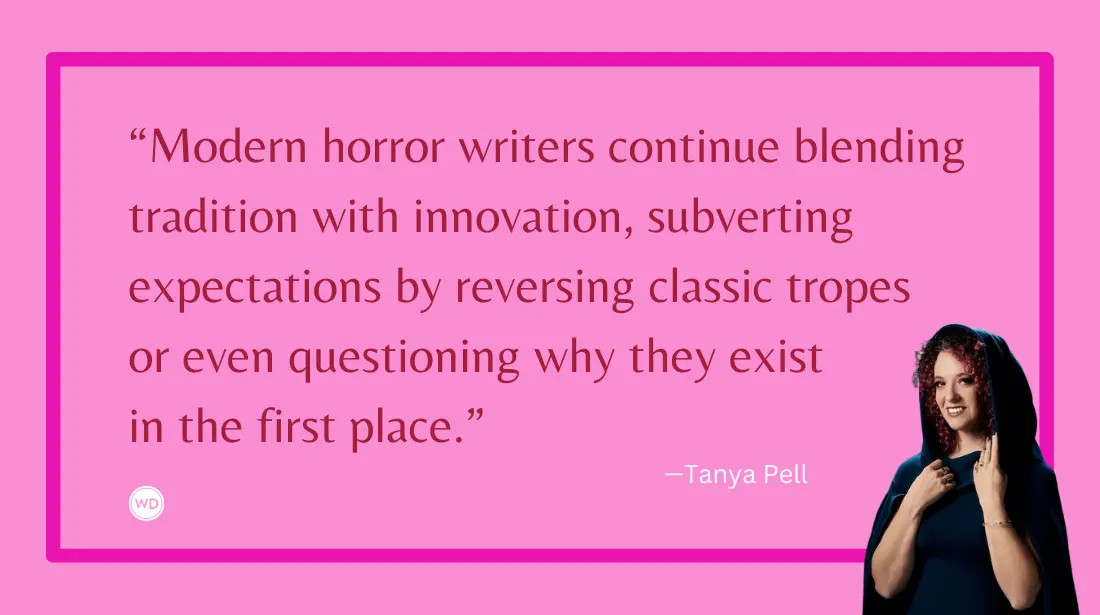
Modern horror writers are actively pioneering a path that brilliantly blends honored tradition with radical innovation. By subverting expectations, reversing classic tropes, and occasionally questioning why those tropes existed in the first place, creators keep the genre vital while paying homage to every single brick laid in the vast necropolis of horror built over centuries. As the world outside continues to evolve at a dizzying pace, the horror genre matches that speed step-for-step, twisting classic conventions to connect audiences through our most universal, unifying experience: the shared pulse of fear, and the defiant will to survive.

Comments
Facebook App ID not configured. Please add it in the Customizer.