
Executive Overview
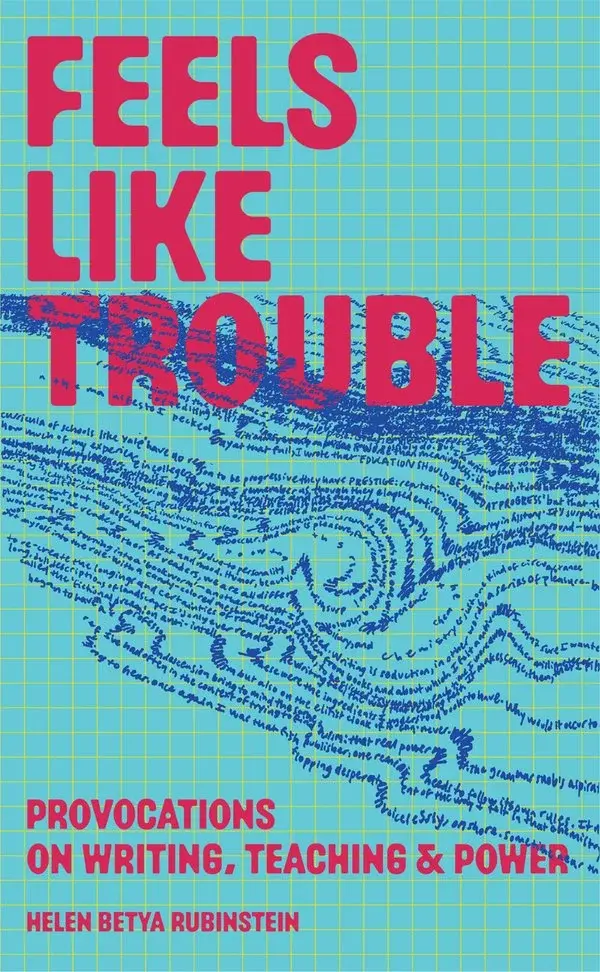
In her memoir Feels Like Trouble, author and educator Helen Betya Rubinstein confronts one of the most pervasive yet rarely interrogated doctrines of elite academic culture: the practice of "breaking" students in order to "build" them. Centered on her experience as an eighteen-year-old freshman at Yale University during the tumultuous autumn of 2001, Rubinstein’s account provides a critical case study of how top-tier educational institutions enforce compliance, suppress intuitive creativity, and equate intellectual maturation with psychological submission.
The phrase "break you to build you"—delivered to Rubinstein by her introductory writing professor in a subterranean campus office—reflects a deeply ingrained pedagogical philosophy. This model posits that high-achieving students must undergo a systemic deconstruction of their voice, confidence, and agency before they can be inducted into elite intellectual circles. Rather than fostering independent critical inquiry, this approach often operates as an institutional self-preservation mechanism. By penalizing stylistic experimentation and demanding deference to rigid standards, elite institutions condition exceptionally capable students to internalize authority rather than challenge it.
This investigation examines the psychological, pedagogical, and cultural mechanics underlying Rubinstein’s account. By juxtaposing her narrative against educational frameworks—including Paulo Freire’s critique of "banking education" and contrasting paradigms of learning—this report illuminates the long-term impact of authoritarian instruction on student development and considers evolving alternatives for modern writing pedagogy.
Read Also
Detailed Chronology: The Fall of 2001 at Yale
[Sept 2001: Arrival at Yale] ──> [Sept 11: National Crisis & First Assignment] ──> [Oct-Nov 2001: Office Hours & Confrontation] ──> [Dec 2001: Academic Burnout] ──> [Jan 2002: Epiphany & Voice Restored]Phase 1: Institutional Induction and Student Profile (September 2001)
On the crisp morning following Labor Day, 2001, Rubinstein entered her first college course, "Writing the Modern Essay." The physical setting reflected the architectural signaling of the Ivy League: paneled carved wood, high diamond-paned stained glass windows, and a heavy wooden conference table surrounded by ambitious first-year students.
The student demographic shared a uniform psychological profile: high school valedictorians, competition winners, and institutional pleasers who had successfully navigated the competitive admissions pipeline. Having attended an unconventional, non-rigorous high school in Louisiana where creative eccentricity was encouraged, Rubinstein entered the classroom with a distinct educational background compared to her hyper-compliant peers.
Phase 2: National Crisis and the Politics Assignment (September 11, 2001)
During the third meeting of the seminar, news broke that commercial airliners had struck the World Trade Center. The instructor—a pale, unsmiling journalist framed by curly dark hair—appeared visibly shaken, offered a brief space for conversation, and dismissed the class early.
The initial writing assignment asked students to analyze a moment when politics directly intersected with their personal lives. Rubinstein submitted an essay detailing her third-grade experience during former Ku Klux Klan Grand Wizard David Duke’s 1991 Louisiana gubernatorial campaign. She recounted watching an airplane spell "DUKE" in skywriting while school children chanted "NO DUKES!"—a childhood echo of anti-nuclear slogans. The professor praised the essay, reading the playground scene aloud to the class as a sophisticated allegory for political powerlessness and historical continuity.
Phase 3: The Pedagogical Rift and Escalating Tension (October 2001)
The initial approval proved brief. As subsequent assignments required students to adhere to strict journalistic principles—establishing news leads immediately, prioritizing narrative efficiency over stylistic play, and adopting standardized argumentative structures—Rubinstein’s creative instincts clashed directly with her instructor’s directives.
+-----------------------------------------------------------------------+
|                         THE PEDAGOGICAL RIFT                          |
+-----------------------------------------------------------------------+
|  PROFESSOR'S DIRECTIVES              RUBINSTEIN'S CREATIVE INSTINCTS  |
|  • Journalistic efficiency           • Capricious word choice         |
|  • Inflexible structural formulas    • Non-linear narrative structures|
|  • Subordinate personal style        • Discovery-based expression     |
|  • Direct political clarity          • Exploratory creative prose     |
+-----------------------------------------------------------------------+
Seeking to defend her creative choices, Rubinstein engaged in direct dialogue with the instructor both during office hours and via email, raising critical questions about the course’s underlying teaching philosophy. In response, the instructor offered detailed critiques of Rubinstein’s submissions, writing in one page-long evaluation:
"A writer needs backbone, not capricious word choice and declarations… [the work should portray] that cycle of human mistakes and errors of which we are all a part."
Phase 4: Breakdown in the Basement (November–December 2001)
The disagreement culminated in a series of tense meetings in the professor’s dimly lit basement office. Confronted with mounting frustration and academic self-doubt, Rubinstein broke down in tears. The professor offered a tissue and explicitly articulated her core educational philosophy:
"I’m breaking you to build you."
The professor explained that she was replicating the exact disciplinary process her own college instructors had imposed on her—a cycle of institutional breaking framed as an essential rite of passage for intellectual development.

Phase 5: Psychological Crisis and Resolution (December 2001–January 2002)
By the end of the semester, Rubinstein experienced severe writing paralysis, academic depression, and a loss of agency. In private journals and correspondence, she noted feeling "broken in English" and "too self-consciously analytical to write well ever again."
The psychological deadlock dissolved in January 2002. Weeks after the course concluded, while working in a subterranean basement computer lab, Rubinstein experienced a sudden return of creative thought and independent synthesis. Reclaiming her intrinsic motivation to write, she re-engaged with educational work on her own terms, later volunteering to teach creative writing in local New Haven schools using flexible, discovery-oriented methods.
Supporting Context & Metrics: Pedagogy, Power, and Institutional Metrics
Paulo Freire and the "Banking Model" of Education
Rubinstein’s experience illustrates the educational dynamics outlined by Brazilian theorist Paulo Freire in Pedagogy of the Oppressed (1970). Freire categorized traditional, authoritarian instruction as the "banking model" of education, wherein students are treated as empty vessels into which teachers deposit standardized knowledge.
THE "BANKING MODEL" VS. DISCOVERY-BASED PEDAGOGY

[Banking Model / Traditional Elite]
Teacher (Source of Authority) ──(Deposits Rules/Formulas)──> Student (Passive Recipient)
Outcome: Compliance, Standardization, Suppression of Intuition

[Discovery-Based / Progressive]
Teacher (Facilitator) <──(Iterative Dialogue & Play)──> Student (Active Creator)
Outcome: Agency, Critical Inquiry, Creative Autonomy
In contrast to the banking model, progressive pedagogy advocates for "problem-posing" education, where learning occurs through interactive discovery, trial, and critical inquiry. In elite university settings, the banking model frequently resurfaces under the guise of academic rigor, demanding that students suppress personal style to adopt institutional norms.
Comparative Frameworks: Parental Perspectives and Soviet Pedagogy
The conflict was further complicated by advice Rubinstein received from her parents. Her father, a Soviet-trained engineering professor, offered a nuanced perspective shaped by his own background:
- Pedagogical Conviction: In the Soviet academic framework, mathematics was taught through problem-solving and self-discovery rather than rote memorization. Students were expected to uncover foundational principles independently.
- Pragmatic Compliance: Despite advocating for discovery-based learning in mathematics, Rubinstein’s father urged his daughter to submit to her professor’s demands in writing, writing to her: "Be a big girl and stop crying. The best writing for this class is the style she wants… Just hold back for a while."
This advice reflects a strategic survival mechanism common among navigating entrenched institutional hierarchies: temporary ideological submission as the price of institutional advancement.
Student Well-Being Indicators in Elite Academia
The psychological impact of high-pressure, punitive instruction on high-achieving undergraduates frequently leads to measurable declines in creative confidence and mental health:
| Metric / Dimension | Traditional "Break to Build" Model | Student-Centered / Discovery Model |
|---|---|---|
| Primary Motivation | Fear of failure / Grade anxiety | Intrinsic curiosity / Expression |
| Relationship to Authority | Subservience and imitation | Critical engagement and dialogue |
| Response to Criticism | Internalized inadequacy / Vocal paralysis | Iterative refinement / Risk-taking |
| Locus of Creative Control | External (Instructor’s preference) | Internal (Student’s agency) |
| Long-Term Outcome | Hyper-conformity or burnout | Sustainable voice and independent thought |
Official Statements & Institutional Rationale
While the specific interactions recounted in Rubinstein’s memoir represent a personal experience, they reflect broader institutional practices in higher education writing programs.
The Institutional Rationale for Rigorous Standardization
From an administrative and foundational stance, introductory composition courses in top-tier universities aim to achieve specific learning objectives:
- Standardization of Quality: Elite universities receive students from vastly divergent secondary backgrounds. Introductory composition courses serve as an equalizer, enforcing clarity, evidence-based argument, and structural logic.
- Elimination of Self-Indulgence: Proponents of traditional rigor argue that young writers often confuse unstructured stylistic flair or "capricious word choice" with genuine substance. Stripping away rhetorical ornamentation forces students to build coherent arguments.
- Preparation for Professional Norms: In professions such as law, journalism, public policy, and academia, adherence to established stylistic constraints is paramount. "Breaking" unexamined habits is viewed as necessary training for high-stakes environments.
The Critical Counter-Perspective
Critiques from contemporary educational researchers suggest that when standardization is coupled with authoritarian teaching methods, it can cause significant harm:
- Confounding Rigor with Domination: As Rubinstein notes, professors often mistake emotional distress and submission for genuine intellectual progress.
- Preservation of Hierarchy: Demanding that students write exclusively in a style preferred by the instructor often serves to protect the teacher’s authority rather than foster student development.
- Suppression of Marginalized Voices: Rigid definitions of acceptable style frequently penalize non-standard, regional, or culturally diverse modes of expression, reinforcing institutional homogeny.
Future Outlook: Reimagining Writing Pedagogy in Modern Academia
The reflections detailed in Feels Like Trouble mirror a broader transformation occurring across modern higher education humanities departments. As universities re-evaluate traditional instructional methods, elite writing programs are increasingly moving away from punitive approaches in favor of methodologies that balance high standards with intellectual agency.
EVOLUTION OF ACADEMIC WRITING PEDAGOGY

[Historical / Paternalistic Paradigm]
• "Break to build" ethos
• Authoritarian critique
• Strict adherence to normative style
• High anxiety as a metric of rigor

       │
       ▼

[Emerging / Traumatized-Informed Paradigm]
• Agency-driven discovery
• Contract / Standards-based grading
• Cultivation of diverse stylistic voices
• High expectations paired with psychological safety
Key Trends Transforming Writing Instruction
- Trauma-Informed and Student-Centered Pedagogy: Contemporary writing instructors are increasingly trained to recognize the psychological dynamics of classroom authority. Paternalistic strategies such as "breaking" students are being replaced by collaborative feedback loops that respect student agency.
- Contract and Ungrading Frameworks: To reduce grade-induced anxiety—which often forces students into hyper-compliant, risk-averse writing—many humanities faculty are adopting alternative grading systems. These approaches reward stylistic risk, deep revision, and personal discovery over submission to an instructor’s stylistic bias.
- Validation of Diverse Rhetorical Styles: Modern composition studies increasingly reject the notion that there is a single "correct" way to write an essay. Incorporating non-linear structures, personal narrative, and varied linguistic styles allows students to engage with academic discourse without abandoning their identity.
Conclusion
Helen Betya Rubinstein’s critique of her first college writing course challenges the enduring myth that intellectual excellence requires psychological deconstruction. Her experience shows that while the "break you to build you" model may produce compliant prose, it often suppresses the very intuition, playfulness, and critical independence that genuine scholarship requires. Moving forward, the challenge for elite higher education lies in maintaining academic standards while creating environments where students learn to articulate their voices without first having to surrender them.




Comments
Facebook App ID not configured. Please add it in the Customizer.