
Executive Overview
SCOTTSDALE, Arizona — Taliesin West, the iconic desert winter home and architectural laboratory of legendary American architect Frank Lloyd Wright, has been closed to the public indefinitely following a fatal accident on its historic grounds. The incident, which occurred on a Friday afternoon, claimed the life of Rogério Renato Mateucci, a prominent Brazilian academic and rector of the Pontifical Catholic University of Paraná (PUCPR).
Mateucci was participating in a guided walking tour of the sprawling 491-acre UNESCO World Heritage site nestled in the foothills of the McDowell Mountains when sudden, severe desert winds swept through the property. According to emergency responders, the gusts dislodged roofing material from one of the historic structures, striking Mateucci and causing instantaneous fatal injuries. He was pronounced dead at the scene.
The unexpected tragedy has sent shockwaves through the global academic community, the architectural preservation sector, and the cultural landscape of Arizona. In response to the accident, the Frank Lloyd Wright Foundation immediately suspended all public operations, canceling tours and shuttering the campus gates to allow local law enforcement, federal safety regulators, and municipal emergency services to conduct a thorough investigation.
Read Also
This comprehensive report examines the sequence of events that led to the tragedy, analyzes the meteorological conditions that transformed the desert afternoon into a hazard, provides essential background on the historic significance of Taliesin West, details the official responses from institutional leaders, and assesses the future outlook for the site as it navigates this unprecedented crisis.
Detailed Chronology of Events
The Afternoon of the Incident
The sequence of events unfolded rapidly on Friday afternoon as a standard group walking tour traversed the desert campus of Taliesin West. At approximately 2:00 p.m. local time, atmospheric conditions across the Valley of the Sun deteriorated swiftly. Meteorological instrumentation and eyewitness accounts confirmed that the area was experiencing a sudden intensification of wind speeds, transforming a seemingly calm afternoon into a high-risk weather event.
As Mateucci and his fellow tour group members moved through a specific sector of the historic compound, a violent gust of wind caught a section of roofing material, tearing it free from its moorings on one of the property’s low-slung, organic structures. The debris was propelled through the air with devastating force, striking Mateucci directly.
Immediate Emergency Response
The Scottsdale Fire Department and emergency medical services received immediate distress calls reporting a severe injury on the property. First responders arrived at the isolated desert complex within minutes, navigating the complex topography of the Wright-designed compound.
Upon arrival, paramedics and rescue personnel attempted life-saving measures. However, the severity of the trauma inflicted by the falling architectural element proved insurmountable. Officials from the Scottsdale Fire Department subsequently confirmed that Mateucci had died instantly from his injuries.
Remarkably, despite the group being in close proximity during the walking tour, no other injuries or fatalities were reported among the remaining tourists or the on-site guide. The Scottsdale Police Department immediately secured the perimeter, transforming the cultural landmark into an active investigation zone to determine the structural and environmental factors that contributed to the dislodgment of the roofing material.
Meteorological Context and Environmental Factors
The "First Alert Weather Day"
The tragedy did not occur in a complete atmospheric vacuum. Local meteorologists and regional news outlets had designated the day as a "First Alert Weather Day"—an administrative and broadcasting protocol used by weather teams across Arizona to alert the public to impending atmospheric disturbances that pose risks to travel, infrastructure, and personal safety.
According to data released by the National Weather Service (NWS), the Phoenix metropolitan area and surrounding desert zones were subjected to anomalous wind patterns. Sustained easterly winds were recorded at approximately 22 miles per hour, accompanied by aggressive, erratic gusts reaching up to 32 miles per hour.
Desert Microclimates and Architecture
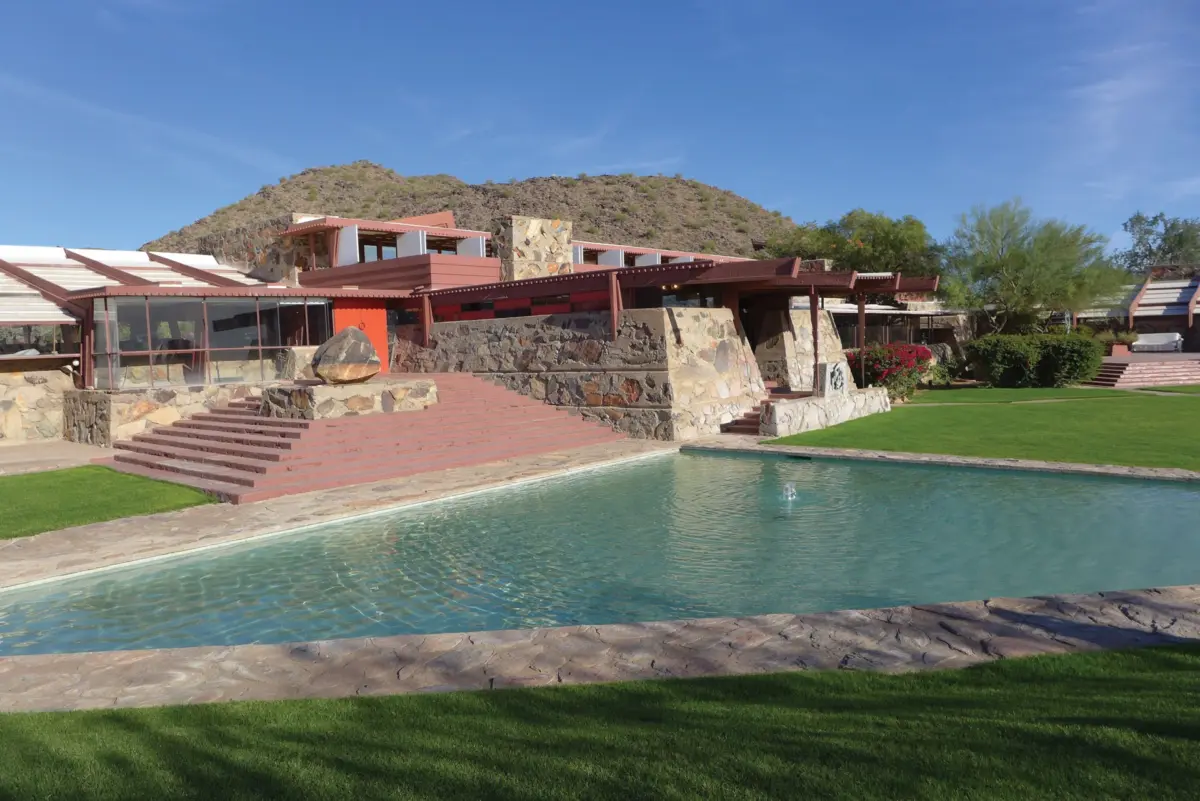
The topography of Taliesin West makes it particularly susceptible to the unique microclimates of the Sonoran Desert. Built directly into the foothills of the McDowell Mountains, the campus experiences unpredictable wind funnelling. The architecture itself—famously designed by Wright to "belong" to the desert rather than merely sit upon it—incorporates local stone, redwood, canvas, and specialized roofing systems that must withstand extreme thermal expansion, high solar radiation, and sudden wind shear.
While historic preservationists labor continuously to maintain the structural integrity of Wright’s buildings, the sudden convergence of high-velocity gusts on a designated weather alert day highlights the inherent vulnerabilities of preserving mid-20th-century experimental architecture in an era of increasingly volatile weather patterns.
Victim Profile: Remembering Rogério Renato Mateucci
The victim of this tragic accident was a figure of considerable international standing in higher education. Rogério Renato Mateucci served as the rector of the Pontifical Catholic University of Paraná (Pontifícia Universidade Católica do Paraná – PUCPR), one of Brazil’s most prestigious and respected institutions of higher learning.
A Life Dedicated to Academic Excellence
As rector, Mateucci was a visionary leader who guided PUCPR through significant periods of academic expansion, internationalization, and technological integration. Colleagues and academic peers remember him as a passionate advocate for education, research, and cultural exchange. His leadership extended beyond the borders of Brazil, as he actively forged partnerships with universities, research institutions, and cultural organizations across the globe.
His presence in Scottsdale was part of an international journey, highlighting his appreciation for global art, history, and architectural innovation—passions that naturally drew him to the masterworks of Frank Lloyd Wright.
The sudden loss of Dr. Mateucci has prompted an outpouring of grief, official condolences, and tributes from academic consortia, government officials, and educational leaders throughout Latin America and the international community.
Supporting Context & Metrics: The History and Significance of Taliesin West
To fully understand the gravity of the closure and the unique structural challenges facing the property, it is essential to examine the history, physical scope, and cultural weight of Taliesin West.
Origins and Architecture
Frank Lloyd Wright first established Taliesin West in 1937 as his personal winter home, architectural studio, and the desert campus for the Frank Lloyd Wright School of Architecture (now the School of Architecture at Taliesin). Fleeing the harsh winters of Wisconsin—where his primary estate, Taliesin East, was located—Wright and his apprentices purchased 491 acres of raw, untamed desert land in Scottsdale.
Working with native desert rocks, sand, and redwood, Wright and his fellowship of students built the structures by hand, embedding them organically into the arid landscape. The roofs were originally constructed with canvas sails stretched over redwood frames to filter the intense Arizona sunlight, though these were later replaced with more durable materials to meet modern building codes and preservation standards while retaining their iconic aesthetic.
Global Cultural Legacy
- UNESCO World Heritage Status: In 2019, Taliesin West—along with seven other Wright-designed properties across the United States, including Fallingwater and the Guggenheim Museum—was inscribed on the prestigious UNESCO World Heritage List, recognizing its outstanding universal value to human culture and architectural history.
- Global Exhibition History: The site’s international fame was cemented decades prior. In 1940, New York’s Museum of Modern Art (MoMA) hosted a major exhibition featuring the complex spatial geometry of Taliesin West. This was followed by a subsequent exhibition in 1947 that showcased detailed photographic studies of the desert structures, introducing Wright’s organic architecture to a global audience.
- Economic and Tourism Impact: Today, Taliesin West operates as a premier cultural tourist destination managed by the Frank Lloyd Wright Foundation. It attracts tens of thousands of international visitors, architecture enthusiasts, and scholars annually, serving as a vital economic and educational anchor for the city of Scottsdale and the state of Arizona’s tourism sector.
Official Statements and Institutional Response
In the wake of the tragedy, leadership at the Frank Lloyd Wright Foundation moved swiftly to address the public, cooperate with municipal investigators, and offer condolences to the victim’s family.
Statement from CEO Joe Spector
Joe Spector, Chief Executive Officer of the Frank Lloyd Wright Foundation, issued a heartfelt statement to local media outlets, including AZ Family:
"The foundation extends its deepest condolences to the family and loved ones of the individual. Out of respect for their privacy and to allow local officials to complete their work, no further details will be shared at this time."
Public Communication via Social Media
The foundation also utilized its official digital channels to inform the public regarding the operational status of the campus. In a formal statement released via Instagram, foundation representatives confirmed:
"The Scottsdale Police Department is aware of the incident, and Taliesin West is closed to the public until further notice."
The swift decision to shutter the campus reflects an institutional commitment to safety, transparency, and a respectful pause to honor the life lost on the property.
Future Outlook: Preservation, Safety, and Reopening
As the dust settles over the desert foothills of Scottsdale, the Frank Lloyd Wright Foundation, municipal authorities, and preservation experts face a complex set of challenges regarding the future of Taliesin West.
The Ongoing Investigation
The immediate priority remains the conclusion of the joint investigation by the Scottsdale Police Department, municipal building inspectors, and occupational safety experts. Investigators must determine whether the dislodgment of the roofing material was the result of an unavoidable "act of God" driven by extreme weather anomalies, or if deferred maintenance, material fatigue, or structural vulnerabilities played a contributing role.
Balancing Historical Authenticity with Modern Safety
One of the most persistent dilemmas in architectural preservation—particularly concerning properties managed under strict historic guidelines, such as UNESCO World Heritage sites—is the delicate equilibrium between maintaining authentic historic fabric and implementing modern, heavy-duty safety reinforcements.
Wright’s architecture at Taliesin West was purposefully lightweight, experimental, and integrated with the elements. As climate change increases the frequency and severity of extreme weather events—including sudden high-velocity microbursts and windstorms in the American Southwest—historic preservationists will likely be forced to reevaluate how these fragile, mid-century structures are anchored against environmental stress without compromising their historical integrity.
Path to Reopening
While the foundation has confirmed that Taliesin West will remain closed to the public "until further notice," industry analysts anticipate a phased reopening plan once official clearance is granted by local authorities. This phased approach is expected to include:
- Comprehensive Structural Audits: A thorough engineering assessment of all roofs, overhangs, canvas structures, and wooden beams across the entire 491-acre campus to identify and mitigate any similar vulnerabilities.
- Enhanced Weather Protocols: The implementation of stricter operational guidelines regarding extreme weather events, including the mandatory cancellation or rerouting of walking tours whenever National Weather Service "First Alert" warnings or high-wind advisories are active in the Scottsdale region.
- Staff and Guide Safety Training: Upgraded emergency preparedness drills for tour guides and on-site staff to ensure rapid evacuation or sheltering during sudden desert weather shifts.
Conclusion
The tragic accident at Taliesin West serves as a sobering reminder of the unpredictable power of nature and the heavy responsibilities inherent in managing and preserving humanity’s most treasured architectural landmarks. As the international community mourns the loss of Dr. Rogério Renato Mateucci, the Frank Lloyd Wright Foundation faces a profound period of reflection, rigorous safety evaluation, and structural stewardship to ensure that Wright’s desert masterpiece can safely welcome future generations of scholars and admirers.



Comments
Facebook App ID not configured. Please add it in the Customizer.