
Executive Overview
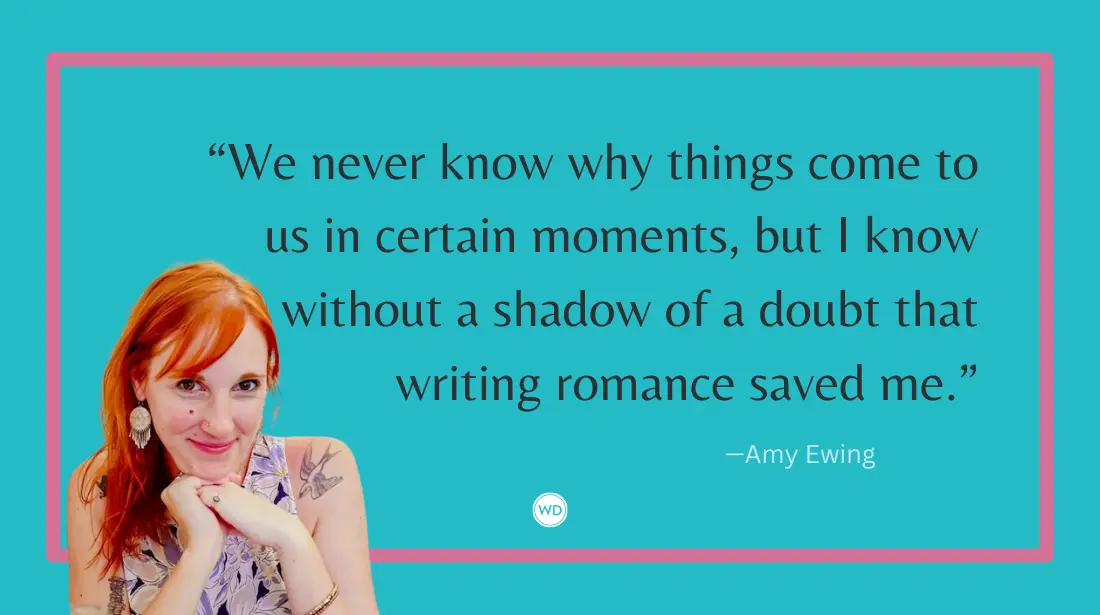
The intersection of creative burnout and personal crisis can be a devastating crucible for any professional, but for authors whose self-worth is inextricably bound to their output, the stakes are uniquely existential. In this deeply reflective personal account, acclaimed author Amy Ewing details her journey through the darkest days of the COVID-19 pandemic—a period characterized by sudden career stagnation, plummeting self-esteem, and the complete collapse of her personal life.
Faced with mounting rejections and a profound loss of identity after moving away from her signature dark, sprawling fantasy worlds, Ewing turned to an unexpected literary savior: the contemporary romance genre. By pivoting to stories defined by hope, emotional vulnerability, and guaranteed happy endings (HEAs), Ewing did not merely resurrect a faltering career; she systematically deconstructed and healed her own psychological foundations.
This feature-length exploration chronicles Ewing’s journey from the depths of creative paralysis to a renewed professional renaissance and personal fulfillment—culminating in a major book deal for her contemporary romance debut, The Plus One List, and an upcoming marriage at age 44. Through her story, we examine the therapeutic mechanisms of the romance genre, the dangers of tying creative self-worth to commercial validation, and how drafting fictional blueprints for love can fundamentally alter a writer’s real-world relationship patterns.
Read Also
Detailed Chronology: From Early Success to Pandemic Paralysis
The Illusion of Infallibility
Every writer’s career trajectory is unique, but few face the psychological whiplash of experiencing immediate, out-of-the-gate success followed by a sudden, jarring halt. For Ewing, early professional validation established a dangerous precedent. Like many creators who achieve rapid initial acclaim, she inadvertently anchored her entire sense of identity and self-worth to her publication status. To be an author was to be successful; to experience a lull was, in her mind, a direct indictment of her character and talent.
For years, this framework functioned—until external forces outside anyone’s control upended the publishing landscape.
The COVID-19 Crucible
The arrival of the COVID-19 pandemic in early 2020 served as a universal trauma, disrupting industries across the globe. For the publishing industry, sudden shifts in consumer habits, supply chain disruptions, and editorial hesitance created an intensely volatile market. For Ewing, the impact was catastrophic. The books she pitched failed to sell. The pipeline that had once flowed steadily suddenly ran completely dry.
[Initial Career Success]
       │
       ▼
[The COVID-19 Disruption] ──► [Book Sales Halt / Rejections Mount]
       │
       ▼
[Loss of Identity & Creative Paralysis] ──► [Dating Patterns Collapse]
       │
       ▼
[Pivoting to Romance] ──► [Healing & Professional Renaissance]
In her own words, Ewing lost her identity during those dark months. The professional setbacks delivered a blow that left her reeling, entirely untethered from a sense of personal value. Compounding the professional crisis was a parallel collapse in her personal life. Having historically chased the illusory safety of relationships—driven by a subconscious compulsion to be "picked" rather than evaluating true compatibility—she stopped dating altogether. She recognized a long-standing pattern of twisting herself into a pretzel to align with whatever a partner desired, ignoring fundamental incompatibilities in the pursuit of validation.
As rejection letters piled up, they transformed from professional critiques into seemingly objective proof of her failure. Writing—the very craft that had once brought her immense joy—turned into a form of psychological torture. Sitting down at the desk became an act of agony, and the future felt entirely drained of color and hope.
Supporting Context & Metrics: The Transformative Power of the Romance Genre
A Genre Defined by Resilience
To understand Ewing’s recovery, one must examine the unique structural mechanics of the romance genre. Unlike literary fiction, tragedy, or even traditional thrillers, which frequently embrace ambiguous or tragic resolutions, the romance genre operates under an unwritten, ironclad social contract between author and reader: the Happily Ever After (HEA) or Happy For Now (HFN).
Market research consistently demonstrates that romance is the highest-grossing sector in the global publishing market, a dominance driven largely by readers seeking emotional sanctuary, psychological validation, and guaranteed optimism.
| Literary Element | Traditional Fantasy / Dark Fiction | Contemporary Romance Genre |
|---|---|---|
| Core Resolution | Ambiguous, sacrificial, or tragic | Guaranteed Happy Ending (HEA) / Hopeful |
| Emotional Focus | Epic scope, external peril, existential dread | Internal healing, emotional vulnerability, relational growth |
| Narrative Arc | Overcoming external magic/monsters | Overcoming internal emotional trauma and relational patterns |
| Therapeutic Value | Catharsis through shared darkness | Rebuilding trust, agency, and optimism |
For Ewing, shifting from dark, magic-laden fantasy worlds to contemporary romance was not merely a stylistic change; it was a tactical psychological intervention. By writing contemporary romance, she forced herself to engage with characters who actively heal, communicate, and choose one another despite immense emotional obstacles.
The Science of Narrative Healing
Psychologists and literary therapists have long noted that writing functions as an external processing mechanism. When authors draft stories where characters navigate emotional turmoil and emerge triumphant, they engage in a form of cognitive behavioral reframing.
- Externalizing Trauma: Putting personal angst into the mouths and minds of fictional characters allows writers to observe their own emotional struggles from a safe distance.
- The Comfort of Predictable Hope: Knowing that a romance novel must end in triumph provides a stabilizing psychological framework during chaotic real-world crises.
- Drafting Real-World Blueprints: By forcing her fictional heroes and heroines to communicate their needs and establish healthy boundaries, Ewing inadvertently taught herself how to do the same.
Official Perspectives and Personal Reflection
Breaking Old Patterns
The true turning point in Ewing’s recovery occurred when she realized that her creative choices were mirroring her personal life. Just as she had previously accepted any rejection letter as proof of her total worthlessness, she had historically accepted any romantic interest without evaluating whether the partnership served her genuine needs.
Writing from dual perspectives—crafting both the hero and heroine’s internal monologues—forced Ewing to confront the psychological architecture of healthy relationships. She began to recognize the literary equivalent of real-world "red flags." If she would not allow a character she created to ignore blatant incompatibilities on the page, how could she justify doing so in her own life?
"I love writing from both the hero and the heroine’s perspectives, and knowing the men I had created on the page, I couldn’t just go back to ignoring all the red flags in real life like I used to." — Amy Ewing
This newfound narrative clarity catalyzed a rigorous, year-long personal detox. She stopped chasing the desperate need to be "picked." Instead, she focused inward, defining her boundaries, identifying her authentic desires, and dismantling decades of internalized conditioning regarding self-worth and partnership.
Redefining Self-Worth at 44
Finding love and professional success later in life carries a unique texture of hard-won wisdom. At 44, Ewing approaches her upcoming marriage and her career revival with a foundation built on survival and self-awareness rather than youthful insecurity.
Her narrative challenges the societal pressures often placed on women regarding timelines for career stability and romantic partnership. The crucible of the pandemic forced her to strip away all external markers of identity—book sales, publication status, relationship status—until only her core self remained.
"My sense of self does not stem from what I do, but from who I am."
— Amy Ewing
This realization represents the ultimate takeaway of her journey: true resilience is born not from an unbroken career, but from the capacity to rebuild after total devastation.
Future Outlook: The Release of The Plus One List and Beyond
A New Chapter in Contemporary Romance
Ewing’s professional rebirth culminates in the release of her contemporary romance debut, The Plus One List. Far removed from the dark, sprawling fantasy realms of her early career, this novel represents the tangible fruit of her healing process—a testament to what happens when an author channels personal vulnerability into commercial fiction.
Industry analysts note a growing appetite for contemporary romance novels that tackle mature themes, such as rebuilding life after mid-career burnout, navigating late-in-life romance, and unlearning toxic relationship paradigms. Ewing’s lived experience infuses The Plus One List with an authentic emotional depth that resonates powerfully with contemporary readers.
The Enduring Legacy of Narrative Resilience
As the publishing landscape continues to evolve post-pandemic, stories like Amy Ewing’s serve as a vital reminder of the symbiotic relationship between art and life. Writing romance did not just save her career; it restored her agency, taught her patience, and illuminated the darkest corridors of a global crisis.
For readers and aspiring writers alike, her journey offers an inspiring blueprint: when external worlds collapse, the stories we choose to tell—and the happy endings we dare to write for our characters—can ultimately become the happy endings we claim for ourselves.
Recommended Reading & Resources
- Featured Check out Amy Ewing’s The Plus One List on Amazon (Note: Writers Digest utilizes affiliate links).
- Writer Resources: For aspiring authors navigating career transitions, explore the Writer’s Digest Member Community for peer support, craft guides, and industry insights.

Comments
Facebook App ID not configured. Please add it in the Customizer.