
Executive Overview
When a roomful of university students or casual thinkers is confronted with a classic philosophical puzzle—such as the nature of free will, the moral boundaries of utilitarianism, or the criteria for personal identity—disagreement almost invariably follows. For generations, philosophers, cognitive scientists, and researchers have relied on an intuitive baseline assumption to explain this phenomenon: that different individuals harbor fundamentally different intuitions. Under this traditional paradigm, Person A possesses a compatibilist worldview, while Person B leans toward incompatibilism; Person C interprets a thought experiment as an instance of direct causation, while Person D sees mere correlation.
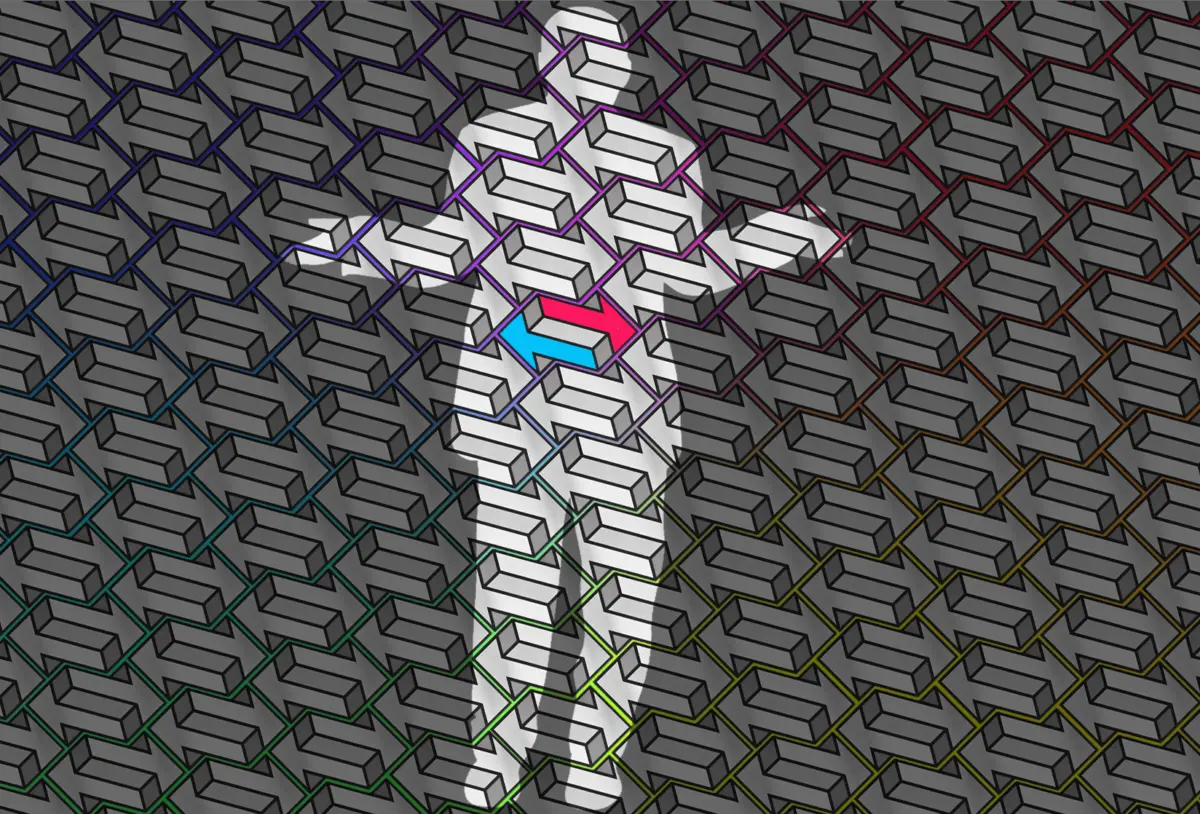
However, a provocative new paper published in the journal Ergo challenges this foundational premise. In “Conflicting Intuitions,” Yale University professor Joshua Knobe posits that the traditional framework is missing a far more complex, and pervasive, psychological reality. Rather than assuming that societal disagreement is merely a byproduct of distinct individuals holding mutually exclusive viewpoints, Knobe argues that the core locus of philosophical tension exists within the individual mind.
According to this hypothesis, when a person encounters a classic philosophical thought experiment, they rarely experience a clean, uniform reaction. Instead, they are frequently besieged by internal friction: one cognitive mechanism pulls their intuition firmly in one direction, while an equally powerful, competing mechanism drags it toward the exact opposite conclusion.
Read Also
This conceptual shift—moving from interpersonal divergence to intrapersonal conflict—carries profound ramifications. Empirically, it forces cognitive scientists and experimental philosophers to completely recalibrate what their data models are attempting to measure and explain. Philosophically, it raises deep questions about whether ordinary language and folk intuitions can be reconciled within a coherent theoretical framework, or if philosophers must abandon the idea that conflicting internal responses can ever be simultaneously true. As the academic community begins to digest Knobe’s thesis, the dialogue surrounding experimental philosophy is entering a sophisticated new era.
Detailed Chronology: The Evolution of Experimental Philosophy and the Genesis of Knobe’s Hypothesis
To fully appreciate the weight of Knobe’s recent contribution, one must trace the historical trajectory of how philosophers and cognitive scientists have studied human intuition over the past quarter-century.
The Rise of Experimental Philosophy (X-Phi)
For centuries, "armchair philosophy" reigned supreme. Thinkers constructed intricate thought experiments—such as the Trolley Problem, Frankfurt cases, or the Ship of Theseus—and consulted their own intuitions (or those of a convenient seminar room) to test the validity of ethical, metaphysical, or epistemological theories.
However, the late 1990s and early 2000s witnessed the birth of experimental philosophy (often abbreviated as X-Phi). Pioneers like Joshua Knobe himself, alongside Shaun Nichols, Eddy Nahmias, and others, began taking philosophical thought experiments out of the seminar room and into the laboratory. They surveyed large, diverse demographics to see how ordinary people actually responded to these scenarios.
Almost immediately, X-Phi researchers discovered widespread cross-cultural and demographic variations. People of different socioeconomic backgrounds, educational levels, and cultural upbringings often gave radically different answers to identical philosophical prompts. This fueled a robust debate: Are philosophical intuitions reliable guides to objective truth if they vary so wildly from person to person?
The Dominant Interpersonal Paradigm
Faced with empirical data showing divergent responses, researchers naturally fell back on an interpersonal explanatory model. If 50% of survey participants claimed that an agent acted of their own free will in a deterministic universe, while 50% claimed they did not, the standard conclusion was straightforward:
- Group A consists of compatibilists (implicitly or explicitly).
- Group B consists of incompatibilists.
The scientific and philosophical endeavor then became focused on mapping these demographic divides, exploring cognitive biases, and determining which group—if either—held the correct or more stable intuition.
The Pivot Toward Intrapersonal Conflict
In "Conflicting Intuitions," Knobe suggests that this dominant paradigm suffers from a critical blind spot. Drawing on subtle cues from recent experimental data, he began to notice that participants were not merely dividing neatly into two camps. Instead, closer probing revealed that individual respondents often felt internally torn.
When presented with complex vignettes—such as legal grey areas regarding corporate liability or metaphysical puzzles regarding personal identity (e.g., cases involving Phineas Gage-style psychological transformations)—individuals did not simply pick a side and rest easy. When pushed, they frequently articulated a state of acute internal tension. They acknowledged the pull of competing arguments that pointed to contradictory outcomes.
This realization led Knobe to formulate the Conflicting Intuitions Hypothesis. Rather than viewing disagreement solely as a horizontal phenomenon (Person A vs. Person B), Knobe argues that it is primarily a vertical, internal phenomenon (System 1 vs. System 2, or competing emotional and rational heuristics within Person A).
Supporting Context & Metrics: Empirical and Philosophical Implications
Knobe’s hypothesis is not merely a semantic nuance; it fundamentally alters the landscape of both empirical cognitive science and theoretical philosophy.
Empirical Ramifications: Redefining What We Measure
If the traditional assumption were true—that different people simply have different static intuitions—the goal of cognitive science would be relatively linear. An adequate psychological theory would need to explain the developmental, cultural, or neurological factors that cause Person A to develop one intuition and Person B to develop another.
However, if Knobe’s hypothesis holds true, the explanatory burden increases exponentially. As Knobe articulates:
"An adequate theory would not merely have to explain why half of the participants have the intuition that it is a case of causation; it would have to explain why those people are conflicted…"
Researchers must now design experiments capable of capturing ambivalence, cognitive dissonance, and concurrent, contradictory mental states. This requires shifting away from binary survey questions (e.g., "Yes or No: Is this free will?") toward multi-dimensional scaling, response-time tracking, and qualitative depth metrics that can measure the strength of conflicting internal vectors.
Philosophical Ramifications: The Problem of Concurrent Truths
Beyond the empirical laboratory, Knobe’s work forces a reckoning within core philosophical disciplines, particularly the philosophy of law and personal identity.
Consider two illustrative domains explored in Knobe’s broader analysis:
- Philosophy of Law: When a corporation cuts corners, leading to environmental devastation while generating immense profit, everyday observers often experience a dual reaction. On one hand, there is a clear intuition that the company violated the law and committed a crime. On the other hand, a deeper structural analysis of corporate personhood and statutory loopholes might elicit an intuition that, technically speaking, no specific statute was violated.
- Personal Identity (The Phineas Case): When a human being undergoes radical psychological transformation due to trauma or disease, observers frequently grapple with conflicting sentiments. There is an immediate, superficial intuition that "this is still Phineas," balanced against a profound, deeper intuition that the core personhood has been obliterated, meaning "this is no longer Phineas."
The philosophical crisis arises when we ask: Can both intuitions be correct?
Knobe points out that philosophers must determine whether it is possible to construct a theoretical framework that accommodates these dual realities—developing a lexicon where an action both is and is not a violation depending on the analytical depth applied.
Furthermore, a darker philosophical reality looms: for many traditional debates, such a harmonious reconciliation may be impossible. There are domains where logic demands an exclusive disjunction ($A$ or $neg A$). If an individual simultaneously intuits both $A$ and $neg A$, and empirical and logical analysis proves that both cannot simultaneously be true, philosophers are left with the daunting task of explaining why our minds are structurally hardwired to generate profound, persistent illusions.
Official Statements and Academic Discourse
The publication of "Conflicting Intuitions" has sent ripples through academic departments worldwide, prompting lively commentary across epistemic blogs, conferences, and faculty seminars.
While full peer-reviewed replies are still working their way through academic journals, early commentary from cognitive scientists and analytic philosophers highlights the polarizing nature of Knobe’s thesis.
- On the Nature of Folk Psychology: Several experimental philosophers have noted that Knobe’s hypothesis bridges a long-standing gap between psychoanalytic traditions (which have long emphasized internal psychic conflict) and modern analytic philosophy of mind. By suggesting that ordinary people are walking bundles of contradictory intuitions, Knobe aligns experimental philosophy closer to the messy realities observed by behavioral economists and cognitive psychologists.
- Skeptical Counter-Perspectives: Traditionalist critics argue that what Knobe terms "conflicting intuitions" within a single individual may simply be an artifact of poorly phrased thought experiments or semantic ambiguity. According to this counter-theory, if a vignette is refined to eliminate linguistic ambiguities, the internal "conflict" dissolves, revealing that the subject did indeed have a single, coherent underlying intuition all along.
- Knobe’s Defense of Complexity: In his writing, Knobe anticipates such reductionist pushback, maintaining that the persistence of internal conflict across carefully controlled variations of thought experiments suggests that the friction is a feature, not a bug, of human cognition. The mind utilizes multiple, competing evaluative frameworks to navigate complex social and moral landscapes.
Future Outlook: Where Does Experimental Philosophy Go From Here?
As the academic community continues to grapple with the implications of "Conflicting Intuitions," several key trajectories are emerging for future research:
- Next-Generation Experimental Design: Laboratories specializing in experimental philosophy are already beginning to construct survey instruments explicitly designed to measure intra-subject ambivalence. Expect to see studies utilizing slider scales (where participants indicate the degree to which they feel pulled in opposite directions simultaneously) rather than forced-choice radio buttons.
- Interdisciplinary Collaboration: Bridging philosophy, cognitive neuroscience, and affective psychology will become increasingly critical. Functional neuroimaging (fMRI) studies could potentially map whether conflicting intuitions light up distinct neural networks—such as pitting emotional valuation centers (like the ventromedial prefrontal cortex) against rule-based logical processing networks.
- Re-evaluating Classic Philosophical Canons: As researchers uncover the prevalence of internal contradiction in ordinary thought experiments, philosophers may need to re-evaluate the utility of intuition-driven arguments altogether. If our intuitions are inherently fragmented and contradictory, the traditional philosophical method of building grand metaphysical systems upon the bedrock of "common sense" or "folk intuition" may require radical reconstruction.
Ultimately, Joshua Knobe’s "Conflicting Intuitions" serves as a vital reminder that human consciousness is rarely monolithic. By turning our gaze inward—from the disagreements we have with our neighbors to the profound disagreements we harbor within ourselves—philosophy opens a more honest, intricate window into the workings of the human mind.


Comments
Facebook App ID not configured. Please add it in the Customizer.