
Executive Overview
As the impacts of ecological destabilization accelerate across continents, the cultural and political discourse surrounding the climate crisis has found a new, urgent voice: the global youth movement. Far from being passive inheritors of an unraveling biosphere, young activists are asserting themselves at the vanguard of systemic change, demanding environmental justice, science-based policy, and structural accountability from global leaders.
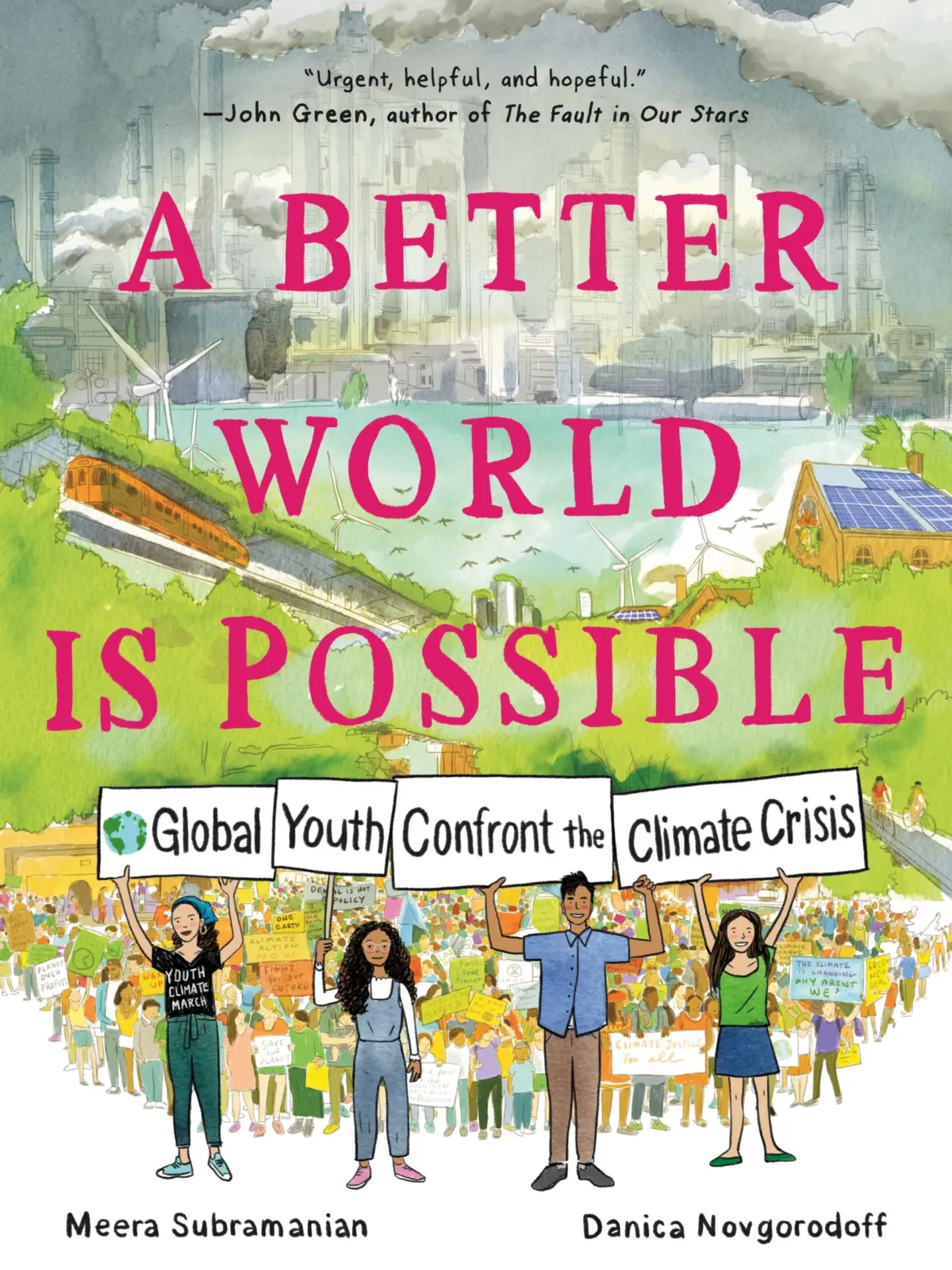
Entering this critical conversation is A Better World Is Possible: Global Youth Confront the Climate Crisis, a landmark graphic nonfiction book written by acclaimed environmental journalist Meera Subramanian and vividly illustrated by artist and writer Danica Novgorodoff. Published by First Second Books, the work bridges the often-intimidating gap between hard climate science and accessible, narrative-driven visual art.
Structured around the biographical profiles of Subramanian, Novgorodoff, and four remarkable young American climate activists—whose families hail from Mexico, Colombia, Bangladesh, and India—the book explores both the localized devastation of ecological collapse and the sweeping power of youth-led resistance. By illuminating the intersectional realities of environmental injustice, the authors demonstrate how climate change is not merely an atmospheric anomaly, but a profound crisis of equity, race, and global economics.
Read Also
This comprehensive report examines the structural makeup of A Better World Is Possible, contextualizes its release within the broader landscape of contemporary climate literature and youth activism, analyzes the intersection of graphic journalism and environmental communication, and provides an authoritative outlook on how works of this nature are shaping the future of ecological advocacy.
Detailed Chronology: The Genesis and Evolution of the Project
The journey toward A Better World Is Possible is rooted in decades of environmental reporting, artistic exploration, and the unprecedented mobilization of the millennial and Generation Z demographics. Understanding the significance of the book requires tracing the path of its creators and the evolving media landscape that made such a project both possible and necessary.
Decades of Reporting: Laying the Groundwork
Long before collaborating on a graphic guide, Meera Subramanian established herself as a formidable voice in environmental journalism. Her work, which frequently explores the human dimensions of ecological crises, has documented everything from the devastating collapse of India’s vulture populations to the complex socio-economic realities of rural America grappling with environmental shifts. Through her reporting, Subramanian recognized a recurring systemic flaw in traditional climate journalism: it was too frequently trapped behind academic paywalls, overly reliant on apocalyptic abstractions, or detached from the lived experiences of those most vulnerable to ecological disruption.
Concurrently, Danica Novgorodoff was building a reputation as a singularly talented graphic novelist and illustrator, known for her ability to render complex human emotions, natural landscapes, and sociopolitical tensions through vibrant, accessible artwork. Her previous graphic works demonstrated a profound appreciation for environmental themes and the delicate relationship between human communities and the natural world.
The Convergence of Art and Science
The collaboration between Subramanian and Novgorodoff began with a shared conviction: that the standard methods of communicating the climate crisis were failing to mobilize the broader public, particularly younger generations who would bear the brunt of ecological failure. Traditional textbooks and dense scientific reports, while essential for academic researchers, often lacked the emotional resonance and narrative urgency required to spark sustained civic engagement.
The decision to utilize the graphic novel medium was strategic and deliberate. Sequential art possesses a unique cognitive power. By pairing rigorous scientific data with expressive, character-driven illustrations, the medium allows readers to process complex ecological mechanisms—such as carbon feedback loops, ocean acidification, and glacial melting—while simultaneously connecting with the human faces behind the statistics.
Centering Global Heritage and Local Realities
As the project evolved, Subramanian and Novgorodoff made a crucial structural choice: rather than presenting a generic, western-centric overview of climate change, they chose to anchor the narrative in the personal stories of four young American climate activists. Crucially, these activists brought distinct global perspectives, with familial roots spanning Mexico, Colombia, Bangladesh, and India.
This multi-faceted approach allowed the book to explore the concept of climate diaspora and transnational vulnerability. The youth profiled in the book are not viewing the climate crisis through a theoretical lens; they are witnessing how rising sea levels, extreme weather events, and environmental degradation directly impact their ancestral homelands and diasporic communities within the United States. Through meticulous research, interviews, and artistic rendering, the creators traced how these young organizers transitioned from localized concerns to national and international advocacy platforms.
Supporting Context & Metrics: The Science, the Art, and the Activism
To fully appreciate the weight of A Better World Is Possible, one must examine the socio-scientific landscape it inhabits. The book arrives at a moment of unprecedented ecological urgency, intersecting with critical data points regarding global youth mental health, environmental displacement, and the efficacy of visual communication.
The Intergovernmental Panel on Climate Change (IPCC) Baseline
The scientific framework underpinning Subramanian’s text aligns with consensus reports from the IPCC, which have repeatedly warned that humanity has a rapidly closing window to curb greenhouse gas emissions and avert catastrophic warming thresholds. According to IPCC metrics:
- Global surface temperatures have risen significantly faster since 1970 than in any other 50-year period over at least the last 2,000 years.
- Sea levels are rising at an accelerating rate, threatening coastal megacities and island nations where hundreds of millions of people reside.
- Extreme weather events—including prolonged droughts, catastrophic mega-fires, and unprecedented flooding—have increased in frequency and intensity, disproportionately affecting communities in the Global South and marginalized populations in the Global North.
The Rise of Climate Anxiety Among Youth
As these metrics manifest in daily headlines, a secondary crisis has emerged: ecological grief and climate anxiety among the younger generation. Psychological studies highlighted by public health organizations indicate that a vast majority of adolescents and young adults experience profound anxiety about the future of the planet. Feelings of betrayal by older generations, combined with institutional inaction, have left many youth feeling helpless.
A Better World Is Possible directly confronts this psychological barrier. By shifting the narrative from passive despair to active empowerment, the book acts as an antidote to climate nihilism. It demonstrates that while the science of climate change is stark, human agency remains the most volatile and powerful variable in the planetary equation.
The Efficacy of Graphic Journalism in Environmental Education
In recent years, graphic journalism has emerged as a vital tool for communicating complex systemic issues. Works like Sarah Glidden’s Rolling Blackouts and Nick Drnaso’s Sabrina have proven that sequential art can tackle geopolitical and social phenomena with nuance and journalistic integrity.
Novgorodoff’s artistic contributions to the book elevate this tradition. Her crisp, expressive illustrations do not merely decorate the text; they function as active pedagogical tools. Through visual metaphor, data visualization, and evocative character portraits, the artwork translates abstract metric tons of carbon and parts-per-million into visceral, understandable realities. Whether illustrating the monitoring equipment used by field scientists or capturing the electric energy of a youth-led climate march, Novgorodoff’s illustrations bridge the gap between intellectual comprehension and emotional empathy.
Official Statements and Critical Perspectives
The release of A Better World Is Possible has garnered significant attention from literary critics, environmental scientists, and educational advocates. The following curated statements and perspectives reflect the broader reception of the work within professional and academic communities.
From the Creators
In interviews discussing the genesis of the book, Meera Subramanian emphasized the necessity of centering youth agency:
"We didn’t want to write a book that simply cataloged the ways the world is breaking. Young people already know the planet is in crisis. What they are looking for—and what we wanted to provide—is a roadmap of resistance, a testament to the fact that systemic change has always been driven by those who refused to accept the status quo as permanent."
Danica Novgorodoff reflected on the artistic challenges and rewards of illustrating complex ecological data:
"The challenge of drawing climate change is that so much of it is invisible—it’s invisible gases in the atmosphere, slow changes in ocean temperatures, or distant melting ice caps. My job as an illustrator was to make those invisible forces visible and immediate, while capturing the fierce, joyful, and relentless energy of the young people fighting back."
Critical and Educational Reception
Educational specialists and literary reviewers have praised the book’s dual utility as both a literary achievement and a classroom resource.
Dr. Elena Vance, a professor of environmental sociology at a prominent northeastern university, noted:
"Subramanian and Novgorodoff have achieved something rare. They have created a text that respects the intelligence of young readers while offering a deeply intersectional analysis of environmental justice. By linking the personal histories of these four activists to global climate metrics, the book makes structural inequality impossible to ignore."
Reviewers from prominent literary trade publications have similarly lauded the seamless integration of investigative journalism and graphic storytelling. Publishers Weekly, in its initial appraisal, highlighted how the book’s biographical approach humanizes the planetary crisis, ensuring that readers understand climate change not as a distant, abstract threat, but as a deeply human issue requiring immediate, collective intervention.
Future Outlook: The Legacy of Graphic Environmentalism
As A Better World Is Possible finds its way into classrooms, libraries, and activist circles, its broader implications for the future of climate communication and youth mobilization warrant careful consideration. The trajectory of environmentalism is shifting, and works like Subramanian and Novgorodoff’s are at the forefront of this evolution.
Transforming Environmental Education
Traditional curricula have long struggled to adapt to the rapid, multidisciplinary nature of the climate crisis. Science classes often isolate ecological mechanisms from social contexts, while history and civics classes frequently overlook the planetary boundaries that will define the political landscape of the 21st century.
Graphic nonfiction offers a holistic alternative. By fusing journalism, science, sociology, and art, books like A Better World Is Possible provide a multidisciplinary template for modern education. As schools increasingly adopt graphic novels to engage reluctant readers and foster visual literacy, works that address systemic global crises will likely become foundational pillars of progressive curricula.
The Expanding Scope of Environmental Justice
A defining hallmark of the contemporary youth climate movement is its unwavering commitment to intersectionality—the understanding that environmental degradation is inextricably linked to racial injustice, economic inequality, colonial histories, and gender disparities.
The inclusion of activists whose families trace their roots to Mexico, Colombia, Bangladesh, and India in A Better World Is Possible underscores this reality. Looking forward, the global climate movement will continue to decentralize, moving away from western-dominated narratives and centering the voices of those in the Global South and diasporic communities who are experiencing the sharpest edges of ecological collapse. The book serves as a vital artifact of this paradigm shift, documenting how the next generation of leaders is reframing the fight for a habitable planet as a fight for universal human rights.
Sustaining Momentum Through Narrative
The ultimate success of the global youth climate movement will depend on its ability to sustain morale, build cross-cultural solidarity, and resist political fatigue in the face of immense corporate and governmental resistance. Narrative art plays an irreplaceable role in this ecosystem of resilience.
When young activists see their struggles validated, their heritages honored, and their strategies amplified through powerful storytelling and art, the isolation of activism is replaced by a sense of shared historical purpose. A Better World Is Possible does not promise an easy resolution to the climate crisis; rather, it offers something more enduring: a testament to human courage, scientific clarity, and the radical, unyielding belief that a livable, just future is still within our grasp.


Comments
Facebook App ID not configured. Please add it in the Customizer.