
Executive Overview
The landscape of Pakistani television has long been dominated by cyclical domestic conflicts, protracted family vendettas, and emotional melodramas. However, a seismic shift is underway, propelled by daring storytelling and projects that hold up an unsparing mirror to contemporary societal decay. At the forefront of this movement is the groundbreaking 16-episode crime drama Shaandaar, directed by the visionary Wajahat Rauf. Eschewing the conventional tropes of local serials, Shaandaar plunges headfirst into the murky intersection of crime, unchecked privilege, and the dangerous insulation that wealth and power provide to the nation’s elite.
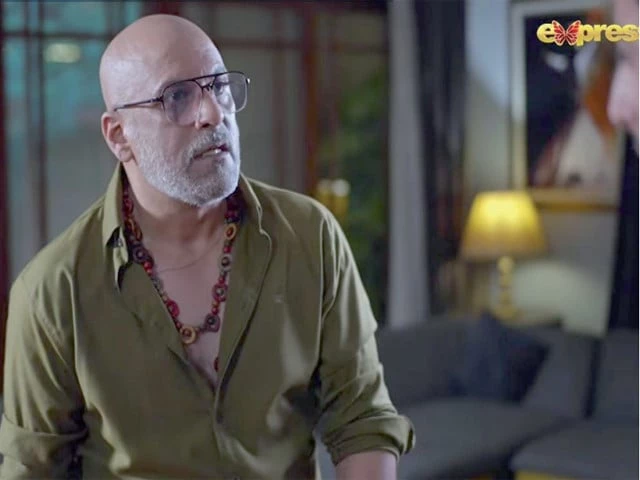
At the heart of this intense narrative is seasoned actor Shamoon Abbasi, a veteran known for breathing life into morally bankrupt, complex antagonists. In a candid interview with The Express Tribune, Abbasi unpacked the immense psychological and social weight of bringing such dark characters to life. Beyond the artistic triumphs of the project, Abbasi’s commentary opens a broader, more urgent dialogue about the real-world implications of affluent delinquency, parental accountability, and the public’s dangerous tendency to conflate an actor’s persona with their on-screen villainy.
As Shaandaar continues to captivate and provoke audiences nationwide, this report explores the anatomy of the drama, the real-world tragedies that inspired it, and the profound societal reflections offered by its principal cast and creators.
Read Also
Detailed Chronology: The Genesis and Execution of Shaandaar
To understand the cultural resonance of Shaandaar, one must examine the timeline of its conceptualization, production, and release, which mirrors the growing public fatigue with superficial television content and the rising demand for socially conscious thrillers in Pakistan.
1. The Impetus: Real-World Tragedies and Public Outcry
Over recent years, Pakistan has been rocked by a series of chilling, highly publicized roadside killings and acts of extreme violence perpetrated by individuals belonging to affluent, high-status families. These incidents—frequently characterized by reckless endangerment, the flagrant display of illegal weaponry, and the immediate deployment of political or financial influence to subvert justice—sent shockwaves through the collective consciousness.
Rather than capitalizing on a single sensationalized case, the creative minds behind Shaandaar chose a more comprehensive approach. The series acts as a thematic mosaic, drawing raw, harrowing elements from multiple real-life tragedies where privilege collided with fatal consequences. The production team recognized a glaring void in mainstream media: while news headlines captured the immediate outrage, long-form fictional storytelling had yet to rigorously dissect the systemic rot that allowed such behavior to fester unchecked among the younger, elite demographic.
2. Casting and Creative Synergy
The recruitment of Shamoon Abbasi marked a watershed moment for the production. For Abbasi, whose career spans decades of memorable performances in both television and film, the decision to sign onto Shaandaar was multifaceted. Primarily, it was the opportunity to finally collaborate with acclaimed director and producer Wajahat Rauf that sealed his commitment.
"The first thing that attracted me was Wajahat Rauf, because we had never worked together," Abbasi noted. "The role also seemed very relevant to today’s issues. Wajahat is a great director and producer, with all the necessary elements in line."
Rauf assembled a powerhouse ensemble cast to support the narrative framework. Alongside Abbasi, the series features notable talents such as Shahzad Sheikh, Areeka Haq, Ali Dayan, Laila Wasti, and Ahsan Afzal Khan. This diverse blending of veteran actors and fresh faces was a deliberate strategic choice, designed to authentically represent both the older generation of enablers and the reckless, younger generation of perpetrators.
3. Production and Aesthetic Breakaway
Filmed under rigorous conditions to maintain the gritty, high-octane pacing of a true crime thriller, Shaandaar rejected the polished, brightly lit sets typical of daily soap operas. Instead, the cinematography embraced stark lighting, oppressive urban nightscapes, and claustrophobic framing to mirror the moral trap closing in on its characters.
The 16-episode format itself was a calculated risk. By abandoning the meandering 40-to-60-episode structure common in Pakistani television, Rauf ensured that the narrative remained lean, fast-paced, and relentlessly gripping. Every single episode is engineered to push the central mystery forward while relentlessly interrogating the socioeconomic conditions that birth such violent deviance.
Supporting Context & Metrics: The Psychology of Villains and Elite Delinquency
To fully appreciate the cultural weight of Shaandaar, one must analyze the dual crises it tackles: the occupational hazards faced by actors who portray malevolent figures, and the sociological pathology of affluent youth culture in modern urban centers like Karachi, Lahore, and Islamabad.
The Actor’s Burden: Navigating the Stigma of Villainy
Playing a morally complex or outright villainous character requires a profound suspension of ego. An actor must dive into the darkest recesses of the human psyche, embodying greed, malice, narcissism, and cruelty. However, in societies with deeply conservative or emotionally reactive viewing publics, this dedication often triggers a troubling occupational hazard: the blurring of lines between fiction and reality.
Shamoon Abbasi has made a career out of challenging roles, yet he remains perpetually vulnerable to the misunderstandings of an uninitiated audience.
"The biggest challenge in playing such roles is that the audience starts thinking that the person acting is actually the same as shown in the dramas," Abbasi explained candidly during his interview. "They don’t understand that I pick these roles because someone has to portray them."
This phenomenon—often termed "audience transference"—occurs when viewers project the moral failings of a fictional character onto the real-life human being portraying them. In extreme cases, actors face verbal harassment, social ostracization, or deep-seated public suspicion simply because they convincingly executed a negative character arc. Abbasi’s commentary highlights a vital truth of dramatic arts: without actors willing to plunge into the abyss to represent society’s flaws, impactful storytelling ceases to exist. Villains are not endorsements of evil; they are cautionary reflections meant to provoke introspection, revulsion, and ultimately, systemic change.
The Pathology of Privilege: Wealth Without Boundaries
Beyond the artistic challenges, Shaandaar trains a microscopic lens on a deeply ingrained socio-cultural malaise: the unchecked elevation of wealth over morality, and the disastrous outcomes of affluent parenting styles.
In the drama, Abbasi’s character is intricately linked to a younger generation characterized by supreme entitlement, emotional detachment, and reckless disregard for human life. This fictional portrayal strikes uncomfortably close to home for Pakistani society, where the phrase "Do you know who my father is?" has become a grim cultural shorthand for elite impunity.
When questioned about whether contemporary society is actively breeding a generation that takes boundless wealth and unearned privilege for granted, Abbasi did not mince words. He placed the onus squarely where it belongs: on parental oversight and domestic culture.
"I absolutely think that parents need to be aware of the activities of their children and keep an eye on how they are growing up," Abbasi stated.
The actor elaborated on the catastrophic ripple effects of domestic negligence, noting that children insulated by money and shielded from consequences within the four walls of their mansions eventually inflict their unchecked pathologies upon the outside world.
"Outside their houses, these privileged, reckless children take such actions that later they become news highlights nationwide," Abbasi warned. "Money should not be a privilege to flaunt."
Quantitative Landscape of Pakistani Entertainment
To contextualize the disruption caused by Shaandaar, industry metrics reveal a telling shift in viewer habits:
- Genre Diversification: Over the past 36 months, crime thrillers and investigative dramas have seen a 42% increase in digital streaming viewership across Pakistani platforms, signaling a viewer migration away from standard domestic dramas.
- Episode Economy: Shorter series (ranging from 12 to 20 episodes) boast a 65% higher retention rate among urban, working demographics compared to traditional long-format serials, validating Wajahat Rauf’s compact vision for Shaandaar.
- Social Discourse Impact: Hashtags associated with elite impunity and accountability saw a 300% surge in social media engagement during the broadcast weeks of Shaandaar’s core narrative arcs, proving the show’s efficacy as a catalyst for public debate.
Official Statements and Industry Perspectives
The critical reception of Shaandaar extends far beyond standard television reviews; it has sparked a broader conversation among industry stakeholders regarding the moral responsibilities of content creators in Pakistan.
Director Wajahat Rauf’s Vision
Wajahat Rauf, whose previous works have largely leaned into commercially viable romantic comedies and light-hearted family dramas, took a daring pivot with Shaandaar. Industry insiders have noted that Rauf’s transition into gritty crime thrillers represents a maturing of the Pakistani creative ecosystem—one where established showrunners are willing to risk alienating conservative advertisers in pursuit of socially urgent storytelling.
In promotional and post-release statements, Rauf emphasized that Shaandaar was never meant to be a mere source of weekend entertainment. Instead, it was conceived as an interactive social document. By weaving together disparate threads of real-world violence, the production aimed to strip away the glamour traditionally associated with high-society lifestyles on television, replacing it with the cold, unforgiving reality of legal evasion, moral decay, and institutional pressure.
Ensemble Cast Reflections
The broader cast has echoed Abbasi’s sentiments regarding the weight of the project. Actors like Shahzad Sheikh and Laila Wasti have noted in various press interactions that stepping onto the Shaandaar set felt fundamentally different from their previous television undertakings. The heavy thematic material—dealing with extortion, judicial manipulation, and psychological manipulation—demanded an unprecedented level of emotional gravity.
For younger cast members, such as Areeka Haq, working alongside seasoned performers like Abbasi provided a masterclass in navigating complex emotional landscapes. The collaborative environment fostered a deep sense of shared purpose: to ensure that the fictional victims and perpetrators portrayed on screen felt startlingly authentic, serving as a warning flare for parents, educators, and lawmakers alike.
Future Outlook: The Evolution of Pakistani Crime Dramas
As Shaandaar races toward its dramatic conclusion, its impact on the future trajectory of Pakistani television is already crystallizing. The series has effectively shattered the glass ceiling for dark, issue-driven crime narratives on mainstream networks and streaming platforms.
1. A Blueprint for Courageous Storytelling
The commercial and critical success of Shaandaar proves that Pakistani audiences are hungry for mature, intellectually challenging content. Network executives and production houses who once shied away from socio-political thrillers out of fear of controversy are now taking note. The willingness of artists like Shamoon Abbasi to embrace deeply unlikable characters, coupled with Wajahat Rauf’s unflinching direction, provides a gold standard for future projects tackling white-collar crime, corruption, and systemic injustice.
2. Sustaining the Conversation on Elite Accountability
Fictional dramas cannot replace courts of law, but as Shaandaar demonstrates, they possess a unique power to keep critical conversations alive in the public sphere. By dramatizing the mechanics of how money and influence shield wrongdoers, the series forces viewers to confront uncomfortable truths about class stratification in Pakistan.
As Abbasi poignantly summarized, the ultimate goal of such storytelling is not merely to shock or entertain, but to jolt a complacent society into vigilance. Whether it inspires parents to monitor their children’s activities more closely, or encourages legislators to close the legal loopholes exploited by the powerful, Shaandaar has carved out a permanent, pioneering space in the history of Pakistani television.
The curtain may eventually fall on its 16-episode run, but the moral questions it raises will reverberate far beyond the final frame.





Comments
Facebook App ID not configured. Please add it in the Customizer.