
Executive Overview
The late 2026 release of Amazon’s 13th-generation Kindle Paperwhite has ignited a fierce debate within the digital reading community. Marketed as the definitive mainstream e-reader for books, graphic novels, and manga, the new device arrives with a slimmed-down profile, a revamped internal architecture designed to comply with evolving environmental regulations, and a collection of controversial artificial intelligence features.
Yet, beneath its sleek 6.8 mm chassis lies a complicated value proposition. Priced at $199 USD—a notable 25.1% price jump over its $159 predecessor—the 13th-generation Paperwhite forces consumers to weigh minor hardware refinements and regulatory compliance against a steeper financial barrier to entry and the continued absence of basic in-box accessories like a charging cable. While newcomers to the ecosystem will find a robust, highly polished e-reading companion, veteran Kindle users may question whether this iteration constitutes genuine progress or merely a repackaged product engineered to extract higher margins in a mature market.
Detailed Chronology & Hardware Evolution
To understand the trajectory of Amazon’s flagship e-reader line, one must examine the incremental changes leading up to this latest iteration. Over successive generations, the Paperwhite brand has transitioned from a niche monochrome display accessory into a sophisticated multimedia hub. The 13th-generation model introduces several structural and mechanical departures from its 2024 predecessor.
Read Also
Physical Redesign and Environmental Compliance
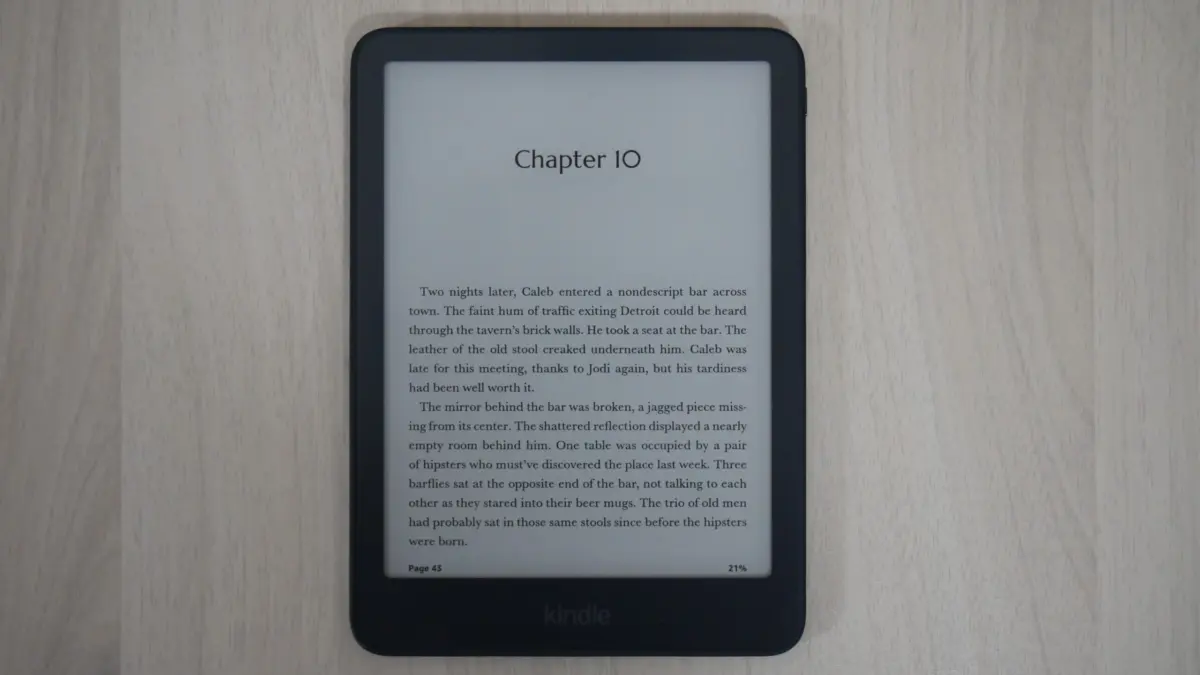
The most immediate physical adjustment is the reduction in thickness. Measuring a mere 6.8 mm (down from previous iterations), the device features flat sides, rounded corners, and a relocated power button situated cleanly on the top-right corner. This subtle shift improves ergonomics for single-handed reading, though the narrower bezels occasionally introduce the challenge of accidental thumb-taps on the touchscreen—a hurdle Amazon attempts to mitigate via a newly introduced software toggle that temporarily deactivates touch inputs.

More significantly, the 2026 model was engineered to comply with stringent European Union regulations taking effect around this period. For the first time in modern Kindle history, the internal battery is no longer permanently sealed within a glued chassis. Instead, it rests behind a removable back panel secured by accessible screws, marking a watershed moment for consumer electronics repairability within the e-reader space. Despite this modularity, the device retains its IPX8 waterproof rating, ensuring complete protection against accidental submersion during poolside or bathside reading.
Display and Under-the-Hood Enhancements
At the heart of the device is a 7-inch E Ink Carta 1300 display boasting a resolution of 1264 × 1680 at 300 PPI. The implementation of an oxide-thin film transistor (TFT) backplane yields deeper, more authentic blacks, sharper contrast ratios, and a roughly 25% to 30% improvement in page-turn speed compared to past generations.
The screen is illuminated by an adjustable warm front light that maxes out at approximately 24 nits, allowing for strain-free reading in pitch-black environments or under direct sunlight. Under the hood, the standard variant ships with 16 GB of local storage, built-in Wi-Fi, and Bluetooth 5.1 compatibility—the latter serving as the wireless conduit for Audible audiobook playback. Powering the entire system is a remarkably efficient Linux-based operating system, engineered to maximize the inherently low-power nature of E Ink technology. Because electronic paper draws power solely during state changes (such as navigating menus or turning pages), the hardware easily achieves up to 12 weeks of battery life under normal reading conditions.
Supporting Context & Metrics: Software, Ecosystem, and AI Integration
Hardware is only half the equation; the Kindle experience relies heavily on Amazon’s sweeping software ecosystem and proprietary backend services.

The Linux Foundation and User Interface
Amazon’s steadfast reliance on a custom Linux kernel remains a masterclass in efficiency. By stripping away extraneous background processes, the operating system ensures optimal stability while preserving battery reserves. The user interface remains deliberately minimalist:
- Home Screen: Displays the three most recently purchased or actively read titles.
- Universal Search Bar: Positioned prominently at the top to query local libraries or the global Amazon storefront.
- Quick Settings Dropdown: Offers rapid toggling for Wi-Fi, airplane mode, brightness levels, and synchronization.
- Navigation Dock: Features persistent "Home" and "Library" tabs flanking a small thumbnail of the active book cover for instant resumption of reading sessions.
The Amazon Bookstore and Audio Integration
Amazon continues to maintain what is widely regarded as the most comprehensive digital bookstore in the world. Backed by direct publishing contracts with major international publishing houses, indie imprints, and self-published authors via Kindle Direct Publishing (KDP), the platform outpaces rivals like Barnes & Noble’s Nook or Kobo in raw catalog depth. Subscription services such as Kindle Unlimited and Kindle Kids+ further expand its utility, offering millions of titles and family-friendly content under consolidated monthly fees.
Complementing text is the deep integration of Audible. With Bluetooth 5.1 enabled, users can seamlessly pair wireless headphones or speakers to stream audiobooks. The audiobook interface mirrors the polished mobile applications found on Android and iOS, granting users granular control over playback speeds, chapter navigation, and bookmarks.
The Artificial Intelligence Controvery
Perhaps the most polarizing addition to the 13th-generation Paperwhite is the introduction of on-device generative AI features. Amazon has rolled out three primary tools:

- Ask This Book: An interactive query tool that allows users to ask specific questions regarding plot points, characters, or context directly drawn from the text of their current read.
- Story So Far: Generates customized, spoiler-free plot summaries calculated up to the reader’s exact page position.
- Kindle Recaps: Provides broader plot refreshers and character arc tracking across individual novels or multi-book series.
While early testing indicates these features can be helpful for readers diving into dense historical fiction or returning to sprawling fantasy epics after a long hiatus, reception has been sharply divided. Critics and literary advocacy groups have raised serious ethical questions regarding transparency, intellectual property consent, and the conspicuous absence of an opt-out mechanism for authors and publishers whose copyrighted works are parsed by these algorithms.
Official Statements and Industry Reception
The commercial rollout of the 13th-generation Kindle Paperwhite has triggered a vigorous debate among technology analysts and consumer advocates alike.
Industry analysts point out that Amazon’s hardware strategy has shifted toward iterative refinement rather than radical reinvention. The inclusion of user-replaceable batteries to satisfy EU mandates is viewed as a monumental victory for the "Right to Repair" movement, signaling that global regulatory pressures can successfully force tech giants to alter monolithic product designs.
Conversely, consumer advocacy outlets and prominent e-reader reviewers have leveled sharp criticisms at the device’s economic value. The 25.1% price hike—moving the baseline model from $159 to $199 USD—has been scrutinized, particularly given that the package omits a dedicated USB charging cable. Critics argue that charging a premium price while stripping away basic accessories represents a regression in consumer value, especially when previous-generation devices frequently receive the same core firmware updates.

Furthermore, the introduction of AI-driven reading assistants without adequate consultation or compensation frameworks for creators has cast a long shadow over the device’s software ambitions, transforming what should have been a universally praised hardware refresh into a flashpoint for digital copyright discussions.
Future Outlook
As the e-reader market matures, the trajectory of Amazon’s Kindle ecosystem hangs in a delicate balance between hardware innovation, regulatory adaptation, and software monetization.
The 13th-generation Paperwhite demonstrates that physical design elements—such as reduced thickness, improved contrast ratios, and modular repairability—will dictate the baseline expectations for consumer electronics moving forward. However, the friction caused by rising price points and controversial AI integrations suggests that hardware polish alone may no longer insulate manufacturers from consumer pushback.
For individuals completely new to the digital reading ecosystem, the 2026 Paperwhite remains a formidable, highly capable entry point that delivers an exceptional reading experience across standard text, graphic novels, and audiobooks. Yet, for existing owners of 11th- or 12th-generation hardware, the marginal improvements in page-turn speed and structural design offer little compelling incentive to upgrade, signaling that Amazon must deliver more substantive innovations if it hopes to captivate its loyal base in the years to come.





Comments
Facebook App ID not configured. Please add it in the Customizer.