
Executive Overview
The publishing landscape of 2026 is experiencing an unprecedented golden age within the Science Fiction and Fantasy (SFF) sectors. Driven by a volatile and vibrant mix of digital-native subgenres, shifting consumer demographics, and a relentless appetite for physical book ornamentation, the market has shattered historical volume and revenue ceilings. According to comprehensive market data released by The Bookseller and NielsenIQ BookData, UK SFF print sales alone skyrocketed past the eight-million-copy milestone during the first 44 weeks of 2026. This represents a striking 14.4% surge in sheer volume and an even more impressive 21.1% leap in total market value compared to previous cycles.
At the heart of this financial and cultural windfall are three distinct engines of growth: the unyielding dominion of "Romantasy" (romantic fantasy), the explosive mainstream graduation of LitRPG (Literary Role-Playing Games), and a collector-driven craze for deluxe, aesthetically elevated hardback editions. Far from being isolated trends, these movements have coalesced to redefine how stories are built, distributed, marketed, and consumed. While traditional publishing giants scramble to acquire indie web-serials and cater to digitally organized fandoms, the boundary between online self-publishing and high-street prominence has effectively dissolved. This report examines the driving forces behind the 2026 SFF boom, the structural changes within the industry, the cultural friction surrounding newly mainstream tropes, and what this explosive growth portends for the future of speculative fiction.
Detailed Chronology: The Evolution of SFF’s Digital-to-Physical Pipeline
To understand how SFF achieved its record-breaking status in 2026, one must examine the multi-year pipeline that transformed internet-first publishing into dominant physical media.
Read Also
Phase 1: The Web-Serial Incubation (Late 2010s – Early 2023)
Long before hitting traditional bookstore tables, the foundations of modern SFF’s high-growth subgenres were forged on serialized fiction platforms such as Royal Road, Wattpad, and Kindle Unlimited. Writers operating outside traditional gatekeepers began publishing chapters weekly, building real-time feedback loops with dedicated readers. LitRPG—stories integrating explicit leveling systems, character statistics, and video game mechanics—incubated here. Authors tested narrative frameworks that mirrored role-playing games, appealing to an underserved demographic of gamers and speculative fiction enthusiasts. Concurrently, romance-heavy fantasy narratives gained immense traction through online reading communities, slowly building a latent, highly mobilized readership.
Phase 2: The Direct-to-Consumer and Kickstarter Awakening (2023 – 2024)
As traditional publishers initially underestimated the commercial viability of these digital niches, independent authors took matters into their own hands. Crowdfunding campaigns on platforms like Kickstarter shattered publishing records, proving that readers were willing to pay premium prices for physical books. Special editions featuring sprayed edges, custom endpapers, and foiled covers became the gold standard for independent and self-published hits. Traditional publishing houses took notice of these massive direct-to-consumer revenue streams and began aggressively scouting web-novel platforms for breakout talent.
Phase 3: The Mainstream Takeover and Hardback Dominance (2025 – 2026)
By 2026, the migration of web-serials to traditional print imprints reached a fever pitch. Major houses established dedicated imprints or partnered with digital platforms to snap up serialized giants. Concurrently, hardbacks claimed a staggering 51.6% of total category revenue for SFF in 2026. This proves that contemporary readers are not merely consuming stories; they are actively investing in physical artifacts. The convergence of digital-first community building with high-end manufacturing resulted in the blockbuster numbers recorded by NielsenIQ BookData this year.
Supporting Context & Metrics: Breaking Down the 2026 Data
The quantitative data emerging from the 2026 publishing cycle paints a vivid picture of a market undergoing structural transformation. The SFF category is no longer a steady, predictable contributor to publishing revenues; it is an aggressive market leader.
The Numbers at a Glance
- Volume Growth: UK SFF print sales surpassed 8 million copies in the first 44 weeks of 2026, marking a 14.4% increase in volume year-over-year.
- Value Growth: Total market value grew by an astonishing 21.1%, outpacing volume growth and indicating higher price points per transaction.
- Format Dominance: Hardbacks accounted for 51.6% of total category revenue, heavily buoyed by the demand for deluxe, collectible editions.
The Deluxe Edition Phenomenon
The dominance of hardback sales is intrinsically linked to the collector culture that has swept through SFF fandoms. Modern readers view bookshelves not just as storage spaces, but as personal galleries. Publishers have responded by treating books as luxury consumer goods. Features that were once exclusive to small-press or independent binderies—such as digitally sprayed or stenciled page edges, debossed cloth covers, metallic foil stampings, and exclusive bonus author content—have become standard selling points for major releases. This elevation of the physical book has successfully insulated physical retail against digital reader cannibalization, as e-books and audiobooks serve different consumption moments while physical copies fulfill the desire for ownership and display.
The Titans of the Trend: Romantasy and LitRPG
Two distinct creative movements are anchoring this financial explosion: the enduring supremacy of Romantasy and the disruptive arrival of LitRPG.
Romantasy as the Ultimate Gateway Drug
Romance-infused fantasy—colloquially termed "Romantasy"—continues to anchor bestseller charts globally. Heavyweights such as Sarah J. Maas, with works like A Court of Splintered Harmony, and Rebecca Yarros, with titles like Threshing Day, command massive, fiercely loyal audiences. However, the cultural footprint of Romantasy extends far beyond its direct sales.
Industry editors and literary agents note that Romantasy acts as a powerful gateway drug for the broader SFF ecosystem. Readers drawn in by character-driven romantic arcs within fantastical settings frequently cross over into traditional epic fantasy, space opera, and dense backlist titles. This funnel effect has revitalized older fantasy catalogues and driven sustained engagement across the entire genre category.

LitRPG: From Gaming Subculture to Publishing Mainstay
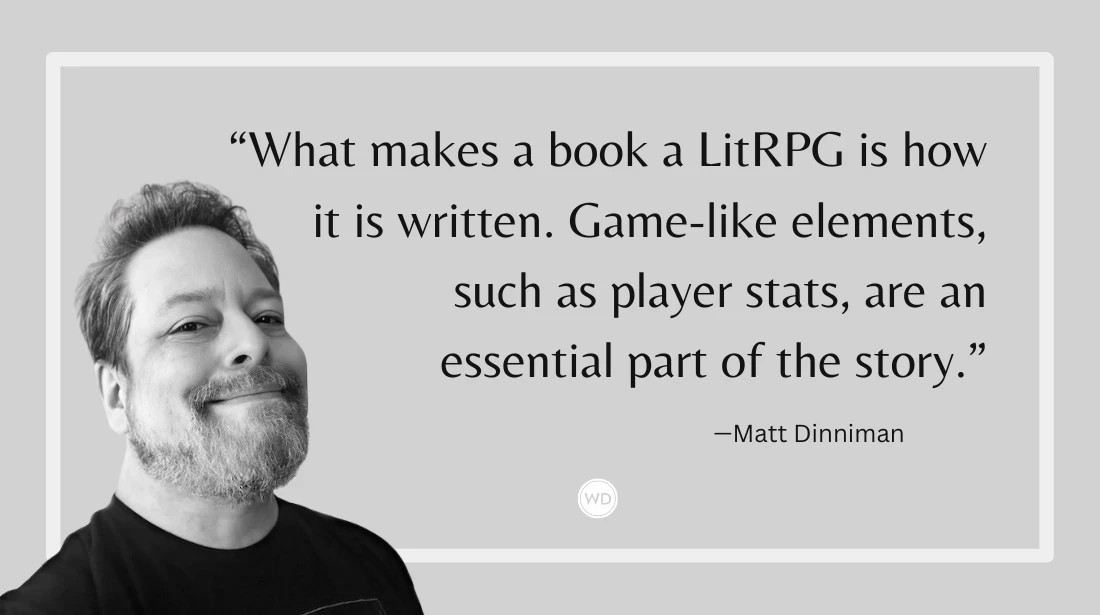
If Romantasy provides the emotional heartbeat of the 2026 market, LitRPG provides the structural disruption. Defined by its integration of visible video game mechanics—such as experience points (XP), skill trees, inventory management, and stat screens—LitRPG has shaken off its reputation as an ultra-niche, self-published novelty.
The movement has been spearheaded by creators like Matt Dinniman, whose darkly comedic, high-stakes series Dungeon Crawler Carl generated an estimated £3.5 million in 2026 alone. What started as an experiment on serialization sites like Royal Road has translated into mainstream commercial success. Major imprints, including Tor, have begun snapping up these properties. Furthermore, foundational web-serials like The Wandering Inn have made successful leaps into traditional print, while audiobooks featuring LitRPG and progression fantasy mechanics frequently dominate digital listening charts.
Hybrid Subgenres and Cultural Friction
As with any rapid cultural shift, the mainstreaming of new subgenres has generated debate, hybridization, and pushback within the literary community.
The Nuances of Progression Fantasy
Complicating clean categorization is the blurred line between LitRPG and adjacent subgenres. Many works share the core DNA of character growth and escalating power levels without relying on explicit, game-like stat screens. Authors like Will Wight champion "progression fantasy"—a style focused on characters training and growing stronger over time, rooted in older wuxia and cultivation traditions. While purists distinguish progression fantasy from traditional LitRPG, casual retail channels often lump them together, creating a rich ecosystem of power-scaling narratives.
The Rise of LitRPG Romantasy and Cozy Hybrids
Creativity thrives at the intersections of these movements, giving rise to unexpected hybrid niches. "LitRPG Romantasy" is emerging as a distinct micro-genre, blending progression mechanics and status updates with high-stakes romantic tension.
Simultaneously, cozy fantasy has found fertile ground by cross-pollinating with game-mechanic tropes. A prime example is Mystic Neptune’s I Ran Away to Evil, a whimsical, stat-light progression fantasy that merges isekai tropes, romantic comedy, and cozy aesthetics. Following a protagonist juggling life as a warrior-princess, a baker, and eventually a bridge troll under the guidance of a soothsayer, these cozy-adjacent hybrids prove that game mechanics do not always require grimdark, high-fatality dungeon crawls to succeed.
Cultural Friction and Reader Pushback
Not all traditional SFF readers are celebrating the shift. On social media literary spaces (BookTok, Bookstagram, and Reddit’s r/fantasy), opinions are deeply divided. While many champion the democratization of publishing—where independent authors can bypass traditional gatekeepers and find multi-million-pound success—traditionalists often express dismay at the proliferation of video game tropes in literature. Critics argue that stat blocks, numerical leveling, and meta-textual gaming references pull them out of the narrative immersion, leading some to dismiss the movement as a passing fad.
Future Outlook: Where Goes SFF from Here?
As the industry looks past the milestone-setting metrics of 2026, the question on every publisher’s mind is sustainability. Can SFF maintain this blistering pace of growth, or are we witnessing the peak of a speculative bubble?
Industry analysts suggest that the structural changes underway are likely permanent, even if growth rates moderate. The integration of digital serialization platforms into the traditional publishing scouting pipeline has permanently altered how books are vetted and de-risked. Publishers no longer have to guess what readers want; they can observe live reader retention metrics on web-novel platforms before offering a traditional book deal.
Furthermore, the consumer demand for luxury physical editions shows no signs of abating. As long as publishers continue to innovate with tactile, artistic packaging, collectors will keep buying hardbacks.
Ultimately, the 2026 SFF boom demonstrates that the reading public is hungry for high-engagement, emotionally resonant, and structurally inventive storytelling. Whether through the sweeping romantic stakes of Romantasy, the dopamine-driven progression curves of LitRPG, or the comforting escapism of cozy hybrids, speculative fiction has proven itself to be the most dynamic and commercially vital sector of modern publishing.



Comments
Facebook App ID not configured. Please add it in the Customizer.