
Executive Overview
At its most fundamental level, a story is a narrative architecture composed of a beginning, a middle, and an end. While the beginning poses a foundational question and the middle serves as the psychological crucible exploring the drama of that inquiry, the ending provides the definitive answer. Yet, modern entertainment culture—dominated by perpetual franchises, endless television series, and serialized universes—increasingly champions the "endless" story.
When a narrative refuses to conclude, it bypasses the very mechanism that grants fiction its profound psychological power: transformation. Stripped of endings, stories devolve from archetypal experiences of catharsis and initiation into cyclical churns of mere entertainment. This article examines the vital psychological necessity of the story ending, investigating how narrative closures mirror life-cycle transitions, help audiences safely process "ego death," and why contemporary media’s aversion to finality risks blunting fiction’s deepest human purpose.

Detailed Chronology: The Evolution and Erosion of Narrative Closure
To understand the crisis of the modern ending, one must trace the evolutionary trajectory of narrative structure from ancient oral traditions to contemporary streaming culture.
Read Also
The Classical and Mythological Paradigm
Historically, human storytelling was inextricably linked to cyclical frameworks. Ancient myths, seasonal rituals, and oral epics operated on the principle of the ouroboros—the snake consuming its tail, symbolizing life, death, and rebirth. In these foundational texts, narratives possessed hard boundaries. The hero embarked on a journey, underwent an inevitable transformation, and returned home fundamentally changed. The ending was not merely a mechanical stop sign; it was the capstone of a complete symbolic conversation with humanity’s deepest psychological truths.

The Rise of the Serialized Novel (19th Century)
The nineteenth century introduced serialized fiction—popularized by authors like Charles Dickens—where stories were published in installments across magazines and newspapers. While this era birthed the precursor to modern episodic entertainment, these serials still fundamentally adhered to overarching structural arcs. Even when prolonged, the narrative ultimately converged toward a definitive, thematic climax that resolved both the external plot and the internal character arc.
The Modern Franchise Era and the "Endless" Pivot
The late twentieth and early twenty-first centuries witnessed a seismic shift driven by commercial imperatives. The birth of the modern blockbuster franchise, long-running cable television, and shared cinematic universes fundamentally altered the economic incentives of storytelling. Rather than cultivating singular, transformative arcs with definitive endpoints, studios and creators discovered immense financial viability in perpetual engagement.

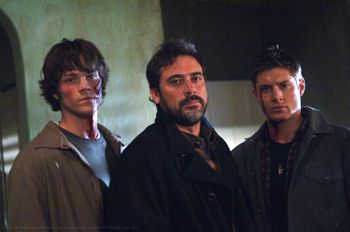
Stories were deliberately constructed to bleed into sequels, spin-offs, and soft reboots. While occasional milestones—such as Marvel Studios’ Avengers: Endgame (2019) or the conceptual conclusion of Eric Kripke’s initial five-season arc for Supernatural—demonstrated that long-form franchises could successfully deliver cohesive thematic closures, the broader industry trend has favored open-ended loops. This modern push toward endlessness, while lucrative, systematically subverts the structural integrity required for genuine narrative transformation.
Supporting Context & Metrics: The Psychology of the Ending
To evaluate the impact of narrative closure, literary theorists and psychologists examine how stories function not just as entertainment vehicles, but as symbolic frameworks for meaning.

The Ending is in the Beginning
A core tenet of master storytelling is that the ending is inherently bound to the beginning. Through sophisticated narrative techniques like foreshadowing or chiastic "ring" structures—where the two halves of a story mirror each other—the opening premise and the closing climax form a closed circuit of meaning.
- The Inevitable vs. The Surprising: In masterpieces like J.R.R. Tolkien’s The Lord of the Rings: The Return of the King, Frodo’s ultimate failure to willingly destroy the Ring feels both startlingly tragic and entirely inevitable, perfectly encapsulating the story’s thematic exploration of power and grace. Conversely, a twist ending like that of The Sixth Sense (1999) retroactively recontextualizes every preceding scene, forcing the audience to reinterpret the narrative’s entire thematic landscape.
- The Shape of Transformation: Without an ending, a story remains an unfinished equation. The climax does not merely resolve the physical conflict between protagonist and antagonist; it serves as a commentary on the story’s underlying theme.
The Parallel of Generational and Psychological Cycles
In generational theory—such as the frameworks explored by historian Neil Howe in The Fourth Turning Is Here—society itself moves through recurring historical cycles characterized by crises, transformations, and renewals. Howe’s theories posit that societies inevitably face systemic upheavals when outdated structures collapse.
Narrative endings provide human psychology with a safe, simulated environment to practice these exact cycles of transformation and "ego death." When audiences witness a character abandon a deeply held internal lie to embrace a thematic truth, the viewer undergoes a micro-dose of psychological catharsis. Depriving audiences of these complete cycles through endless, non-resolving stories risks leaving systemic life-force energy unchaperoned, potentially exacerbating cultural resistance to necessary real-world change.
Official Statements and Expert Perspectives
Industry creators, literary theorists, and cultural analysts increasingly voice concerns regarding the commercial pressures that compromise narrative integrity.

"When story is viewed less as merely an entertainment vehicle and more as a symbolic conversation with the deeper parts of our humanity, this modern impulse toward endless stories suggests we’ve strayed from one of story’s most important psychological functions. Endings complete the transformation that gives the story its meaning."
— K.M. Weiland, Author and Narrative Theorist
Literary critics point out that while long-running television and cinematic universes can foster deep audience loyalty, they frequently suffer from diminishing thematic returns once the core arc is resolved. The continuation of series past their natural thematic expiration dates often results in the dilution—or outright reversal—of character growth.

For instance, cultural commentators noted a stark contrast in major franchise milestones over the last decade. While Avengers: Endgame successfully delivered satisfying closures for foundational characters like Tony Stark, subsequent franchise installments frequently stumbled when they attempted to churn out content without a unified overarching thematic destination, occasionally undermining established character arcs for comedic or commercial expedience.
Future Outlook: Navigating the Craft of Closure
As the entertainment landscape continues to grapple with the tension between commercial longevity and artistic integrity, writers face a critical imperative: mastering the art of the satisfying ending. Crafting an ending that honors both the plot and the psychological arc requires adherence to five foundational principles:

- Connect the Ending to the Beginning: Utilize structural symmetry, such as chiastic plotting, to ensure the inciting incident and the climactic moment speak to the same thematic question.
- Let Meaning Emerge from Consequences: Allow the narrative’s ultimate message to be dictated by the logical and emotional consequences characters face for their choices, rather than forcing artificial authorial statements.
- Complete the Character Transformation: Ensure that the climax resolves not just the external plot, but the internal character arc, fulfilling the promise of growth or tragic realization.
- Honor the Structural Beat of Death and Rebirth: Guide characters through the essential "Dark Night of the Soul" and Third Plot Point, where outdated ego identities are stripped away to make room for thematic truth.
- Have the Courage to End: Whether writing a standalone novel or a sprawling multi-part series, recognize when an arc is thematically complete and resist the commercial temptation to dilute its power through endless extension.
Ultimately, storytellers must remember that the power of fiction relies on its ability to guide audiences through the full circle of transformation. By embracing purposeful, resonant endings, writers can restore narrative to its ancient, transformative function—offering humanity a vital mirror for growth, catharsis, and renewal.





Comments
Facebook App ID not configured. Please add it in the Customizer.