
Executive Overview
The intersection of academic ambition, societal expectation, and unexpected caregiving forms the narrative core of Family Language, the highly anticipated debut literary novel by author, linguist, and academic Nicole Nelson. Set for publication on November 10, 2026, by Melville House—with editorial guidance from Michelle Capone and representation by literary agent Jenna Satterthwaite of Storm Literary—the novel probes deeply into the fault lines of modern professional life and domestic duty.
Nelson, a Bay Area native currently residing in Southern California, brings a unique dual perspective to her fiction. Holding a PhD in linguistics from Rutgers University alongside an MFA from the prestigious Bennington Writing Seminars, Nelson uses her deep technical understanding of language to examine human relationships under acute stress. Family Language follows an academic linguist on the verge of securing tenure whose life is upended overnight following a tragedy that leaves her six-year-old nephew orphaned. Thrust instantly into involuntary motherhood, the protagonist must negotiate not only a sudden and unwanted caregiving role with her professional partner, but also the deeply entrenched cultural norms surrounding gender, sacrifice, and autonomy.
This comprehensive profile explores the genesis of Nelson’s debut, charting its seven-year evolution from a casual character study during her MFA studies to a finely tuned manuscript. Through an in-depth look at her creative process, the rigorous copy-editing phase, her linguistic inspirations, and the broader cultural questions underpinning the novel, this article offers a definitive window into one of 2026’s most compelling literary releases.
Read Also
Detailed Chronology: From MFA Genesis to Melville House
The journey of Family Language from an embryonic concept to a published hardback spans nearly a decade, highlighting the persistence required in contemporary literary fiction.
Phase 1: Inception and Early Experimentation (The MFA Years)
The foundational elements of Family Language began to take shape while Nelson was enrolled in the Bennington Writing Seminars MFA program. Rather than starting with a rigid plot outline, Nelson began by playing with characters—specifically, sketching out a dual-career professional couple navigating the unexpected introduction of a young child into their orderly, ambition-driven lives.
During these early developmental stages, Nelson experimented with narrative point of view. Initially, she drafted sections from the perspective of the six-year-old nephew. While she recalls enjoying the creative challenge of capturing a child’s worldview, she ultimately made the editorial decision to scrap those sections early in the drafting process. She recognized that the emotional engine of the story relied heavily on the interiority of the adult protagonist—specifically her internal friction regarding tenure, autonomy, and involuntary domesticity.
Phase 2: Structural Shifts and Drafting
As the manuscript progressed through successive drafts, it underwent significant structural evolution. Initially written in the third person, the novel found its emotional footing following advice from a trusted beta-reader friend. This peer suggested experimenting with a first-person narrative voice to pull the reader closer to the protagonist’s psychological and emotional struggles.
Though Nelson confesses she initially held an unfounded aversion to writing fiction in the first person, the stylistic shift proved transformative. The first-person perspective lent an urgent, confessional intimacy to the protagonist’s internal monologue, successfully grounding high-level academic concepts in raw, human vulnerability.
Phase 3: The Seven-Year Manuscript Journey
From its initial conception during her MFA studies to the moment it was acquired for publication, the manuscript required approximately seven years of patient revision, workshopping, and refinement. Balancing a rigorous academic background in linguistics with creative writing demands, Nelson relied on disciplined writing habits to carry the project across the finish line.
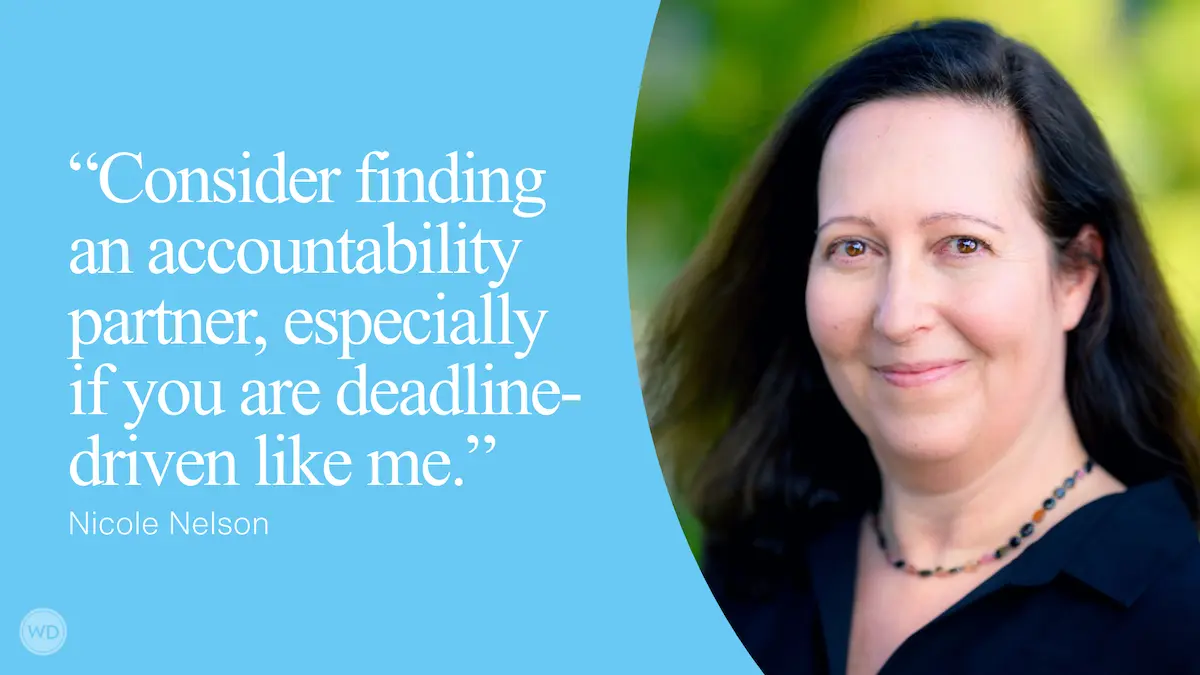
A critical component of this marathon journey was her collaboration with an accountability partner. For years, Nelson and a close peer maintained a disciplined routine: articulating concrete weekly writing goals, celebrating milestones together, and maintaining momentum over Turkish lattes. This practical framework proved essential for a deadline-driven writer navigating the demands of academic and creative pursuits.
Phase 4: Acquisition, Editing, and the Road to Publication
The multi-year drafting phase culminated when the manuscript captured the attention of editor Michelle Capone at Melville House. Following acquisition, the journey from contract to bookstore shelves took approximately one and a half years—a period defined by intensive structural and line-level editing.
Supporting Context & Metrics: The Mechanics of Language and Craft
Family Language is fundamentally a book about communication—not just in the linguistic sense of syntax and phonetics, but in the unspoken contracts and power dynamics that govern domestic partnerships.
The Linguistic Lens
Given Nelson’s credentials as a Rutgers PhD in linguistics, it is unsurprising that the novel weaves linguistic data and theoretical concepts into its narrative fabric. The title itself, Family Language, serves a dual purpose: it references both the idiosyncratic sociolects and communication patterns that develop within family units, and the broader sociolinguistic constructs that dictate how men and women are expected to speak, negotiate, and yield space in professional and domestic spheres.
Nelson hopes that beyond the emotional resonance of the narrative, readers will find themselves captivated by the underlying linguistic data and concepts, potentially sparking a broader curiosity about how language shapes human behavior and societal expectations.
Copy-Editing Revelations
For a writer with a deeply analytical background, the copy-editing phase offered an unexpected masterclass in precision. Working with copy editor Molly Woodward provided both humbling and thrilling learning moments for Nelson, who initially believed her submitted draft was remarkably clean.
Among the primary technical takeaways was mastering the nuanced distinctions between en dashes and em dashes. Furthermore, Woodward’s sharp eye caught several subtle factual and typographical errors that had eluded the author through years of self-editing:
- Tortoise vs. Turtle: Woodward correctly identified a contextual error where Nelson had referred to a specific creature as a "tortoise" when the surrounding narrative context explicitly demanded "turtle."
- The Wookiee Conundrum: In a humorous revelation of a long-standing blind spot, Nelson noted that Woodward caught the spelling of "Wookiee"—pointing out an extra "e" at the end that the author had failed to notice for decades.
Publishing Metrics at a Glance
- Author: Nicole Nelson
- Literary Agent: Jenna Satterthwaite (Storm Literary)
- Publisher: Melville House
- Editor: Michelle Capone
- Release Date: November 10, 2026
- Genre: Literary Fiction
- Primary Format: Hardcover / E-book / Audiobook
Official Statements & Authorial Intent
In discussions surrounding the thematic underpinnings of Family Language, Nelson has been vocal about the cultural double standards that inspired her narrative framework.
Challenging Cultural Double Standards on Caregiving
At the heart of the novel is an exploration of how modern society assesses sacrifice, selfishness, and parental duty along strict gender lines. Nelson points out a pervasive cultural hypocrisy:
"Our culture generally deems a woman who dares to put her needs first ‘selfish.’ A man, on the other hand, is expected to do just that."
This observation serves as the catalyst for the central conflict in Family Language. When a heterosexual couple consisting of two high-achieving career professionals is suddenly handed the responsibility of raising a young boy overnight following a tragic accident, the structural imbalances of their relationship are laid bare. Nelson uses this setup to interrogate urgent questions: What do their negotiations look like under acute pressure? What unspoken expectations immediately rise to the surface?
By stripping away the choice of parenthood—a choice that women are traditionally socialized to embrace unconditionally—Nelson forces her characters to confront the raw mechanics of obligation versus personal autonomy.
Reader Takeaways and Core Objectives
When asked what she ultimately hopes readers will extract from her debut novel, Nelson outlines a dual mission of sociological reflection and intellectual engagement:
- Deconstructing Gender Roles: Readers are encouraged to reflect deeply on internalized societal ideas regarding the distinct responsibilities assigned to motherhood versus fatherhood, the gendered politics of language, and the broader pursuit of domestic and professional equality.
- Appreciating Sociolinguistic Inquiry: Nelson aims to demystify academic linguistics, hoping that audiences will engage with the linguistic concepts embedded in the text and feel inspired to explore the science of language further.
Future Outlook
As the November 10, 2026 publication date approaches, Family Language is positioned to enter the literary landscape as a sharp, timely exploration of contemporary domesticity. In an era where conversations surrounding work-life balance, invisible labor, and the mental load of caregiving dominate cultural discourse, Nicole Nelson’s debut offers a rigorous intellectual and emotional examination of these themes.
Supported by Melville House and guided by the sharp editorial instincts of Michelle Capone, the novel bridges the gap between accessible literary fiction and academic insight. For Nelson, the journey from early MFA workshops and accountability sessions over Turkish lattes to a major book launch underscores the power of perseverance. As readers prepare to open Family Language, they are invited into a meticulously constructed narrative world where every word, dash, and syntactic choice matters—proving that sometimes, the most profound human truths are found by examining the language we use to define our lives.





Comments
Facebook App ID not configured. Please add it in the Customizer.