
Executive Overview
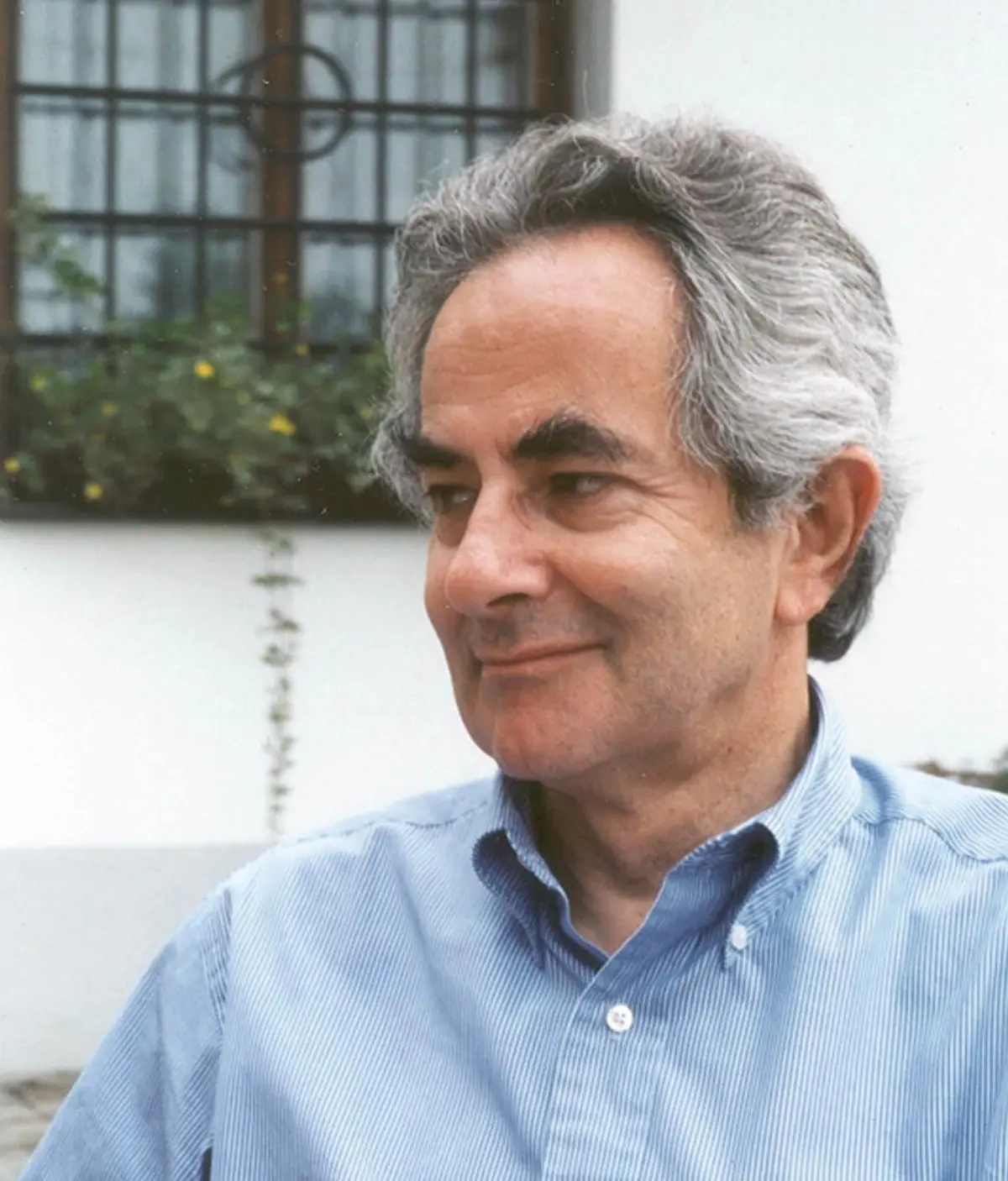
Renowned philosopher and New York University Professor Emeritus Thomas Nagel has been named the recipient of the prestigious 2026 Berggruen Prize for Philosophy & Culture. Bestowed annually by the Berggruen Institute, the $1 million international award honors thinkers whose ideas have profoundly shaped human self-understanding, societal discourse, and the cultural landscape.
Nagel, whose academic career spans decades of groundbreaking inquiry into the nature of consciousness, moral philosophy, political theory, and the philosophy of mind, was lauded by the Institute as "one of the most significant philosophers of our time." The selection committee highlighted not only his rigorous contributions to academic scholarship but also his rare ability to bridge the gap between highly technical philosophical debates and pressing public concerns. From his iconic essay "What Is It Like to Be a Bat?" to his foundational work on moral luck, equality, and political liberalism, Nagel has consistently challenged dogmatic assumptions—whether materialist, utilitarian, or hyper-rationalist—insisting instead on the irreducibility of the subjective human experience.
This comprehensive report examines the announcement of the 2026 Berggruen Prize, details Nagel’s sprawling intellectual legacy, explores the mission and metrics of the Berggruen Institute, and evaluates the broader future outlook for public philosophy in an increasingly technocratic and polarized world.
Read Also
Detailed Chronology: The Evolution of a Philosophical Titan
To understand the weight of Thomas Nagel receiving the 2026 Berggruen Prize, one must trace a career that has spanned more than half a century of shifting paradigms in Western philosophy.
Early Life and Academic Roots
Born in Belgrade, Yugoslavia, in 1937, Nagel immigrated to the United States with his family. He pursued his undergraduate studies at Cornell University, where he earned his Bachelor of Arts in 1958, before undertaking graduate work at the University of Oxford as a Fulbright Scholar under the supervision of the influential moral philosopher R. M. Hare. Nagel subsequently completed his Ph.D. at Harvard University in 1963 under the direction of John Rawls, another titan of twentieth-century political philosophy.
Nagel’s early academic appointments included teaching positions at the University of California, Berkeley, and Princeton University, before he settled at New York University (NYU) in 1980. Alongside fellow luminaries at NYU, Nagel helped cultivate one of the most vibrant philosophy departments in the world, mentoring generations of scholars and cementing New York City as a global hub for philosophical inquiry.
The Consciousness Revolution (1974)
While Nagel had already established a formidable reputation in ethics and political philosophy, his publication of the landmark essay "What Is It Like to Be a Bat?" in 1974 fundamentally reoriented the philosophy of mind. At a time when reductionist and physicalist theories of mind were gaining dominance—proposing that mental states could be fully explained by brain states—Nagel argued fiercely for the irreducibility of subjective consciousness.
Using the bat as a phenomenological case study, Nagel demonstrated that even if we understood everything about a bat’s physical and neurological makeup, we would still be fundamentally incapable of knowing what it feels like to be a bat from the inside. This formulation introduced the concept of "qualia"—the internal, subjective component of sense perceptions—into the center of modern philosophical debate, posing an enduring challenge to purely materialist explanations of the universe.
Expanding into Ethics, Politics, and Public Life
Throughout the 1970s, 1980s, and 1990s, Nagel applied his rigorous analytical framework to the messy realities of human ethics and governance. In works such as The Possibility of Altruism (1970), Mortal Questions (1979), The View from Nowhere (1986), and Equality and Partiality (1991), Nagel explored the perpetual tension between objective, impartial standpoints and subjective, personal perspectives. He famously examined how individuals can hold moral duties to others even within self-interested frameworks, and how societies must balance the demands of egalitarian justice with the legitimate claims of personal autonomy.
In the public sphere, Nagel never shied away from controversy. He became well-known for his accessible yet intellectually uncompromising essays in publications such as The New York Review of Books, tackling topics ranging from the ethics of war and political violence to affirmative action, academic freedom, and the limits of evolutionary psychology.
Supporting Context & Metrics: The Berggruen Prize and Its Legacy
Established in 2016 by philanthropist, investor, and intellectual Nicolas Berggruen, the Berggruen Prize for Philosophy & Culture was designed to correct a perceived modern deficit: the marginalization of deep philosophical thought in an era dominated by rapid technological advancement, fast-paced media, and hyper-specialization.
The Mission of the Berggruen Institute
Headquartered in Los Angeles with global networks, the Berggruen Institute operates as an independent, non-partisan think tank dedicated to developing foundational ideas for a changing world. The Institute focuses on governance, globalization, the future of capitalism, and the philosophical implications of artificial intelligence and biotechnology.
The $1 million Berggruen Prize serves as the cornerstone of this mission. By placing deep philosophical inquiry on center stage, the award seeks to elevate thinkers who provide humanity with the conceptual tools necessary to navigate complex global crises. Nicolas Berggruen noted in the official 2026 press release:
"The Institute is pleased to recognize Thomas Nagel for his interrogation of the human experience and for expanding consciousness and our capacity to understand ourselves."
A Prestigious Roster of Past Laureates
Thomas Nagel joins an elite pantheon of thinkers who have been awarded the Berggruen Prize since its inception. The roll call of previous laureates reflects a commitment to global intellectual diversity, spanning metaphysics, political philosophy, environmental ethics, and cultural critique:
- 2016: Charles Taylor – The Canadian philosopher known for his work on secularism, modernity, and the self.
- 2017: Onora O’Neill – The British philosopher renowned for her work on Kantian ethics, bioethics, and public trust.
- 2018: Martha C. Nussbaum – The American philosopher celebrated for her contributions to virtue ethics, human capabilities, and the emotions.
- 2019: Global Justice Thinkers (awarded collectively to a group of scholars addressing systemic inequality).
- 2020: Paul Farmer – The physician, anthropologist, and humanitarian whose work revolutionized global public health and medical ethics.
- 2021: Daniel Dennett – The philosopher and cognitive scientist known for his contributions to the philosophy of mind and evolutionary biology.
- 2022: Bruno Latour – The influential French sociologist and philosopher of science who interrogated the intersection of humanity, technology, and ecology.
- 2023: Peter Singer – The Australian utilitarian philosopher whose work ignited the modern animal rights and effective altruism movements.
- 2024: Abdullahi Ahmed An-Na’im – The Sudanese-American scholar of law and human rights, focusing on Islam and secular governance.
- 2025: (Institutional transition year / ongoing global nominations).
- 2026: Thomas Nagel – Honored for his definitive contributions to the philosophy of mind, moral philosophy, and political theory.
Official Statements and Institutional Impact
The announcement of the 2026 prize has generated widespread acclaim across the global academic community. Universities, professional philosophical associations, and cultural commentators have united in celebrating Nagel’s recognition.
In an official statement released by New York University, institutional leadership celebrated Nagel’s decades-long tenure at the university. "Tom Nagel represents the absolute highest standard of academic excellence and intellectual fearlessness," the statement noted. "His ability to ask simple, devastatingly difficult questions about consciousness, justice, and morality has permanently altered the landscape of modern philosophy. We are immensely proud to see his lifelong dedication recognized by the Berggruen Institute."
Fellow philosophers have similarly praised the selection. Dr. Elijah Millgram, a prominent contemporary epistemologist, noted:
"Tom Nagel is a philosopher’s philosopher. He has never chased academic fads or ideological trends. Instead, he looks directly at the most recalcitrant problems of human existence—mind, mortality, and justice—and insists on facing their full complexity without oversimplification."
The Berggruen Institute emphasized that Nagel’s work holds unique urgency in the twenty-first century. As artificial intelligence systems rapidly evolve and challenge human definitions of consciousness, agency, and intelligence, Nagel’s lifelong insistence on the reality of subjective experience provides a vital philosophical anchor.
Future Outlook: The Relevance of Nagel’s Thought in a Technocratic Age
As the Berggruen Institute prepares to formally present the $1 million prize to Thomas Nagel in a forthcoming ceremony, the broader philosophical community is reflecting on the enduring legacy of his work and its application to the challenges of the future.
The Challenge of Artificial Intelligence and Consciousness
One of the most profound frontiers where Nagel’s work remains indispensable is the philosophy of artificial intelligence. As tech conglomerates and research laboratories push toward Artificial General Intelligence (AGI), questions surrounding synthetic consciousness, machine sentience, and moral patienthood have moved from science fiction to empirical reality.
Nagel’s foundational insight—that subjective experience ("what it is like") resists reduction to mere functional computation—serves as a crucial philosophical check against uncritical techno-optimism. If consciousness cannot be fully captured by algorithmic processing, then questions regarding whether machines can truly "feel," suffer, or possess rights take on an entirely new dimension. Nagel’s framework reminds contemporary computer scientists and cognitive architects of the deep, irreducible mysteries of subjective awareness.
Public Philosophy in a Polarized World
Furthermore, Nagel’s career exemplifies the vital necessity of public philosophy. In an era defined by hyper-partisanship, epistemic bubbles, and social media soundbites, Nagel’s style of inquiry—characterized by intellectual humility, patient argument, and a willingness to follow an idea wherever it leads, regardless of ideological comfort—stands as a model for public discourse.
The Berggruen Prize does not merely reward academic publication count or citations; it honors thought that matters to society at large. By celebrating Thomas Nagel, the Berggruen Institute is signaling to the world that rigorous, unsentimental, and deeply humanistic reasoning is more crucial than ever for navigating the ethical quagmires of the twenty-first century.
As humanity confronts unprecedented transformations in technology, governance, and culture, the voice of Thomas Nagel—insistences on the reality of the mind, the demands of justice, and the inescapable weight of our subjective humanity—remains an essential guide. The 2026 Berggruen Prize ensures that this monumental contribution to human self-understanding is rightfully enshrined at the very center of global public discourse.





Comments
Facebook App ID not configured. Please add it in the Customizer.