
Executive Overview
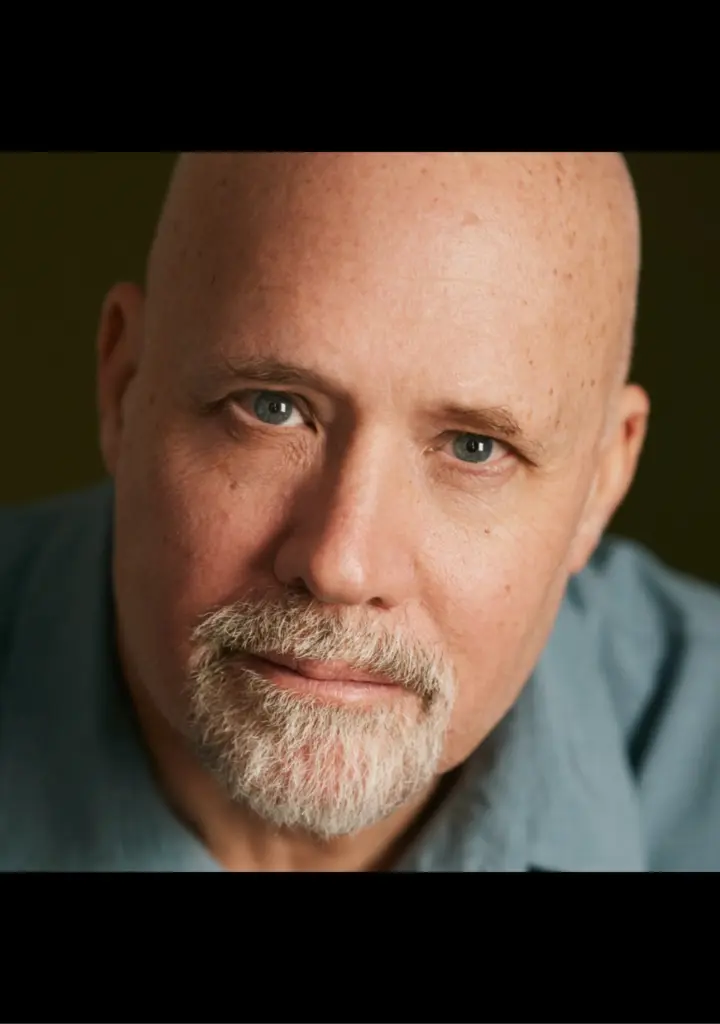
Nearly a decade after his poignant short story “Snow Angels” debuted in the Summer 2015 issue of The Missouri Review, acclaimed author Mitch Wieland is expanding that narrative canvas into a major new novel. Set for publication on November 3—a date that coincides with the thirtieth anniversary of his debut novel, Willy Slater’s Lane—The Ghosts of Okuma has already earned a coveted starred review from Kirkus Reviews and was named a Best Indie Book for March.
Wieland’s third novel is the product of an exhaustive, ten-year gestation period that saw the manuscript grow through thousands of pages of drafts before being meticulously pared down to a razor-sharp 275-page narrative. The book follows Wyatt, an American outsider traveling to Japan to locate his missing sister while carrying the ashes of his late mother, and Yoshimi, a grief-stricken young Japanese woman whose fury channels the real-world disillusionment following the 2011 Tōhoku earthquake, tsunami, and Fukushima Daiichi nuclear disaster.
In this extended interview and literary retrospective, Wieland reflects on the deeply personal and national tragedies that shaped the book, his formative years living and writing in Japan, the mentorship of literary legends like George Garrett, and his profound legacy as the founding editor of The Idaho Review and co-founder of Boise State University’s MFA program.
Read Also
Detailed Chronology: The Evolution of a Decade-Long Project
From Mailbox Mud to The Missouri Review
Wieland’s relationship with The Missouri Review stretches back to his return from Japan in 1991, where he had lived and taught English from 1986 to 1991. Immersing himself in the collections of Raymond Carver and Joy Williams, he frequently noticed The Missouri Review cited at the fore of masterclass short fiction. Upon returning to the United States, it became his very first literary journal subscription.
Years later, while living on an Idaho farm near the Oregon border alongside his wife, Cindy, Wieland experienced a quintessential writerly breakthrough. Following a violent windstorm that scattered his household mail across the fields, Wieland was knee-deep in mud, flood-irrigating crops under a brutal one-hundred-degree sun. Pulling on his gumboots, he unearthed a letter from The Missouri Review editor Speer Morgan.
Morgan’s handwritten note praised a previous submission from Wieland’s story collection God’s Dogs, noting that while the editorial board’s vote had narrowly split, Wieland should immediately send another piece. That subsequent submission was none other than “Snow Angels.” Debuting in the Summer 2015 issue, the story laid the foundational emotional architecture for what would eventually become The Ghosts of Okuma.
The Catalyst of March 2011 and the Road to Publication
Long before “Snow Angels” was conceived, Wieland had spent years drafting an entirely different, 500-page novel about Japan under the guidance of iconic literary agent Wendy Weil, known for representing Alice Walker.
That trajectory shifted fundamentally on March 11, 2011. While watching NHK news—Japan’s public broadcaster—Wieland watched in disbelief as live footage of the tsunami swept ashore. Realizing instantly that he could not write a modern novel about Japan while ignoring an existential national catastrophe, he set aside the massive manuscript entirely.
Bolstered by a National Endowment for the Arts (NEA) grant and a one-year fellowship from Boise State’s Arts and Humanities Institute, Wieland secured the funding and time needed for deep immersion. He traveled to Japan for eight weeks of intensive field research, visiting every primary setting in the novel except the nuclear exclusion zone, which remained heavily restricted just one year after the meltdown. Seeking to master narrative architecture, he also traveled to Los Angeles to study under legendary story consultants Robert McKee and Christopher Vogler.
By 2013 and 2014, “Snow Angels” was completed and published in The Missouri Review. Yet, the road to a book deal remained arduous. The manuscript was completed around 2020 just as pandemic lockdowns paralyzed the publishing industry. In 2021, literary agent Julie Stevenson of Massie and McQuilken took Wieland on. Following rigorous revisions that included cutting an initial 70 pages set in San Diego, the novel was officially sold in 2024. In total, Wieland generated roughly 2,000 pages of preliminary material to sculpt the final 275-page masterpiece.
Supporting Context & Metrics: Cultural Resonance and Sensory Craft
Experiencing Japan Across Two Eras
Wieland’s intimate knowledge of Japan spans two radically different economic epochs. During his initial five-year residency from 1986 to 1991, he witnessed the height of Japan’s hyper-inflated economic bubble, an era when citizens routinely discarded functional household appliances on "Big Trash Day."
Returning in 2012 for research, Wieland observed a profoundly transformed national psychology brought on by decades of recession and the collective trauma of the Fukushima disaster. Secondhand shops had become ubiquitous, and public optimism had been severely tested.
This generational despair deeply informed his characters. Through conversations with his long-time friend Jack Perkins, a university professor in Tokyo, Wieland learned how student aspirations had fundamentally fractured. Confronted by a disaster of unprecedented scale—where an island nation only 150 miles wide came perilously close to widespread radioactive contamination—many young Japanese citizens questioned the point of traditional milestones like marriage, homeownership, and starting families.
The Neuroscience of Sensory Architecture
Wieland credits his mentor, the celebrated writer George Garrett, with instilling a foundational commitment to creating a "sensuously effective texture." Rather than relying on exposition, Wieland utilizes moment-by-moment sensory details designed to bypass the reader’s analytical mind and engage neurological processing centers directly.
"If the subject is reading something like ‘she smelled of clove cigarettes and lavender,’ the brain lights up not only the language processing center but also the olfactory part lights up exactly as if the reader is actually smelling clove cigarettes and lavender."
This commitment to lived experience is mirrored in Tokyo itself—a metropolis of sensory overload. From the quiet rustle of wooden slats clattering against metal grates in the historic Yanaka Cemetery to the intimate hum of mom-and-pop diners in Shinjuku, Wieland’s settings operate as active participants in the narrative rather than static backdrops.
Official Statements & Key Insights
Discussing his approach to translating historical and national trauma into fiction, Wieland emphasizes the distinction between personal and collective grief:
- On Personal Grief: "On the personal side, with Wyatt and his mother, my father had actually passed away when I was still working on the novel. We’ve all experienced grief, and that’s something we can try to understand and tap into."
- On National Trauma and Agency: "Wyatt is an outsider. He’s only there for ten days, and he’s trying to find his sister. He has a clear and visible outer goal… Yoshimi, of course, has the loss of her father; she’s lost her town. I tried to resurrect some of my feelings as a kid when Three Mile Island happened."
- On the Spark of Character Inspiration: Yoshimi’s fierce, uncompromising anger draws direct inspiration from Chim↑Pom, a radical young Tokyo artist collective. Just one month after the Fukushima disaster, the group marched into the exclusion zone wearing hazmat suits and tennis shoes, unfurling a banner depicting the Japanese flag transformed into the international radiation symbol with the smoldering power plant in the background. “When I watched that video for the first time, I thought it was utterly brilliant,” Wieland notes. “The protest and the anger they must have felt is partly what drew me to create the character of Yoshimi.”
Future Outlook: A Literary Legacy at Boise State
As The Ghosts of Okuma prepares to hit shelves on November 3, Wieland is also approaching the twilight of a remarkable academic tenure. Approaching retirement with two years left at Boise State University, he reflects proudly on the literary institution he helped build from the ground up.
Having co-founded Boise State’s MFA Program in Creative Writing and launched The Idaho Review in 1998, Wieland has overseen the cultivation of a nationally recognized literary hub. Over twenty issues, The Idaho Review secured placements in seventeen prize anthologies, including three Best American selections and numerous Pushcart Prizes. Following his retirement from the magazine, leadership was passed to colleague Anna Caritj.
The MFA program’s pedagogical lineage—rooted in George Garrett’s classic workshops—continues to yield extraordinary fruit. Recent graduates have achieved remarkable commercial and critical success:
- Mary Pauline Lowry sold The Roxy Letters to Simon & Schuster.
- Ariel Delgado Dixon secured a two-book deal with Penguin Random House for Sourland and Don’t Say We Didn’t Warn You.
- Jackie Polzin won the Los Angeles Times Book Prize and the Sue Kaufman Prize for First Fiction with her novel Brood.
- Ayotola Tehingbola, a Nigerian lawyer who entered the program without prior formal fiction training, recently graduated and sold her short story collection, Lagos Will Be Hard For You.
For Wieland, seeing the pedagogical techniques passed down from Garrett—who studied alongside Flannery O’Connor—resonate with a new generation of global writers is the ultimate validation of a life dedicated to the written word.
The Ghosts of Okuma arrives on November 3, marking not only a major milestone in contemporary fiction but also thirty years of uninterrupted literary stewardship by one of America’s most dedicated champions of narrative art.



Comments
Facebook App ID not configured. Please add it in the Customizer.