
Executive Overview
More than half a century after it was condemned by critics as a "grand fiesta for sadists and perverts" that "might have been written and filmed by Nero and the Marquis de Sade," Ken Russell’s cinematic masterpiece The Devils has returned to the big screen. The recent, highly publicized theatrical re-release of the film’s uncensored director’s cut has triggered a profound cultural reappraisal. Once buried beneath waves of institutional censorship, studio edits, and moral panic, the film is now being hailed across a surprisingly diverse ideological spectrum as a triumphant blow against censors, prudes, scolds, and authoritarian impulses of all stripes.
Yet, beneath the glossy celebration of artistic freedom and anti-authoritarian bravado lies a deeper, more paradoxical reality. While mainstream critics in outlets ranging from the Los Angeles Times to the National Review have rushed to embrace the film as a prescient parable against overreaching power and state-sponsored corruption, labeling it a necessary warning for our own turbulent political moment, a more rigorous critique reveals a different narrative. The Devils is not merely a neutral historical cautionary tale about the dangers of church-state tyranny. Rather, it functions as a liturgical text for secular liberalism itself—a vibrant, provocative ritual designed to validate the eternal progressive march against the "irrational past."
In this extended journalistic investigation, we examine the tumultuous history of Ken Russell’s masterwork, trace the geopolitical and historical roots of the Loudun possessions, analyze the shifting critical reception across five decades, and dissect the underlying theological and philosophical currents that make The Devils as potent—and as dogmatic—today as it was in 1971.
Read Also
Detailed Chronology: From 17th-Century Loudun to the 21st-Century Silver Screen
To fully grasp the cultural weight of The Devils, one must trace its journey across centuries—from the grim real-world politics of seventeenth-century France to the cinematic revolution of the 1970s and, finally, to its triumphant, quasi-religious resurrection in contemporary theaters.
1634: The Tragedy of Urbain Grandier
The historical bedrock of the narrative lies in the harrowing events of Loudun, France, during the early 1630s. Urbain Grandier, a charismatic, politically ambitious, and notoriously womanizing parish priest, found himself at odds with the entrenched powers of his day, most notably the formidable Cardinal Richelieu. Grandier’s sharp tongue, independent theological stances, and refusal to bow to centralized authority made him a dangerous anomaly in a rigidly stratified society.
When the local Ursuline convent, populated by repressed young women under the psychological weight of monastic life, began exhibiting bizarre, histrionic behaviors interpreted as demonic possession, Richelieu and his political operatives saw a golden opportunity. Grandier was arrested, tortured mercilessly, accused of utilizing black magic to corrupt the nuns, and ultimately burned at the stake in a public spectacle designed to reinforce the absolute dominance of the state and its ecclesiastical allies.
1952: Aldous Huxley’s Historical Excursus
Three centuries later, British intellectual and author Aldous Huxley revisited the horrific episode in his 1952 non-fiction masterpiece, The Devils of Loudun. Huxley’s exhaustive historical analysis explored the intersections of mass hysteria, religious fervor, political opportunism, and sexual repression. It was this text that caught the imagination of British director Ken Russell, who recognized in Huxley’s pages a vibrant, cinematic vehicle to challenge contemporary political and social structures. Russell believed that the medium of film could uniquely transport viewers back to seventeenth-century Loudun while forcing them to confront the totalitarian impulses simmering within their own modern governments.
1971: The Original Release and the Censor’s Axe
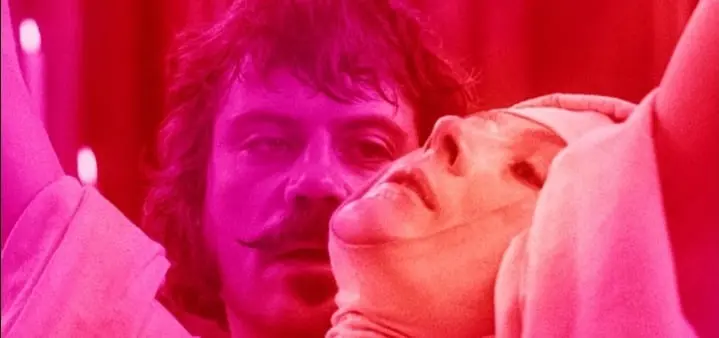
When Russell brought The Devils to the screen in 1971, starring Oliver Reed as Grandier and Vanessa Redgrave as Sister Jeanne des Anges, the cultural shockwaves were immediate and violent. Warner Bros., terrified by the film’s blistering critiques of religious hypocrisy, rampant sexuality, and state-sponsored violence, demanded immediate cuts. Even after heavy editing, the film faced ferocious backlash. Critics branded it depraved, while censors worldwide locked away its most transgressive footage, robbing audiences of Russell’s intended vision—particularly the infamous "Rape of Christ" sequence, in which frenzied nuns descend into a Dionysian orgy within the desecrated sanctuary of the church.
2026: The Uncensored Resurrection
Fifty-five years after its initial suppression, film preservationists, led by figures like critic Mark Kermode, successfully assembled and released the definitive director’s cut. Originally slated for a modest, one-week theatrical engagement by Warner Bros., audience demand overwhelmed expectations. The studio quickly extended the run, leaning into the film’s transgressive legacy with promotional campaigns that boldly declared, "You have spoken," followed by the provocative teaser: "You will blaspheme." The box office success confirmed that the appetite for cinematic transgression remains as ravenous as ever.
Supporting Context & Metrics: The Shift in Critical Consensus
The evolution of critical opinion surrounding The Devils offers a fascinating case study in how cultural norms shift over time. What was once viewed as cinematic poison is now celebrated as high art and political prophecy.
| Period | Dominant Critical Stance | Primary Cultural Anxiety | Industry Status |
|---|---|---|---|
| 1971 | Condemned as sadomasochistic, blasphemous, and morally depraved. | Fear of unchecked counter-cultural hedonism and attacks on traditional religious institutions. | Heavily censored, edited, and restricted by major studios. |
| 2026 | Praised as a triumph over authoritarianism, prudes, and censorship. | Fear of rising authoritarian control, bureaucratic overreach, and institutional hypocrisy. | Fully restored director’s cut enjoying widespread theatrical runs and enthusiastic critical acclaim. |
The reversal among legacy media outlets has been stark. In 1971, publications across the ideological spectrum united to denounce the film’s assault on sensibilities. Today, the Los Angeles Times has lauded the film for its "morality [involving] speaking truth to power and resisting authoritarian control," asserting that its themes make it "shockingly relevant right now."
Similarly, conservative publications like the National Review have found unexpected value in the picture, arguing that its depiction of decadent power "resembles the progressive chicanery we recently experienced" during periods of heavy-handed government intervention. By framing the seventeenth-century French state as an incompetent, sadistic monolith, The Devils has been retrofitted by modern commentators to fit whatever contemporary political boogeyman they wish to slay.
Official Statements and Industry Reactions
The resurrection of The Devils has generated substantial commentary from filmmakers, critics, and studio executives alike, illuminating the complex motivations driving the film’s re-release.
- Warner Bros. Release Team: Following the unprecedented surge in ticket sales during what was initially planned as a one-week engagement, studio representatives noted the public’s hunger for uncompromising cinema, stating simply: "You have spoken." Subsequent promotional material pushed the envelope further, boldly promising audiences: "You will blaspheme."
- Mark Kermode, Film Critic and Restoration Collaborator: Speaking on the painstaking process of assembling the director’s cut, Kermode emphasized that Ken Russell’s artistic intent was never meant to be watered down. Russell, who passed away in 2011, "always wanted audiences to have exactly the reaction they’re having now." Kermode noted that the director viewed shock and boundary-breaking not as gratuitous exploitation, but as essential tools to awaken a dormant public.
- Contemporary Cultural Critics: Observers have increasingly pointed out the irony inherent in the film’s reception. While The Devils purports to expose the dangers of dogmatic religious fervor, its modern-day champions treat the screening room as a sacred space for secular communion. The celebration of the film’s uncut release is handled with all the solemnity and zealous devotion of a religious liturgy, proving that anti-authoritarianism can itself harden into an orthodoxy.
Future Outlook: The Paradox of Secular Liturgy
As The Devils continues to draw crowds in its newly restored form, the film leaves viewers standing at a philosophical crossroads. As a historical critique of church-state authoritarianism, Russell’s work ultimately falls short. It does not genuinely warn against the dangers of placing absolute faith in socio-political and theological doctrines; rather, it simply substitutes one doctrine for another.
Drawing upon the insights of political theorists like Adrian Vermeule, who famously argued that "All Human Conflict Is Ultimately Theological," we can understand liberalism not as a neutral arbiter of peace, but as a system with its own sacred rites. In his essay examining liberalism’s inner nature, Vermeule notes that the liberal project requires a continuous celebration of its great liturgy: the Festival of Reason, defined by the dynamic overcoming of the darkness, superstition, and slavish authoritarianism of the irrational past. This benchmark perpetually shifts with each new celebration, requiring fresh enemies to cast in the role of the villain.
- The Libertarian Trap: In The Devils, this liturgical dynamic is played out in full technicolor. The viewer is invited to identify with Urbain Grandier—who escapes the corrupt, shadowy machinations of the state-run church to worship God, goodness, and nature in the wilderness—and to cast whatever contemporary authority they resent into the role of the villainous Cardinal Richelieu.
- The Unanswered Question of Freedom: Yet, the film’s ultimate weakness lies in its inability to answer what freedom is actually for. The final scene of the film depicts Madeleine, the woman Grandier secretly married, climbing over the ruined walls of Loudun into a bleak, desolate landscape.
Ultimately, The Devils warns against social control while operating as a sophisticated form of social control itself—an anti-authoritarian parable that trains its audience to view every boundary as an intolerable prison and every authority figure as a jailer. By the time the credits roll, the audience is left abandoned in the wasteland alongside Madeleine, possessing a profound sense of rebellion, but utterly devoid of any destination, purpose, or vision beyond the destruction of the walls themselves.




Comments
Facebook App ID not configured. Please add it in the Customizer.