
Executive Overview
The landscape of Pakistani arts and culture stands at a volatile crossroads following the contentious passage of the Punjab Dramatic and Theatrical Performances Bill 2026. Squeezed through a deeply polarized provincial assembly amid chaotic brawls, screaming matches, and bitter confrontations between treasury and opposition benches, the legislation has sparked an immediate and fierce backlash from civil society. At the epicenter of this storm is the Human Rights Commission of Pakistan (HRCP), which has categorically condemned the law as a severe, unconstitutional overreach that effectively places the government above satire, critique, and public accountability.
The legislation—introduced purportedly to curb rising concerns over vulgarity and obscenity in commercial theatres—institutionalizes an aggressive regulatory apparatus. Under the newly minted framework, every script must pass through rigorous, state-controlled bureaucratic reviews before a mandatory licensing permit is issued. The penalties for non-compliance are severe, carrying the looming threats of hefty financial fines and imprisonment. Cultural critics, human rights defenders, and performing artists argue that these sweeping provisions do not merely regulate stagecraft; they suffocate it, weaponizing vague legal terminology to criminalize political dissent, artistic expression, and independent cultural commentary.
This comprehensive report provides an in-depth examination of the events leading up to the bill’s passage, an analysis of its legally ambiguous clauses, the broader socio-political context of censorship in Punjab, and the organized resistance mobilizing to protect the province’s rich theatrical heritage.
Read Also
Detailed Chronology: How the Bill Became Law
The trajectory of the Punjab Dramatic and Theatrical Performances Bill 2026 reflects a steady, accelerating deterioration of legislative consensus and democratic debate within the provincial legislature. Tensions had been simmering for months over the state of commercial theatre in major urban hubs like Lahore, Faisalabad, and Multan. Conservative lawmakers repeatedly accused local stage productions of descending into moral depravity, relying on vulgar dance numbers, double entendres, and crude humor that they claimed violated cultural norms and offended family audiences.
The Legislative Showdown
The flashpoint arrived in a late-session assembly meeting that quickly descended into chaos. Treasury benches, determined to push through a stringent regulatory mechanism, faced ferocious pushback from opposition lawmakers. The debate quickly devolved into personal attacks, shouting matches, and physical shoving in the well of the house. Opposition members argued that the government was exploiting legitimate concerns about stage vulgarity as a Trojan horse to smuggle in authoritarian censorship laws designed to silence political dissent.
Despite the uproar, walkouts, and desperate attempts to stall the proceedings, the ruling majority used its numerical strength to ram the bill through. The vote marked a dark day for proponents of free speech, cementing a legal framework that civil rights groups argue belongs in an autocracy rather than a constitutional democracy.
The Immediate Aftermath and HRCP’s Intervention
Within hours of the bill’s ratification, the HRCP took to social media and official press channels to sound the alarm. In a strongly worded statement released on the platform X (formerly Twitter), the commission stated:
"HRCP is deeply concerned that the recently passed Punjab Dramatic and Theatrical Performances Bill 2026 effectively places the government beyond satire and criticism. Prohibiting performances deemed likely to create disaffection towards the government is a gross violation of artistic freedom and the right to freedom of expression."
The commission did not stop at rhetorical condemnation. Recognizing the existential threat this poses to the creative community, the HRCP announced plans to convene an emergency national consultation. This gathering will bring together veteran actors, playwrights, directors, legal experts, and cultural stakeholders to formulate a cohesive strategy, challenge the law’s constitutional validity in the courts, and build a unified front against state-sanctioned censorship.
Anatomizing the Legislation: Legal Framework and Ambiguities
To understand the profound alarm raised by human rights organizations and artists, one must closely examine the text of the legislation itself. At the heart of the controversy is Article 3 of the bill, titled "Prohibition of certain dramatic or theatrical performances."
The statute outlines an expansive, vaguely defined blanket of prohibitions, declaring that no dramatic or theatrical performance shall be held if it is:
- (a) scandalous or defamatory;
- (b) likely to excite feelings of disaffection to the Government;
- (c) likely to deprave and corrupt persons present at the performance;
- (d) obscene or vulgar;
- (e) inciting hatred or hurting religious feelings; or
- (f) any other performance as may be prescribed.
The Weaponization of Vague Terminology
Legal scholars and constitutional experts have zeroed in on clauses (b) and (f) as particularly insidious. The phrase "likely to excite feelings of disaffection to the Government" is a colonial-era legal relic reminiscent of sedition laws designed to protect foreign despots from native uprisings. Applied to a modern democratic state, it effectively criminalizes political satire, theatrical parodies of public officials, and social commentary addressing state failure, corruption, or human rights abuses.
Furthermore, clause (f)—"any other performance as may be prescribed"—grants unbridled, unchecked discretionary power to bureaucratic committees and executive authorities. It opens the floodgates for arbitrary bans based on the personal whims, political sensitivities, or ideological biases of whoever happens to be sitting on the censorship board at any given time.
Bureaucratic Red Tape and the Threat of Criminalization
Beyond content restrictions, the bill imposes a chokehold on the operational mechanics of theatre production. The requirement for mandatory prior licensing means that no production can take to the stage without submitting its script to state-controlled review boards weeks or months in advance.
This creates an environment of proactive self-censorship. Playwrights and directors, knowing that their livelihoods—and potentially their freedom—hang in the balance, will inevitably self-censor, stripping their work of any biting social critique, political edge, or artistic audacity. When the state holds the keys to the stage through the threat of financial ruinous fines and immediate imprisonment, genuine creative expression ceases to exist.
Supporting Context & Historical Metrics: Censorship in Punjab
The passage of the 2026 bill does not occur in a vacuum; it is the latest chapter in a long, troubled history of state interference in Punjab’s vibrant performing arts ecosystem.
The Decline of Commercial Stage Theatre
For decades, Lahore’s commercial theatre scene—centered around iconic venues such as the Alhamra Arts Council and various private commercial stages—thrived as a unique socio-cultural mirror. It blended broad slapstick comedy, social satire, and traditional dance. However, the commercialization of these spaces in the late 1990s and 2000s led to a race to the bottom, where sensationalism often overshadowed artistic merit.
Successive provincial governments used these commercial excesses as a convenient pretext to clamp down on the arts altogether. Over the years, numerous theaters have faced administrative raids, sudden shutdowns, and sealing orders. A notable historical precedent includes the aggressive sealing of Lahore’s prominent Mahfil Theatre by the Punjab government following minor moral panics—a tactic that demonstrated the state’s preference for outright bans over constructive cultural dialogue or self-regulation.
The Shrinking Democratic Space
This legislative crackdown mirrors a broader national trend in Pakistan where civic spaces, media freedoms, and creative liberties are systematically constricted under the guise of maintaining public morality, national security, or state dignity. While society undeniably has an interest in regulating genuinely obscene or defamatory content, democratic norms require that such regulations be narrow, precise, and subject to judicial review—not sweeping instruments designed to shield political elites from embarrassment.
Stakeholder Perspectives and Official Statements
The battle lines over the Punjab Dramatic and Theatrical Performances Bill 2026 expose a deep ideological divide between the state apparatus and the cultural vanguard.
The Government’s Defense
Proponents of the bill within the ruling coalition maintain that the legislation is a necessary step to rescue family entertainment and restore public morality. Speaking anonymously due to protocol restrictions, a senior provincial assembly member defended the law:
"We are not against art, culture, or legitimate expression. However, we cannot allow the public stage to be turned into a platform for vulgarity, obscenity, and attacks on religious and social values. Families have stopped visiting theaters because of what goes on stage. This bill brings much-needed discipline and accountability to an unregulated industry."
The Artistic Community and Civil Society Counter-Narrative
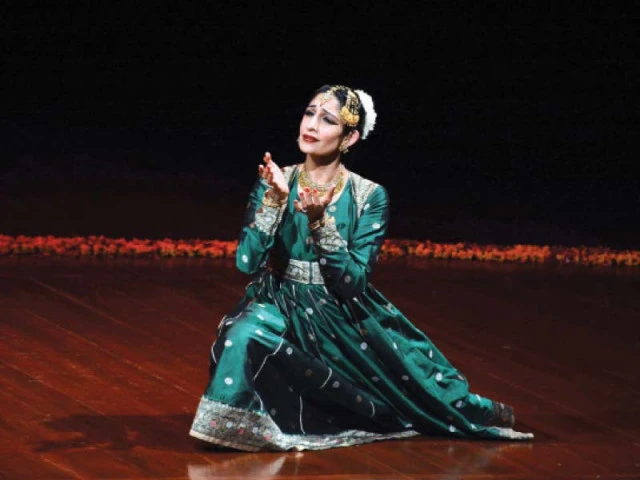
Conversely, the artistic community views this justification as a smokescreen for political censorship. Renowned Kathak dancer, classical performers, and independent playwrights have expressed profound despair over the trajectory of cultural policy in the province.
Prominent cultural figures argue that using the broad brush of "vulgarity" to justify bureaucratic script reviews is a deliberate strategy to eliminate political satire. When the government dictates what can and cannot be said on stage, theatre is reduced to mere state propaganda or toothless entertainment stripped of its historical role as the conscience of society.
Human rights advocates point out that existing legal frameworks—including Pakistan’s penal code—already contain adequate provisions to address genuine obscenity or defamation. Therefore, creating an entirely new, heavy-handed regulatory bureaucracy dedicated exclusively to theatrical performances serves no purpose other than expanding the architecture of state control.
Future Outlook: The Fight for Cultural Freedom
As the dust settles on the chaotic assembly sessions, the focal point of the struggle is shifting from the legislature to the courts and civil society networks.
Legal Challenges on the Horizon
Constitutional lawyers are currently reviewing the text of the Punjab Dramatic and Theatrical Performances Bill 2026 to prepare a formal constitutional petition. The primary argument for the legal challenge will rest on Article 19 of the Constitution of the Islamic Republic of Pakistan, which explicitly guarantees freedom of speech and expression, subject to reasonable restrictions imposed by law relating to the glory of Islam or the integrity, security, or defence of Pakistan—not government embarrassment or bureaucratic convenience.
The Upcoming National Consultation
The HRCP’s upcoming consultative convention will be a critical litmus test for the solidarity of Pakistan’s creative community. By bringing together artists, writers, legal minds, and journalists, the commission hopes to map out a multi-pronged resistance campaign. This will likely include public awareness drives, international advocacy, legal challenges, and the establishment of independent, peer-reviewed ethical standards that preempt state censorship by demonstrating that the artistic community is fully capable of self-regulation.
Conclusion
The Punjab Dramatic and Theatrical Performances Bill 2026 represents a critical test for the future of democratic liberties in Pakistan. If left unchallenged, it threatens to turn the stage into a sterile, state-approved echo chamber, robbing Punjab of its rich, rebellious theatrical tradition. As artists and human rights defenders mobilize to fight this draconian legislation, the outcome will determine whether creative expression in Pakistan can survive the heavy hand of state censorship or whether the curtain is falling on artistic freedom in the province.



Comments
Facebook App ID not configured. Please add it in the Customizer.