
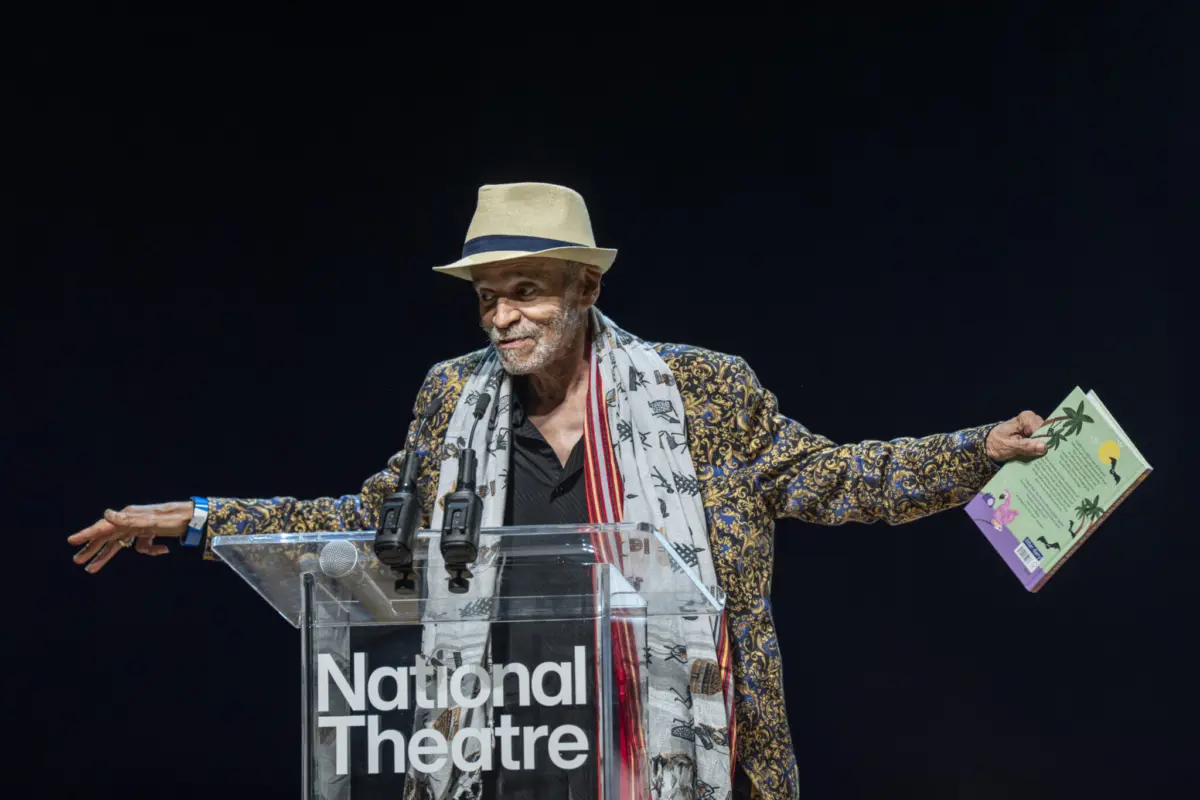
LONDON — In a landmark celebration of verse, performance, and youthful literary enthusiasm, legendary poet John Agard has been crowned the winner of the 2026 Centre for Literacy in Primary Education Poetry Award (CLiPPA). Announced on Thursday, July 9, 2026, during a vibrant ceremony at London’s prestigious National Theatre on the Southbank, Agard’s historic victory marks the first time any author has secured the esteemed children’s poetry prize three times.
The event was a hybrid spectacle of live performance and digital connectivity. Hundreds of ecstatic young people filled the auditorium of the National Theatre, while thousands more students tuned in via live-stream from classrooms across the United Kingdom, transforming the poetry celebration into a nationwide festival of literature.
Executive Overview
The 2026 CLiPPA ceremony delivered a masterclass in the power of spoken word, culminating in John Agard taking home the top honor for his celebrated collection, The Poetry World of John Agard. Published by Otter-Barry Books and vividly illustrated by Shirley Hottier, the winning anthology compiles 80 of Agard’s most resonant pieces, blending decades of poetic brilliance with fresh artistic interpretations.
Read Also
Agard’s win is not merely a personal triumph; it is a watershed moment for contemporary children’s literature. Having previously claimed the prize in 2003 (alongside his wife and fellow poet Grace Nichols for Under the Moon and Over the Sea) and again in 2009 (The Young Inferno, illustrated by Satoshi Kitamura), Agard stands alone as a three-time champion. This latest accolade adds to an already illustrious career that includes the Queen’s Gold Medal for Poetry (2012) and the BookTrust Lifetime Achievement Award (2021).
Chair of the 2026 judging panel, poet and Children’s Laureate for Wales Nicola Davies, led a chorus of critical acclaim for Agard’s enduring impact. Surrounded by a fierce shortlist of contemporary talent, Agard’s collection ultimately captured the hearts of the judges and young readers alike, cementing his legacy as one of the most vital literary voices of our time.
Detailed Chronology: A Day of Celebration on the Southbank
The July 9 ceremony unfolded as a dynamic showcase of the shortlisted authors, illustrators, and primary school students who had spent weeks engaging with the nominated collections.
Morning Arrival and Digital Reach
As the doors of the National Theatre opened, the atmosphere crackled with anticipation. School groups streamed into the venue, greeted by the bustling energy of the Southbank. Simultaneously, digital infrastructure coordinated by the CLPE allowed classrooms from Cornwall to the Scottish Highlands to participate in real-time. For thousands of children, the morning served as the culmination of months of reading, analyzing, and performing poetry as part of the nationwide CLiPPA Shadowing Scheme.
The Live Performances
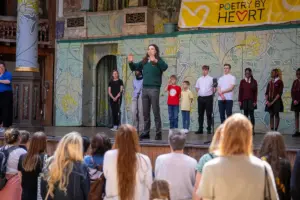
The afternoon ceremony brought the shortlisted books to life through high-energy stage performances. Every shortlisted poet took to the boards of the Lyttleton Theatre, demonstrating the vital oral tradition that underpins children’s poetry. Adding a vibrant visual dimension to the event, former Children’s Laureate Chris Riddell captured the performances in real time, illustrating the proceedings live on stage.
The highlight of the afternoon, however, belonged to the school children. Winners of the CLiPPA Shadowing scheme—young readers who had mastered and memorized poems from the shortlisted collections—shared the stage with the professional poets. Performing before a packed house and a massive online audience, these students embodied the core mission of the CLiPPA: fostering a lifelong, active relationship with poetry among the youngest demographics.
The Grand Announcement
The tension in the National Theatre reached its peak when Nicola Davies took the stage to announce the winner. As Agard’s name was called, the auditorium erupted in applause. Donning his signature vibrant attire—a black and white scarf, a black shirt, a blue and yellow jacket, and a summer hat—Agard stepped up to accept the award, carrying a copy of his historic collection and treating the audience to a signature, mesmerizing performance of his work.
Supporting Context & Metrics: The Anatomy of a Masterpiece
To understand the magnitude of Agard’s 2026 victory, one must examine the depth and breadth of The Poetry World of John Agard.
The Winning Collection
The Poetry World of John Agard is a meticulously curated retrospective that bridges generations. The 80 poems within its pages span decades of Agard’s career, drawing heavily on material from early, beloved collections such as:
- I Din Do Nuttin (1983)
- Laughter is an Egg (1990)
- We Animals Would Like a Word With You (1996)
Many of these pieces draw inspiration from Agard’s Caribbean childhood, weaving vibrant cultural imagery, linguistic playfulness, and profound philosophical inquiry into forms accessible to young minds. Paired with Shirley Hottier’s fresh illustrations, the collection offers a bridge between the poetry that inspired the UK’s current generation of young poets and the children experiencing Agard’s genius for the very first time.
The 2026 Shortlist
Agard’s victory came after deliberation over one of the most diverse and innovative shortlists in the award’s recent history. The 2026 finalists represented a broad spectrum of themes, styles, and demographics:
- Sam Gayton – Press Play to Start: A clever, ground-breaking debut collection that successfully bridges the cultural gap between video gaming and poetic form, engaging reluctant readers through familiar digital paradigms.
- Simon Mole – A First Book of Bugs: An imaginative exploration of the natural world, introducing young readers to the intricate lives of insects through lyrical, accessible verse.
- Sean Taylor – Five Little Friends: A delightful collection of brand-new finger rhymes designed specifically for the very youngest children, emphasizing rhythm, touch, and early auditory development.
- Traci N. Todd – This Is Not a Small Voice: A powerful, celebratory collection highlighting predominantly African American, Caribbean, and Black British writing for children, amplifying diverse cultural experiences and joyous self-expression.
The CLiPPA Shadowing Scheme and Partnerships
Beyond recognizing published authors, the CLiPPA acts as a powerful educational catalyst. Through the annual Shadowing Scheme, primary schools across the UK integrate the shortlisted books into their core curricula. Children read, discuss, and perform the poems, developing critical literacy skills and public speaking confidence.
The continued success and accessibility of the award are made possible through key institutional partnerships. The CLiPPA is proudly delivered in collaboration with the Authors’ Licensing and Collecting Society (ALCS) and receives vital public funding support from Arts Council England, ensuring that poetry remains accessible and celebrated in schools nationwide.
Official Statements: Voices from the Ceremony
The announcement of John Agard’s historic win prompted widespread praise from literary leaders, judges, and cultural organizations.
Nicola Davies, Chair of the 2026 Judging Panel and Children’s Laureate for Wales, reflected on Agard’s enduring artistry:
"The first time I saw John Agard perform his work, over thirty years ago, I knew at once he was the most extraordinary artist. His poems gleam with human warmth and sunshine, but like all bright lights they cast important shadows, and illuminate things we have not noticed before. You can carry John’s words in your head and your heart and warm your soul on them forever. His book The Poetry World of John Agard will invite new generations of readers into his wonderful universe and I’m delighted that it is this year’s CLiPPA winner."
Organizers from the Centre for Literacy in Primary Education (CLPE) emphasized the broader cultural impact of the award, noting how events at the National Theatre help dismantle the perception that poetry is an inaccessible art form. By placing children directly onto the stage alongside literary titans, the CLiPPA reinforces the idea that young voices are an active, vital component of the nation’s literary ecosystem.
Future Outlook: Legacy and the Next Generation of Verse
As the curtain falls on the 2026 CLiPPA ceremony, the ripples of John Agard’s unprecedented victory are already being felt across the educational and literary landscapes.
By cementing his third win, Agard has raised the bar for children’s poetry, proving that literature written for younger audiences requires immense technical skill, emotional depth, and universal resonance. Publishers and educators anticipate that The Poetry World of John Agard will become a staple in primary school classrooms for years to come, serving as both a teaching resource and a source of pure literary joy.
Moreover, the success of the 2026 shortlist—featuring everything from gaming-inspired verse to finger rhymes for toddlers—signals a robust, evolving future for children’s poetry in the UK. As initiatives like the CLiPPA Shadowing Scheme continue to expand their digital and physical reach, thousands of children are discovering that poetry is not a static relic of the past, but a living, breathing, and wildly entertaining medium that belongs to everyone.
With trailblazers like John Agard leading the charge, and a new generation of school children stepping up to the National Theatre stage to voice their favorite verses, the future of British children’s poetry burns brighter than ever.

Comments
Facebook App ID not configured. Please add it in the Customizer.