
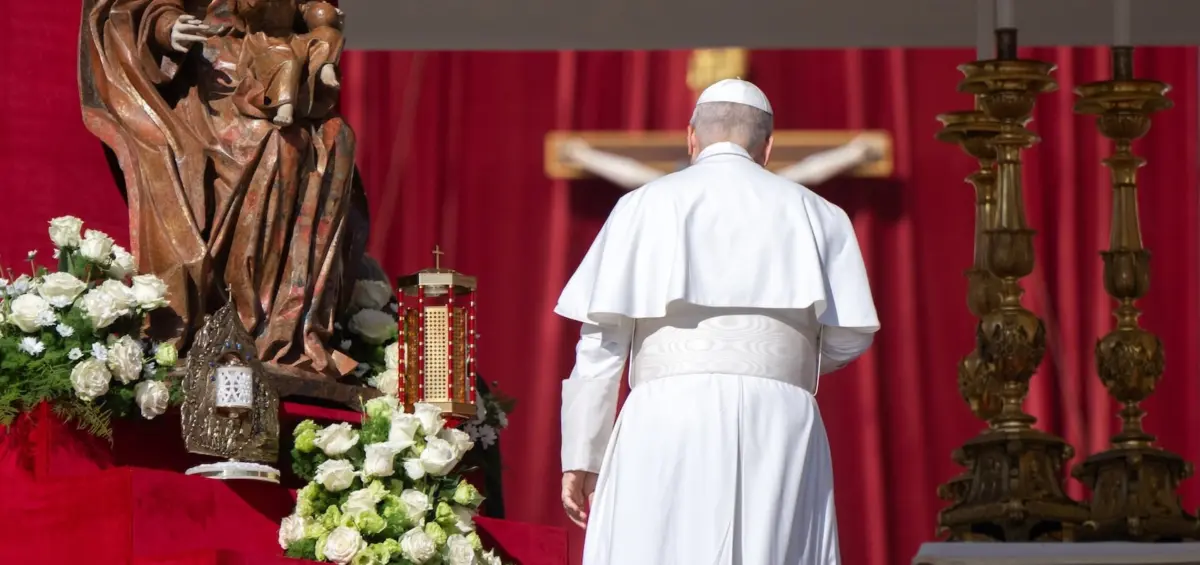
Pope Leo XIV has concluded a landmark apostolic journey across Uruguay, Argentina, and Peru, a pastoral voyage that pushed physical boundaries and provided profound theological insights. Remarkably, the international tour occurred shortly after the pontiff underwent major surgery for the removal of a cancerous growth on his lung—a recovery widely viewed by the faithful as nothing short of miraculous. Despite lingering health considerations, Pope Leo displayed extraordinary vitality, his characteristic pursed-lip expression frequently giving way to radiant smiles as he engaged with local populations, civil leaders, religious communities, and marginalized groups.
The ten-day tour served as a defining moment for the early years of Leo’s pontificate. While honoring the legacy of his predecessor, Pope Francis, Leo systematically articulated his own distinctive vision for the Church. Observers note that while Francis heavily emphasized the existential and geographical peripheries, Pope Leo anchors his mission in an explicitly Christocentric worldview. Through addresses delivered in bustling capital cities, high-altitude Andean communities, and remote Amazonian outposts, Leo wove together themes of synodality, social justice, and higher education, insisting that all pastoral endeavors must flow directly from a living communion with Jesus Christ.
Detailed Chronology of the Apostolic Journey
The papal itinerary spanned three nations deeply familiar with the nuances of Latin American Catholicism, each offering a unique backdrop for the pope’s message of evangelization and renewal.
Read Also
Uruguay: Cultivating Spiritual Senses in the University Sector
The journey began in Montevideo, Uruguay, where Pope Leo addressed the intellectual and academic spheres of the Church. Speaking at the Catholic University of Uruguay, the pontiff focused heavily on the spiritual senses in a secularized academic culture.
- "It is essential that we defend the sweet fragrance of the human person, grounded in the sweet fragrance of the Messiah," Leo told educators and students.
- He called for a renewed defense of human life at every stage, emphasizing that higher education must look beyond mere utility and instead seek transcendent truth.
Argentina: Honoring Roots and Inspiring Youth
Moving next to Argentina—a deeply emotional stop given its status as the homeland of Pope Francis—Leo immersed himself in high-energy gatherings with the faithful. In Buenos Aires, he addressed thousands of young people, directly adapting Francis’s famous rallying cry of "todos, todos, todos" (everyone, everyone, everyone). However, Leo filtered the phrase through a sharp Christological lens:
- "Everyone toward Christ, everyone with Christ, everyone like Christ."
In Córdoba, addressing an assembly of local clergy and pastoral workers, Leo praised the Argentine Church’s historical dedication to social welfare while issuing a gentle theological corrective. He stressed that while charitable works are vital, social closeness must ultimately lead individuals to a transformative encounter with Christ.
Peru: From the Coast to the Andes and the Amazon
The final leg of the journey took place in Peru, encompassing a diverse geographic and cultural landscape that stretched from Chiclayo on the coast to Cusco in the Andes, and finally deep into the Amazon basin in Pucallpa.
- Chiclayo: At a regional gathering of bishops, priests, and synodal teams, Leo emphasized ecclesial communion, declaring that "communion must precede mission." Addressing his former academic stomping ground at the Catholic University of Chiclayo, where he previously served as grand chancellor, he urged students to view truth not as an abstract concept, but as a person: Jesus Christ.
- Cusco: High in the Andes, on his final full day in the country, Leo reflected on the ancient indigenous traditions of climbing majestic cliffs in search of the divine, contrasting it with the Christian revelation of a God who descends to dwell among humanity.
- Pucallpa: Traveling to the Amazonian frontier—a region marked by both immense promise and severe environmental and social exploitation—Leo offered a message of profound solidarity. Reminding indigenous communities and missionaries that Christ never abandons His flock, he reinforced the concept that the suffering body of Christ is present in the struggles of the marginalized.
Supporting Context & Metrics
To fully understand the weight of Pope Leo XIV’s inaugural Latin American tour, it is essential to examine the structural and demographic factors framing his itinerary.
The Theological Thread: Evangelii Gaudium
Throughout the journey, Leo heavily cited the papal encyclicals Laudato Si’ and Fratelli Tutti of his predecessor. However, analysts point out that the text driving Leo’s spiritual imagination is Francis’s inaugural apostolic exhortation, Evangelii Gaudium (The Joy of the Gospel).
- The Primacy of Encounter: Leo operationalizes Francis’s call for a "loving encounter with the Savior," arguing that evangelization is not a bureaucratic duty, but the natural overflow of having experienced divine love.
- Christological Reframing: Where Francis emphasized structural reform and horizontal solidarity, Leo verticalizes these concepts. By tying synodality, social justice, and academic freedom directly to baptismal incorporation into Christ, Leo provides a cohesive doctrinal framework for the modern Church.
Demographic and Geopolitical Significance
- Geographic Spread: The tour covered over 10,000 miles across three distinct South American nations, moving from secularized urban centers (Montevideo) to densely populated traditional strongholds (Buenos Aires and Lima) and fragile ecological frontiers (the Amazonian city of Pucallpa).
- Health Milestones: Medical teams closely monitored the tour following the pontiff’s major pulmonary surgery. The successful completion of a rigorous schedule involving high-altitude transitions (such as traveling from sea level in Lima to over 11,000 feet in Cusco) demonstrated remarkable resilience, reassuring the global Catholic community regarding his physical capacity to lead.
Official Statements & Excerpts
Pope Leo XIV’s addresses during the ten-day tour provided a rich corpus of theological commentary that theologians and Vatican watchers will parse for years. Below are key excerpts from his major speeches:
-
On Discipleship (Buenos Aires, Argentina):
"I would like to draw inspiration from those words to speak about what it means to live as disciples of Jesus: everyone toward Christ, everyone with Christ, everyone like Christ."
-
On Ecclesial Communion (Chiclayo, Peru):
"How can we become a more synodal and missionary Church? At the foundation lies our bond with Christ, rooted in Baptism… The first witness that any Christian community must give is the fraternal love that exists among its members, thereby reflecting the Most Holy Trinity. . . . For this reason, communion must precede mission."
-
On Social Justice and Transformation (Córdoba, Argentina):
"The pilgrim Church in Argentina is enriched by a deep sensitivity to the social needs of its children. From this sensitivity have sprung so many generous efforts to stand alongside those who suffer. However, this closeness must take us even further, because every person we serve is called to encounter Christ and to be transformed by him."
-
On the Role of the Catholic University (Chiclayo, Peru):
"The university is called to be a training ground for talent and a laboratory of meaning, a place where intelligence does not bow to utility, but rather serves the truth faithfully. Above all, it is called to serve Truth—with a capital ‘T’—who is Christ, the Savior of the world."
-
On Amazonian Solidarity (Pucallpa, Peru):
"…witnesses of our Lord Jesus Christ, who rather than coming down from the cross, gives his life for his people. Christ never abandons us. Christ is with you. The Church is with you, and you are her members. We are the body of Christ."
Future Outlook
The conclusion of Pope Leo XIV’s apostolic journey to Uruguay, Argentina, and Peru marks the end of a physical tour, but it signals the beginning of a new phase for his pontificate. Several key trajectories are expected to shape the Catholic Church in the wake of this historic voyage:
- A Shift Toward "Christic" Centrality: While the reforms of Pope Francis focused extensively on institutional decentralization, synodal listening processes, and environmental stewardship, Leo’s early trajectory indicates an intentional effort to ground these pastoral initiatives in explicit Christology. Future Vatican documents and synodal guidelines are likely to reflect this synthesis, emphasizing that structural reforms must flow from interior communion with Christ.
- Re-energized Intellectual and Academic Apostolates: Leo’s specific attention to Catholic universities in Montevideo and Chiclayo points to an emerging papal strategy for higher education. By positioning universities as "laboratories of meaning" dedicated to Truth with a capital ‘T,’ Leo challenges Catholic institutions of higher learning to resist secular utilitarianism and embrace a robustly theological identity.
- Deepened Engagement with Indigenous and Environmental Issues: By bringing his message from the majestic heights of the Andes down to the contested and vulnerable terrain of the Amazon, Leo demonstrated that the Church’s social and ecological teachings (Laudato Si’) are inseparable from the proclamation of the Gospel. His solidarity with Amazonian populations guarantees that indigenous rights and ecological preservation will remain central pillars of contemporary Catholic social doctrine.
As Pope Leo XIV returns to Rome, the theological, pastoral, and personal resonance of his journey across South America will continue to reverberate. By embodying the joy of the Gospel through a lens of profound communion with Christ, the pontiff has left an indelible mark on the Latin American Church and set a clear, Christ-centered compass for the global Catholic community.


Comments
Facebook App ID not configured. Please add it in the Customizer.