
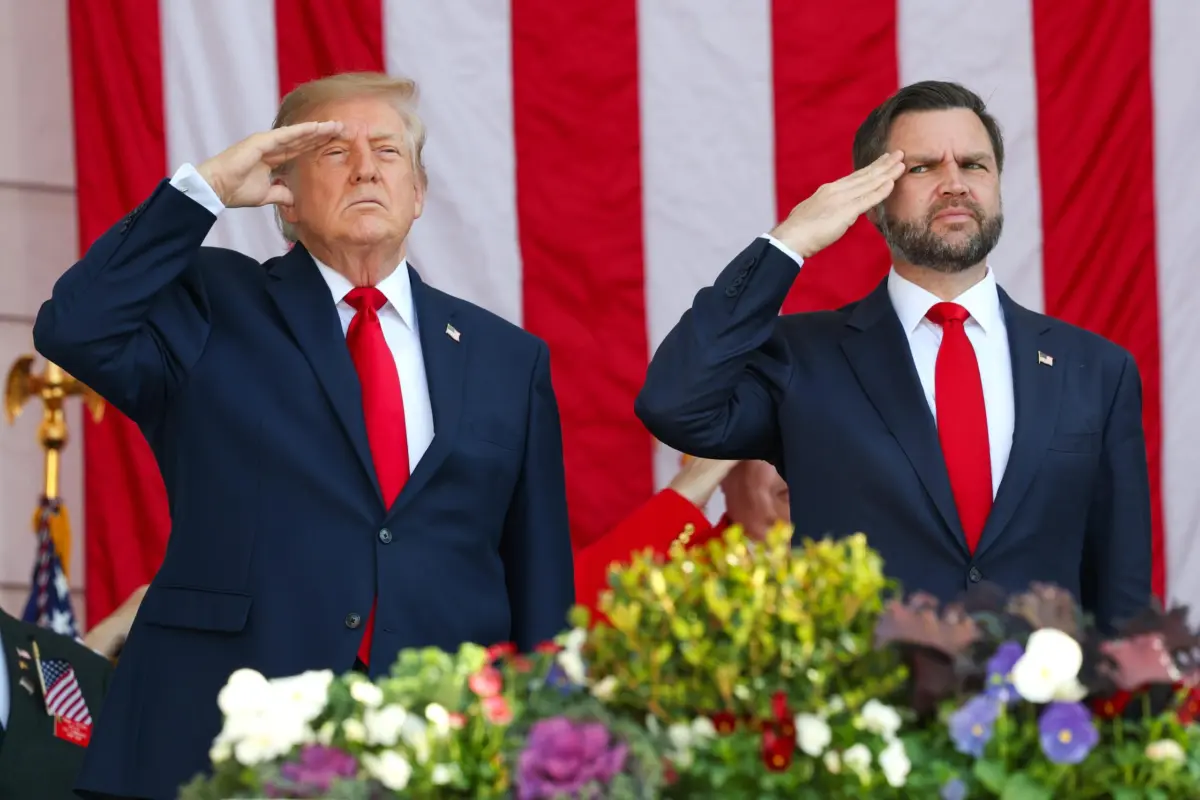
Executive Overview
For nearly two years following the inauguration of the second Donald Trump administration, Vice President JD Vance sat comfortably atop the MAGA ecosystem as the undisputed heir apparent. His coronation for the 2028 Republican presidential nomination was treated by many within conservative circles as an inevitability. As recently as last year, potential rivals like Secretary of State Marco Rubio openly conceded the field, telling reporters that if Vance chose to run, he would be the consensus nominee and secure immediate backing.
Today, that political invulnerability has evaporated.
Emerging from a punishing midterm election cycle in severely weakened political shape, Vance finds himself trapped in a high-stakes vise of his own creation. Caught between his public policy convictions and the ironclad demands of presidential loyalty, the Vice President has publicly clashed with Donald Trump over two of the most volatile issues in modern American politics: the ongoing war with Iran and comprehensive immigration reform.
Read Also
The consequences have been swift and brutal. Polling data reveals a staggering collapse in primary support, with Vance’s numbers plummeting from 54 percent to 20 percent, while Secretary of State Marco Rubio surges into the frontrunner position at 36 percent. As other ambitious Republicans—such as outgoing Florida Governor Ron DeSantis and Texas Senator Ted Cruz—position themselves to capitalize from outside the administration, Vance faces a perilous "double bind." He is tethered to an increasingly complex White House portfolio while his once-solid claim to the MAGA mantle slips away.
Detailed Chronology: Anatomy of a Political Freefall
The deterioration of Vance’s standing within the administration and the broader party did not happen overnight, but it accelerated sharply in the wake of the midterm elections.
The Midterm Fallout and the Iran War Debacle
The catalyst for the current crisis arrived the day after the midterms. Facing sweeping electoral losses that stunned the Republican establishment, Vance took to social media to air grievances regarding the administration’s foreign policy. In a candid, extensive post, he laid the blame for the party’s ballot-box catastrophe squarely on the ongoing war with Iran, arguing that the conflict had become an insurmountable electoral anchor for conservative candidates nationwide.
For an administration hyper-focused on message discipline and absolute defense of executive decisions, Vance’s public post-mortem was viewed as insubordination. President Trump has steadfastly refused to concede that entering the conflict was a strategic error—even while occasionally acknowledging its heavy political toll.
The Immigration Trap
Compounding his friction with the West Wing, Vance waded into the domestic policy quagmire surrounding immigration. In subsequent social media commentary, he forcefully condemned emerging proposals for "bipartisan immigration reform" that would establish pathways allowing certain undocumented immigrants to remain in the United States. Vance characterized these compromises as "morally and electorally disastrous."
The tactical error in this stance lay in a major disconnect with the Oval Office. President Trump, navigating legislative realities and floating strategic maneuvers, has signaled occasional, vague interest in bipartisan approaches to immigration. Vance’s preemptive condemnation boxed him into a corner, publicly undercutting the President’s legislative flexibility and drawing sharp rebukes from West Wing aides.
The Joint Press Conference Showdown
The underlying tensions broke into public view during a joint press conference featuring President Trump, Vice President Vance, and Secretary of State Marco Rubio. Placed squarely on the spot by reporters, Vance was asked directly whether the war with Iran was worth the devastating political fallout the party experienced during the midterms.
Rather than doubling down on his previous online assertions—or offering a robust defense of the administration’s foreign policy—Vance attempted a diplomatic tightrope walk, offering a muted and evasive response:
"The president said he would do it again. My view is that my goal in my job is to support the president of the United States."
The tepid answer satisfied neither political observers nor, crucially, the President. Observers noted that Trump has made it clear he expects his second-in-command to act as an aggressive, unreserved surrogate in defending controversial executive actions, not a reluctant defender seeking distance from the administration’s ledger.
Supporting Context & Metrics: The 2028 Primary Realignment
The shifting political winds are most visibly reflected in empirical polling data and the sudden awakening of a dormant 2028 Republican primary field.
Polling Collapse: The Emerson College Data
A national poll released by Emerson College laid bare the erosion of Vance’s base. The numbers mark one of the most precipitous drops for a sitting vice president in recent memory:
- JD Vance’s 2028 Support: Plummeted from 54 percent at this point last year to 20 percent in the latest survey.
- Marco Rubio’s Surge: Jumped from 6 percent to 36 percent, vaulting the Secretary of State into the leading position for the GOP nomination.
- The Wider Field: Competitors such as Ron DeSantis and Ted Cruz are quietly consolidating support, positioning themselves to capture anti-establishment and establishment-aligned conservative factions alike.
The "Double Bind" of the Vice Presidency
Political analysts have increasingly pointed to Vance’s unique structural dilemma. As vice president, he is charged with defending an executive agenda that faces mounting skepticism from a weary electorate. Yet, any attempt to moderate his stance to appeal to a broader national electorate risks alienating the core MAGA base that serves as his foundational support. Conversely, leaning further into populist orthodoxy risks exacerbating fractures with pragmatic conservatives and legislative dealmakers within his own party.
Furthermore, reports have surfaced detailing the granular control the White House exerts over its inner circle—symbolized metaphorically by reports of uniform administrative stylings and strict behavioral expectations. In such an environment, unauthorized ideological divergence or public second-guessing of executive strategy is treated as a severe breach of loyalty.
Official Statements and Insider Perspectives
The public and private maneuvering among the administration’s top tiers has triggered intense speculation across Washington.
- The Establishment View: Marco Rubio’s camp, while publicly maintaining diplomatic alignment with the administration, has done little to tamp down mounting chatter regarding a potential 2028 campaign. According to reports from CNN and other outlets, Rubio’s recent engagements have left key donors and party powerbrokers with the distinct impression that he is actively preparing for a presidential bid, should the administration’s political fortunes continue to dim.
- The Outsider Advantage: Allies of figures like outgoing Florida Governor Ron DeSantis and Texas Senator Ted Cruz have noted a strategic silver lining for potential rivals operating outside the direct orbit of the executive branch. By maintaining distance from the day-to-day controversies of the Trump-Vance administration, external candidates retain the flexibility to chart an independent course through the primary season.
- White House Reaction: While official statements from the press office continue to project unity, sources close to the West Wing indicate that the President is deeply displeased with Vance’s public "subtweeting" and perceived hesitancy during high-profile media appearances.
Future Outlook: A Long Road to the Primary
As the calendar turns toward the grueling lead-up to the 2028 primary season, JD Vance faces an unforgiving timeline. With more than a year remaining before the first formal votes are cast, the Vice President’s political capital has been severely depleted.
To regain his footing, Vance must navigate a narrow path: he must convincingly realign himself with the President’s vision without alienating the broader electorate that punished the party in the midterms. At the same time, he must fend off an energized slate of rivals—led by a resurgent Marco Rubio—who smell blood in the water and are positioning themselves to claim the post-Trump conservative movement.
For now, Vance’s status as the inevitable successor has been shattered. Whether he can recalibrate his strategy and rebuild his coalition remains one of the most compelling and volatile storylines in American politics.




Comments
Facebook App ID not configured. Please add it in the Customizer.