
Executive Overview
The contemporary biographical drama exists in a perpetual tug-of-war between two competing artistic impulses: the drive toward raw, uncompromising realism and the seductive pull of narrative mythmaking. Two high-profile releases—Simon Stone’s Scottish theater drama Elsinore and Peter Farrelly’s Hollywood origin story I Play Rocky—offer contrasting studies in how cinema dramatizes the lives of real-world figures under extreme pressure.
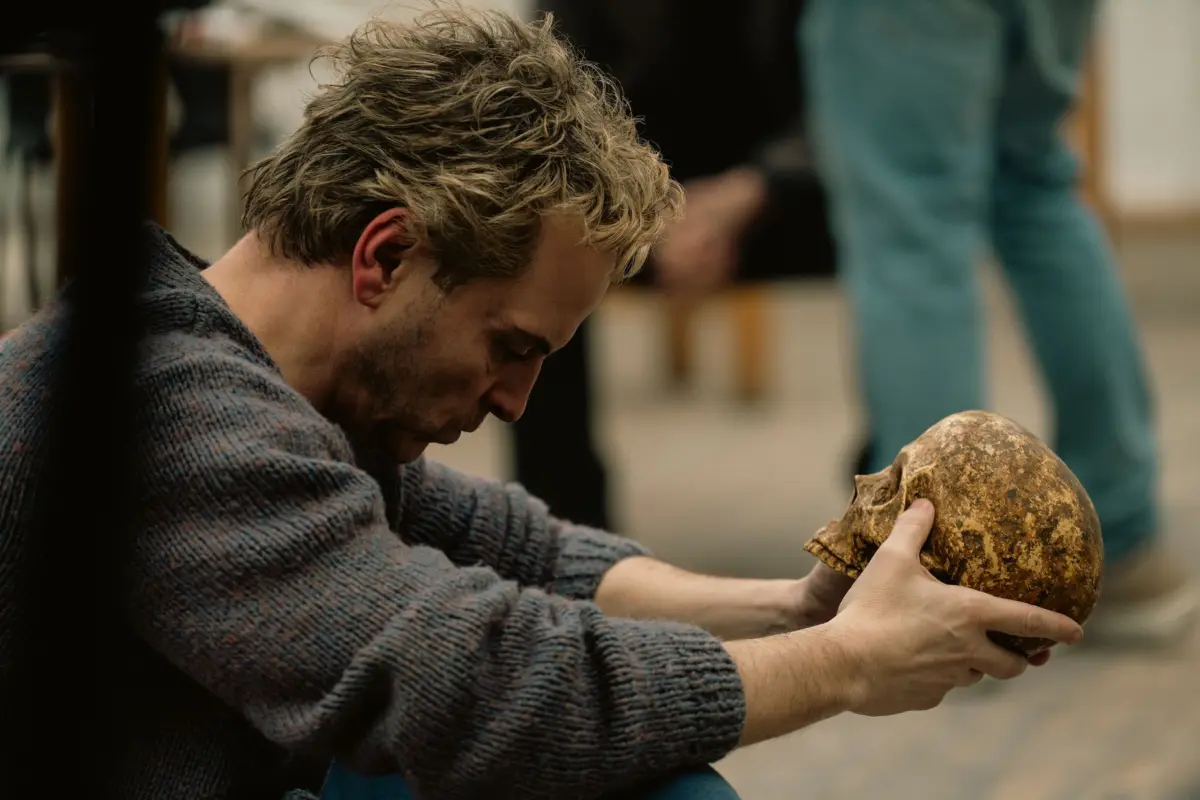
Elsinore, written by Stephen Beresford and directed by Australian filmmaker Simon Stone, chronicles the tragic final months of Scottish actor Ian Charleson (portrayed by Andrew Scott). Facing a terminal HIV/AIDS diagnosis in late 1989, Charleson undertook a celebrated run as the lead in Shakespeare’s Hamlet at London’s National Theatre, stepping into the role after Daniel Day-Lewis unexpectedly departed the production. Stone’s film frames Charleson’s ordeal as a high-stakes convergence of art, mortality, and personal identity. However, its maximalist aesthetic and fragmented narrative structure frequently risk overwhelming the subtle, interior craft of its lead actor.
Conversely, Peter Farrelly’s I Play Rocky, written by Peter Gamble, explores the mid-1970s origin story of Sylvester Stallone (played by Anthony Ippolito). The film follows Stallone from an impoverished NYC actor to the creator and star of Rocky (1976). While Ippolito delivers a accurate vocal and physical portrayal of Stallone, Farrelly’s direction leans heavily into nostalgic reenactment, prioritizing fan-pleasing milestone beats over deep emotional scrutiny or systemic critique of Hollywood’s studio ecosystem.
Read Also
Together, these films demonstrate the opportunities and pitfalls inherent in modern biographical filmmaking. They highlight the delicate balance between honoring historic realities, navigating awards-season demands, and managing the audience’s appetite for inspirational spectacle.
Detailed Chronology: Art, Mortality, and the Fight for Autonomy
=========================================================================================================
                                     HISTORICAL BIOPIC TIMELINES
=========================================================================================================

[IAN CHARLESON / ELSINORE TIMELINE]
 1974  -------------------> Plays Hamlet at Cambridge early in stage career
 1981  -------------------> Stars as Eric Liddell in "Chariots of Fire" (Best Picture Winner)
 Sept 1989 ----------------> Daniel Day-Lewis leaves National Theatre's "Hamlet" mid-run
 Autumn 1989 -------------> Charleson accepts role under Richard Eyre; diagnosed with advanced AIDS
 Nov–Dec 1989 ------------> Completes acclaimed 24-performance run while physically deteriorating
 Jan 1990 -----------------> Passes away at age 40; publicly discloses AIDS cause of death post-mortem

[SYLVESTER STALLONE / I PLAY ROCKY TIMELINE]
 Mid-1970s ----------------> Stallone ("Mike") works odd jobs in NYC; encouraged by wife Sasha
 March 1975 ---------------> Watches Ali vs. Chuck Wepner bout; writes "Rocky" in 3.5 days
 Late 1975 ----------------> Pitches script to producers Irwin Winkler & Robert Chartoff; refuses to sell
                            without starring guarantee, defying UA executive Sandy Maddox
 1976 ---------------------> Production greenlit under director John G. Avildsen on a modest budget
 Nov 1976 -----------------> "Rocky" releases to massive box-office success and 10 Oscar nominations
=========================================================================================================
The Final Act: Ian Charleson and the 1989 National Theatre Hamlet
The historical framework underpinning Elsinore concentrates on a condensed, critical window in late 1989:
-
1981–1988: The Post-Chariots Aftermath
Following his star turn as Olympic runner Eric Liddell in the Academy Award-winning Chariots of Fire (1981), Ian Charleson found himself inextricably linked to the film’s pop-cultural shadow. Despite a rich classical stage repertoire, public recognition remained tied to Vangelis’s synthesizer score, an association Charleson met with weary resignation. -
Autumn 1989: The Crisis at the National Theatre
Rising star Daniel Day-Lewis famously walked away mid-performance from Richard Eyre’s production of Hamlet at the National Theatre. Eyre (played in Elsinore by Johnny Flynn) approached the 40-year-old Charleson to assume the title role. -
Late 1989: The Battle on and off Stage
At the time of Eyre’s offer, Charleson was dealing with advanced HIV/AIDS during an era when the disease carried severe social stigma and limited treatment options. Despite severe physical decline, facial Kaposi’s sarcoma lesions, and the disapproval of his primary physician, Dr. Margaret Johnson, Charleson accepted the challenge. Supported by casting director and close confidante Patsy Pollock, he completed 24 performances to critical acclaim. -
January 1990: Legacy and Disclosure
Charleson passed away weeks after his final performance in January 1990. Prior to his death, he requested that his cause of death be made public, making him one of the first high-profile British artistic figures to openly attribute his passing to AIDS complications.
+-----------------------------------------------------------------------------------+
|                        IAN CHARLESON: THE 1989 STAGE CRISIS                       |
+-----------------------------------------------------------------------------------+
|  [Daniel Day-Lewis Exits Hamlet] ---> [Director Richard Eyre Recruits Charleson]  |
|                                                                                   |
|  [Severe Health Decline & AIDS Diagnosis] <---> [Objections from Dr. M. Johnson]   |
|                                                                                   |
|  [Support from Casting Dir. Patsy Pollock] --> [24 Triumphant Stage Performances] |
|                                                                                   |
|  [Jan 1990: Death at Age 40] --------------> [Public Disclosure of AIDS Cause]    |
+-----------------------------------------------------------------------------------+
The 1970s Hustle: Sylvester Stallone’s Origin Story
I Play Rocky documents Sylvester Stallone’s rise through the studio system between 1974 and 1976:
-
Mid-1970s: The New York Struggles
Working under the name "Mike" and taking low-paying jobs at fish markets, Stallone struggled to land minor roles. Encouraged by his wife Sasha, he embraced his given name, Sylvester, and focused on writing original screenplays. -
March 1975: The Inspiration
After witnessing the 15-round heavy-weight bout between Muhammad Ali and underdog Chuck Wepner, Stallone wrote the initial draft of Rocky during an intense three-and-a-half-day writing session. -
Late 1975: The Studio Stand-off
Producers Irwin Winkler and Robert Chartoff recognized the script’s potential and offered significant buyout fees. However, Stallone issued a strict ultimatum: he would only sell the project if he were cast as Rocky Balboa. Studio executives, represented by composite figure Sandy Maddox at United Artists, pushed for established box-office draws like Robert Redford or Burt Reynolds before eventually relenting to a low-budget deal. -
1976: Production and Release
Directed by John G. Avildsen on a tight budget, Rocky relied on cost-saving production choices. The film became the highest-grossing release of 1976 and won the Academy Award for Best Picture.
Supporting Context & Metrics: Visual Realism vs. Stylistic Amplification
Dramatic Strategy: Elsinore
Elsinore approaches Charleson’s final months as a dramatic biathlon, combining the physical demands of playing Shakespeare’s Denmark prince with the physical decline brought on by terminal illness.
+----------------------------------------------------------------------------------+
|                          "ELSINORE" DRAMATIC STRUCTURE                           |
+----------------------------------------------------------------------------------+
|  ARTISTIC HIGH STAKES              |  PHYSICAL DECAY                             |
|  - Taking over Hamlet mid-run      |  - Advancing Kaposi's sarcoma lesions       |
|  - Complex text and stage movement |  - Deteriorating respiratory health         |
|  - Defying artistic anonymity      |  - Medical conflict: Quality vs. Quantity   |
+----------------------------------------------------------------------------------+
To capture Charleson’s physical appearance, lead actor Andrew Scott wore blue contact lenses over his naturally brown eyes and underwent subtle prosthetic application to mirror Kaposi’s sarcoma lesions.

+----------------------------------------------------------------------------------+
|                       KEY DRAMATIC CONFLICTS IN "ELSINORE"                       |
+----------------------------------------------------------------------------------+
|  CONFRONTATION / RELATIONSHIP |  CENTRAL CONFLICT / THEMATIC IMPASSE             |
+-------------------------------+--------------------------------------------------+
|  Ian Charleson vs.            |  Preservation of longevity vs. Quality of life;   |
|  Dr. Margaret Johnson         |  Medical risk vs. Artistic fulfillment.          |
|  (Andrew Scott / Olivia Colman)|                                                 |
+-------------------------------+--------------------------------------------------+
|  Ian Charleson vs.            |  Private identity vs. Political visibility;       |
|  Derek Jarman                 |  Resentment over commercial compromise vs.       |
|  (Andrew Scott / David Dawson)|  Demands for public outing.                      |
+----------------------------------------------------------------------------------+
The interplay between Scott and Olivia Colman (playing Dr. Margaret Johnson) anchors the film’s central moral dispute. Johnson prioritizes preserving her patient’s life through medical caution. In contrast, Charleson argues that life should be evaluated by performance quality and creative purpose rather than length.
Critical Counterpoint: Directorial Style vs. Performance
Critical assessment suggests a tension between Simon Stone’s maximalist direction and Scott’s acting approach. Where Scott’s earlier performance in Andrew Haigh’s All of Us Strangers (2023) drew power from quiet interiority, Stone’s direction in Elsinore relies heavily on rapid montages, frequent crosscutting, and dramatic musical cues. By overlaying Charleson’s stage line readings with severe coughing fits and medical distress, the film risks reducing Shakespeare’s text to a background track for physical trauma.
+-----------------------------------------------------------------------------------+
|               PERFORMANCE COMPARISON: ANDREW SCOTT IN RECENT ROLES                 |
+-----------------------------------------------------------------------------------+
|  FILM                 | DIRECTORIAL APPROACH    | PERFORMANCE CHARACTERISTICS     |
+-----------------------+-------------------------+---------------------------------+
|  All of Us Strangers  | Minimalist, understated | Delicate, quiet interiority,    |
|  (2023)               | emotional framing       | gradual spiritual evolution     |
+-----------------------+-------------------------+---------------------------------+
|  Elsinore             | Maximalist, montage-    | High physical intensity,        |
|  (Current)            | heavy, stylistic cuts   | externalized suffering          |
+-----------------------------------------------------------------------------------+
Historical Accuracy in Characterization
Elsinore’s depiction of avant-garde filmmaker Derek Jarman (played by David Dawson) has also drawn artistic scrutiny. The film portrays Jarman as a severe critic who confronts Charleson over his public silence regarding his sexuality and his past distance from their 1978 film Jubilee.
However, archival evidence highlighted in Theo Rollason’s documentary Queer Edward II—which premiered at the Venice and London film festivals—presents a broader picture. While Jarman actively campaigned against compulsory closeted life in the arts, historical footage reveals an ebullient personality and collaborative warmth that contrasts with the confrontational character shown in Elsinore.
+-----------------------------------------------------------------------------------+
|                 DEREK JARMAN PORTRAYAL: HISTORICAL CONTRAST                      |
+-----------------------------------------------------------------------------------+
|  ELSINORE DRAMATIZATION                 |  HISTORICAL ARCHIVAL FOOTAGE            |
|  (Stephen Beresford / Simon Stone)      |  (Theo Rollason's "Queer Edward II")    |
+-----------------------------------------+-----------------------------------------+
|  - Sharp, vitriolic confrontations      |  - Direct and confrontational activism  |
|  - Focus on resentment over past film   |  - High personal ebullience & warmth    |
|  - Antagonistic dynamic with Charleson  |  - Deep collaborative affection on set  |
+-----------------------------------------------------------------------------------+
Production & Narrative Execution: I Play Rocky
Peter Farrelly’s I Play Rocky adopts an underdog frame across multiple production levels:
- In-Engine Character: Rocky Balboa fighting inside the boxing ring.
- Biographical Subject: Sylvester Stallone maneuvering through 1970s Hollywood.
- Production Narrative: A low-budget independent film defying studio expectations.
+----------------------------------------------------------------------------------+
|                        "I PLAY ROCKY" NARRATIVE LAYERS                           |
+----------------------------------------------------------------------------------+
|  LAYER 1: DIEGETIC STAGE    | Rocky Balboa fights Apollo Creed as an underdog    |
|  LAYER 2: BIOGRAPHICAL      | Stallone fights UA studio executives for control   |
|  LAYER 3: INDUSTRY META     | Low-budget feature challenges prestige Hollywood   |
+----------------------------------------------------------------------------------+
Anthony Ippolito delivers a detailed mimetic performance, matching Stallone’s physical presence, slurred speech cadence, and quiet determination. He is supported by AnnaSophia Robb as Sasha Stallone, P.J. Byrne as Irwin Winkler, Toby Kebbell as Robert Chartoff, Jay Duplass as director John G. Avildsen, and Tracy Letts as composite studio executive Sandy Maddox.
+-----------------------------------------------------------------------------------+
|                           "I PLAY ROCKY" CAST LISTING                             |
+-----------------------------------------------------------------------------------+
|  ACTOR              | HISTORICAL / COMPOSITE ROLE                                 |
+---------------------+-------------------------------------------------------------+
|  Anthony Ippolito   | Sylvester Stallone ("Mike")                                 |
|  AnnaSophia Robb    | Sasha Stallone (Wife & confidante)                          |
|  P.J. Byrne         | Irwin Winkler (Producer)                                    |
|  Toby Kebbell       | Robert Chartoff (Producer)                                  |
|  Tracy Letts        | Sandy Maddox (Composite United Artists Executive)           |
|  Matt Dillon        | Frank Stallone, Sr. (Father)                                |
|  Jay Duplass        | John G. Avildsen (Director of "Rocky")                      |
+-----------------------------------------------------------------------------------+
Narrative Sanitization and Nostalgic Reenactment
Despite strong lead performances, the film tends to smooth over complex biographical details:
- Domestic Strain: While Stallone’s memoir The Steps details severe familial rift and friction with his father, Frank Stallone, Sr., Farrelly’s adaptation reduces these dynamic tension points to brief arguments, featuring an underutilized Matt Dillon.
- Creative Mechanics: The narrative glosses over Stallone’s development as a writer. The passage of time is conveyed through a simple title card reading—"SIXTEEN MONTHS AND EIGHT SCREENPLAYS LATER…"—skipping past the technical effort involved in honing his scriptwriting craft.
- Fan-Service Focus: Once the production phase begins, the film leans into familiar reenactments: running up the Philadelphia Museum of Art steps in grey sweatpants, or struggling on the ice-rink set. While entertaining, these set pieces substitute nostalgic homage for dramatic tension.
+-----------------------------------------------------------------------------------+
|                   CRITICAL EVALUATION OF "I PLAY ROCKY"                           |
+-----------------------------------------------------------------------------------+
|  STRENGTHS                               |  LIMITATIONS                           |
+------------------------------------------+----------------------------------------+
|  - Anthony Ippolito's vocal/physical     |  - Sanitized domestic dynamics         |
|    impersonation of Stallone             |  - Oversimplified writing process      |
|  - Sharp satirical look at 1970s studio  |  - High reliance on fan service and    |
|    executive negotiation scenes          |    re-enactment nostalgia              |
+-----------------------------------------------------------------------------------+
Critical Consensus & Industry Evaluation
=========================================================================================================
                                     CRITICAL CONSENSUS MATRIX
=========================================================================================================

[ELSINORE]
* Lead Performance (Andrew Scott) ........ EXCELLENT   (High intensity, tender modulation, strong impact)
* Directorial Vision (Simon Stone) ....... MIXED       (Maximalist montages dilute theatrical power)
* Narrative/Script (Stephen Beresford) ... MODERATE    (Effective urgency; heavy-handed subplots)
* Historical Accuracy .................... CONTESTED   (Jarman dynamic directly challenged by archival doc)

[I PLAY ROCKY]
* Lead Performance (Anthony Ippolito) .... HIGHLY PRAISED (Remarkable vocal, physical, and emotional match)
* Supporting Ensemble (Letts, Dillon) .... STRONG      (Tracy Letts provides sharp studio satire)
* Directorial Vision (Peter Farrelly) .... FORMULAIC   (Relies on crowd-pleasing beats over genuine stakes)
* Script & Pace (Peter Gamble) .......... CONVENTIONAL (Skips structural writing struggle via title cards)
=========================================================================================================
Analytical Breakdown of Elsinore
Industry reactions emphasize the tension between Andrew Scott’s refined, expressive acting and Simon Stone’s dramatic style. Critical consensus notes that while Scott successfully conveys Charleson’s lingering humor, tenderness, and resolve, the film’s restless crosscutting often interrupts crucial theatrical moments.
By prioritizing dramatic montages over extended, unadorned rehearsal scenes, the director sacrifices quiet character study in favor of heightened medical crisis. Consequently, the film presents Charleson as an unwavering figure of resilience rather than allowing him space for subtle internal development.
Analytical Breakdown of I Play Rocky
Reviews of I Play Rocky highlight its crowd-pleasing qualities while noting a reliance on familiar biopic formulas. The film succeeds during business negotiations, where Tracy Letts delivers a sharp, satirical performance as studio executive Sandy Maddox.
However, critics point out that director Peter Farrelly—whose previous work includes the Oscar-winning Green Book (2018)—frequently relies on audience nostalgia. By built-in expectation, the film assumes audience affection for the original Rocky, taking the ultimate victory of its protagonist for granted rather than earning dramatic tension through new insight.
Future Outlook: Awards Positioning and Narrative Biopics
+-----------------------------------------------------------------------------------+
|                        AWARDS & DISTRIBUTION TRAJECTORY                          |
+-----------------------------------------------------------------------------------+
|  PROJECT            | CAMPAIGN TARGET / DISTRIBUTOR | PROSPECTUS                  |
+---------------------+-------------------------------+-----------------------------+
|  Elsinore           | Academy Awards: Best Actor    | Strong nomination odds for  |
|                     | (Andrew Scott)                | Scott; mixed craft support. |
+---------------------+-------------------------------+-----------------------------+
|  I Play Rocky       | Commercial / Streamer Focus   | High viewer accessibility;  |
|                     | (Amazon MGM distribution)     | potential acting nods.      |
+---------------------+-------------------------------+-----------------------------+
|  Queer Edward II    | Festival Circuit / Seeking    | Critical acclaim; vital     |
|  (Documentary)      | U.S. theatrical distribution  | historical counter-narrative|
+-----------------------------------------------------------------------------------+
Awards Season Landscape
Both films are strategically positioned for major awards consideration:
- Andrew Scott (Elsinore): Widely tipped for a Best Actor nomination. Scott’s performance offers a intense physical commitment that aligns with classic Academy preference, even if critics remain divided on the film’s overall assembly.
- Anthony Ippolito (I Play Rocky): Positioned as a breakout lead performance. Ippolito’s turn as Stallone establishes him as a compelling young talent, earning praise even from viewers critical of the film’s familiar structure.
Implications for the Biopic Genre
The artistic outcomes of Elsinore and I Play Rocky point to ongoing challenges within biographical filmmaking:
-
The Tension Between Montage and Performance
Elsinore demonstrates that overly dense cinematic editing can paradoxically diminish the impact of an actor’s live-stage recreation. Audiences and critics increasingly seek long, uninterrupted takes that allow true theatrical performance to breathe. -
The Pitfall of Nostalgic Sanitization
I Play Rocky demonstrates how relying on fan service can dilute genuine stakes. While celebrating iconic cultural milestones yields accessible entertainment, bypassing real personal flaws and narrative friction risks turning complex human history into routine studio mythmaking.
Ultimately, both features show that whether depicting a Shakespearean tragedy at the National Theatre or a low-budget sports movie written in a three-day burst, biographical cinema is at its best when it trusts the unvarnished reality of its human subjects over glossy Hollywood formula.





Comments
Facebook App ID not configured. Please add it in the Customizer.