
Executive Overview
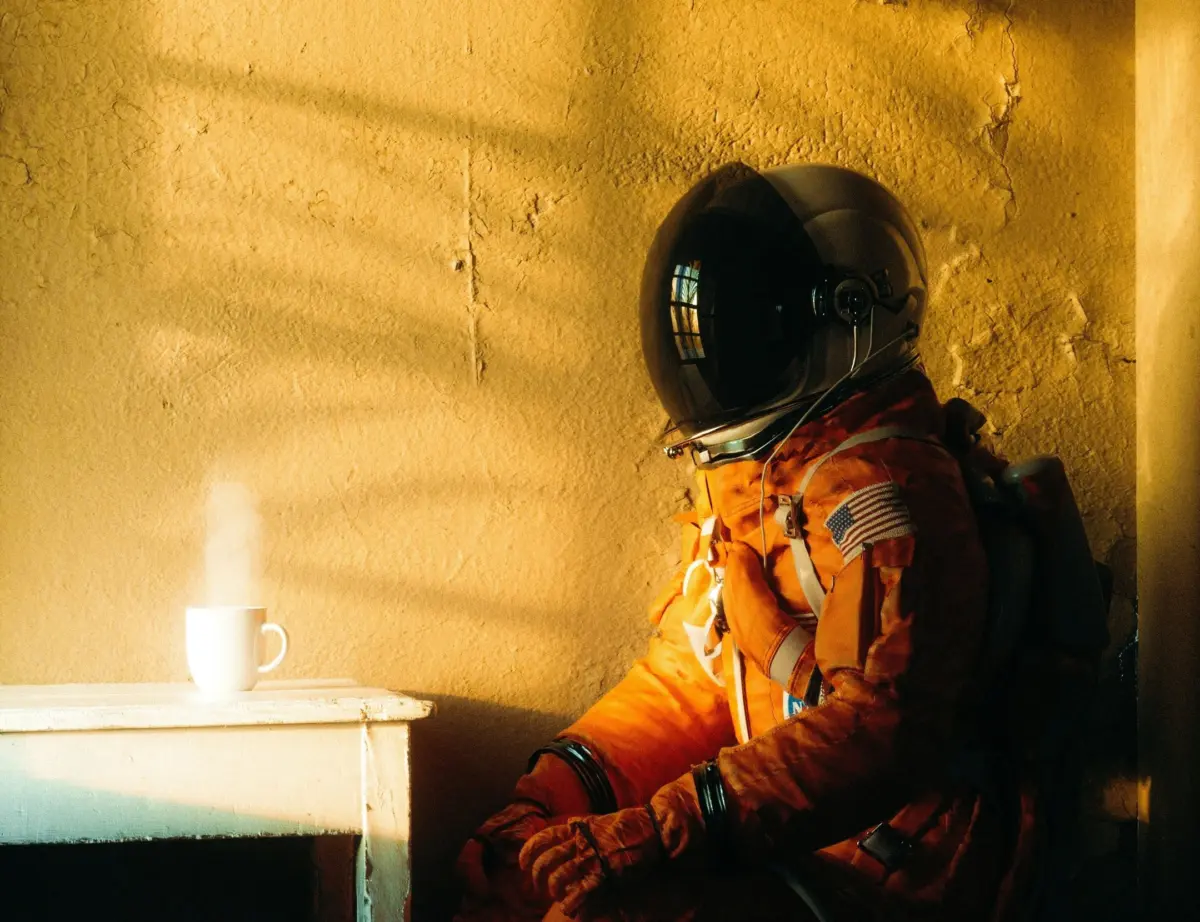
In an extraordinary intersection of youth alienation, space-age obsession, and extreme psychological confinement, a young engineering student named Laurin locked himself inside a retrofitted 40-square-meter basement habitat in his family’s suburban home. The objective was to undertake a self-administered, 200-day solitary simulation of NASA’s Perseverance mission to Mars. What began as an meticulously planned experiment in autonomous living gradually transformed into a tense domestic crisis, exposing the frailties of familial communication, the limits of human sensory deprivation, and the dark side of modern space-flight fascination.
For 115 days, Laurin remained completely sealed behind a drywall barrier, surviving on pre-portioned rations, artificial light, filtered ventilation, and daily exercise on a stationary bike. His sole link to the outside world was a custom-coded messaging application that artificially calculated and imposed the real-time light-speed time delay between Earth and Mars—a delay that grew by six seconds each day.
While Laurin sought to prove his psychological endurance to join the next generation of interplanetary pioneers, his parents were drawn into a silent emotional vortex. His father became an unwitting mission controller and technical co-conspirator, while his mother, Anna, slipped into profound despair. The experiment ultimately collapsed on Day 115, when severe communication breakdown and obvious signs of physical and mental deterioration forced the father to break the habitat’s seal, raising urgent questions about youth mental health, the ethics of home-brewed analog research, and the psychological costs of radical self-isolation.
Read Also
+-----------------------------------------------------------------------------------+
|                            MISSION METRICS AT A GLANCE                            |
+------------------------------------+----------------------------------------------+
| Designated Mission Name            | Mission to Mars 2022 (Self-Simulated)        |
| Target Duration                    | 6 Months, 19 Days (~200 Days)                |
| Actual Duration Elapsed            | 115 Days                                     |
| Habitat Area                       | 40 Square Meters (Suburban Basement Workshop)|
| Daily Water Allowance              | 7 Liters Total (3L Drinking/Cooking, 4L Hygiene)|
| Peak Simulated Telemetry Delay     | ~11.5 Minutes One-Way (23 Minutes Round-Trip)|
| Primary Life Support Features      | Sealed Ventilation, Custom Sewage Pump, LEDs |
+------------------------------------+----------------------------------------------+
Detailed Chronology of the Isolation Experiment
       [Autumn 2021]               [January 2022]              [March 2022]                [April 2022]
  Planning & Construction ----> Launch (Sol 1) ----> Sol 70 (Birthday Photo) ----> Sol 115 (Abort / Unseal)
  - Plumbed toilet & meter      - Hatch sealed with pliers  - Visible weight loss       - Single-number message
  - Drywall partition built     - Message delay active     - Teddy bear log entry      - Father breaks seal
Phase 1: Planning and Construction (Autumn Prior to Launch)
The roots of the project trace back to Laurin’s childhood obsession with the defunct Mars One project, a venture that promised one-way passages to the Red Planet. Though Mars One was revealed to be an unfunded scheme, the concept of absolute, solitary spaceflight took firm root in Laurin’s mind. While enrolled in a university mechanical engineering course focused on space travel, he systematically retreated from physical attendance, downloading lecture notes in isolation and surrounding himself with literature ranging from technical NASA manuals to Robinson Crusoe, Joseph Conrad, and Edgar Allan Poe.
In late autumn, Laurin formally announced his plan to his parents. Citing NASA’s requirement for candidates of simulated Mars stations—and noting that he would reach the prime age of 30 by the favorable alignment of 2033—he outlined a strict protocol: he would seal himself within the family basement for six months and nineteen days, matching the transit time of the Perseverance rover.
Despite his mother’s fierce opposition and threats to contact public mental health services, Laurin’s father agreed to assist with the technical alterations. Together, they constructed a drywall partition over a 40-square-meter section of the basement encompassing an old workshop and a fitness niche. A professional plumber was hired to install a water meter on the tap and a specialized macerating waste pump connected to the main sewage line. The exterior wall was painted in red lettering: "Mission to Mars 2022."
Phase 2: Launch and Initial Transit (January: Sol 1 to Sol 30)
On a Saturday morning in mid-January, following a quiet breakfast, Laurin prepared for entry. His mother intentionally left the house to conduct routine grocery shopping, refusing to participate in the formal farewell.
At 09:00 AM, Laurin stepped through the custom hatch. His father closed the barrier, secured the external latch using heavy pliers according to Laurin’s instructions, and photographed the sealed entry.
                                [BASEMENT HABITAT]
  +-----------------------------------------------------------------------------+
  |  [Exercise Niche]         [Living & Work Area]          [Sanitation Area]   |
  |  - Home Trainer Bike      - Yoga Mat (Bed)              - Metered Tap       |
  |  - Blocked Light Shaft    - Microwaved Mason Jars       - Macerator Toilet  |
  |  - Constant Fan Hum       - Laptop / Offline Logbook    - Sealed Trash Bin  |
  +-----------------------------------------------------------------------------+
                                      ||
                             [SEALED HATCH / PLIERS]
                                      ||
                                [UPSTAIRS HOUSE]
  +-----------------------------------------------------------------------------+
  |  - Father (Liaison/Logistics)      - Anna (Mother / Uncommunicative)        |
  +-----------------------------------------------------------------------------+
Initial operational parameters ran smoothly:
- Diet: Rationed, pre-cooked meals preserved in sterile glass jars, supplemented by daily synthetic multivitamin cocktails and occasional canned fruits.
- Hygiene & Clothing: Disposable fleece underwear changed every two to three weeks; water usage strictly monitored at 7 liters per day.
- Routine: Daily 20-kilometer sessions on a stationary bike, logging blood pressure, and reading offline media.
- Telemetry Delay: Laurin instituted a daily delay code of six seconds per day to simulate orbital drift. By the end of the first month, messages sent via the internal household network took several minutes to deliver each way.
Phase 3: The Mid-Point Degradation (Days 70 to 100)
As winter transitioned into early spring, the physical and psychological cracks within the experiment became undeniable. Upstairs, the domestic atmosphere deteriorated. Anna suffered from a persistent, unexplained cough and ceased speaking directly about her son, although telemetry logs revealed she was sending private, unshared messages to his terminal.
On Day 70, Laurin’s birthday, his father transmitted a photograph of a birthday cake with a single candle. In return, Laurin transmitted his first self-portrait from inside the module:
- He sat cross-legged on a yoga mat, holding a childhood teddy bear.
- He wore an overgrown beard and unkempt hair, displaying clear signs of significant weight loss.
- His message was brief: "Day 70. All systems operational."
By Day 90, communication became increasingly erratic. Laurin abandoned narrative updates, transmitting only technical logs, quotes from Jack London, or dry metrics regarding sol lengths (24 hours, 39 minutes, 35 seconds). His voice was reported to have receded into a technical silence, mirroring the environmental sensory deprivation of his dim, fan-humming enclosure.
Phase 4: Systemic Breakdown and Termination (Days 101 to 115)
The final phase of the mission was marked by extreme communication decay. Messages sent by the father—such as asking what Laurin missed most—went unanswered for long stretches or received fragment responses.
- Day 105: Laurin accidentally sent an uncropped photograph showing a cluttered floor, piles of unwashed disposable clothes, stacks of empty mason jars, and garbage bags accumulating inside the 40-square-meter footprint.
- Day 110: A single-line transmission arrived at the father’s phone: "An apple." Taking a fresh apple from the kitchen, the father left it on the concrete floor just outside the drywall partition wall, sitting beside it to listen to the ceaseless hum of the interior ventilation fan.
- Day 115 (02:14 AM): The father received a final, stripped-down ping: simply the number "115". There were no health metrics, logs, or personal greetings attached.
Disturbed by the sudden termination of all verbal output, the father abandoned his post at work later that afternoon and returned home. Finding the untouched apple still lying outside the partition, he retrieved pliers, broke the physical seal on the hatch, and breached the module.
Inside, the environment was heavy with stale air, sweat, and accumulated waste. Laurin was found sitting motionless on his yoga mat in near-darkness, his back against the wall, staring blankly ahead with an open logbook at his side. He was emaciated and physically unsteady. Upon seeing his father, Laurin offered no resistance. Helped to his feet, he embraced his father and softly whispered twice: "Thank you."
Supporting Context & Technical Metrics
The "Mission to Mars 2022" experiment was framed by strict technical boundaries self-imposed by Laurin to match professional space agency standards, despite operating entirely within a residential building.
================================================================================
                       SIMULATED LIFE SUPPORT & METRICS
================================================================================
Parameter                     Value / Standard
--------------------------------------------------------------------------------
Total Enclosed Space          40 square meters (Drywall / Insulation Partition)
Ventilation System            Continuous Electric Exhaust Fan (Blocked Light Shaft)
Lighting Conditions           100% Artificial Light (Dim LED Array)
Daily Water Ration            3 Liters (Ingestion/Cooking), 4 Liters (Hygiene)
Waste Management System       Macerating Sewage Pump + Sealed Air-Tight Bin
Fitness Protocol              20 km / day on Magnetic Resistance Trainer
Primary Diet                  Sterilized Microwave Mason Jars, Fleece Underwear
Communications Protocol      App-based 6 sec/day escalating delay (Max ~23 min)
================================================================================
Psychological Dynamics of Extreme Confinement
Analog research studies conducted by NASA (such as CHAPEA) and the Russian Academy of Sciences (Mars-500) have long established that prolonged isolation in small volumes produces severe cognitive stressors:
- Asthenic Syndrome: Characterized by fatigue, emotional lability, irritability, and gradual withdrawal from interpersonal communication. Laurin’s transition from detailed letters to monosyllabic responses and isolated numbers matches classic asthenic onset observed in long-duration sub-aquatic and space habitat analogs.
- Sensory Deprivation & Monotony: The removal of natural light cycles, combined with the low-frequency hum of a continuous ventilation fan, distorts temporal perception. This explains Laurin’s absolute reliance on measuring time in Martian sols rather than terrestrial days.
- Familial Entrapment: Unlike professional astronaut crews backed by ground support teams and psychological monitoring, Laurin’s control team consisted of an emotionally compromised father who alternated between helper and enabler, and a mother whose silent grief effectively fractured the family dynamic upstairs.
Official & Expert Perspectives
While the event was kept entirely private from municipal authorities or medical institutions during its execution, behavioral health specialists and space historians view cases of self-administered isolation as symptomatic of broader sociological shifts.
Psychological Analysis: The Escape into Confinement
Dr. Aris Thorne, a senior researcher in behavioral health and human performance in isolated environments, reviewed the chronicled events of the basement simulation:
"What we observe in Laurin’s case is a phenomenon known as ‘cosmic escapism’—the use of rigorous, simulated scientific protocol to justify radical social retreat. In a hyper-connected, fully mapped modern world where every square meter can be viewed instantly on Google Maps, young individuals feeling overwhelmed by existential expectations may perceive the vastness of space—and the extreme isolation it demands—as the only remaining domain of true autonomy.
However, performing such an experiment alone, without psychological oversight or structured crew interactions, almost guarantees severe sensory regression. The subject effectively recreates the sensory ecosystem of a womb—a highly controlled, dark, monotonous environment where the outside world is reduced to delayed text signals."
Parental Complicity and Ethical Dilemmas
The chronicler’s account raises severe questions regarding parental boundaries and emergency intervention. The father acknowledged feeling a strange exhilaration in helping translate Laurin’s vision into reality, admitting that building the partition wall was "the only way not to lose him completely."
Psychologists note that this dynamic frequently occurs in families dealing with severe withdrawal behaviors (such as extreme hikikomori cases observed globally). Parents often rationalize facilitating the young adult’s isolation under the fear that forcing entry or calling emergency services will permanently sever the emotional bond or push the individual into self-harm.
Future Outlook and Lessons Learned
Following the unsealing of the basement habitat on Day 115, Laurin was returned to an open-air environment, ending a four-month period without direct sunlight, fresh food, or uninhibited human contact.
+-------------------------------------------------------------------------------+
|                       POST-SIMULATION RECOVERY PROTOCOL                        |
+-------------------------------------------------------------------------------+
| Immediate Interventions:                                                      |
|   1. Complete medical assessment (weight loss, muscle atrophy, vitamin intake). |
|   2. Gradual reintroduction to natural sunlight and complex real-time speech.   |
|   3. Dismantling of internal drywall partition and sewer pump system.         |
|                                                                               |
| Long-term Challenges:                                                         |
|   1. Addressing underlying psychological triggers of isolation.                |
|   2. Rebuilding family dynamic and resolving mother's chronic grief/trauma.   |
|   3. Redirecting academic ambitions toward grounded, collaborative goals.     |
+-------------------------------------------------------------------------------+
Decommissioning the Habitat
The family quickly dismantled the 40-square-meter drywall installation, restoring the basement to its original function as a storage workshop. The macerating toilet pump and blocked light shafts were removed, erasing the physical infrastructure of the "Mission to Mars 2022."
Re-establishing Terrestrial Grounding
Laurin’s physical recovery required addressing significant muscle loss caused by limited mobility and a restricted diet, alongside a gradual re-adaptation to natural light cycles. Mentally, the immediate post-isolation phase centered on re-establishing real-time, non-delayed human speech. The sudden transition from an environment where communication took 20 minutes to process back to the immediacy of face-to-face conversation presents its own cognitive hurdles.
Broader Implications for Private Analog Research
The incident highlights the growing need for clear guidelines surrounding non-institutional space analogs. As private spaceflight publicity captures global attention, domestic self-simulations present hidden risks:
- Absence of Safety Protocols: Lack of emergency medical abort triggers or third-party psychological monitoring.
- Sub-standard Environmental Quality: Accumulation of waste, potential volatile organic compound (VOC) buildup from sealed plastic bins, and unmonitored microbial growth in stagnant water lines.
- Psychological Strain on Non-Participants: The severe mental toll exacted on family members acting as involuntary mission support personnel.
Ultimately, Laurin’s 115-day journey did not reach the red dust of Mars, nor did it complete its planned 200-day trajectory. Yet it exposed a profound truth about human endurance: the vast, terrifying emptiness of space is easily rivaled by the quiet distances human beings can create right beneath their own living room floors.





Comments
Facebook App ID not configured. Please add it in the Customizer.