
Executive Overview
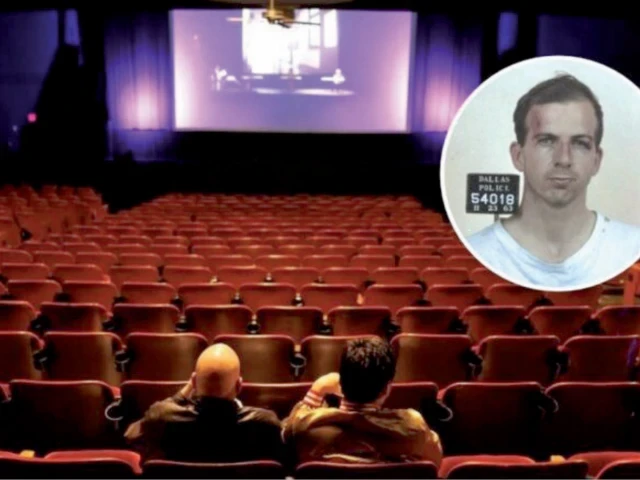
Every November 22, as a chill settles over the historic Oak Cliff neighborhood of Dallas, Texas, history enthusiasts, amateur sleuths, and curious tourists converge on a singular landmark: the Texas Theatre. Located just a few miles from Dealey Plaza—where President John F. Kennedy was tragically struck down on a sunlit Friday afternoon in 1963—this atmospheric 1931 movie house holds a permanent, chilling place in the annals of American history. It was here, amidst the flicker of silver-screen projections and the chaos of a nation plunging into shock, that Lee Harvey Oswald was captured by the Dallas Police Department roughly 80 minutes after the assassination.
Today, the Texas Theatre operates not merely as a historic relic trapped in amber, but as a vibrant, independent cultural hub that actively embraces its grim legacy. Through annual commemorations known as "JFK Day," the theater bridges the gap between collective national trauma and living history. Visitors can walk the same terrazzo floors, purchase tickets at the original box office for the historically accurate price of 90 cents, and watch the exact double feature that was playing when law enforcement swarmed the auditorium.
However, the theater’s survival is a triumph in its own right. Having weathered decades of urban decay, the rise of multiplex chains, the economic devastation of the COVID-19 pandemic, and the existential threat of home streaming services, the Texas Theatre stands defiant. It has evolved into a sanctuary for cinema lovers and a touchstone for those attempting to grasp the tactile reality of an event that fundamentally altered the trajectory of the 20th century. This in-depth report explores the historical weight of the Texas Theatre, the meticulous preservation of its darkest hour, its enduring cultural footprint in modern media, and its ongoing mission to remain a vital community asset in the heart of Dallas.
Read Also
Detailed Chronology: From the Motorcade to the Oak Cliff Arrest
To understand the magnetic pull of the Texas Theatre, one must retrace the frantic timeline of November 22, 1963—a day that transformed ordinary city locations into permanent fixtures of global history.
12:30 PM: The Shots on Elm Street
At precisely 12:30 PM CST, the presidential motorcade swept past the Texas School Book Depository on Elm Street in downtown Dallas. As the open-top Lincoln Continental limousine passed Dealey Plaza, three shots rang out. President John F. Kennedy was struck in the head and neck, and Texas Governor John Connally was severely wounded. Within moments, the vehicle accelerated toward Parkland Memorial Hospital, leaving behind a scene of absolute pandemonium.
In the immediate aftermath, suspicion quickly zeroed in on the Texas School Book Depository, where an employee named Lee Harvey Oswald was reported missing. According to subsequent investigations by the Warren Commission, Oswald fled the building, boarded a city bus, took a taxicab to his rooming house in Oak Cliff to retrieve a revolver, and then walked toward the commercial district of the neighborhood.
1:00 PM to 1:20 PM: The Flight of Lee Harvey Oswald
During his flight, Oswald encountered Dallas Police Officer J.D. Tippit, who had been patrolling the Oak Cliff area and stopped a man matching the broadcast description of the presidential assassin. Near the intersection of 10th Street and Patton Avenue, an altercation ensued, and Tippit was fatally shot. Eyewitnesses immediately pointed police toward a fleeing suspect who was ducking through nearby commercial properties and residential yards.
Sensing the closing net, Oswald slipped into the dimly lit lobby of the Texas Theatre on West Jefferson Boulevard at approximately 1:20 PM. Fleeing without paying, he caught the attention of Johnny Brewer, the manager of a neighboring shoe store. Brewer noticed the young man acting suspiciously—ducking into the theater’s foyer as a squad car raced past with sirens blaring—and promptly alerted the theater’s ticket clerk, Julia Postal, and called the police.
1:50 PM: The Siege and Arrest
Acting on Brewer’s tip, a dozen Dallas police officers swarmed the Texas Theatre, entering through the front and rear exits. The house lights were abruptly switched on, cutting through the darkness of the auditorium where around 15 patrons were watching a war double feature.
Officer M.N. McDonald located Oswald sitting near the rear of the theater in row S. As officers approached, Oswald reportedly drew his .38-caliber revolver, pulled the trigger—though the weapon allegedly misfired—and engaged in a brief, violent struggle with police. McDonald and several other officers subdued Oswald, beating back his resistance before hauling him out through the alleyway into a waiting squad car. The arrest marked the beginning of the end of the manhunt, culminating two days later when nightclub owner Jack Ruby fatally shot Oswald in the basement of Dallas police headquarters as cameras rolled.
Supporting Context & Metrics: Preservation, Programming, and Economics
The preservation of the Texas Theatre is a masterclass in adaptive reuse and cultural stewardship. Operated today by Barak Epstein and his team, the theater balances commercial viability with historical reverence.
The Economics of Memory
Maintaining a single-screen, historic neighborhood cinema in the 21st century is fraught with financial peril. Epstein and his partners assumed management of the venue when it was struggling, injecting new life into its operational model by blending arthouse programming, genre festivals, and community events with its unique JFK heritage.
| Metric / Detail | Historical Context (1963) | Modern Commemoration (Present Day) |
|---|---|---|
| Ticket Price | $0.90 USD | $0.90 USD (Special "JFK Day" promotional rate) |
| Feature Films | War Is Hell and Cry of Battle | Surviving fragments of War Is Hell + original double feature |
| Box Office Location | Original front-building kiosk | Fully preserved 1931 architectural facade and ticketing booth |
| Seating Row | Row S, Seats 2 through 5 | Row S, Seat 5 (Iconic pilgrimage spot for visitors) |
As noted by long-time patrons and visitors like Duncan McQueen and Richard Pruett, the physical continuity of the space offers an irreplaceable sensory experience. Visitors do not simply read about history in a textbook; they purchase tickets at the same physical counter, step onto the same sloped floors, and sit under the same vaulted ceiling that sheltered moviegoers six decades ago.
The Film Programming
On "JFK Day," the theater screens the exact films that were rolling on the projectors when Oswald was captured: Cry of Battle, starring Van Heflin, and a fragmented surviving print of War Is Hell. These films, largely forgotten by mainstream cinema history, are granted a surreal second life as historical artifacts.
Additionally, the screening is preceded by archival material, including a specially produced video featuring Johnny Brewer recounting the moments he pointed police toward the fugitive. This meticulous attention to detail transforms an afternoon at the movies into a living museum experience, shielding the past from abstraction.
Official Statements and Cultural Commentary
The enduring gravity of the Texas Theatre was on full display during the recent 63rd-anniversary commemorations, drawing prominent filmmakers, historians, and international journalists to Dallas.
Director Insights on Living History
Renowned filmmaker Roland Joffé, whose presence at the theater coincided with the premiere of his new mafia-perspective docudrama November 1963, spoke eloquently about the unique aura of the venue. Addressing an audience gathered inside the historic auditorium, Joffé emphasized that historical sites should not feel sterile or academic.
"What’s very beautiful here is that this movie theater is very much alive," Joffé remarked to Agence France-Presse (AFP). "It has its own history, which makes it even more remarkable… We’re suddenly aware that history hasn’t gone. We’re just a part from it, with a slightly different stage, and it’s therefore completely alive."
Barak Epstein, the theater’s managing director, echoed this sentiment regarding the delicate balance of commercial operations and solemn remembrance. While the venue is primarily dedicated to celebrating independent, international, and classic cinema 364 days a year, Epstein acknowledges that November 22 demands a specific acknowledgment.
"That day… we do sort of lean into what happened here and commemorate it," Epstein explained. By leaning into its past without sensationalizing it, the theater provides a safe, respectful space for public processing and historical reflection.
The Visitor Perspective: Moving Beyond Imagination
For the public, the physical architecture of the theater acts as a psychological bridge. Richard Pruett, who traveled to Dallas with his son to witness the anniversary programming, articulated the profound shift that occurs when stepping inside the building:
"It’s a strange feeling because it makes it seem so much more real," Pruett said while waiting in the lobby. "You no longer have to rely on your imagination so much."
This sentiment is shared by thousands of tourists who make the trek from Dealey Plaza—where white X marks painted on the asphalt of Elm Street designate the fatal trajectory of the presidential motorcade—to the Oak Cliff neighborhood. The spatial proximity of these two sites grounds the sprawling, often conspiracy-laden mythology of the JFK assassination in concrete geography.
Future Outlook: Safeguarding a Century-Old Cultural Anchor
As the Texas Theatre approaches its centennial anniversary in 2031, its stakeholders face the dual challenge of structural preservation and relevance in a rapidly changing media landscape.
Architectural and Technological Adaptations
While the building retains its 1931 art deco and neoclassical charm, modern operations require constant maintenance. Upgrades to digital projection and sound systems have been carefully integrated into the historic auditoriums without disrupting the visual integrity of the space. Epstein and his team have prioritized keeping the theater operational as a multi-use facility, hosting live music performances, comedy shows, and film festivals alongside its core arthouse programming.
Educational Outreach and Historical Literacy
Looking forward, the theater’s administration aims to deepen its educational partnerships. By collaborating with local universities and historical societies, the Texas Theatre is developing archival workshops, film preservation seminars, and guided tours that contextualize the events of 1963 within the broader social and political movements of the 1960s. The goal is to transition the narrative from a morbid curiosity about an assassination to a broader appreciation of mid-century American culture, urban evolution, and cinematic history.
Conclusion: The Unyielding Light of the Silver Screen
The Texas Theatre remains an indispensable monument to a fractured moment in American history. It proves that historic locations do not need to be converted into lifeless museums to honor the past. Instead, by continuing to project films, welcome audiences, and sell tickets at 1963 prices for one day a year, the theater asserts that history is not a static chapter in a book, but a continuous stream that flows through our present. As long as the projector light cuts through the darkness of row S, the echoes of November 22 will continue to find a receptive audience in the heart of Dallas.





Comments
Facebook App ID not configured. Please add it in the Customizer.