
Executive Overview
In the wake of a surprising wave of midterm victories that defied conventional political wisdom, a new narrative has begun to dominate mainstream media analysis. As captured by a much-discussed Wall Street Journal headline, the prevailing theory posits that, "After Decades of a Religious Right, Democrats Find a Religious Left."
This formulation suggests a symmetrical political evolution: just as conservative evangelicals and traditional Catholics built an institutionalized, highly organized political machine on the right over the past fifty years, the Democratic Party has seemingly birthed its own organized religious counterpart. Yet, a deeper investigation into the backgrounds of these successful candidates reveals a far more nuanced, localized, and complex reality.
The victorious figures driving this conversation are not the vanguard of a newly minted, mass-mobilized "religious left." Rather, they are largely white mainline Protestants—ordained ministers and seminarians from the Presbyterian Church (USA), the United Methodist Church, and the Evangelical Lutheran Church in America—who have successfully injected explicit Christian ministry and language into progressive campaigns. Their victories in historically difficult terrain, from Texas to Kansas and Iowa, signal a potentially profound cultural and ideological shift within the Democratic Party. For decades, the party has struggled with an internal secularist faction that viewed overt religious expression with suspicion, if not outright hostility.
Read Also
By centering their campaigns on Christ’s mandate to care for the poor, marginalized, and vulnerable, these candidates have broken a long-standing taboo within modern progressivism. However, claiming that this represents the birth of a unified, grassroots "religious left" misreads the institutional weakness of modern mainline Protestantism. Instead, these historic wins reflect a loosening of secular dogmatism within party primaries, a renewed willingness among progressive voters to embrace candidates of deep faith, and a re-emergence of a theological lineage rooted deeply in the late-nineteenth-century Social Gospel movement. As these politicians take office, their presence promises to reshape internal party dynamics, challenge lingering secular prejudices in the public square, and spark renewed theological debates across the American political landscape.
Detailed Chronology and Electoral Breakthroughs
To understand the scope of this political shift, one must examine the specific races and candidates that shattered long-standing electoral glass ceilings during the midterms. These were not marginal victories in safe, deep-blue districts; they were hard-fought battles in regions where a Democratic candidate embracing evangelical or mainline pastoral credentials was previously considered a political impossibility.
The Southern and Midwestern Surprises
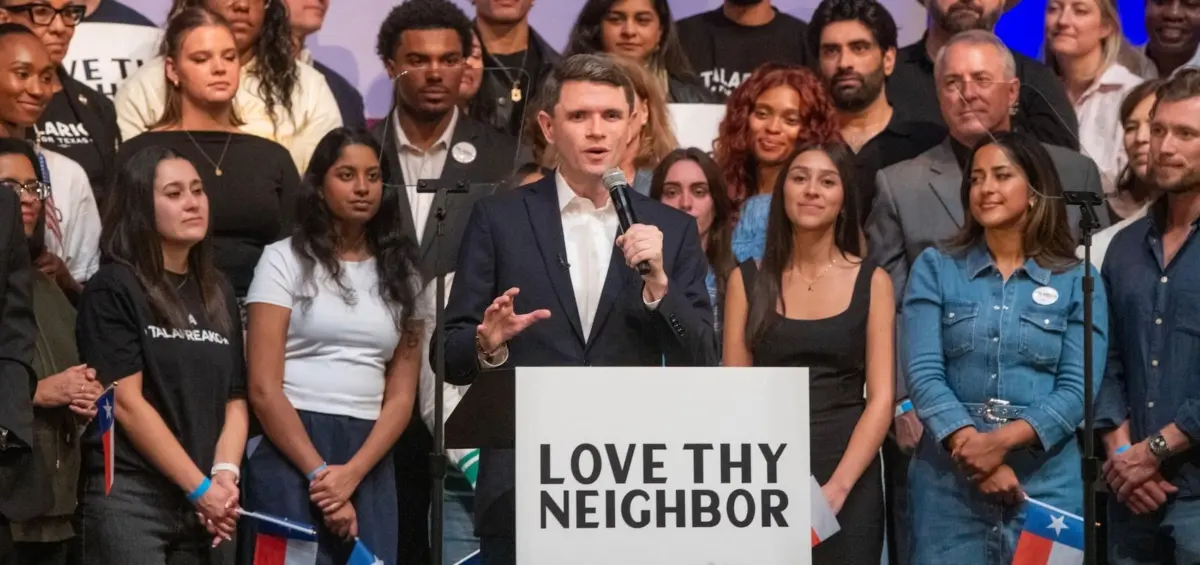
The timeline of these historic victories began to unfold on election night as returns broke conventional electoral models. Among the most stunning upsets was the performance of James Talarico, a Presbyterian (PCUSA) seminarian whose campaign in Texas captured national attention. Talarico’s victory makes him the first Democratic senator elected in the Lone Star State since the 1980s—a milestone that fundamentally challenges the assumption that statewide success in the South requires secularized messaging or complete avoidance of traditional religious idioms.
Concurrently, in Kansas, Adam Hamilton, a prominent Methodist (UMC) megachurch pastor, achieved what many political analysts deemed impossible. Hamilton secured a Senate seat, becoming the first Democrat to represent Kansas in the upper chamber in more than eighty-five years. Bringing the weight of decades of pastoral leadership into a deeply conservative agricultural state, Hamilton’s campaign leaned heavily on a message of pastoral care, civic reconciliation, and economic justice framed explicitly through a Christian ethical lens.
The momentum was not confined to the Senate. In Iowa, two distinct congressional races saw mainline clergy members flip Republican House seats into the Democratic column. Sarah Trone Garriott, an ELCA pastor, and Lindsay James, a PCUSA minister, both successfully unseated incumbent Republicans in fiercely contested districts. Across all four of these high-profile races, the common denominator was unmistakable: three ordained ministers and one active seminarian placed Christ’s call to serve the poor and heal the sick at the very center of their policy agendas.
The Campaign Trail: A Radical Shift in Rhetoric
Had political observers been told a year prior to the midterms that major congressional campaigns would be anchored by active Christian ministry, the initial reaction would have been sheer shock. The revelation that the wider Democratic apparatus would rally behind these figures and carry them to historic victories would have stretched credulity to its breaking point.
On the campaign trail, these candidates refused to relegate their faith to the private sphere—a traditional defensive posture adopted by many center-left politicians for decades. Instead, they weaponized the gospel narratives of compassion and equity against conservative economic policies, arguing that true fidelity to Christian scripture demanded universal healthcare, robust social safety nets, and systemic equity. When asked tough questions by skeptical interviewers, their responses broke the scripted, consultant-driven mold of modern politics. Most famously, when Talarico was asked during a brutal stretch of his campaign whether he loved his hardline conservative opponent, Ken Paxton, his immediate and unhesitating response stunned onlookers: "Yes, [because] Ken Paxton is a child of God. He is my brother in Christ." On election night, the physical rostrum from which he delivered his victory speech bore a simple, unvarnished placard reading: "Love Thy Neighbor."
Supporting Context & Metrics: The Myth of the "Religious Left"
While the cultural impact of these victories is undeniable, political scientists and historians urge caution against labeling this phenomenon as the birth of a "religious left" equivalent to the conservative "religious right."
Institutional Realities of Mainline Protestantism
The comparison to the religious right falls apart upon closer institutional examination. The religious right that emerged in the late 1970s and 1980s was powered by tens of millions of mobilized voters, an extensive grassroots network of mega-churches, parachurch organizations, Christian broadcasting empires, and highly coordinated political action committees. It was, and remains, a vast institutional ecosystem capable of driving legislative agendas and holding politicians accountable at every level of government.
In contrast, the candidates who won these midterm seats emerge from white mainline Protestant denominations—traditions that, despite the massive individual congregation led by Senator-elect Hamilton, continue to shed members at an alarming rate. Mainline Protestantism is a faint shadow of its former demographic self. These are not institutions presently capable of mobilizing a potent, grassroots-driven mass political movement. There was no widespread, coordinated political action originating from the pews of PCUSA, UMC, or ELCA churches that engineered these electoral triumphs.
The Legacy of the Social Gospel
Instead of a new grassroots movement, what we are witnessing is a modern echo of the Social Gospel movement that arose at the end of the nineteenth century. During that era, mainline Protestant denominations were the largest, wealthiest, and most culturally powerful institutions in the United States. They served as the moral engine of early progressivism, successfully establishing private charitable institutions, hospitals, and universities while aggressively lobbying for government intervention to solve the crises of industrialization: urban poverty, atrocious public health, and lax worker protections.
Today’s successful candidates are theological and political heirs to that specific historical tradition. They represent an intellectual and moral lineage that views state action not as an enemy of faith, but as a potential instrument of divine justice. However, because the institutional base of mainline Protestantism is vastly diminished compared to the Gilded Age, these politicians are operating largely as individual moral actors rather than as the vanguard of a revitalized, mass-membership religious coalition.
Official Statements and Political Reactions
The fallout from these elections has triggered intense debate within both political parties, academic circles, and religious institutions across the country.
Internal Party Realignments
For decades, the Democratic Party has wrestled with an internal faction of secularists and anti-religionists who maintained that religious faith must be rigorously scrubbed from the public square. Within this worldview, religious language was viewed primarily as a dog-whistle for exclusion, bigotry, or the erosion of the separation of church and state.
The primary significance of these midterm victories lies in the fact that candidates who openly highlighted their Christian ministry—and who did not fit the demographic profile of historically Black Protestant leaders long welcomed in the party—managed to survive grueling Democratic primaries and win enthusiastic, broad-based party support.
Political analysts note that this widespread embrace signals a quiet erosion of secularist hegemony within the party leadership. Now that these pastoral candidates have emerged as political heroes, the Democratic Party has a powerful pragmatic incentive to make institutional and rhetorical room for politicians who speak openly about their Christian faith. As veteran strategists have observed, welcoming believers back into the fold is not merely a moral imperative for inclusivity; it is an electoral necessity if the party hopes to reconnect with working-class voters in rural and suburban communities who view secular progressivism with deep suspicion.
Theological Tensions and Controversies
Yet, this newfound receptiveness within the party is not without its friction points. The tolerance shown to religious candidates is likely to be severely tested when a faithful politician’s theological convictions lead them to conclusions that conflict with the established progressive platform. For instance, while these candidates easily toed the party line on most core issues during the midterms, the integration of faith and politics inevitably brings ideological stress fractures to the surface.
Critics from traditional and conservative theological perspectives have been quick to point out the theological acrobatics sometimes required to baptize standard progressive policy agendas. Particular alarm was raised by conservative commentators over statements made by candidates like James Talarico, whose novel interpretations of scriptural events—such as framing the Annunciation as divine proof of God’s support for abortion—drew sharp rebukes from orthodox Christians.
Such controversies highlight the danger of instrumentalizing sacred texts for partisan ends. However, commentators across the ideological spectrum argue that the disgust generated by theological overreaches should not blind observers to the genuine expressions of Christian charity and foundational teachings demonstrated on the campaign trail.
Future Outlook: A New Era for Faith in the Public Square?
As the dust settles on the midterm cycle, the long-term implications for American governance are beginning to come into focus. These results portend a shifting landscape where the intersection of faith and progressive politics will be negotiated with renewed intensity.
Quieting the Secularists and Fostering Open Debate
Outside of the immediate mechanics of the Democratic Party, the fact that high-profile senators and representatives are speaking forthrightly about how their Christian faith compels them to engage in civic life could have a transformative effect on the broader cultural conversation. By demonstrating that deep religious commitment and progressive public policy can coexist in a single individual, these candidates help disarm the reflexive anti-religionists who seek to banish faith from public discourse.
If sustained, this normalization of religious discourse in center-left politics could help dispel the pervasive prejudice against voices of faith in the public square, fostering the kind of open, pluralistic debate that the nation urgently requires. Furthermore, these victories will almost certainly serve as a beacon, drawing more liberal and moderate Christians into the political arena. In politics, success breeds emulation; seeing pastoral candidates win major office will inspire a new generation of seminary graduates and lay leaders to run for local, state, and federal positions.
A Necessary Step Toward Broad-Based Reconciliation
Ultimately, the 2024 midterms may have ushered in a monumental shift—one that is far more complex than mainstream media narratives suggest. It is not the sudden birth of an organized "religious left" that mirrors the institutional might of the Christian right. Rather, it is the cracking of a secular monoculture within the Democratic Party and the tentative return of faith-infused progressive rhetoric to center stage.
For this progress to mature, the Democratic Party must continue to rid itself of the partisan intolerance that has long alienated people of faith. A genuine return to pluralism requires recognizing that moral convictions can lead citizens to diverse political conclusions. If the party can learn to embrace candidates whose faith guides them—even when those convictions occasionally challenge party orthodoxy—it will have taken a vital first step toward healing the deep cultural fractures dividing the American electorate. In doing so, it may finally recover the capacious big tent that once welcomed all Americans of conscience, regardless of where their prayers led them.



Comments
Facebook App ID not configured. Please add it in the Customizer.