

Executive Overview
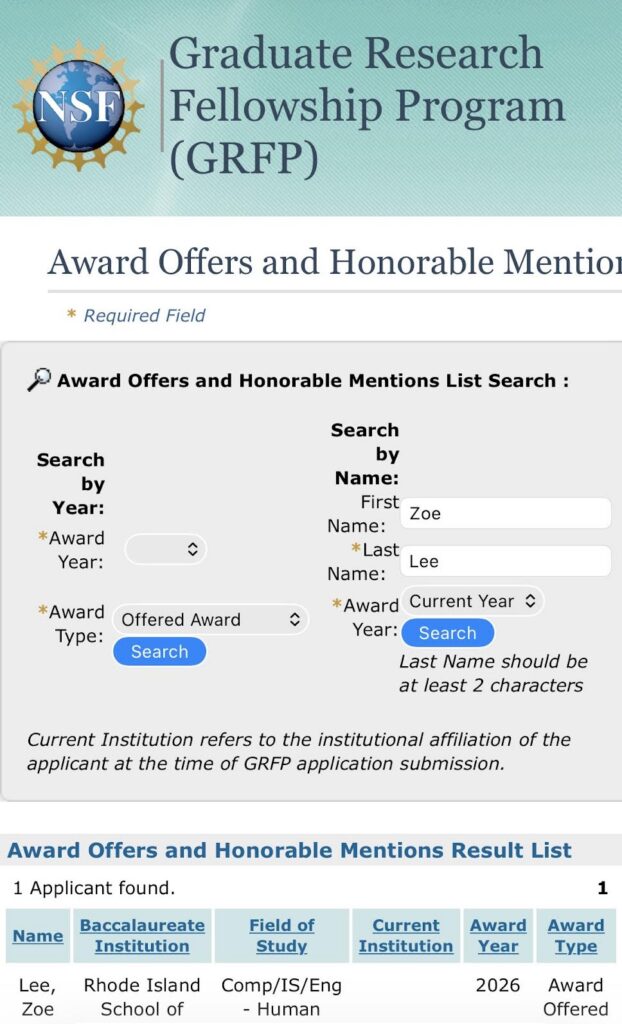
In the upper echelons of academic achievement, few milestones rival the distinction of securing a National Science Foundation (NSF) graduate research fellowship. This highly competitive award identifies and empowers the nation’s most promising STEM and design-research innovators. For Zoe Lee—an alumna of the prestigious Rhode Island School of Design (RISD) with a specialization in Industrial Design—this honor marks the official commencement of a transformative academic chapter.
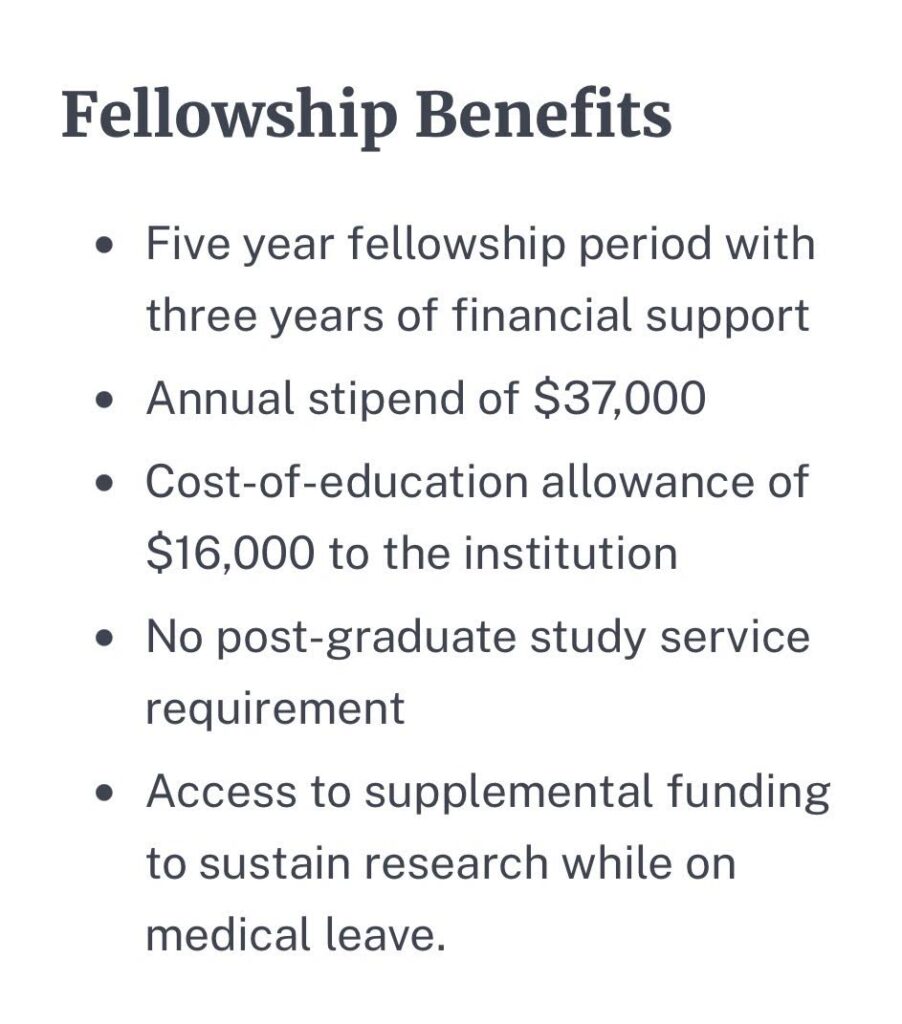
This autumn, Lee will transition to the Massachusetts Institute of Technology (MIT) to begin her Master’s program, backed by an NSF fellowship structured to fully fund both her master’s studies and her subsequent Doctor of Philosophy (Ph.D.) track. This comprehensive financial backing provides her with the autonomy, resources, and institutional support needed to pioneer cross-disciplinary research at the intersection of design, technology, and applied science.
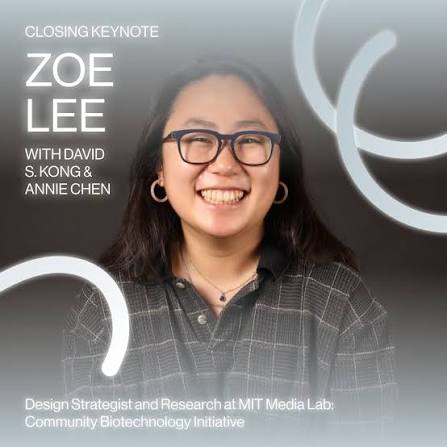
Lee’s ascent is not an isolated triumph, but rather the culmination of a rigorous, multi-year trajectory defined by entrepreneurial ventures, prestigious creative fellowships, and sustainable innovation challenges. From her early explorations in industrial design to founding startups and securing regional design accolades, Lee represents a new breed of modern scholar: one who seamlessly bridges the gap between artistic conceptualization and empirical scientific inquiry. This report provides an exhaustive chronicle of her academic evolution, contextualizes the weight of her achievements, and explores the broader implications of her work as she steps onto MIT’s world-renowned campus.
Read Also
Detailed Chronology: From Creative Foundations to Advanced Scientific Research
The architecture of Zoe Lee’s academic and professional journey reveals a deliberate, progressive synthesis of industrial design, social impact, and systems thinking. To understand her current success at MIT, one must trace the milestones that forged her technical dexterity and design philosophy.
Formative Years and the RISD Foundation
Lee’s academic foundation was built at the Rhode Island School of Design (RISD), an institution globally revered for cultivating avant-garde artists, designers, and thinkers. While many students within industrial design focus purely on consumer aesthetics or ergonomic product development, Lee oriented her studies toward deep functionalism, sustainability, and human-centric problem solving.
Her undergraduate tenure was characterized by rigorous studio critiques, material explorations, and collaborative innovation challenges. During her time at RISD, Lee immersed herself in the philosophy that industrial design is a powerful vehicle for systemic change. Her coursework probed how physical objects and systems interact with environmental and human ecosystems—a perspective that would later serve as the bedrock for her grant-winning graduate research proposals.
Regional Accolades and Early Innovation (2021)
Even prior to her undergraduate commencement, Lee’s capacity for high-level applied problem-solving drew external validation. In June and October of 2021, a multidisciplinary team of RISD industrial design students—featuring Lee prominently—entered and conquered the Rhode Island BlueGreen Innovation Challenge.
The challenge required competitors to design solutions that marry economic development with environmental stewardship, focusing heavily on marine and coastal sustainability. Lee and her team advanced through rigorous finalist rounds to capture top honors, proving early on that her design concepts possessed commercial viability, ecological consciousness, and scientific rigor. This early victory signaled to mentors and industry leaders that Lee was capable of operating at the intersection of environmental science and tactile engineering.

Entrepreneurship and Startup Ventures (2024)
Rather than following a traditional corporate trajectory immediately after graduation, Lee expanded her professional footprint into the entrepreneurial sphere. In late 2024, she helped launch the startup BEAM, concurrently securing a coveted residency or affiliation with NEW INC—the first museum-led cultural incubator dedicated to supporting art, design, and technology.
BEAM’s establishment underscored Lee’s versatility. The venture demonstrated her ability to translate abstract design methodologies into scalable, market-ready initiatives. Operating within the dynamic ecosystem of NEW INC allowed Lee to collaborate with technologists, creative coders, and business strategists, further sharpening the multidisciplinary acumen that would later catch the eye of NSF selection committees.

Creative Recognition and Literary Pursuits (2025–2026)
True to her RISD roots, Lee’s intellectual curiosity has never been confined to a single silo. In late 2025, her creative range was spotlighted through collaborative and independent literary efforts, including a Kickstarter-backed book project titled Eating the Whole Fish.
Following this, in early 2026, Lee’s profile expanded further when she was awarded the prestigious MacDowell Fellowship. The MacDowell Colony, renowned for providing time, space, and an inspiring community to groundbreaking artists, writers, and designers, offered Lee a sanctuary to reflect upon larger conceptual frameworks. This fellowship reinforced her status as a holistic thinker—someone capable of producing both hard industrial prototypes and deeply considered cultural narratives.

The MIT Transition and NSF Fellowship (Fall 2026)
The culmination of these milestones arrived in mid-2026 with the announcement of the National Science Foundation grant. The NSF Graduate Research Fellowship Program (GRFP) is notoriously competitive, evaluating applicants not only on their past academic transcripts, but on their potential to contribute globally significant advancements in research, innovation, and educational outreach.
By securing this fellowship, Lee has ensured full financial sponsorship for her upcoming Master’s program at MIT, with guaranteed continuation through her doctoral studies. As she steps onto the MIT campus this fall, she enters an environment uniquely suited to amplify her hybrid background in industrial design and advanced technology.

Supporting Context & Metrics: Evaluating the Milestone
To fully grasp the magnitude of Zoe Lee’s achievement, it is essential to examine the institutional landscapes, statistical selectiveness, and structural mechanics of the awards she has secured.
The Selectivity of the National Science Foundation Graduate Research Fellowship
The NSF GRFP is the oldest graduate fellowship of its kind, helping support generations of American scientists and engineers who have achieved high levels of international recognition.

- Acceptance Rates: Historically, the GRFP receives upwards of 12,000 to 15,000 applications annually across all participating STEM and design-research fields, with a successful award rate typically hovering between 12% and 16%.
- Evaluation Criteria: Reviewers assess candidates based on two fundamental criteria: Intellectual Merit (the potential to advance knowledge) and Broader Impacts (the potential to benefit society and contribute to the achievement of specific, desired societal outcomes).
- The Interdisciplinary Edge: Lee’s background in Industrial Design from RISD gives her a distinct advantage in meeting the "Broader Impacts" criterion. While traditional STEM applicants often focus strictly on quantitative metrics, designers are inherently trained to evaluate how technology impacts human behavior, accessibility, and environmental sustainability.
The MIT Ecosystem for Design and Engineering
MIT’s graduate programs, particularly those intersecting design, computation, and material science, represent global centers of academic excellence. By embedding herself within MIT’s labs and research groups, Lee will gain access to:
- Advanced Prototyping Facilities: State-of-the-art labs where theoretical concepts can be rapidly physicalized and tested.
- Cross-Departmental Collaboration: Synergy between MIT’s School of Engineering, the Department of Architecture, and the MIT Media Lab.
- Venture Mentorship: Resources akin to those she navigated during her time with NEW INC and BEAM, facilitating the transition of academic research into real-world applications.
Official Statements and Institutional Perspectives
While the formal announcements highlight the structural parameters of the grant, the broader academic community has widely celebrated Lee’s trajectory as a model for modern higher education.

Educational advocates and family members alike have noted the unique path forged by contemporary graduates who refuse to choose between the arts and the sciences. In reflecting on her daughter’s journey, proud family and mentors have emphasized the relentless work ethic, creative resilience, and intellectual curiosity that propelled Lee from studio late nights at RISD to grant-writing success.
Academic observers note that institutions like MIT are increasingly seeking candidates who possess "T-shaped" skills—deep vertical expertise in a technical discipline paired with a broad horizontal capacity for creative synthesis, empathy, and design thinking. Zoe Lee personifies this paradigm. Her ability to pivot fluidly from the conceptual nuance of a MacDowell Fellowship to the empirical rigor required by the National Science Foundation underscores a paradigm shift in how future doctoral researchers are trained.

Future Outlook: The Horizon at MIT and Beyond
As the autumn semester approaches, the academic world watches with keen interest to see how Zoe Lee will deploy her resources at MIT.
Anticipated Research Directions
While specific details of her master’s thesis and eventual doctoral dissertation remain in development as she begins her coursework, her past portfolio provides clear signposts:

- Sustainable Materials and Circular Systems: Building upon her work with the Rhode Island BlueGreen Innovation Challenge and her startup BEAM, Lee is well-positioned to research biodegradable polymers, alternative structural materials, and closed-loop manufacturing systems.
- Human-Technology Interaction: Leveraging her industrial design background, her research will likely explore how emerging technologies—such as soft robotics, smart textiles, or responsive environments—can be engineered to harmonize with human physiology and psychological well-being.
- Translational Innovation: Given her entrepreneurial track record, Lee’s trajectory points toward an academic career that refuses to stay locked inside an ivory tower. Her NSF funding will allow her to test high-risk, high-reward hypotheses that could eventually spin out into commercially viable, society-benefiting technologies.
Conclusion
Zoe Lee’s story is far more than a personal success narrative; it is a testament to the power of interdisciplinary education. By dismantling the artificial barriers that historically separated art and design from hard science and engineering, she has crafted a unique path that commands national recognition. With an NSF-funded graduate career at MIT now unfolding, Lee stands at the vanguard of a new generation of thinkers poised to design, engineer, and build a more sustainable and imaginative future.





Comments
Facebook App ID not configured. Please add it in the Customizer.