
Executive Overview
The debate surrounding narrative perspective remains one of the most consequential structural decisions an author can make. Choosing whether to employ a single point of view (POV) or a multi-POV framework sends ripples across every facet of a manuscript—influencing pacing, plot architecture, thematic resonance, and character arcs. Most importantly, it dictates the reader’s emotional immersion, acting as the lens through which they interpret triumphs, tragedies, and psychological shifts.
While single-POV narratives offer an intimate, uninterrupted deep dive into a single protagonist’s psyche, contemporary genre fiction increasingly leans toward multi-perspective frameworks. This structural choice does more than simply broaden the scope of a fictional world or provide behind-the-scenes glimpses into secondary conflicts. When wielded with precision, multi-POV storytelling unlocks a powerful literary phenomenon known as the Vicarious Love Factor.
This article investigates the mechanics of the Vicarious Love Factor, examining how shifting perspectives allow readers to experience characters from both the inside out and the outside in. By analyzing the psychological underpinnings of interpersonal relationship dynamics in fiction, we explore how external validation—or condemnation—shapes reader empathy, deepens characterization, and ultimately determines whether a multi-POV strategy elevates a story or fractures its narrative momentum.
Read Also
Detailed Chronology: The Evolution of Narrative Perspective in Modern Fiction
To understand the modern debate over multiple points of view, one must trace how the craft of fiction has evolved from rigid narrative constraints to fluid, kaleidoscopic storytelling structures.
The Era of the Solitary Lens (Classical to Mid-20th Century)
Historically, Western literature heavily favored the singular lens. Whether through the omniscient narrator peering down from a godlike vantage point or the tight first-person perspective of classic noir and epistolary novels, the focus remained locked onto a solitary anchor.
- The Strength: Unfiltered intimacy with the protagonist’s internal rationalizations and immediate desires.
- The Limitation: A restricted field of vision. Readers were entirely dependent on the protagonist’s self-perception, which is inherently flawed, subjective, and blind to how the individual is perceived by others.
The Rise of the Multi-POV Epic (Late 20th Century to Present)
As genres like epic fantasy, sprawling historical fiction, and complex multi-line thrillers expanded, the single-POV model began to stretch past its structural limits. Authors required panoramic mechanisms to manage sprawling casts and continent-spanning plots.
- The Shift: Writers began distributing chapters among alternating protagonists, allowing audiences to witness events happening simultaneously across different geographical and political spheres.
- The Growing Pains: While this solved the logistical hurdle of world-building scale, it introduced new narrative vulnerabilities. Authors quickly discovered that readers frequently favored certain POVs over others, leading to pacing imbalances where sections of the plot felt like obligatory chores rather than compelling narrative hurdles.
The Modern Craft Realization: The Vicarious Love Factor
In contemporary storytelling discourse, writing instructors and theorists have shifted the conversation away from mere plot logistics and toward emotional mechanics. The adoption of multiple POVs is no longer viewed merely as a logistical tool for plot delivery, but as an advanced psychological instrument.
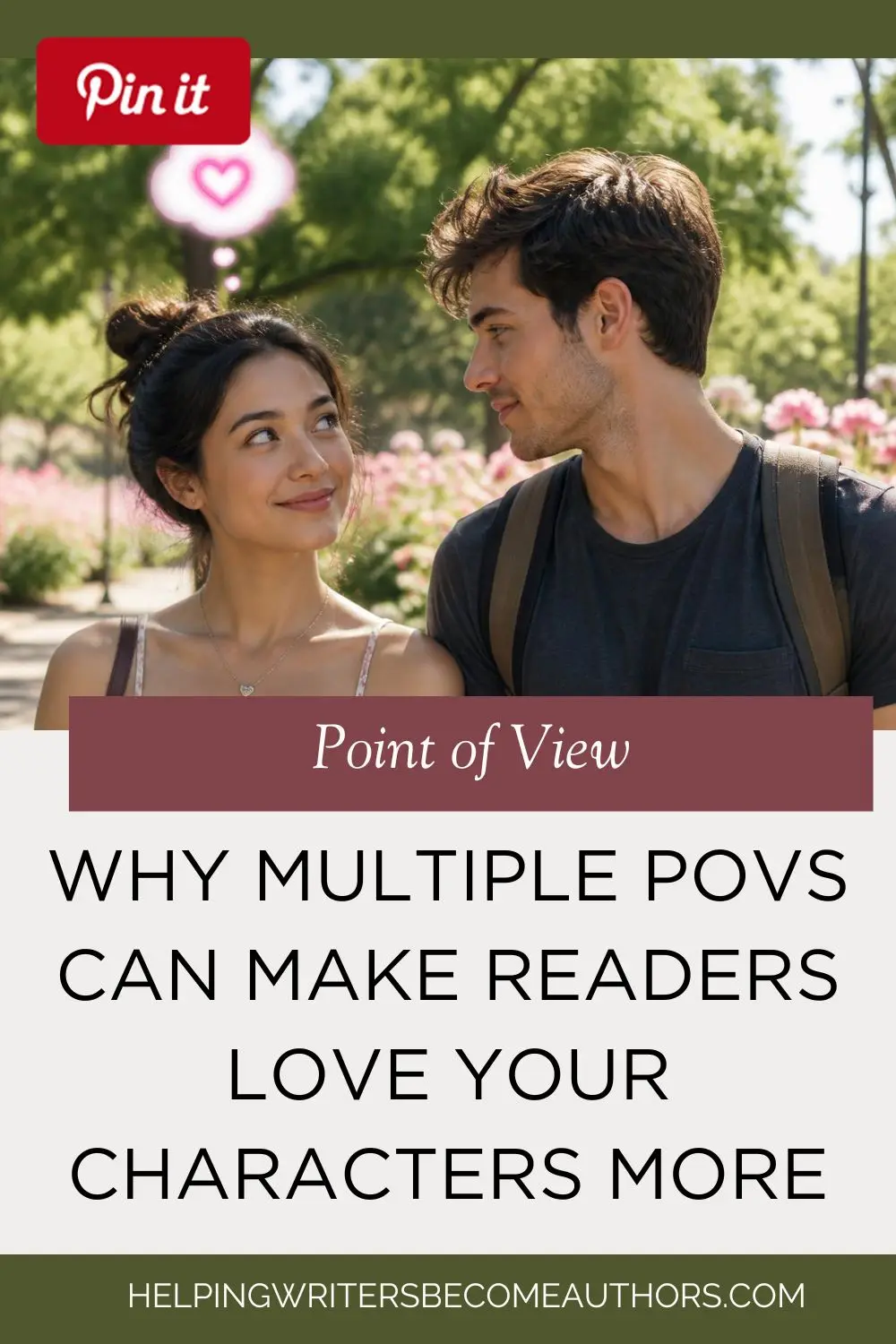
By observing how character A views character B, authors leverage the Vicarious Love Factor. This evolution recognizes that human beings—both in reality and within the pages of a novel—do not form opinions in a vacuum. We evaluate individuals by observing how others react to them, turning multi-POV storytelling into a mirror that reflects mutual emotional investments back onto the reader.
Supporting Context & Metrics: The Mechanics of the Vicarious Love Factor
To fully grasp why multiple perspectives can exponentially increase reader attachment, we must break down the psychological interplay between internal self-doubt and external observation.
Inside Out vs. Outside In
One of the inherent limitations of a single-POV story is that readers experience the protagonist almost exclusively from the inside out. They have direct access to private fears, rationalizations, and anxieties, but they rarely get to witness that character the way the rest of the fictional world does.
Because most individuals struggle with objective self-assessment, a single POV can create an unreliable or unnecessarily skewed self-image:
- The Self-Deprecating Protagonist: A hero may genuinely believe they are ordinary, incompetent, or unlikable.
- The External Revelation: Through the eyes of a secondary POV character, readers may suddenly recognize hidden courage beneath that self-doubt, deep-seated kindness beneath a cold exterior, or unyielding integrity beneath glaring personal flaws.
This outside perspective reveals psychological and emotional dimensions that a solitary viewpoint cannot convey with equal impact.

The Subconscious Incentive to Care
When a secondary character looks at the protagonist with fierce loyalty, protective instinct, or unrequited love, they pass an emotional verdict. Readers, observing this dynamic through an objective lens, receive a powerful subconscious cue. If a trusted secondary character loves, respects, or admires the protagonist—even when the protagonist feels unworthy of such affection—readers are primed to share that emotional investment.
Conversely, the inverse mechanism is equally potent. If a viewpoint character regards the protagonist with suspicion, jealousy, fear, or outright contempt, that adversarial lens taints the reader’s perception. It introduces tension, preemptive skepticism, and complex moral ambiguity long before any direct conflict unfolds on the page.
Emotional Entanglement and Shared Stakes
Multiple POVs do not simply supply more raw information; they construct an emotional architecture. When readers witness one character experiencing heartbreak, grief, or fierce hope for another, they participate directly in that relationship.
- Shared Grieving: If a POV character mourns the loss or failure of another, the reader’s empathetic threshold is lowered, making the grief feel communal rather than isolated.
- Aligned Desires: When a secondary character desperately wants the protagonist to succeed, readers frequently find themselves adopting that exact yearning, cementing their emotional tether to the story’s outcome.
Official Perspectives & Craft Insights
Industry experts, developmental editors, and master novelists have long debated the precise threshold where multi-perspective storytelling transitions from a masterclass in depth to an exercise in narrative clutter.
The Danger of POV Disparity
Writing authorities frequently caution against the primary trap of multi-POV structures: POV disparity.
"Readers may significantly enjoy certain POVs more than others, which can in turn contribute to a poorly-paced plot in which comparatively little happens."
When an author introduces a secondary or tertiary perspective solely to move chess pieces across a board or deliver exposition without emotional stakes, the audience feels the friction. Industry consensus dictates that every POV must earn its keep through deep character conflict, unique thematic illumination, or plot progression that cannot be achieved through any other lens.
The Interlocking Nature of Relationship Dynamics
Renowned developmental editors emphasize that every relationship depicted across multiple viewpoints must function as a two-way mirror. Relationship dynamics never operate in a vacuum; they act as a diagnostic tool for both participants.
- Character Revelation: When POV Character A admires POV Character B, readers simultaneously learn volumes about the psychological makeup, moral compass, and underlying vulnerabilities of Character A.
- Thematic Reinforcement: These emotional currents weave together to reinforce the story’s central theme organically, bypassing heavy-handed exposition and relying entirely on interpersonal friction and affection.
Future Outlook: Evaluating Your Story’s Structural Needs
As the literary marketplace continues to prioritize emotionally resonant, character-driven narratives, authors must approach the structural choice of point of view with strategic intention. Deciding whether to add a secondary POV is no longer a casual whim; it is a foundational architectural decision.
Strategic Questions for Modern Authors
Before expanding a manuscript to include multiple viewpoints, writers are advised to evaluate their story against rigorous diagnostic criteria:
- Does the new POV reveal dimensions unreachable by the primary protagonist? If the perspective merely serves to relay offstage plot events or provide shallow commentary, it should be ruthlessly pruned.
- Does it heighten the Vicarious Love Factor? Does the secondary viewpoint deepen the reader’s emotional stake, empathy, or tension regarding the primary characters?
- Can the plot structure sustain alternating momentum? Will readers eagerly flip the page to return to this new perspective, or will they experience narrative whalefall—dreading transitions away from the core narrative?
Upfront Planning and Structural Integrity
Mitigating the risks of multi-POV narratives is exponentially easier during the pre-drafting and outlining phase. Frameworks that allow authors to map out character relationships, emotional arcs, and structural pacing side-by-side prevent the need for extensive, painful structural overhauls during later revision cycles.
Whether an author ultimately chooses the laser-focused intimacy of a single-POV journey or the expansive, multifaceted emotional web of a multi-POV epic, understanding the mechanics of how characters perceive one another remains the ultimate key to unlocking profound reader engagement. By respecting the psychological weight of the Vicarious Love Factor, writers can craft enduring characters who not only inhabit a living world, but capture the hearts of readers long after the final page is turned.




Comments
Facebook App ID not configured. Please add it in the Customizer.