
Executive Overview
The current cinema landscape has witnessed a formidable display of Anne Hathaway’s formidable screen presence—a tough, steely competence defining her recent work. Across varied cinematic landscapes, Hathaway has consistently projected a rare ability to shoulder narrative weight without complaint or hesitation. While she was unable to salvage the tedious, logorrheic misfire Mother Mary, where she played a troubled pop star burdened by a subpar script, her commanding versatility remains unquestioned. She brought effortless charm to The Devil Wears Prada 2, convincing audiences that her character could engineer fairy-tale resolutions to real-world corporate fashion pressures. Furthermore, as Queen Penelope in Christopher Nolan’s wildly debated adaptation of The Odyssey, Hathaway provided an ancient Greek archetype with diamond-hard Hollywood luster, serving as the steady emotional anchor within a fragmented narrative structure.
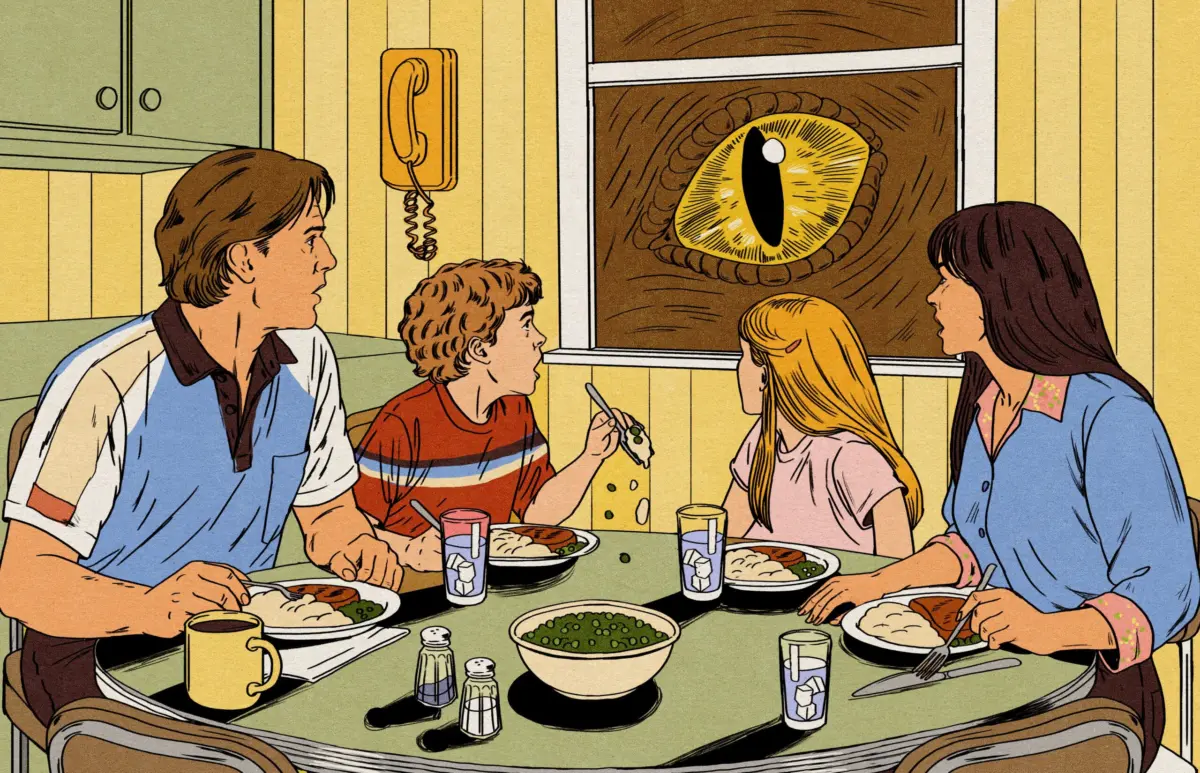
Now, director David Robert Mitchell’s The End of Oak Street provides a startling, junkily diverting contrast to her recent portfolio. Operating at the intersection of 1980s suburban melodrama and violent prehistoric creature feature, the film casts Hathaway as Denise Platt, a dissatisfied 1982 Michigan housewife and aspiring novelist whose domestic frustration is violently interrupted by a temporal dislocation.
Co-starring Ewan McGregor as her disengaged husband, Greg, and produced by J.J. Abrams, the film attempts a complex balancing act: channeling the iconic, warmth-infused blockbusters of Steven Spielberg while filtering them through Mitchell’s signature brand of nihilistic urban alienation. The result is a fast-paced, highly stylized thriller that highlights Hathaway’s fierce adaptability, even as the narrative stumbles into an uncanny valley between heartfelt homage and cold, mechanical cynicism.
Read Also
+-----------------------------------------------------------------------------------+
|                            THE END OF OAK STREET (2026)                           |
+-----------------------------------------------------------------------------------+
| Director / Writer : David Robert Mitchell (It Follows, Under the Silver Lake)    |
| Producer          : J.J. Abrams (Super 8)                                         |
| Cinematographer   : Mike Gioulakis                                                |
| Lead Cast         : Anne Hathaway (Denise Platt), Ewan McGregor (Greg Platt)     |
| Supporting Cast   : Maisy Stella (Audrey Platt), Christian Convery (Brian Platt)    |
| Key Influences    : Steven Spielberg, Alfred Hitchcock, Stephen King              |
+-----------------------------------------------------------------------------------+
Detailed Chronology: From Domestic Discontent to Cretaceous Siege
Act I: Domestic Malaise in 1982 Suburbia
The narrative opens in 1982 along the tranquil, tree-lined suburban stretch of Oak Street, Michigan. Denise Platt (Anne Hathaway) leads an increasingly suffocating existence. Her husband, Greg (Ewan McGregor), recently laid off, has retreated into a haze of chronic alcohol consumption and emotional absence, offering little support in raising their teenage daughter, Audrey (Maisy Stella), and pre-teen son, Brian (Christian Convery).
To preserve her sanity, Denise retreats nightly to the family basement, writing a novel that offers a biting, transparent critique of her failing marriage and nuclear family constraints. Before the film’s genre transformation occurs, Mitchell establishes the household’s crumbling dynamics with quiet, mournful precision, anchored by Hathaway’s subtle portrayals of quiet resignation.
Act II: The Temporal Displacement
The central narrative twist disrupts the mundane suburban setup early in the film. Rather than a standard monster invasion where prehistoric beasts migrate into the modern era, Oak Street itself is ripped from its foundations. Following inexplicable seismic tremors and eerie blips of white light, the entire neighborhood is cast backward through time to the early Cretaceous period.
Audrey, a science enthusiast inspired by Carl Sagan, deduces that their suburban block now rests on a prehistoric landscape featuring active volcanoes, dense jungle flora, and aggressive theropods. The underlying mechanics of the space-time glitch remain unexplained—a deliberate omission consistent with Mitchell’s previous works, such as It Follows (2015) and Under the Silver Lake (2019), which frequently leave core mysteries unaddressed.
[ 1982 Suburban Michigan ]
            │
            ▼  (White Light Blips & Seismic Tremors)
[ Temporal Displacement Glitch ]
            │
            ▼
[ Cretaceous Era Wilderness ] ──► (Neighborhood Under Siege: Allosaurus, Pterosaurs, Titanoboa)
Act III: The Battle for Oak Street
As prehistoric predators begin hunting through suburban lawns and living rooms, the narrative transitions rapidly into violent survival action. Denise discards her domestic passivity and steps into the primary defender role:
- Allosaurus Engagement: Denise acquires a hunting rifle, defending her property perimeter against a charging Allosaurus.
- Pterosaur Interception: She repels winged scavengers using improvised close-quarters weaponry and physical combat.
- The Titanoboa Duel: In the film’s set-piece sequence, Denise engages in a desperate, close-range fight against a giant Titanoboa inside a suburban kitchen, using household cutlery to drive off the massive reptile.
While Denise fights fiercely to protect her family, her husband Greg remains largely paralyzed by indecision, emphasizing the film’s reversal of traditional 1980s action archetypes.
Supporting Context & Cinematic Metrics
Spielbergian Nostalgia vs. Directorial Alienation
The End of Oak Street functions heavily as an explicit homage to Steven Spielberg’s seminal late-20th-century filmography, combining stylistic elements across several classic titles:
+------------------------------+----------------------------------------------------+
| Spielberg Reference          | Manifestation in 'The End of Oak Street'           |
+------------------------------+----------------------------------------------------+
| E.T. the Extra-Terrestrial   | Suburban kids riding bicycles amid crisis; looming |
| (1982)                       | threat of parental divorce.                        |
+------------------------------+----------------------------------------------------+
| Close Encounters (1977)      | Nocturnal neighborhood phenomena with pulsing      |
|                              | lights and low-frequency sonic rumbles.            |
+------------------------------+----------------------------------------------------+
| Jaws (1975)                  | Stegosaurus tail spikes breaking plant foliage like|
|                              | a shark fin cutting water.                         |
+------------------------------+----------------------------------------------------+
| Jurassic Park (1993)         | Relentless predatory tracking of suburban victims|
|                              | in residential structures.                         |
+------------------------------+----------------------------------------------------+
The film also borrows key horror tropes from other classic directors:
- Alfred Hitchcock’s The Birds (1963): Replicated in scenes where Denise and Greg are trapped inside an automobile while winged scavengers feast on fallen neighbors nearby.
- Stephen King Adaptations: Recreates the adolescent peer dynamics of Stand by Me (1986) during a bullying scene involving young Brian, while the concept of an isolated suburban enclave under siege mirrors the supernatural entrapment of Under the Dome.
Technical and Production Metrics
The production team brings significant technical polish to the film:
- Cinematography: Director of Photography Mike Gioulakis utilizes extended, sweeping tracking shots across Oak Street, juxtaposing idyllic 1980s architecture with graphic prehistoric violent disruptions.
- Musical Score: Composer Michael Giacchino delivers a brass-heavy, high-tempo score that echoes his prior work on the Jurassic World franchise and J.J. Abrams’ Super 8 (2011).
+----------------------------------------------------------------------------------+
|                            PRODUCTION SPECIFICATIONS                             |
+----------------------------------------------------------------------------------+
| Running Time       : 102 Minutes                                                 |
| Aspect Ratio       : 2.39:1 Scope                                                |
| Primary DP         : Mike Gioulakis                                              |
| Scoring Composer   : Michael Giacchino                                           |
| Key Special FX     : Practical Animatronics integrated with Photorealistic CGI   |
+----------------------------------------------------------------------------------+
Critical Assessment & Performance Analysis
Cast Performance Evaluations
Anne Hathaway (Denise Platt)
Hathaway provides the film’s core emotional stability. Her performance moves convincingly from quiet domestic melancholy to intense physical action. She grounds improbable narrative turns through grounded emotional reactions, convincing the audience of her transition from frustrated writer to tactical survivor.
Ewan McGregor (Greg Platt)
McGregor’s depiction of Greg feels underdeveloped. Scripted as an emotionally detached and ineffective father, the performance lacks the depth or nuance required to make his domestic redemption arc convincing, leaving the character feeling thin alongside Hathaway’s dynamic lead.
Supporting Cast Dynamics
- Maisy Stella (Audrey Platt): Delivers a strong performance as the intellectually curious daughter. The film introduces an intriguing romantic subplot between Audrey and a neighborhood girl, Jeannette (Jordan Alexa Davis), though the script treats this development with a somewhat distant, clinical detachment.
- Christian Convery (Brian Platt): Fulfills the traditional "kid in peril" role, though his character’s insistence on retrieving the family dog occasionally feels like a forced plot mechanism rather than a natural character choice.
+-------------------+--------------------+-----------------------------------------+
| Actor             | Character          | Critical Assessment                     |
+-------------------+--------------------+-----------------------------------------+
| Anne Hathaway     | Denise Platt       | Exceptional; grounds the film's wild    |
|                   |                    | tonal shifts with visceral commitment.  |
+-------------------+--------------------+-----------------------------------------+
| Ewan McGregor     | Greg Platt         | Weak; performance is constrained by an   |
|                   |                    | underwritten, passive character script. |
+-------------------+--------------------+-----------------------------------------+
| Maisy Stella      | Audrey Platt       | Solid; manages scientific exposition    |
|                   |                    | and quiet character beats effectively.  |
+-------------------+--------------------+-----------------------------------------+
| Christian Convery | Brian Platt        | Serviceable; limited by conventional    |
|                   |                    | genre-trope mechanics.                  |
+-------------------+--------------------+-----------------------------------------+
Directorial Tone: Sincerity vs. Cynicism
David Robert Mitchell’s background as an indie auteur (The Myth of the American Sleepover) creates a distinct stylistic tension within The End of Oak Street. Where Steven Spielberg used disaster narratives to emphasize human connection and resilience, Mitchell approaches the material with a cooler, more detached perspective.
The camera glides systematically past graphic neighbor casualties, prioritizing visual elegance over tragic impact. This clinical tone creates a sharp divide between the film’s warm 1980s aesthetic and its cold narrative perspective, culminating in a polarizing final twist that prioritizes core family survival over broader moral considerations.
Future Outlook
Career Trajectories and Industry Impact
For Anne Hathaway
The End of Oak Street further demonstrates Hathaway’s exceptional versatility as a leading actress. Coming off prestige blockbusters like Nolan’s The Odyssey and commercial sequels like The Devil Wears Prada 2, her performance here proves she can elevate high-concept genre material through sheer physical commitment and dramatic weight.
For David Robert Mitchell
The film marks an ambitious, if flawed, attempt by Mitchell to scale up his stylistic signature into big-budget studio filmmaking. While his execution of suspense remains sharp, future projects will likely determine whether he can bridge the gap between cold indie cynicism and the emotional resonance required for wide mainstream appeal.
The Genre Homage Landscape
Following Jordan Peele’s Nope (2022) and J.J. Abrams’ Super 8 (2011), The End of Oak Street highlights Hollywood’s ongoing fascination with reshaping 1980s Spielbergian tropes. As audiences grow increasingly familiar with nostalgic aesthetics, future genre films will face higher demands to offer genuine subversion rather than mere visual homage.
+----------------------------------------------------------------------------------+
|                              PROJECTED INDUSTRY IMPACT                           |
+----------------------------------------------------------------------------------+
| Star Power Impact    : Solidifies Hathaway as a premier lead capable of driving  |
|                        unconventional, high-budget genre films.                  |
| Directorial Path     : Establishes Mitchell as a capable visual stylist for      |
|                        studios, though tonal balance remains a key challenge.    |
| Marketplace Trends   : Reflects evolving audience demands for subverted,         |
|                        darker takes on classic 1980s nostalgic cinema tropes.    |
+----------------------------------------------------------------------------------+



Comments
Facebook App ID not configured. Please add it in the Customizer.