
Executive Overview
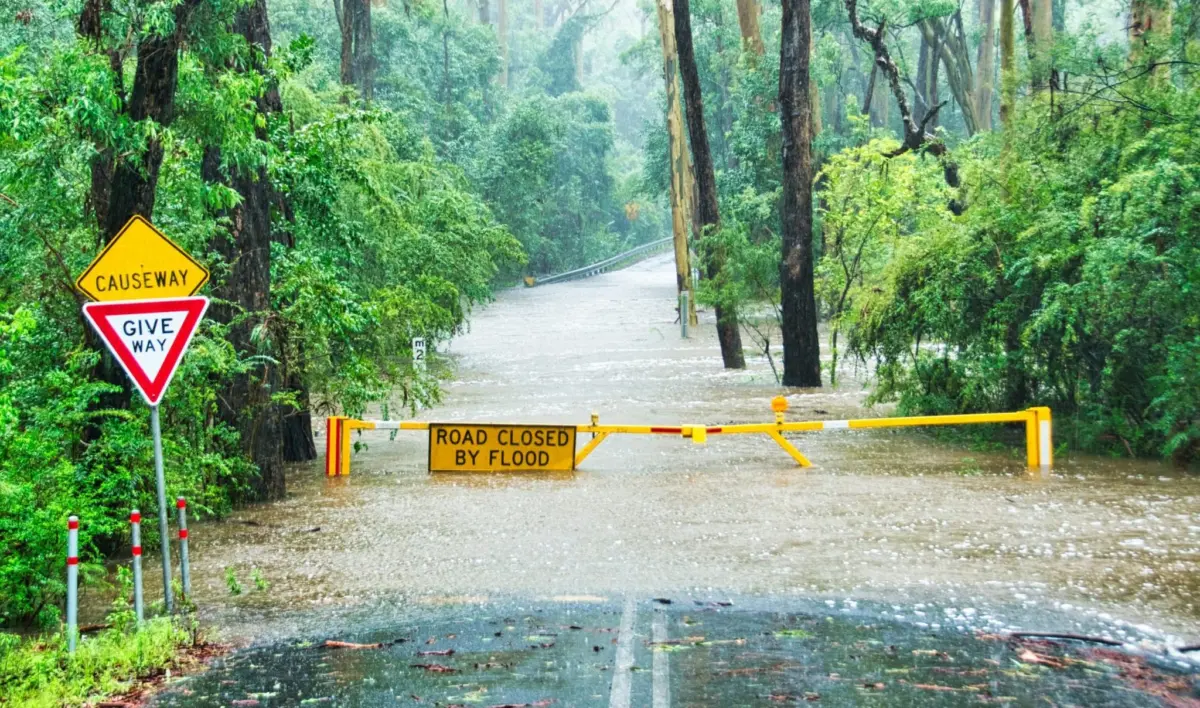
The intersection of historical trauma, state-sponsored displacement, and the boundaries of narrative truth forms the core of What Remains, the acclaimed debut novel by Galician author Brais Lamela. Translated into English by Jacob Rogers, the novel investigates one of the most suppressed chapters of 20th-century Iberian history: the forced relocation of rural communities in Galicia under General Francisco Franco’s dictatorship. During this period, entire villages were inundated to make way for massive hydroelectric reservoirs, their displaced populations forcibly resettled into state-designed "colonial" agricultural settlements.
Framed through the perspective of a Galician doctoral candidate living in New York City, What Remains transcends standard historical fiction. By blending archival research with self-reflexive meta-fiction, Lamela interrogates the limits of the historical record and the ethics of narrative reconstruction. The narrator’s attempt to write an academic dissertation on Francoist displacement evolves into an obsession with an unnamed woman whose exile is recorded in bureaucratic files, yet whose personal humanity has been erased.
Through an investigation of memory, exile, and ideological architecture, Lamela demonstrates how literature can function as a tool of historical restitution. Rather than offering a passive nostalgia, What Remains engages directly with forensic architecture and narrative theory, questioning whether lost spaces can ever be reconstructed—and whether fiction can provide justice where history has left only silence.
Read Also
Detailed Chronology
========================================================================================
TIMELINE: HISTORICAL DISPLACEMENT AND NARRATIVE EVOLUTION IN 'WHAT REMAINS'
========================================================================================

 [1950s–1970s] ------------> [2020s Archival Inquiry] -------> [Present-Day Narrative]
 Francoist Modernization      PhD Candidate in NYC              Return to Galicia
 • Mass dam construction     • Uncovers erased records         • Mirror-structure return
 • Submergence of villages   • Shift from thesis to novel      • Encounter with father
 • Forced resettlement in    • Interrogates forensic           • Disruption of historical
   Terra Chá "colonies"        architecture concept              and fictional accounts
========================================================================================
Phase I: The Francoist Hydraulic Plan and Forced Migration (1950s–1970s)
During the mid-20th century, the Francoist regime embarked on an aggressive modernization campaign centered on hydraulic autarky. Across northwestern Spain, state authorities dammed major rivers, flooding fertile valleys and centuries-old agricultural communities. In Galicia, displaced peasants were relocated to newly established settlements built by the Instituto Nacional de Colonización (National Colonization Institute) in regions such as Terra Chá. These uniform, state-designed settlements were intended not only to rehouse the displaced but to reshape rural society into idealized, controllable subjects of the regime.
Phase II: Archival Research and Narrative Shift (New York City)
Decades later, a young Galician researcher living in New York City attends a lecture on forensic architecture. Half-focused while navigating graduate school, urban precarity, and an evolving relationship with his partner, Mariana, he begins contemplating whether lost physical spaces can be restored through critical inquiry.
His research into Franco-era displacement uncovers official records documenting a woman who was forcibly removed from her submerged valley, resettled in a state colony, and subsequently evicted from her new home. Troubled by the cold, bureaucratic language that records her exile while omitting her voice, the narrator abandons academic prose. His dissertation transforms into a work of fiction—a attempt to construct an imaginative space where her story can exist.
Phase III: The Galician Return and Narrative Deconstruction
The novel shifts from the abstract urban landscape of New York to the physical terrain of rural Galicia. The narrator returns home to care for his father, who suffers from a debilitating neurological condition that leaves him paralyzed and mute.
In this second movement, the narrative destabilizes its own authority. Interjections from Mariana challenge the narrator’s liberties with historical facts, while his father recalls past events in stark contrast to the narrator’s documented version. The novel exposes the mechanisms of memory construction, demonstrating that neither bureaucratic state archives nor imaginative literature can offer an unmediated depiction of the past.
Supporting Context & Metrics
Architectural Ideology and Social Control
A central focus of both the novel and Lamela’s historical commentary is the deliberate use of state architecture to dismantle regional culture and social cohesion.
+-----------------------------------------------------------------------------------+
| COMPARED ARCHITECTURAL FORMS IN RURAL GALICIA                                     |
+-------------------------------------------------+---------------------------------+
| Traditional Vernacular Architecture             | Francoist Colonial Settlements  |
+-------------------------------------------------+---------------------------------+
| • Central stone hearths (Lareiras)              | • Uniform white concrete blocks |
| • Extended communal gathering spaces            | • Minimized individual kitchens |
| • Integrated into topography and regional flora  | • Grid layout for easy surveillance
| • Fostered oral tradition and collective life   | • Designed to isolate families  |
+-------------------------------------------------+---------------------------------+
In traditional Galician rural life, the kitchen (lareira) served as the political and emotional core of the household—a space where oral traditions, community decisions, and intergenerational memory were sustained around a shared fire. The regime’s engineers deliberately disrupted this structure. By isolating nuclear families and removing traditional gathering points, state architecture functioned as an instrument of social engineering.
Regional Displacement Statistics in Dictatorship-Era Spain
The historical context underpinning What Remains reflects a broader pattern of state-enforced migration across 20th-century Spain:
- Submerged Communities: Over 500 villages across Spain were flooded or abandoned due to dam construction between 1940 and 1975.
- Forced Relocations: An estimated 100,000 rural citizens were directly displaced by state hydraulic projects during the dictatorship.
- Resettlement Villages: The Instituto Nacional de Colonización constructed over 300 planned agricultural settlements across Spain, moving tens of thousands of families into rigid architectural environments.
The Galician Literary Landscape in Translation
Lamela’s novel joins a growing body of Galician literature being translated into English, bringing regional historical memory to global readers. Key figures in this contemporary movement include:
- Berta Dávila: Known for unhurried prose exploring domestic spaces and personal grief.
- Chus Pato: A prominent contemporary poet whose work engages with avant-garde aesthetics and political memory.
- Susana Sánchez Arins: Author of And They Say (Dicen), an investigation of Francoist repression constructed through local rumors, oral histories, and family silences.
- X.L. Méndez Ferrín: A foundational 20th-century Galician writer whose political and literary works confronted state authority and regional identity.
Official Statements
In an extensive dialogue with literary critic Evander James Reyes, author Brais Lamela reflected on the origins of the novel, the socio-political power of architecture, and the nature of narrative restitution.
On Historical Unsettlement and Regional Discovery
Lamela noted that the novel originated from an unsettling realization about the landscape of his childhood:
"The book emerged first from a very vivid sense of surprise, or maybe unsettlement, with regards to my native region. I come from Galicia, which is this very rural region, and I guess we often think of rural regions as areas where not much happens, or at least not big history events.
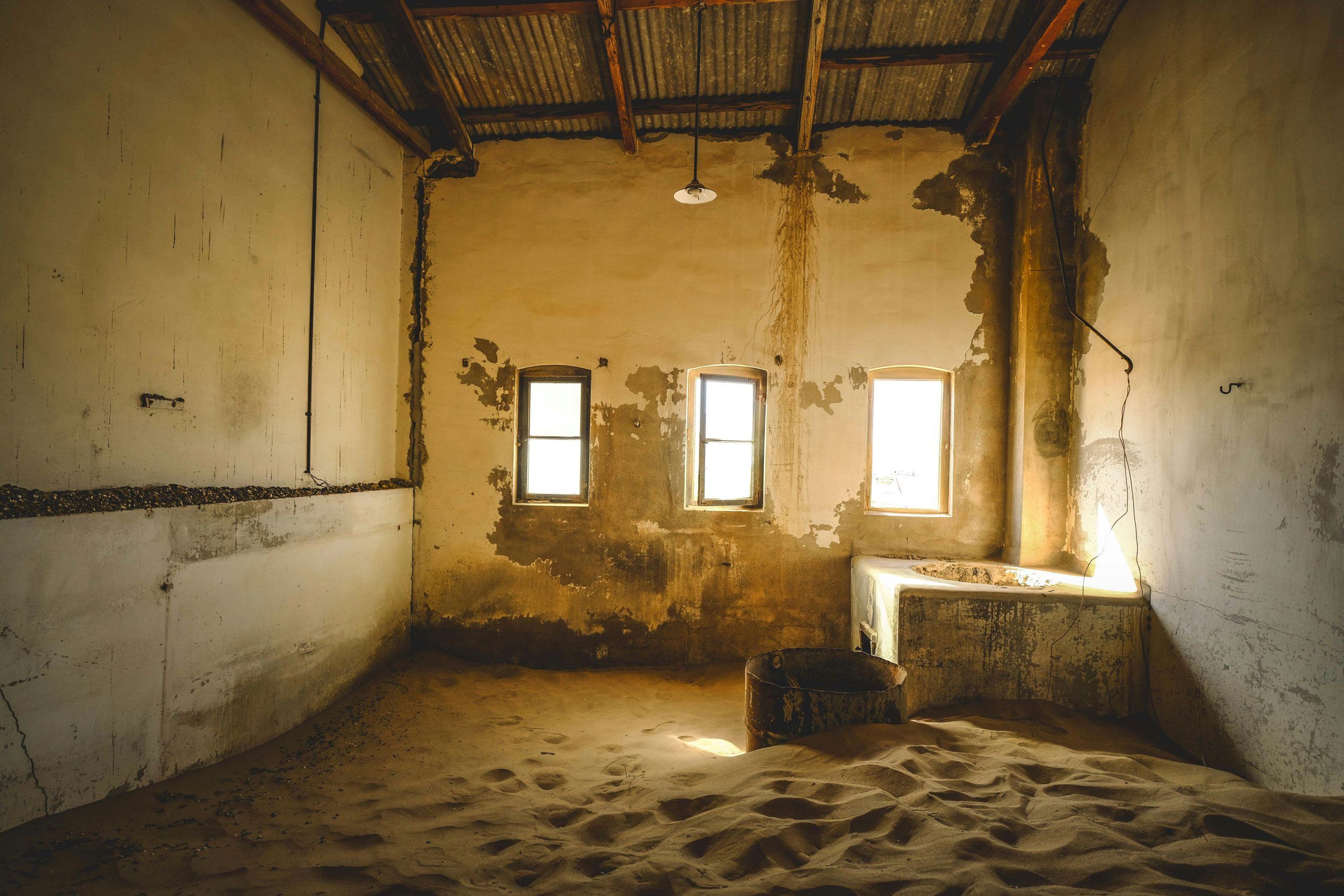
"At some point, I started to pick up on certain words that people in my family would say, like referring to neighbors as the ‘colonists’ or hamlets as ‘colonial towns’… That is how I began to ask more about this story—the story of how people were forcibly displaced due to the construction of a water dam that had been relocated to Terra Chá as part of a modernization project. It created this sense of unsettlement, as if all these things that appeared natural were actually the result of huge historical forces."
On the Ideological Nature of Built Environments
Addressing the contrasting architectural styles of traditional Galicia and Francoist settlements, Lamela emphasized how state planning sought to enforce ideological compliance:
"One of the first things that calls your attention when you see the houses built for these displaced peoples is that they are radically different from the vernacular architecture of Galicia—they look like white, uniform blocks. It’s almost as if they are trying to announce themselves, to serve as the mouthpieces of an ideology.
"They built these tiny kitchens, whereas in the Galician countryside the kitchen is very important—it’s the communal place where people gather around the fire. I have always been fascinated by that aspect of architecture: how it’s something we assume as natural, even though it shapes the most intimate aspects of our lives and was designed by someone else with an agenda that is far from neutral."
+-----------------------------------------------------------------------------------+
| DIRECT QUOTE: ON THE NOVEL AS AN OPEN CONTAINER                                   |
+-----------------------------------------------------------------------------------+
| "I like to think of books as open, airy vessels: spaces that aren’t               |
| over-determined by their own mechanics, inviting to voices that might unsettle   |
| the story being told... Writing here [in New York] always takes place in a room  |
| that isn’t entirely your own."                                                   |
|                                                                 — Brais Lamela    |
+-----------------------------------------------------------------------------------+
On Translation, Loss, and Reconstruction
Discussing the title’s shift from the original Galician Ninguén queda ("No one remains") to the English What Remains, Lamela noted:
"To me, it sounds both like a question—perhaps a desperate question—and an affirmation: What, if anything, remains? And at the same time, affirming that something, indeed, remains.
"The novel is much more interested in habitation than in nostalgia. It’s not so much a lament about what has been lost; rather, it tries to grasp for those things that indeed remain, even in a flooded village."
Future Outlook
The publication and critical reception of What Remains signal an important shift in contemporary memory studies and Iberian literature. By moving past traditional linear historical fiction, Lamela introduces a self-reflexive model for engagement with authoritarian histories.
Impact on Literary Memory Work
- Forensic Aesthetics in Fiction: What Remains demonstrates how contemporary authors can integrate concepts of forensic architecture and archival critique directly into novelistic structures, using fiction to highlight gaps in official state records.
- Deconstruction of the Authoritative Narrator: By allowing secondary characters to dispute the narrator’s claims, the text provides a model for literature that acknowledges its own limitations in representing historical trauma.
The Trajectory of Minoritized Literatures in Translation
The international reception of Lamela’s debut highlights a growing interest in minoritized European languages, such as Galician, Catalan, and Basque. Translators like Jacob Rogers are bridging the gap between regional European histories and global readership, ensuring that marginalized narratives of state displacement receive international critical attention.
Ultimately, What Remains establishes that while literature cannot physically restore submerged villages or reverse historical exiles, it can confront the state mechanisms that sought to erase them. By framing narrative as an "airy vessel" open to competing voices, Lamela provides a framework for engaging with the past—one that accepts the impossibility of complete recovery while affirming the necessity of the attempt.



Comments
Facebook App ID not configured. Please add it in the Customizer.