
Executive Overview
In an era defined by instantaneous digital feedback, the intersection of traditional artistic expression and modern social media critique has become a high-stakes arena for public figures. Pakistani entertainment icon Faysal Quraishi recently found himself at the epicentre of this digital phenomenon. Following the theatrical release and subsequent festival screening of his latest cinematic project, the acclaimed actor and producer faced a wave of online scrutiny—most notably from prominent digital commentator "Mango Jutt."
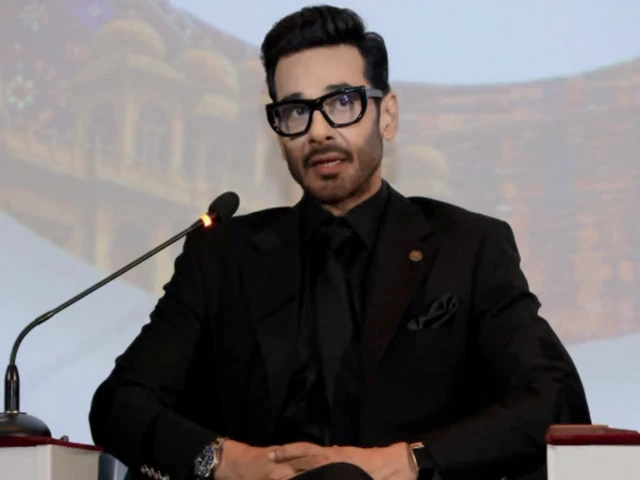
Rather than retreating behind the defensive walls often erected by veteran celebrities, Quraishi embraced the discourse. Speaking candidly on the sidelines of the prestigious World Culture Festival in Karachi, the decorated star addressed the criticism with remarkable pragmatism. He framed digital commentary not as a personal assault, but as an organic, albeit noisy, component of the modern creative ecosystem.
This report provides an in-depth examination of Quraishi’s measured response to online detractors, explores his insights on the evolving role of international film festivals in nurturing regional talent, and offers a comprehensive retrospective of a career that has spanned over three decades. By analyzing the broader implications of digital-age criticism on Pakistani cinema, this article sheds light on how industry veterans are adapting to a landscape where every viewer holds a virtual megaphone.
Read Also
Detailed Chronology: From Cinematic Release to Digital Backlash
The trajectory of any modern film extends far beyond the physical boundaries of the silver screen, often migrating into the volatile digital ecosystems of social media. For Faysal Quraishi, the journey of his recent cinematic venture was no exception.
The Theatrical Launch and Festival Circuit
The project initially debuted in cinemas, capturing the attention of mainstream moviegoers before transitioning to the curated environment of the World Culture Festival in Karachi. Film festivals, historically designed as sanctuaries for artistic appreciation and critical dialogue, provided Quraishi and his contemporaries with a platform to showcase their work to a diverse audience of cinephiles, international delegates, and aspiring filmmakers.
During panel discussions and press interactions at the festival, Quraishi emphasized that these gatherings serve a dual purpose. They are not merely venues for commercial screenings, but incubators for cross-cultural exchange and industry education. However, the contrast between the high-brow, intellectual atmosphere of festival circuits and the unfiltered environment of social media soon became apparent.
The Rise of Online Critique and "Mango Jutt"
As the film reached wider audiences, it naturally attracted varied reactions. Among the most vocal critics was the digital content creator known as "Mango Jutt," whose review sparked widespread online discussion and divided digital communities. The critique, distributed across popular social platforms, zeroed in on specific narrative and technical elements of Quraishi’s project, generating a cascade of comments, memes, and secondary discussions.
In the digital age, such critiques rarely remain isolated opinions; they frequently morph into viral controversies. Recognizing the potential for misunderstandings, Quraishi addressed the situation head-on. He clarified that a video response he had previously circulated online was not a targeted attack against any specific individual, such as Mango Jutt, but rather a generalized reply to a specific message that had crossed his path.
By de-escalating the tension and reframing the dialogue, Quraishi demonstrated a sophisticated understanding of digital optics, refusing to allow online sensationalism to overshadow the artistic merits of his work.
Supporting Context & Metrics: The Architecture of Pakistani Cinema and Faysal Quraishi’s Legacy
To fully appreciate Faysal Quraishi’s reaction to modern criticism, one must examine the monumental scale of his career and the shifting paradigms of the Pakistani entertainment industry.
A Three-Decade Cinematic Odyssey
Faysal Quraishi is not merely an actor; he is a foundational pillar of modern Pakistani television and film. With a career spanning over thirty years, Quraishi’s footprint on the South Asian entertainment landscape is defined by staggering metrics:
- Project Volume: Having participated in over 200 television and film projects, Quraishi’s versatility has kept him at the forefront of the industry across multiple generations.
- Accolades: He is the proud recipient of more than 20 nationally recognized awards, cementing his status as one of the most critically acclaimed and commercially viable performers in the country.
- Breakthrough Role: Quraishi achieved household-name status in 1999 with his tour-de-force performance as the protagonist Boota in the landmark television series Boota from Toba Tek Singh, a role that redefined anti-hero archetypes in Pakistani television.
- Entrepreneurial Expansion: Beyond acting, Quraishi has successfully transitioned behind the camera. He founded the production house Connect Studios in 2017 and subsequently launched Faysal Quraishi Films, establishing himself as a key decision-maker in domestic content creation.
- Hosting Prowess: Demonstrating remarkable range, Quraishi spent years anchoring high-profile morning shows, including Muskurati Morning with Faisal Qureshi (2010–2014) and Salam Zindagi (2016–2019), connecting with millions of daily viewers on a personal level.
The Economics of Audience Polarization
Quraishi’s philosophical approach to audience feedback is rooted in a mature understanding of artistic reception. During his remarks at the World Culture Festival, he drew a parallel to timeless masterpieces of world cinema.
"Not every film is going to be liked by everyone," Quraishi noted. "Even after watching a film like The Odyssey, some people come out saying, ‘What did I just watch? What kind of film was that?’ So, our film can also have shortcomings. There is nothing unusual about someone not liking it."
This perspective highlights a crucial economic and artistic reality in contemporary filmmaking: polarization is often a byproduct of ambition. As Pakistani cinema strives to break free from conventional formulas and experiment with complex storytelling, divergent audience reactions are inevitable—and arguably necessary—signs of an industry pushing its own boundaries.
Official Statements: Navigating Praise and Peril in the Digital Age
The advent of social media has democratized film criticism, transforming passive viewers into active content creators. During his press engagement in Karachi, Quraishi offered a masterclass in media literacy, detailing how artists must navigate this decentralized feedback loop.
Embracing the Spectrum of Opinion
Rather than expressing resentment toward online detractors, Quraishi welcomed the transparency that social media affords.
"Some people praised the film, while others did not like it. That’s fine. It is good that people are sharing their feedback," he stated.
He emphasized that social media grants every citizen a microphone, creating a direct line of communication between creators and consumers. For Quraishi, this dialogue—however bruising it may occasionally be—is an indispensable part of the modern artistic process.
Clarifying the Narrative
Addressing the digital sparring matches that frequently erupt online, Quraishi was keen to clear the air regarding his own internet footprint. He stressed the importance of context in digital communication, noting that his public statements were intended as a broad philosophical stance on creative critique rather than petty retaliations against individual influencers like Mango Jutt. By rising above personal feuds, Quraishi elevated the discourse from a superficial internet squabble to a broader conversation about the nature of artistic accountability.
Future Outlook: The Evolution of Film Festivals and Youth Empowerment in Pakistan
Looking beyond the immediate ripples of online controversy, Quraishi’s appearance at the World Culture Festival shed light on the broader trajectory of Pakistani arts and culture. The actor passionately articulated a vision for the future, emphasizing the vital role that international platforms play in shaping the next generation of storytellers.
Inspiring the Next Generation of Filmmakers
For young creatives in Pakistan, navigating the path from an enthusiastic film enthusiast to an established auteur can be daunting. Quraishi argued that events like the World Culture Festival act as crucial navigational beacons.
- Demystifying the Craft: By interacting with international filmmakers, aspiring artists gain a transparent look at how projects are conceptualized, financed, and executed.
- Pathway Discovery: Festivals expose youth to diverse global cinematic traditions, proving that storytelling is not monolithic.
- Raising Industry Standards: Exposure to international critiques and high-caliber productions inspires local creators to elevate their technical and narrative standards, fostering a culture of continuous improvement.
The Road Ahead for Pakistani Cinema
As the domestic film industry continues to mature, it faces a dual challenge: satisfying an increasingly sophisticated local audience while competing on the global stage. Incidents like the public discourse surrounding Quraishi’s latest project illustrate that Pakistani cinema is no longer operating in an insular vacuum.
The willingness of industry titans like Faysal Quraishi to engage constructively with digital critics signals a healthy, evolving ecosystem. By treating social media feedback not as an existential threat, but as part of the rigorous alchemy of creation, Quraishi and his peers are paving the way for a more resilient, self-aware, and globally competitive cinematic culture in Pakistan.





Comments
Facebook App ID not configured. Please add it in the Customizer.