
Executive Overview
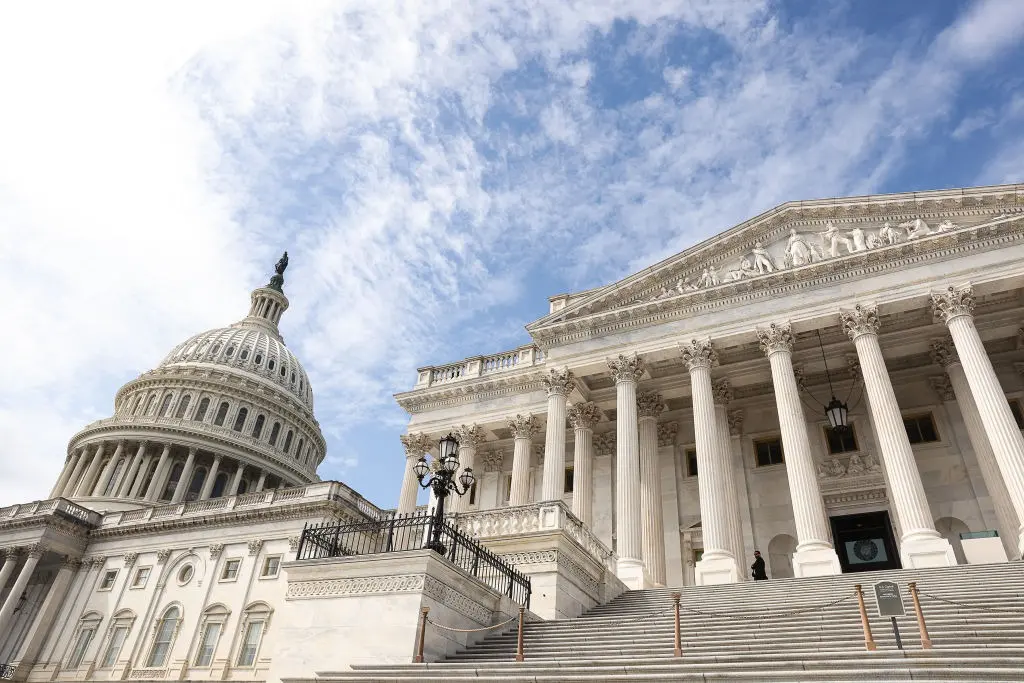
In the waning days of the current legislative session, Capitol Hill has become the epicenter of a high-stakes clash between the imperatives of economic expansion and the preservation of America’s cultural heritage. At the center of the storm is the Bipartisan American Affordability and Jobs Act of 2026 (S.5653), a sweeping 500-page legislative package designed to overhaul the nation’s federal permitting regime.
Advanced by the U.S. Senate in a decisive 73–25 vote on a Monday in November, the bill’s proponents champion it as a long-overdue legislative scalpel capable of excising the bureaucratic "red tape" that stalls critical infrastructure and energy production projects. However, the legislation has simultaneously triggered an unprecedented wave of alarm among historic preservationists, Indigenous tribal nations, museum directors, and environmental and architectural coalitions.
Crucially, S.5653 targets Section 106 of the National Historic Preservation Act (NHPA) of 1966—a landmark piece of conservation legislation enacted six decades ago to safeguard the nation’s historic, archaeological, and sacred sites from unchecked federal development. By narrowing the scope of the NHPA, altering the criteria for what constitutes a protected historic site, and stripping away mandatory consultation requirements with tribal nations and the public, the bill threatens to fundamentally rewrite the rules of federal accountability.
Read Also
This deep-dive investigation examines the anatomy of S.5653, tracing its rapid advance through the Senate, analyzing the polarizing economic arguments and the fierce public backlash it has provoked, and assessing what its potential enactment means for the future of historic preservation in the United States.
Detailed Chronology of the Legislative Push
The legislative trajectory of S.5653 has been marked by remarkable speed, procedural maneuvering, and immediate, visceral public opposition.
The Lead-Up and Introduction
Drafted as a bipartisan initiative to address mounting economic concerns over stalled federal projects, the Bipartisan American Affordability and Jobs Act of 2026 was introduced by Senator Shelley Moore Capito (R-W.Va.). The bill’s architects deliberately constructed a bipartisan coalition to bolster its political viability in a divided Congress. Alongside Capito, the bill is cosponsored by Senator Mike Lee (R-Utah), Senator Sheldon Whitehouse (D-R.I.), and Senator Martin Heinrich (D-N.M.).
Despite the bill’s immense scope—spanning roughly 500 pages of dense legal and regulatory text—lawmakers introduced the legislation just 48 hours before the Senate floor vote was formally scheduled. This compressed timeline immediately drew sharp rebukes from critics, who argued that sweeping structural changes to bedrock environmental and cultural protection laws were being rushed through the legislative pipeline with minimal opportunity for public scrutiny, committee debate, or expert testimony.
The Senate Floor Debate and Vote
On Monday morning, the floor of the United States Senate became the stage for a passionate debate over the balance between national economic competitiveness and environmental and historical stewardship. Defending the bill, lead sponsor Senator Capito argued that the status quo of federal permitting was economically unsustainable.
Following the debate, the Senate advanced S.5653 by a commanding 73–25 bipartisan margin. The vote underscored the broad appeal of economic deregulation among lawmakers facing mounting pressure to modernize national infrastructure and accelerate domestic energy production.
With the current session of the Republican-controlled Senate slated to run through December 18—and a newly elected cohort of senators preparing to be sworn in on January 3—proponents of the bill pushed for rapid advancement to secure legislative momentum before the close of the 119th Congress.
The Grassroots Backlash
Even as the Senate advanced the bill, dissent spilled out of committee rooms and onto the streets. According to reporting by The Art Newspaper, approximately 800 demonstrators converged on the West Lawn of the U.S. Capitol to protest the legislation.
The crowd was a coalition of institutional heavyweights and grassroots advocates. Prominent leaders from the Association of African American Museums, the DC Preservation League, the American Institute of Architects (AIA), and the Archaeological Institute of America stood shoulder-to-shoulder with tribal representatives and environmental justice advocates.
Elected officials sympathetic to the preservationist cause also voiced sharp criticisms. Representative Melanie Stansbury (D-N.M.) famously condemned the legislation during the protests as a "dirty deal," echoing the sentiments of coalition leaders who argued that the bill traded foundational democratic safeguards for illusory economic gains.
Supporting Context & Metrics: The Economic Imperative vs. Heritage Protection
To understand why S.5653 was drafted and why it has generated such intense opposition, it is necessary to examine the competing data sets and legal frameworks that define the current debate.
The Proponents’ Case: Sidelined Capital and Regulatory Delays
Supporters of S.5653 argue that the United States is being choked by its own regulatory apparatus, pointing to data indicating that massive amounts of capital are trapped in bureaucratic limbo.
During her floor speech, Senator Capito cited compelling economic metrics to justify the necessity of the overhaul:
- The National Association of Manufacturers (NAM): Data from NAM indicates that permitting delays and regulatory backlogs cost American manufacturers a staggering $12.1 billion every year. In West Virginia alone, these administrative bottlenecks impose an estimated $87 million in additional operational costs annually.
- McKinsey & Company: Fresh data from a McKinsey report highlighted by Capito reveals that a colossal $1.8 trillion in investments is currently locked up across the federal permitting system. In her home state of West Virginia, this translates to $22.3 billion of sidelined investments in infrastructure, energy, and commercial projects that cannot break ground due to protracted environmental and historical reviews.
Proponents argue that Section 106 of the National Historic Preservation Act has frequently been weaponized by opponents of development to file frivolous, protracted challenges, transforming a well-intentioned consultation process into an endless procedural quagmire.
The Preservationists’ Case: Dismantling the NHPA
Opponents counter that the economic figures cited by proponents represent a false equivalency, downplaying the irreplaceable cultural, historical, and economic value generated by historic preservation.
At the heart of the controversy is Section 106 of the NHPA. Enacted in 1966, Section 106 requires federal agencies to take into account the effects of their undertakings on historic properties—including buildings, archaeological sites, and cultural landscapes—listed in or eligible for inclusion in the National Register of Historic Places. Furthermore, it mandates that federal agencies consult with state historic preservation officers, local governments, and tribal nations when a project receives federal funding, licensing, or permits.
According to legal analysts and reporting by The Art Newspaper, S.5653 introduces profound structural changes to this framework:
- Narrowed Scope of Review: The bill significantly narrows the types of infrastructure and energy projects that trigger an NHPA review, exempting vast categories of development from federal oversight.
- Consultation Made Optional: S.5653 would strip away the strict mandate for federal agencies to consult with tribal nations regarding projects that impact ancestral lands and sacred sites, transforming a legally binding obligation into a discretionary option.
- Removal of Public Notification Requirements: The legislation eliminates the mandatory requirement that federal agencies notify and actively consult with the general public regarding potential harm to historic and cultural sites.
- Redefined Historic Sites: The bill narrows the statutory definition of what legally constitutes a "historic site," potentially stripping protections from marginalized communities’ historic markers, mid-century modern architecture, and fragile archaeological sites.
Official Statements and Institutional Responses
The legislative advancement of S.5653 has prompted an unprecedented mobilization of the cultural heritage community. Professional associations, museum networks, and tribal coalitions have issued strongly worded rebukes, warning that the bill represents an existential threat to American history.
The 106 Strong Coalition Open Letter
On November 6, the 106 Strong Coalition—a massive united front comprising more than 1,200 organizations, tribal nations, and preservation advocates—sent an open letter to the United States Congress demanding the immediate defeat of S.5653.
The coalition features an extraordinarily diverse array of signatories, including the American Alliance of Museums (AAM), numerous state and regional museum associations, architectural preservation trusts, and historical societies.
In their joint letter, the signatories did not mince words, characterizing the legislation as:
"A sweeping assault on the protections Congress enacted sixty years ago to ensure that federal agencies consider the consequences of their decisions for America’s historic and sacred places."
The letter emphasizes that Section 106 was never designed to be an arbitrary roadblock, but rather a vital democratic mechanism ensuring that the voices of ordinary citizens, historians, and Indigenous peoples are not drowned out by the singular pursuit of industrial development.
Tribal Sovereignty and Consultation Concerns
Tribal nations and indigenous advocates have been among the most vocal critics of S.5653. For decades, Section 106 has served as a critical legal tool allowing Native American tribes to protect ancestral burial grounds, sacred geographies, and historical sites from desecration by federally backed infrastructure projects.
By making tribal consultation optional rather than mandatory, critics argue that S.5653 violates the federal government’s trust responsibility to tribal nations and systematically erases Indigenous history from the federal planning process. Leaders from various tribal councils have pointed out that removing these safeguards risks repeating historical injustices by prioritizing short-term industrial convenience over the enduring cultural heritage of America’s first peoples.
Future Outlook: What Lies Ahead for S.5653
As the 119th Congress hurtles toward its December 18 adjournment deadline, the political fate of S.5653 remains hanging in the balance, setting the stage for a dramatic legislative showdown.
The Legislative Path Forward
While the Senate’s 73–25 vote demonstrates formidable bipartisan momentum, the bill still faces significant hurdles before it can be signed into law. It must navigate the complexities of reconciliation with any potential House measures, and face a united front of opposition from preservation-minded representatives and senators who are mobilizing their constituencies.
Furthermore, the legal and constitutional challenges that would likely follow the enactment of S.5653 cannot be understated. Legal scholars suggest that stripping away long-standing procedural rights—particularly those impacting tribal consultations and established environmental justice frameworks—will almost certainly invite immediate litigation from coalitions like the 106 Strong Coalition, potentially bogging the legislation down in federal courts even if it successfully clears Congress.
The Broader Cultural Reckoning
Beyond the immediate legislative outcome, the debate over S.5653 has catalyzed a much broader national conversation about the values that define American progress in the 21st century.
As the nation grapples with urgent demands for renewable energy transition, grid modernization, and infrastructure renewal, the friction between physical development and cultural preservation will only intensify. Proponents of S.5653 argue that modernization cannot wait for cumbersome bureaucratic reviews in an era of global economic competition. Conversely, preservationists insist that a nation which loses its physical connection to its history—sacrificing its archaeological sites, historic neighborhoods, and Indigenous sacred spaces in the name of speed—forfeits its identity along the way.
Whether S.5653 is enacted in its current form, amended to appease critics, or ultimately defeated, it has irrevocably shifted the debate over federal permitting, ensuring that the legacy of the National Historic Preservation Act will remain a flashpoint in American politics for years to come.




Comments
Facebook App ID not configured. Please add it in the Customizer.