
Executive Overview
Federal authorities in southeastern Utah are ramping up an urgent investigation following a pair of brazen vandalism incidents that have left irreplaceable, centuries-old Indigenous rock art marred by crude, modern carvings. The Bureau of Land Management (BLM) Utah launched a public appeal for information after discovering that protected petroglyph panels near Moab—a world-renowned hub for outdoor recreation and archaeological treasures—had been defaced with careless graffiti.
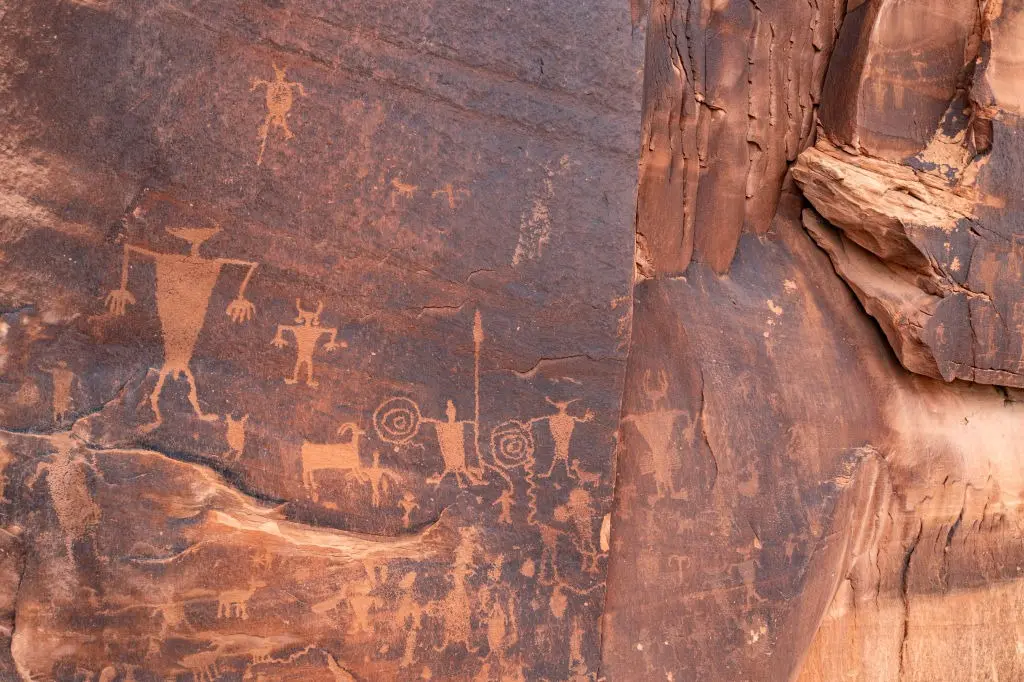
Among the visible destruction is a prominent, large-scale signature reading “Craig W,” scrawled directly across ancient artistic depictions of local wildlife. According to the BLM, the desecration spans two distinct, highly trafficked areas: one situated along the culturally rich corridor of Highway 279, and another adjacent to the rugged, globally famous Hell’s Revenge off-road slickrock trail.
These latest acts of destruction highlight a deeply troubling, escalating trend of vandalism directed at North America’s irreplaceable cultural heritage. As federal land managers struggle to police vast expanses of remote wilderness, heritage preservationists and Indigenous communities are sounding the alarm. The defacement of the Moab panels is not merely an act of local property damage; it represents an assault on shared human history, a violation of federal law, and a devastating loss for descendent communities who view these landscapes as living ancestral archives.
Read Also
With public outrage mounting, investigators are relying on community tips, forensic analysis, and heightened surveillance to track down those responsible. Under federal statute, the perpetrators face severe legal consequences, though conservationists argue that no penalty can truly undo the permanent harm inflicted on the canyon walls.
Detailed Chronology of the Moab Incidents
The unfolding investigation centers on two separate vandalism events discovered by BLM rangers and field staff in the Moab field office jurisdiction. While investigators are exploring whether the two incidents are the work of the same individual or group, the geographic separation and distinct stylistic approaches point to a brazen disregard for federal antiquities laws across the region.
The Highway 279 Corridor Incident
The first site targeted lies along Utah State Route 279, locally known as the Potash Road. This scenic byway runs parallel to the meandering Colorado River, flanked by towering Navajo sandstone cliffs that hold some of the region’s most accessible and culturally significant rock art panels. Thousands of tourists, rock climbers, and history enthusiasts traverse this route annually to view petroglyphs and pictographs left behind by ancestral Indigenous peoples centuries ago.
Sometime prior to the BLM’s public alert, vandals breached the unprotected buffer space near the roadway and carved deep into a delicate rock face. Photographs released by the Bureau—and initially brought to light by SF Gate—reveal the shocking scale of the damage. In one widely circulated investigative photograph, a BLM officer can be seen holding a measuring tape across enormous, jagged letters spelling out “Craig W.” These modern block letters cut ruthlessly through an ancient petroglyph panel depicting native animals, permanently obliterating portions of prehistoric imagery that had survived centuries of natural weathering.
The Hell’s Revenge Incident
The second act of vandalism occurred near the world-famous Hell’s Revenge off-road slickrock trail, a magnet for motorized vehicle enthusiasts, Jeep clubs, and extreme outdoor adventurers. Located just east of Moab, this landscape is characterized by rolling petrified sand dunes and stark, beautiful drop-offs.
While the exact timeline of the discovery remains under close wrap by investigators, the Hell’s Revenge site suffered a similar fate of crude defacement. In this instance, a less distinct marking was etched into the stone near the trail system. Because of the heavy volume of off-highway vehicle (OHV) traffic in the immediate vicinity, investigators are scouring digital footprints, visitor logs, and social media geotags from tourists who frequented the trail during the suspected window of the crime.
The Immediate Aftermath and Public Appeal
Upon discovering the ruined panels, BLM Utah field managers immediately documented the crime scenes, collecting forensic evidence, toolmark impressions, and photographic records to assess the structural compromise of the sandstone. Recognizing that local law enforcement resources alone cannot police every mile of delicate canyon walls, the agency took the unusual step of turning directly to the public for actionable leads.
The BLM’s outreach campaign emphasizes that the destruction of these panels constitutes a federal crime under the Archaeological Resources Protection Act (ARPA). Investigators are urging anyone with information regarding an individual named "Craig W," or anyone who witnessed suspicious activity along Highway 279 and the Hell’s Revenge trail, to come forward immediately.
Supporting Context & Metrics: A National Crisis of Heritage Destruction
The incidents in Moab do not occur in a vacuum. Across the American West and in island territories like Hawaii, public lands are witnessing an alarming surge in archaeological looting, recreational vandalism, and systemic policy rollbacks that critics argue leave cultural treasures uniquely vulnerable.
The Fragility of Rock Art and the Limits of Restoration
To the untrained eye, petroglyphs—images carved, pecked, or abraded into rock surfaces—might appear durable, having survived centuries of wind, sun, and sand. In reality, they are remarkably fragile. When ancestral artists created these works, they chipped through the "desert varnish," a dark, glossy coating of manganese, iron oxides, and clay that accumulates on exposed rock surfaces over millennia.
Once this dark varnish is scraped or gouged away, the lighter sandstone underneath is exposed in stark, jarring contrast. Conservation experts emphasize that this damage is irreversible. Because desert varnish takes thousands of years to form under very specific climatic conditions, it cannot be repainted, patched, or restored. When a modern carver gouges initials into a panel, they are permanently erasing chapters of an unwritten history book.
A Pattern of Desecration: Comparative Incidents
The Moab vandalism is part of a broader, systemic failure to respect and protect public lands. Similar high-profile crimes have plagued heritage sites nationwide:
- Hawaii’s Sacred Cliffs (2021): A series of sacred, 300-year-old petroglyphs situated along the dramatic cliffs of Hawaii were aggressively defaced using a paintball gun. The attack sparked outrage among Native Hawaiian cultural practitioners, who viewed the multicolored splatters as a profound desecration of ancestral resting places and spiritual markers.
- Volcanic Tableland, Bishop, California: The rich cultural landscape of the Volcanic Tableland, featuring intricate petroglyphs carved by the Paiute-Shoshone people long before European colonization, has endured relentless attacks. Beyond routine graffiti, these sites have suffered structural theft. In one particularly brazen operation, criminals used heavy-duty power saws to carve out and steal massive sections of rock bearing ancient imagery. Although the BLM successfully recovered some of the stolen artifacts during subsequent raids, the primary suspects managed to evade immediate capture, leaving the landscape permanently scarred.
Legislative Frameworks and Policy Pressures
The protection of these sites is theoretically anchored by robust federal statutes, chief among them the Archaeological Resources Protection Act of 1979 (ARPA) and the Antiquities Act of 1906. ARPA prohibits the excavation, removal, damage, or defacement of archaeological resources on public lands, carrying penalties that can include tens of thousands of dollars in fines and multi-year prison sentences for felony violations.
However, enforcement remains a daunting logistical challenge. Federal land management agencies are chronically underfunded and understaffed, tasked with monitoring millions of acres of remote, rugged terrain with only a handful of law enforcement rangers.
Compounding these enforcement hurdles are shifting political and administrative landscapes. Conservation groups have raised alarms over federal policy rollbacks and administrative efforts to shrink the boundaries of protected national monuments. Environmental watchdogs, such as Earthjustice, have frequently challenged executive actions aimed at slashing national monument protections by millions of acres—moves that critics argue open up fragile buffer zones to increased industrial traffic, unmitigated tourism, and heightened risks of cultural resource degradation.
Official Statements and Community Outrage
The response to the Moab vandalism has exposed a deep cultural divide between modern recreationists seeking personal notoriety and a public fiercely protective of public lands and Indigenous heritage.
The Bureau of Land Management Speaks Out
In an official statement released across its social media channels, BLM Utah characterized the targeted rock art panels as “irreplaceable cultural resources” that demand absolute stewardship from all who visit public lands.
"Our cultural resources are part of our shared heritage," the Bureau stated in its public appeal. "Once damaged, they cannot be restored to their original condition. We ask visitors to respect these resources and help protect them for future generations."
Agency spokespersons have reiterated that defacing natural rock formations or archaeological sites is not a harmless prank; it is a federal felony that deprives all Americans—and specifically contemporary Indigenous tribes with ancestral ties to the region—of their connection to the past.
Public Backlash and the Call for Zero Tolerance
Public reaction across digital platforms, travel forums, and social media channels has been swift, unified, and unforgiving. Communities on Reddit, Facebook, and outdoor recreation forums have expressed profound disgust at the perpetrators, calling for maximum legal penalties and sweeping societal condemnation of landscape vandalism.
Reflecting the sentiment of thousands of outdoor enthusiasts, one user on the popular r/California subreddit captured the public fury following the Bishop, California theft incidents, writing:
"The minimum sentence for this crime should be life without parole. If you disrespect historical artifacts of great significance, you should be labeled an enemy of the public. Zero tolerance."
While a life sentence exceeds current statutory parameters under ARPA, the intensity of such commentary underscores a growing public appetite for aggressive prosecution. Local Moab tour operators, Indigenous tribal councils, and heritage conservation groups are demanding that federal prosecutors make an example of "Craig W" and any accomplices to deter future copycat crimes.
Future Outlook: Safeguarding the Past in an Era of Over-Tourism
As Moab and other desert destinations grapple with record-breaking visitor numbers, the challenge of balancing public access with resource preservation has reached a critical tipping point. The vandalism of the Highway 279 and Hell’s Revenge petroglyphs serves as a harsh warning bell for land managers across the American West.
Enhancing Surveillance and Technology
In response to the growing frequency of remote vandalism, federal agencies are being forced to modernize their protection strategies. Moving forward, the BLM and the U.S. Forest Service are evaluating the deployment of advanced surveillance technologies, including covert motion-activated trail cameras, acoustic sensors, and increased drone patrols in high-risk archaeological zones.
Furthermore, educational campaigns are shifting from passive signage—which vandals frequently ignore or deface—to active, community-driven guardianship models. Programs like Site Stewards, where trained volunteers regularly monitor vulnerable rock art panels and report suspicious activities, are expanding rapidly across Utah, Arizona, and New Mexico.
Strengthening Penalties and Interagency Cooperation
Legal experts anticipate that federal prosecutors will seek maximum penalties under ARPA if the suspects in the Moab case are apprehended. A high-profile conviction carrying significant jail time and heavy financial restitution could serve as a powerful deterrent in an era where social media clout sometimes incentivizes destructive behavior.
Ultimately, protecting America’s ancient heritage will require a cultural shift among visitors. As tribal leaders continually remind the public, these landscapes are not a blank canvas for modern egos; they are living cathedrals of human history. Until every visitor learns to view them with reverence rather than entitlement, the ancient stones of Moab will remain vulnerable to the careless strokes of the present.




Comments
Facebook App ID not configured. Please add it in the Customizer.