
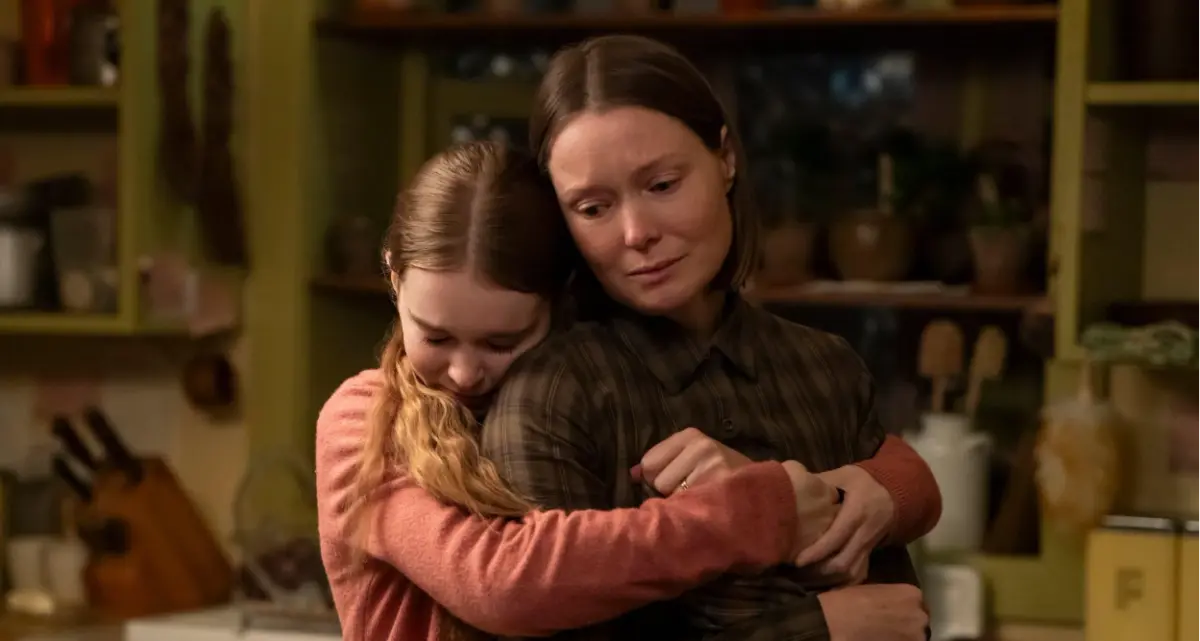
- Article Note: This investigative breakdown contains comprehensive spoilers for the Prime Video series adaptation of Stephen King’s Carrie.
Executive Overview
Mike Flanagan’s television adaptation of Carrie for Prime Video has arrived, instantly cementing its place as one of the most polarizing and fiercely debated pieces of genre television in recent memory. Stephen King’s seminal 1974 epistolary novel remains a foundational pillar of modern horror literature, while Brian De Palma’s iconic 1976 cinematic adaptation is universally heralded as a masterclass in psychological suspense and cinematic style. Consequently, any new attempt to adapt the material faced a monumental hurdle: what could a serialized television format achieve that had not already been thoroughly explored by previous iterations—especially given the historically mixed track record of prior cinematic and television reboots?
Rather than offering a safe, nostalgic note-for-note translation of King’s original text, Flanagan has engineered a radical, paradigm-shifting reimagining. The Prime Video series systematically deconstructs, updates, and expands the established Carrie mythos, trading the insular 1970s tragedy of a single outcast for an expansive, modern-day sci-fi-adjacent thriller. By weaving contemporary socio-technological anxieties—most notably cyberbullying and the genetic predeterminism of trauma—with clandestine shadow organizations, shared psychic networks, and a shocking survivalist conclusion, Flanagan has fundamentally rewritten the rules of the genre.
Whether viewed as a bold, visionary expansion of King’s literary universe or an overstuffed betrayal of a tight, tragic masterpiece, the series demands close examination. This report provides a comprehensive, beat-by-beat autopsy of the major narrative divergences that separate Prime Video’s Carrie from its source material.
Read Also
Detailed Chronology of Deviations
1. The Modernization of Maine: Shifting from 1979 to 2026
Stephen King’s novel is anchored in the late 1970s, capturing the specific analog isolation, religious fervor, and social rigidity of that era. Flanagan’s adaptation relocates the narrative firmly to the year 2026. While maintaining the atmospheric isolation of a small New England town, this futuristic shift introduces a hostile ecosystem defined by digital hyper-connectivity.
The most prominent manifestation of this shift is the central role played by cyberbullying. Series creator Mike Flanagan has noted in promotional interviews that the 2026 setting allows the production to dissect not merely the mechanics of online harassment, but the chilling normalization of digital cruelty within contemporary scholastic spaces. The primary antagonist, Chris Hargensen, weaponizes this environment by launching a targeted social media smear campaign under the moniker “Carrie Red.” This digital hub serves as a running torment engine, broadcasting malicious rumors, deepfakes, and invasive footage not only concerning Carrie White, but a wider swath of the student body and faculty.
While classic high school horror touchstones—such as the institutionalized deployment of metal detectors—ground the setting in current sociopolitical anxieties, it is the pervasive reach of social media that dictates the narrative pacing and escalates the scale of the tragedy.
2. A Baptism by Fire: Carrie Enters Public School for the First Time
In the traditional narrative lore, Carrie White has endured years of systemic psychological and physical abuse within the public school system, culminating in the infamous locker room shower scene. The Prime Video series, however, alters this foundational timeline significantly: Carrie is introduced as an adolescent who has been strictly homeschooled for the entirety of her life.
It is only following the sudden, violent death of her father and mounting intervention by local child welfare authorities that Carrie is thrust into a public high school environment. This narrative restructuring fundamentally alters the audience’s perception of her victimization. While the novel positions Carrie’s trauma as a long, agonizing war of attrition, the television series frames her entry into public school as a sudden, brutal culture shock. This creative choice has sparked intense debate among literary purists, particularly regarding how effectively the series critiques modern homeschooling subcultures and insular religious fanaticism.
3. Ralph White: The Surviving Father and Phantom Architect
In King’s original text, Carrie’s father, Ralph White, perished in a construction accident before Carrie was even born. He exists in the literary canon primarily as a fleeting memory, remembered chiefly for possessing fundamentalist Christian leanings that were somewhat less militant than those of his wife, Margaret.
Flanagan’s series grants Ralph a delayed, tragic expiration date. Ralph survives until Carrie is well into her teenage years, ultimately meeting his demise in a similar industrial workplace accident. His prolonged presence fundamentally recontextualizes Carrie’s formative years. Furthermore, Ralph’s death triggers a haunting psychological manifestation: Carrie experiences vivid, obsessive apparitions of her father throughout the series.
Through these ghostly visitations, viewers discover that Ralph was a military veteran whose rigorous survivalist training partially dictated the brutal, isolated environment of the White household. He emerges not as a missing specter, but as an active architect of Carrie’s psychological conditioning.
4. Humanizing the Tormentor: A Sympathetic Chris Hargensen
Chris Hargensen has historically functioned as the definitive archetype of the high school sadist—driven by pure malice, inherited entitlement, and an instinctive revulsion toward anyone who deviates from the social hierarchy.
The Prime Video iteration subverts this one-dimensional depiction by heavily expanding Chris’s domestic backstory. The series reveals that Chris is navigating a fractured home life compounded by severe financial and legal scandals involving her father. These structural pressures leave Chris feeling profoundly isolated and powerless within her own social sphere. By reframing her cruelty as a misdirected outlet for domestic instability, Flanagan attempts to mold Chris into a more nuanced, psychologically rounded figure. While this aligns with the show’s broader thematic fixation on the unprecedented stresses burdening modern youth, it remains one of the most divisive creative gambits of the adaptation.
5. Margaret White’s Dormant Abilities and the Genetics of Horror
Few villains in horror history loom as large as Margaret White, the religious zealot whose fanatical zeal and emotional abuse forged her daughter into a weapon of mass destruction. Flanagan and actress Samantha Sloyan signaled prior to release that their version of Margaret would eschew pure caricature in favor of a more complex, sympathetic interpretation.
This reimagined Margaret is not merely motivated by blind sadism, but by a crushing, paranoid cynicism regarding humanity’s capacity for cruelty. Her harshness is framed as a toxic, misguided attempt to shield her daughter from a world she knows will inevitably destroy her.
However, the most explosive revision involving Margaret is the revelation that she possesses latent psychic abilities mirroring Carrie’s own. While King’s novel fleetingly hints at a hereditary bloodline of telekinesis (noting that Margaret’s grandmother exhibited similar traits), the Prime Video series depicts Margaret actively utilizing these powers—most notably to survive the catastrophic collapse of the White family homestead.
Thematically, this genetic continuity serves a dual purpose:
- It externalizes the contemporary cultural anxiety surrounding genetic predeterminism—the nagging fear that we inevitably pass our worst psychological and biological traits onto our offspring.
- It literalizes Margaret’s hyper-vigilance, implying that her terror of Carrie stems from an intimate, lived understanding of the catastrophic power humming within their shared lineage.
6. Emaline and the Astral Network of Psychics
Carrie is no longer isolated in her supernatural burden. Early in her public school tenure, she crosses paths with a mysterious student named Emaline. Initially, the narrative drops calculated breadcrumbs suggesting Emaline is a psychotic delusion born from Carrie’s fractured psyche.
This theory is eventually exposed as a narrative red herring. Emaline is, in fact, an independent psychic who has been utilizing astral projection to mentor Carrie, validate her experiences, and encourage her to lean into her supernatural capabilities rather than suppressing them. Emaline eventually manifests physically to bridge the gap between their worlds.
While King’s novel features historical accounts of scattered psychics across the globe, the concept of a telekinetic peer actively reaching out to tutor and shape Carrie’s worldview introduces an entirely new dynamic of externalized influence.
7. Shared Guilt: The Prom Massacre and Co-Opted Telekinesis
The Prom Massacre remains the definitive high-water mark of terror in the Carrie canon. In the Prime Video series, the sequence kicks off with the familiar, horrific humiliation of the pig’s blood drenching Carrie. Yet, the chaos that immediately follows diverges sharply from the traditional narrative.
As Carrie retaliates—shattering mobile devices, collapsing catwalks, and igniting the gymnasium—auditory cues reveal the presence of Emaline, who whispers, "Let me help… let me take the wheel, ok?" Immediately following this prompt, the violence scales to a catastrophic, coordinated level of devastation.
Assuming this is not a manifestation of Carrie’s dissociated subconscious, the text strongly implies that Emaline directly commandeered or influenced Carrie’s abilities to execute a wider massacre. This creative choice carries profound interpretive weight:
- Absolution of Agency: It arguably serves to partially insulate Carrie from total moral culpability, reflecting modern cultural sensitivities surrounding the depiction of mass school violence in media.
- Collective Expansion: It shifts the narrative weight from an isolated tragedy of personal vengeance to an overt escalation of a broader, interconnected society of psychics.
8. Shadow Organizations and the Hunting of the Gifted
The global implications of psychic phenomena are brought to the forefront of the narrative. Throughout the series, it is revealed that clandestine government and corporate entities are actively tracking, cataloging, and neutralizing telekinetics worldwide. These operatives initially embed themselves within the community under the guise of an innocuous documentary crew, only to reveal their true, predatory intentions.
The terrifying reach of this shadow network is driven home when an operative executes Margaret White, who had miraculously survived the destruction of her home. This secret organization subplot expands the narrative canvas far beyond the borders of Castle Rock, transforming a gothic psychological drama into a high-stakes sci-fi thriller.
9. Carrie Lives: Surviving the Apocalypse
The traditional culmination of Carrie—whether on the page or in De Palma’s 1976 film—is uncompromisingly bleak. Carrie bleeds out amidst the ruins of her hometown, crushed under the literal and metaphorical weight of her sins and abuses.
The Prime Video series shatters this tradition entirely. Carrie not only survives the prom massacre and the subsequent leveling of the town, but she escapes alongside Emaline, setting the stage for an uncertain, fugitive future. Flanagan has made no secret of his desire to steer the series into multi-season territory, pushing far beyond the terminal boundaries of Stephen King’s original text.
While this survival satisfies the logistical requirements of an ongoing television franchise, it fundamentally alters the emotional and thematic closure that made the original tragedy so enduring.
Supporting Context & Metrics
To understand the scale of this adaptation, it is vital to examine how the production measures against historical adaptations of Stephen King’s bibliography:
- Source Material Adaptability Index: King’s 1974 novel spans approximately 199 pages, relying heavily on an epistolary framework of news clippings, scientific reports, and diary entries. Flanagan’s serialized format stretches this compact narrative into an 8-episode arc, necessitating the addition of the shadow organization and Emaline subplots to sustain episodic momentum.
- Historical Adaptation Benchmarks:
- Carrie (1976) – Directed by Brian De Palma; domestic box office: $33.8 million; 2-Academy Award nominations.
- Carrie (2002) – Directed by David Carson; television film; mixed critical reception.
- Carrie (2013) – Directed by Kimberly Peirce; box office: $84.9 million; moderate commercial success.
- Carrie (2026) – Developed by Mike Flanagan for Prime Video; represents the first serialized television adaptation of the property.
Official Statements
Speaking on the creative philosophy behind the radical departures in the Prime Video series, series creator Mike Flanagan emphasized the necessity of evolving the material for a modern audience:
"You cannot simply retell the exact same story in 2026 that Stephen King penned in 1974 or that Brian De Palma filmed in the ’70s and expect it to carry the same cultural resonance. The horrors of high school have migrated into an inescapable, 24-hour digital Panopticon. By expanding the canvas to explore the genetics of trauma, the burden of inherited rage, and the existence of a wider, unseen world reacting to these gifts, we aren’t trying to replace the masterworks that came before us—we are building a dark, expansive mirror for our current moment."
Samantha Sloyan, who stepped into the daunting role of Margaret White, addressed the humanization of the series’ primary antagonist:
"Margaret isn’t just a monster shouting Bible verses; she is a survivor of a terrifying internal landscape. When you give her dormant psychic abilities, you realize her terror of Carrie isn’t born out of arbitrary hatred—it’s born out of terrifying self-recognition. She knows the fires that live in that bloodline because she has spent her entire life trying to keep her own ashes from scattering."
Future Outlook
Mike Flanagan’s Carrie has successfully shattered the cinematic gravity that has held the 1974 novel and 1976 film in orbit for decades. By steering away from a self-contained tragedy and leaning into a sprawling, sci-fi-tinged conspiracy involving shadow organizations, shared telekinetic networks, and surviving protagonists, the Prime Video adaptation has charted an unpredictable course.
As production conversations regarding a potential second season gain traction, the true test of Flanagan’s vision will lie in its execution. Can a franchise that originated as an intimate portrait of domestic abuse and social ostracization successfully sustain itself as an expansive, geopolitical cat-and-mouse thriller involving super-powered fugitives?
For now, the audience is left to process the rubble of Castle Rock—and a version of Carrie White who, for the first time in literary and cinematic history, has walked away from the fire alive.



Comments
Facebook App ID not configured. Please add it in the Customizer.