
Executive Overview
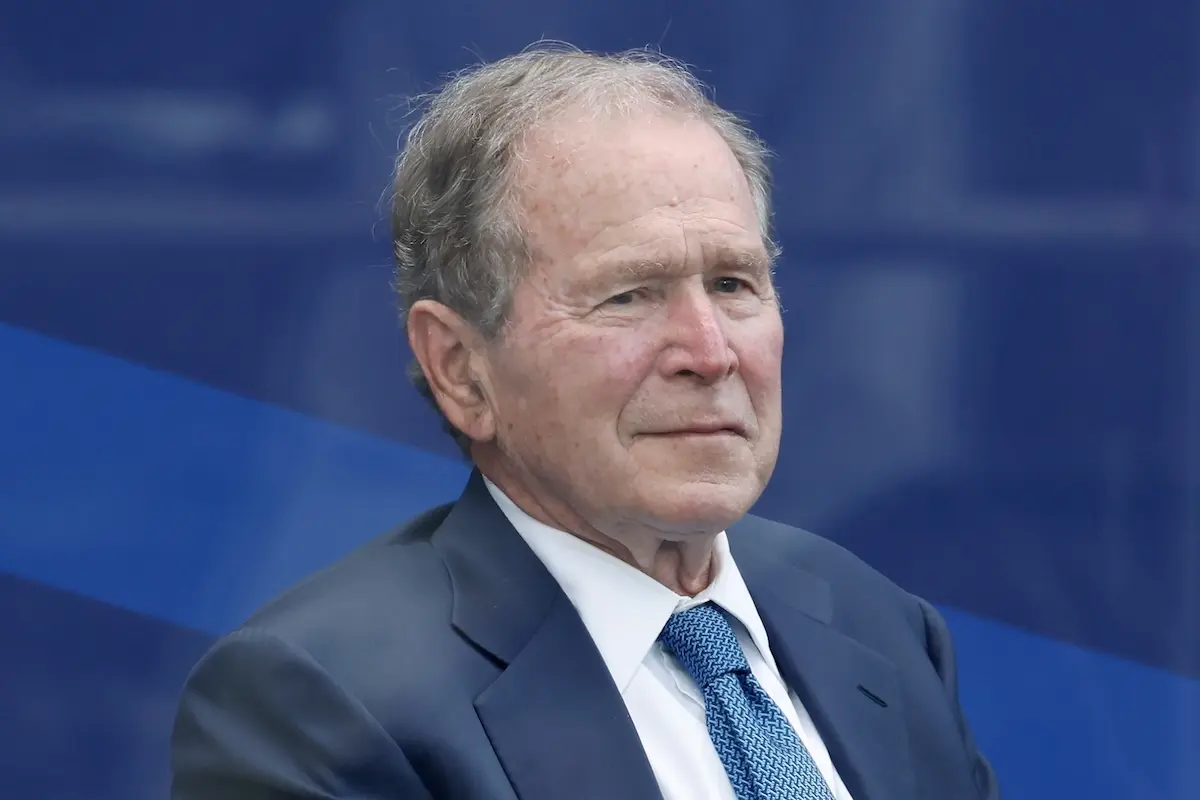
Two and a half decades after the nation was irrevocably altered on a crisp Tuesday morning, former United States President George W. Bush has returned to his canvas to confront the defining trauma of his administration. Opening this week at the George W. Bush Presidential Center in Dallas, Texas, a solemn new exhibition titled "Remembering 9/11" brings together 16 newly minted paintings dedicated to the victims, first responders, and national resilience born out of the September 11 terrorist attacks.
Running through September 30, the exhibition serves as both a localized memorial and a significant artistic milestone for the 43rd commander-in-chief, who traded the geopolitical stage for a palette and easel following his departure from the White House in 2009. While the precise subjects of the complete 16-painting suite remain heavily guarded by the museum, promotional materials reveal a deeply poignant artistic focus: a rendered depiction of a firefighter’s helmet and fresh blossoms resting atop a memorial dedicated to fallen first responders—specifically honoring individuals like Peter L. Freund, a 45-year-old firefighter who perished in the line of duty at the World Trade Center site.
This exhibition arrives at a complex historical crossroads. As the United States prepares to mark the 25th anniversary of an event that redrew global security paradigms, launched endless wars, and reshaped civil liberties, the man who led the nation through the immediate aftermath is processing that legacy through a medium that has steadily evolved from a quirky post-presidential hobby into a subject of genuine art-world fascination. Once dismissed by critics as the well-intentioned dabblings of an amateur, Bush’s artistic output has steadily commanded serious cultural discourse. This latest series bridges the personal and the political, offering a rare window into how a leader who made the ultimate decisions during a national crisis reflects upon it generations later through visual art.
Read Also
Detailed Chronology: From the Oval Office to the Easel
To understand the weight of "Remembering 9/11," one must trace the trajectory of George W. Bush’s life from the harrowing events of late 2001 to his unexpected metamorphosis into a working portraitist and memorialist.
The Crucible of September 11, 2001
The chronological arc of this exhibition begins, of course, on the morning of September 11, 2001. Orchestrated by the extremist group al-Qaeda as a direct retaliation against United States foreign policy in the Middle East, four commercial airliners were hijacked. Two struck the twin towers of the World Trade Center in New York City, one struck the Pentagon outside Washington, D.C., and a fourth, United Flight 93, crashed into a field in Shanksville, Pennsylvania, after passengers revolted.
As president, George W. Bush was thrust instantaneously into a wartime presidency. The subsequent weeks and months saw the invocation of Article 5 of the NATO treaty, the establishment of the Department of Homeland Security, the authorization of the invasion of Afghanistan, and the enunciation of the Bush Doctrine, which fundamentally altered American foreign policy for the next two decades. For Bush, September 11 was not merely an event managed by his administration; it became the anchor of his historical legacy.
The Post-Presidency Pivot to Painting
Following his exit from the White House in January 2009, Bush largely retreated from the partisan political fray, maintaining a quiet, private life centered in Dallas, Texas. It was during this period of transition that he discovered painting. Inspired in part by Winston Churchill’s famous essay Painting as a Pastime, Bush took up the brush with a fierce, quiet discipline.
Initially, his artistic pursuits were private. However, in 2013, a hacker breached the private email accounts of members of the Bush family, leaking several digital files of early self-portraits—including paintings of the former president in his bathtub and shower. Rather than retreating from the public exposure, Bush leaned into it.
This unexpected public introduction catalyzed a series of formalized artistic collections:
- 2014: Bush debuted Portraits of Courage: A Commander in Chief’s Tribute to America’s Warriors, featuring striking portraits of wounded veterans whom he had met or whose rehabilitation he had followed.
- 2017: He expanded his scope to the global stage with South of Hope: Portraits of Immigrant Courage, celebrating the contributions of immigrants to American society.
- Intermittent Collections: Over the years, his subjects have varied wildly, ranging from still lifes and self-portraits to architectural studies of campus life at Southern Methodist University (SMU), home to his presidential center.
Now, as the 25th anniversary approaches, Bush has turned his brush inward, directing his artistic vision back to the very crisis that defined his presidency.
Supporting Context & Metrics: The Art, The Criticisms, and The Market
The intersection of political power and artistic expression always invites rigorous scrutiny. George W. Bush’s journey through the art world is no exception, existing in a unique space between populist sentiment and high-art critique.
Artistic Evolution and Style
Working primarily in oils, Bush’s early output was characterized by a flat, unblended application of color, hesitant line work, and an almost naive perspective. Art critics initially pointed out the stiffness of his figures and a lack of technical mastery typical of self-taught Sunday painters.
However, over the course of more than a decade of daily practice, working alongside professional instructors in Dallas, his technical proficiency has visibly evolved. His brushwork has grown looser, more expressive, and more attuned to emotional resonance rather than hyper-realistic rendering. The newly teased image for the Remembering 9/11 exhibition—featuring the weathered helmet, structural shadows, and delicate blossoms—demonstrates a sophisticated handling of texture and mood, proving that his artistic vocabulary has deepened significantly since his initial 2013 leaks.

The Critical Reception: From Dismissal to Endorsement
The reception of Bush’s art has been a fascinating cultural study in partisan versus aesthetic judgment. When his paintings first emerged, many cultural commentators and left-leaning critics were quick to dismiss them as the crude pastimes of a controversial politician.
Yet, several prominent figures within the fine art establishment offered startlingly generous reappraisals. Most notably, Pulitzer Prize–winning art critic Jerry Saltz published a widely read, critically perceptive review in Vulture in 2013. Saltz wrote candidly:
"The Whitney Museum of American Art should get on the stick and offer this American a small show."
Saltz argued that Bush’s lack of academic training granted him an unvarnished sincerity, allowing him to bypass the cynical irony often found in contemporary art markets. While major institutions like the Whitney have yet to extend a formal curatorial invitation, exhibitions at the George W. Bush Presidential Center consistently draw thousands of visitors, bridging the gap between historical artifact and fine art exhibition.
| Exhibition Series | Focus / Subject Matter | Primary Medium | Year Debuted |
|---|---|---|---|
| Portraits of Courage | Wounded U.S. military veterans | Oil on Canvas | 2017 |
| Out of Many, One | Immigrant contributions to America | Oil on Canvas | 2021 |
| Remembering 9/11 | 25th Anniversary reflections / First responders | Oil on Canvas | 2026 |
Official Statements and Curatorial Vision
The curation of the Remembering 9/11 exhibition has been handled with profound solemnity by the staff at the George W. Bush Presidential Center. Recognizing the weight of a quarter-century retrospective, museum officials have intentionally curated the 16 paintings to emphasize healing and collective memory over political theater.
According to the official exhibition description released by the museum:
"These paintings reflect on the courage, sacrifice, and resilience that emerged from one of the most defining moments in American history."
By focusing the teaser imagery on Peter L. Freund—a 45-year-old firefighter who made the ultimate sacrifice—the curators have deliberately humanized the macroeconomic and geopolitical trauma of the day. The exhibition does not attempt to answer the complex geopolitical questions of the post-9/11 era; rather, it provides a quiet, meditative space for viewers to contemplate individual loss and communal endurance.
In past public statements regarding his art, George W. Bush has often remarked that painting changed his life, giving him a renewed sense of purpose and a therapeutic outlet to process the profound burdens of his presidency. While the former president has kept public commentary surrounding this specific exhibition restrained, the works themselves speak volumes about how a statesman processes history through creative expression.
Future Outlook: Legacy, Memory, and the 25th Anniversary
As the nation approaches the official September 11 milestone, the Remembering 9/11 exhibition at the Bush Presidential Center stands as a powerful testament to the enduring scars and healing processes of a generation.
Looking forward, the exhibition’s run through September 30 is expected to draw substantial crowds, including veterans, first responders, historians, and art enthusiasts alike. More broadly, the collection forces a re-examination of how former leaders process their historical accountability. In an era where political memoirs are often ghostwritten exercises in image rehabilitation, George W. Bush’s physical labor—mixing pigments, applying oil to canvas, and rendering the faces of fallen heroes and immigrants with his own hands—offers a uniquely tactile form of historical reflection.
Whether the broader contemporary art establishment will eventually embrace Bush’s body of work remains an open question. Institutions like the Whitney Museum have yet to heed Jerry Saltz’s decade-old call for a major museum retrospective. However, exhibitions like Remembering 9/11 bypass traditional gallery gatekeepers entirely, embedding themselves directly into the public memory of the nation.
Ultimately, these 16 canvases do not merely record history; they translate collective national grief into personal, visual poetry. Twenty-five years after the towers fell, George W. Bush’s brushstrokes remind us that while monuments can be built from steel and stone, the deepest historical wounds are often processed one quiet stroke of oil paint at a time.

Comments
Facebook App ID not configured. Please add it in the Customizer.