
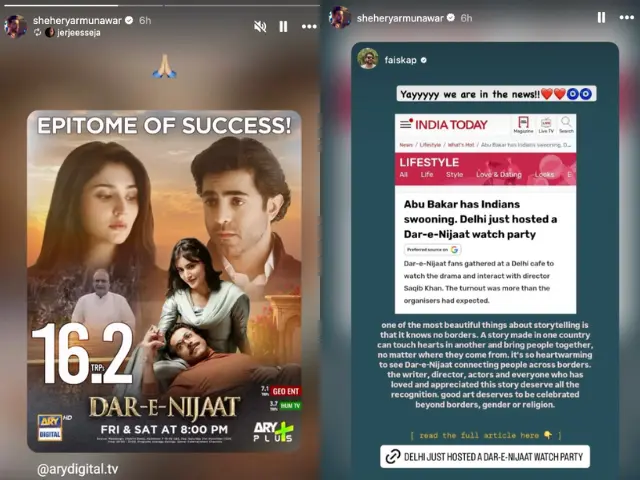
In an era defined by polarized geopolitics and rigid national boundaries, the enduring power of popular art to build clandestine bridges continues to astonish observers. The Pakistani television serial Dar-e-Nijaat has emerged as the latest cultural phenomenon to bypass the friction of India-Pakistan state relations, sparking widespread enthusiasm among audiences across the border. The show’s momentum culminated in a fan-organized public watch party in New Delhi—a rare and striking display of cross-border cultural affinity.
The event, which brought together dozens of viewers at a local café to watch the drama and interact virtually with its director, Saqib Khan, underscores a profound truth: stories rooted in shared linguistic nuances, familiar family dynamics, and deeply human emotional landscapes can transcend hostile political climates. For Pakistani actor Sheheryar Munawar, whose nuanced portrayal of the romantic lead Abu Bakar has won the hearts of viewers in India, the New Delhi screening was a poignant reminder of the universal appeal of quality storytelling. Sharing media coverage of the gathering on social media, Munawar eloquently championed the idea that art belongs to no single nation, religion, or gender.
This development is not an isolated incident but rather the latest chapter in a long-standing tradition of South Asian cultural exchange. For decades, television productions from Pakistan have found a fiercely loyal audience in India, captivating viewers with grounded scripts, progressive emotional depth, and relatable domestic conflicts. However, the success of Dar-e-Nijaat—and the grassroots enthusiasm that powered the Delhi watch party—arises against a backdrop of strict administrative hurdles, digital blockades, and severed formal artistic collaborations.
Read Also
This article explores the anatomy of this cultural crossover, examining the chronology of the New Delhi screening, the character dynamics driving the show’s cross-border popularity, the broader socio-political context of Indo-Pakistani artistic engagement, and the vital role that celebrity voices continue to play in championing creative diplomacy.
Detailed Chronology: From Screen to Street in New Delhi
The journey of Dar-e-Nijaat from a mainstream Pakistani television hit to the center of a New Delhi café gathering highlights the organic, decentralized nature of modern fandom.
The Rise of Dar-e-Nijaat
As the series broadcasted across television and digital platforms, it steadily cultivated a robust international following. While Pakistani dramas have historically enjoyed success in South Asia due to linguistic accessibility and high emotional resonance, Dar-e-Nijaat struck a particularly vibrant chord. Central to this appeal was the character of Abu Bakar, portrayed with grounded sensitivity by Sheheryar Munawar. Unlike traditional, hyper-masculine, or aggressive tropes often found in mainstream regional serials, Abu Bakar’s characterization relied on emotional maturity, quiet patience, empathy, and vulnerability.
The New Delhi Watch Party
Sensing the deep engagement of the local audience, Delhi-based platforms—specifically Tales of City Official in collaboration with organizer Hamza Khan—decided to move the viewing experience out of private living rooms and into the public sphere. Fans gathered at a popular New Delhi café to watch a screening of the drama together.
Significantly, the event was not merely a passive viewing experience. Attendees were treated to a live, virtual interaction with the drama’s director, Saqib Khan, bridging the physical gap between the creators in Pakistan and their admirers in the Indian capital. According to event organizers, the demographic makeup of the crowd challenged conventional assumptions about South Asian soap opera fandom: approximately 60% of the attendees were men. This unusual gender distribution underscored the broad, cross-demographic appeal of the show’s narrative themes, proving that complex emotional storytelling is not bound by gendered viewing habits.
Media Spotlight and Digital Amplification
Coverage of the New Delhi watch party was soon picked up by prominent Indian lifestyle and entertainment outlets, including India Today. The report highlighted how ordinary Indian viewers were openly swooning over the Pakistani production and celebrating its narrative complexity.
Upon encountering the coverage, Sheheryar Munawar took to Instagram Stories to share the report alongside a reflective, personal commentary. By amplifying the voices of his Indian fans, Munawar transformed a local fan-meet into an international talking point, cementing the symbiotic relationship between South Asian artists and their cross-border audiences. Organizers, buoyed by the unexpected success of the gathering, have since announced plans to explore hosting a follow-up screening, potentially for the drama’s highly anticipated series finale.
Supporting Context & Metrics: The Architecture of Cross-Border Fandom
To fully understand the significance of the Dar-e-Nijaat screening, one must analyze the broader landscape of Indo-Pakistani media consumption and the distinct factors driving contemporary viewership patterns.
The Socio-Cultural Ecosystem
India and Pakistan share a deep historical, linguistic, and cultural lineage. Despite decades of political hostility, partition legacies, and diplomatic freezes, the psychological architecture of everyday life—expressed through idioms, family structures, culinary habits, and emotional expressions—remains remarkably parallel. Pakistani television productions have long capitalized on this shared heritage. Where cinematic blockbusters are often subjected to rigid state censorship, theatrical bans, and nationalist rhetoric, television dramas and streaming platforms slip more fluidly across physical borders, reaching living rooms through YouTube, digital archives, and VPNs.
Demographic Shifts and Changing Expectations
The demographic profile of the New Delhi watch party—booming with a significant male turnout—signals an evolution in how South Asian audiences consume domestic dramas. For years, prime-time serials were stereotyped as targeted exclusively toward female domestic viewers. However, the nuanced character arc of Abu Bakar in Dar-e-Nijaat offers an alternative blueprint for masculinity. By prioritizing emotional intelligence, conflict resolution through dialogue, and deep-seated respect, the character resonates with male viewers navigating modern identity, relationships, and societal pressures in urban South Asia.
Comparative Cultural Engagement Metrics
While formal, state-sponsored artistic collaborations remain suspended due to geopolitical tensions, digital metrics consistently reveal an insatiable grassroots demand for cross-border content.
| Metric / Indicator | Historical Context (2015–2019) | Current Landscape (2024–2026) |
|---|---|---|
| Primary Distribution Channels | Satellite television, delayed cable broadcasts, pirated DVDs. | Global streaming platforms, official YouTube channels, digital syndication. |
| Viewer Accessibility | High visibility on Indian cable networks (e.g., Zindagi channel era). | Fragmented; reliant on digital workarounds, VPNs, and independent fan communities. |
| Nature of Fandom | Passive home viewing; solitary consumption. | Active, organized communities; public watch parties; social media mobilization. |
| Censor/Political Friction | Moderate; periodic bans on Pakistani actors and music artists. | High; strict administrative blocks on social media accounts, stringent visa restrictions. |
The data indicates that despite tightening state restrictions and the targeted blocking of digital assets, the appetite for authentic, human-centric storytelling has only grown more resilient. Grassroots initiatives like the New Delhi watch party demonstrate that contemporary audiences are increasingly willing to carve out their own spaces for cultural celebration, bypassing bureaucratic red tape.
Official Statements & Industry Perspectives
The success of Dar-e-Nijaat in India has once again ignited a vital conversation among prominent artists from both nations regarding the intersection of politics, art, and human connection. Over recent years, leading figures in the South Asian entertainment industry have consistently pushed back against the weaponization of culture.
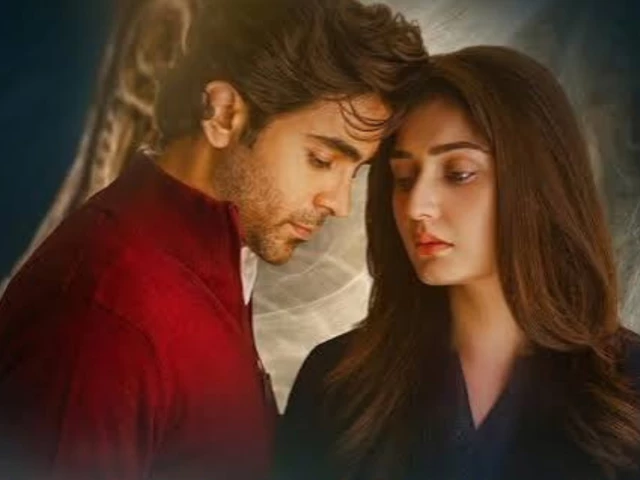
Sheheryar Munawar on the Universality of Art
Responding to the New Delhi screening, Sheheryar Munawar emphasized that the true measure of art lies in its capacity to dissolve artificial boundaries. In his public statements, he stated:
"One of the most beautiful things about storytelling is that it knows no borders. A story made in one country can touch hearts in another and bring people together, no matter where they come from."
Munawar went on to praise the collaborative effort behind the screen, extending credit to the writer, director, and fellow cast members, while reiterating a core philosophy of creative expression: "Good art deserves to be celebrated beyond borders, gender or religion."
Mahira Khan and the Human Cost of Political Retaliation
Munawar’s sentiments align closely with those voiced by other leading Pakistani stars. In May 2025, during an interview with Independent Urdu, superstar Mahira Khan addressed the systematic blocking of Pakistani celebrities’ social media accounts in India. Expressing deep affection for her Indian fanbase, Khan questioned the logic of penalizing artists during political standoffs:
"I continue to love my Indian fans… Why are artists often among the first to face restrictions when political tensions escalate? Artists and their work help connect people; restrictions on creative expression ultimately affect those relationships."
Hania Aamir on the "Distant Cousin" Dynamic
In January 2025, during an appearance on CNN, actress Hania Aamir offered a vivid metaphor for the relationship between the two neighboring populations, describing them as "distant cousins." Reflecting on the profound cultural commonalities, Aamir noted:
"We’re just so similar in so many ways. It’s absolutely lovely to see that we can collaborate and are just so appreciative of each other."
Sanam Saeed and Humayun Saeed on Cross-Border Affection
Similarly, actress Sanam Saeed, speaking in July 2024 regarding the international reception of her series Barzakh, expressed astonishment at the sheer volume of warmth originating from across the border:
"It’s amazing how much love comes from India, even though I’ve never been there."
Adding a foundational industry perspective, veteran actor and producer Humayun Saeed reflected in July 2023 on the historical fluidity of South Asian talent exchanges. Recalling an era when Indian actors frequently appeared in Pakistani television projects, Saeed argued that fundamental human bonds—such as love, friendship, and artistic collaboration—should remain immune to the shifting winds of state diplomacy. He voiced a persistent personal desire to travel to India, reconnect with old colleagues, and restore the professional bridges that once defined the regional entertainment sector.
Future Outlook: Can Cultural Diplomacy Outlast Political Friction?
As Dar-e-Nijaat approaches its narrative conclusion, the implications of its success extend far beyond television ratings or niche fan events. The New Delhi watch party serves as a sociological case study in the resilience of civil society engagement in the face of governmental alienation.
The Digital Frontier and Decentralized Fandoms
In the absence of formal state-sanctioned exchanges—such as joint film productions, reciprocal theatrical releases, and open tour visas for artists—fan-driven digital ecosystems have stepped into the vacuum. Social media platforms, independent curation collectives like Tales of City Official, and decentralized online watch parties have democratized cultural consumption. Fans no longer wait for official permission or broadcast syndication deals; they curate, discuss, and celebrate media on their own terms. This decentralized model suggests that future cross-border cultural interactions will be increasingly difficult for state apparatuses to suppress or regulate.
The Indispensable Role of Soft Power
Governments on both sides of the border have frequently deployed nationalist rhetoric to score political points, often utilizing the entertainment industry as an easy casualty during diplomatic crises. However, the unyielding enthusiasm of Indian audiences for Pakistani narratives—and the reciprocal warmth expressed by stars like Munawar, Khan, Aamir, and Saeed—demonstrates the limits of state-imposed cultural isolation. Soft power cannot be permanently legislated out of existence when it is sustained by authentic emotional resonance.
Towards a Collaborative Horizon
Looking ahead, industry insiders and cultural analysts remain cautiously optimistic. While an immediate return to formal, large-scale bilateral co-productions appears unlikely in the short term, the grassroots energy manifested in New Delhi proves that the demand for shared cultural spaces is timeless. Whether through independent digital collaborations, underground screenings, or virtual fan interactions, the human impulse to share stories will continue to carve out paths across the most heavily fortified borders.
Ultimately, Dar-e-Nijaat has left a mark that endures longer than any temporary political impasse. It stands as a testament to the fact that when a story is told with truth and empathy, it ceases to be foreign property—it becomes the collective emotional heritage of everyone willing to listen.


Comments
Facebook App ID not configured. Please add it in the Customizer.