
Executive Overview
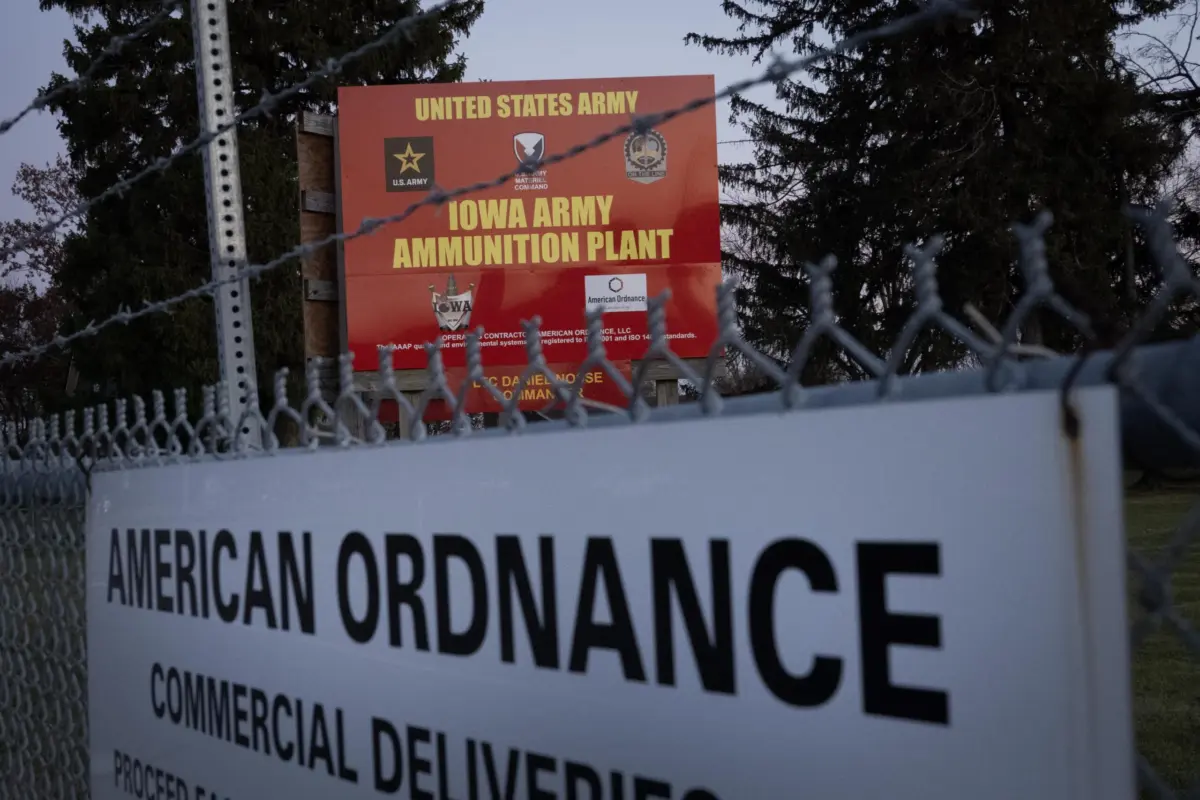
Just hours before millions of Americans were set to sit down for Thanksgiving dinner, the United States military prepared to execute a controversial, high-stakes operation in rural Iowa: the controlled detonation of approximately five tons (9,500 pounds) of lead azide—an exceptionally unstable primary explosive compound. The operation, scheduled for Wednesday morning, aims to destroy aging munitions stored inside reinforced concrete bunkers. However, the chosen method—a massive open-air explosion—threatens to send a toxic plume of heavy metal particulate matter drifting across multiple states, potentially reaching as far as 100 miles away and crossing state lines into Missouri.
The path to this Thanksgiving eve detonation has been marked by fierce legal battles, intense political wrangling, widespread public alarm, and last-minute interventions by federal health agencies. While the US Army defends the operation as an urgent necessity driven by the extreme instability of the degrading materials, critics, local residents, and environmental advocates have condemned the lack of transparency, the communication failures of military leadership, and the profound public health risks posed by dispersing thousands of pounds of lead dust into the atmosphere.
This crisis highlights a broader, often overlooked reality about modern environmental health: despite decades of hard-fought progress that removed lead from gasoline, household paints, and residential plumbing, lead remains a pervasive and invisible threat in American life. From aging infrastructure and imported consumer goods to industrial legacies and emergency military operations, lead continues to pose significant health risks—particularly to children and pregnant women—demonstrating how difficult it is to fully excise this potent neurotoxin from our modern world.
Read Also
Detailed Chronology of the Iowa Lead Azide Crisis
The unfolding crisis in Iowa is the result of decades-old military stockpiles meeting modern safety panic, culminating in a week of dramatic legal and political maneuvering.
The Buildup and the Hazard
For years, the Pentagon has maintained stockpiles of various aging energetic materials. Among them is lead azide ($Pb(N_3)_2$), a chemical compound heavily relied upon as a detonator because of its extreme sensitivity to friction, shock, and static electricity. Over time, however, lead azide degrades. As it ages, crystals can shift, fracture, or destabilize, drastically increasing the probability of a spontaneous, uncontrolled detonation.
According to Army assessments, the five tons of lead azide currently stored in Iowa have reached a critical stage of degradation. Compounding the issue are environmental factors: falling autumn and winter temperatures in Iowa can alter the physical stability of the compound, heightening the risk that it could detonate spontaneously inside its storage facility. Military officials argued that an accidental, uncontrolled explosion would be far more catastrophic, unpredictable, and environmentally damaging than a planned, contained detonation inside reinforced bunkers.
Legal Battles and Political Hot Potatoes
As news of the planned Thanksgiving eve blast leaked to the public, local outrage boiled over. Residents expressed deep frustration with the Army’s poor communication channels, pointing out that military officials failed to provide adequate advance notice, clear evacuation guidance, or transparent data regarding potential atmospheric fallout zones.
A coalition of local stakeholders and environmental advocates rushed to state court, securing a temporary injunction that briefly halted the military’s plans. However, the legal victory was short-lived. Following an expedited appeal by government attorneys, a federal circuit court overturned the lower court’s ruling on Monday, clearing the legal pathway for the blast to proceed as scheduled on Wednesday morning.
The high-stakes nature of the operation drew the attention of the highest levels of government. President Donald Trump, visibly concerned by the potential fallout—both literal and political—attempted to shift the ultimate responsibility of the decision. In an unusual political maneuver, the administration sought to pass the final authorization down to Rob Sand, the incoming Democratic governor-elect of Iowa, hoping to insulate federal leadership from the political and health consequences if the operation went awry. Despite this eleventh-hour attempt to distribute accountability, court approvals held firm, and the military pressed forward.
The Thanksgiving Eve Detonation
The operation relies on specialized military engineering. The explosive material is housed within reinforced concrete bunkers designed to absorb and redirect the brunt of the explosive force. Technicians implemented various atmospheric and blast-mitigation steps to minimize dispersion. Nevertheless, independent scientific models and military projections acknowledged a grim reality: a significant amount of vaporized lead and fine particulate dust would escape into the atmosphere.
Predictive models from meteorological and environmental agencies indicated that the resulting toxic plume could travel vast distances, carried by prevailing winds up to 100 miles from the blast site, threatening communities across Iowa and potentially crossing state lines into Missouri.
Supporting Context & Metrics: The Mechanics of Lead Azide and Environmental Fallout
To understand why the Pentagon’s detonation plan sparked such widespread panic, it is necessary to examine the physical properties of lead azide and the toxicology of lead itself.
What is Lead Azide?
Lead azide is an inorganic compound featuring lead cations and azide anions. It is classified as a primary explosive, meaning it is extremely sensitive to thermal and mechanical shock. It is predominantly used in military detonators and percussion caps to initiate secondary, more stable explosives like TNT or RDX. Because of its sensitivity, handling lead azide requires extreme care; friction from routine movement or minor environmental shifts can trigger a violent reaction.
When detonated, lead azide decomposes rapidly into nitrogen gas and microscopic lead particulates. In a controlled blast inside a bunker, engineers attempt to capture as much of this residue as possible, but fine particulate matter invariably escapes into the surrounding air column.
The Toxicity of Lead: No Safe Threshold
The primary danger of the Iowa blast is not the explosive shockwave—which will be contained within a military installation—but the airborne dispersion of lead dust. Public health organizations universally agree that there is no safe blood lead concentration for humans.
Lead is a potent neurotoxin that affects nearly every organ system in the body. When inhaled or ingested, lead particles enter the bloodstream and accumulate in soft tissues and bone structures.
- Neurological Impact: In children, even microscopic exposure can cause permanent cognitive deficits, lowered IQ scores, developmental delays, behavioral disorders, and diminished academic potential.
- Cardiovascular and Renal Effects: In adults, chronic or acute lead exposure is linked to hypertension, cardiovascular disease, and kidney dysfunction.
- Reproductive Health: Pregnant women exposed to lead face severe risks, as the metal easily crosses the placental barrier, leading to miscarriage, stillbirth, premature birth, and low birth weight.
Given these severe health implications, the release of tons of lead dust into an uncontained atmospheric environment represents an acute public health hazard.
Official Statements, Health Advisories, and Interagency Friction
The looming explosion triggered urgent warnings, contradictory messaging, and unprecedented health advisories from federal and public health institutions.
The Military’s Defense
Throughout the ordeal, representatives for the US Army maintained that they had no viable alternative. Officials emphasized that leaving the unstable lead azide in storage posed an unacceptable, ticking-time-bomb threat to military personnel and nearby civilian populations.
"We are choosing the safest possible path out of a set of exceptionally dangerous options," an Army spokesperson noted during briefings. Military engineers underscored that waiting longer—especially as winter temperatures continued to drop—exponentially increased the risk of a catastrophic, accidental detonation that would lack the containment measures currently in place.
Public Health Alarms: ALA and HHS Warnings
Civilian health organizations took a starkly different view of the operation’s safety profile. The American Lung Association (ALA) issued urgent public advisories on Monday and Tuesday, strongly urging any residents living within the potential plume trajectory to seal their homes, turn off HVAC systems, and remain indoors for one to two days following the detonation.
Simultaneously, the Department of Health and Human Services (HHS) issued direct, targeted warnings that went further than the military’s baseline safety communications. On Tuesday, HHS officially recommended that vulnerable populations—specifically children, infants, and pregnant women—actively evacuate the projected path of the toxic plume, which meteorologists warned could drift across county boundaries and into neighboring Missouri.
This divergence in messaging exposed deep rifts between the operational priorities of the Department of Defense and the protective mandates of public health agencies, leaving local residents caught in a storm of conflicting instructions just hours before a major national holiday.
The Broader Landscape: Why Lead Remains All Around Us
While the emergency munitions detonation in Iowa is an extreme and rare event, it serves as a stark reminder of a broader, systemic failure: the persistence of lead in the modern American environment.
The Legacy of the 20th Century
During the 20th century, lead was integrated into the foundational
infrastructure of industrial economies. It was mixed into paint to accelerate drying times and enhance durability, added to gasoline to improve engine performance, and used to manufacture residential water supply pipes.
Although federal bans enacted in the late 1900s—such as the prohibition of leaded gasoline in the 1970s, the ban on residential lead paint in 1978, and subsequent restrictions on lead in plumbing—marked major public health victories, they could not erase the past. Millions of tons of legacy lead remain embedded in the American landscape:
- Soil Contamination: Decades of exhaust deposition from leaded gasoline have left surface soils along major roadways and urban centers permanently contaminated.
- Aging Housing Stock: Millions of older homes still contain layers of deteriorating lead paint beneath modern coats, posing severe poisoning risks during routine remodeling or as paint naturally chips and turns to dust.
- Infrastructure: Aging municipal water systems across the country still rely on legacy lead service lines, threatening drinking water safety in older cities.
The Globalized Threat Chain
As investigative reporting has repeatedly demonstrated, lead pollution is no longer solely a domestic relic of past manufacturing practices; it is a contemporary, globalized hazard. A significant portion of modern lead exposure stems from imported consumer goods, ranging from contaminated spices and traditional medicines to poorly manufactured toys, ceramics, and consumer electronics.
Experts emphasize that domestic regulations alone are insufficient. Drew McCartor, director of a prominent global public health nonprofit, noted in previous analyses that resolving the ongoing lead crisis requires an ambitious, whole-of-government commitment that extends far beyond US borders. International supply chains must be rigorously monitored, and cooperative frameworks must be established to curb lead usage in manufacturing nations that export goods to the United States.
Future Outlook: Lessons from the Iowa Detonation
As the smoke clears over the Iowa countryside following Wednesday’s controversial detonation, policymakers, environmental scientists, and military planners will face a long-term reckoning.
First, the incident has exposed critical vulnerabilities in military logistics and emergency disposal protocols. The fact that the US armed forces were forced to rely on an open-air, high-risk explosion to dispose of unstable munitions highlights an urgent need for research and funding into safer, greener chemical neutralization technologies. Modern science must develop advanced methods to render primary explosives inert without releasing heavy metal toxins into the biosphere.
Second, the crisis underscores a fundamental breakdown in government communication during technological and environmental emergencies. When federal agencies fail to provide transparent, timely, and coordinated safety guidance, public trust collapses, and local communities are left vulnerable to preventable harms. Future emergency operations—whether military, industrial, or environmental—must prioritize transparent community engagement and rigorous precautionary health measures from the outset.
Finally, the Iowa lead plume serves as an uncomfortable metaphor for our broader environmental predicament. Lead is heavy, persistent, and deeply entrenched in the material history of human industrialization. Whether found in decaying urban infrastructure, imported consumer products, or forgotten military stockpiles, lead cannot simply be wished away. Addressing it requires sustained vigilance, robust regulatory oversight, interagency cooperation, and a willingness to confront the toxic legacy of our industrial past before it explodes into our present.





Comments
Facebook App ID not configured. Please add it in the Customizer.