
As the midsummer heat peaks, the digital entertainment ecosystem is already undergoing a profound seasonal metamorphosis. While conventional wisdom dictates that the hallowed halls of horror cinema remain firmly locked away until the leaves turn amber in October, major streaming conglomerates have aggressively fast-tracked their autumnal programming. Long before the traditional calendar flips to autumn, platforms are aggressively acquiring, archiving, and uploading every available spine-chilling title into their digital libraries.
This premature shift signals more than just a clever marketing strategy; it reflects a sophisticated algorithmic response to year-round consumer demand for atmospheric, genre-specific content. Yet, navigating this overwhelming deluge of digital terror presents a paradox for the modern viewer. Subscribers face an ever-expanding sea of content on platforms characterized by slowly creeping subscription fees and labyrinthine interfaces. The path of least resistance usually leads back to familiar cultural touchstones—the blockbuster franchises and mainstream hits that populate countless "Top 10" lists.
However, beneath the surface of these high-profile releases lies a vast, underexplored archive of brilliant, overlooked, and genuinely subversive horror cinema. This curated investigative survey cuts through the algorithmic noise to spotlight essential, underrated cinematic offerings hitting various streaming platforms. From gothic masterworks and pioneering anthologies to audacious sequels and visionary stop-motion triumphs, this feature serves as an authoritative guide to expanding your cinematic horizons. Taking a calculated chance on these overlooked treasures offers the ultimate remedy to the fatigue of endless streaming browsing.
Read Also
Detailed Chronology: October Streaming Additions & Critical Analysis
Byzantium
- Platform & Release Date: Tubi — October 1
- Creative Vision: Directed by Neil Jordan; Starring Gemma Arterton and Saoirse Ronan
To the discerning horror aficionado, the foundational ingredients of Neil Jordan’s Byzantium read like an absolute wishlist. Reuniting the atmospheric mastery of director Neil Jordan with the vampire subgenre—decades after his seminal work on Interview with the Vampire—this maritime gothic tale stars Gemma Arterton and Saoirse Ronan as a mother-daughter duo of blood-drinkers operating on the fringes of a decaying British coastal town. For those attuned to high-concept, moody genre cinema, the mere mention of its pedigree is reason enough to clear an evening’s schedule.
Yet, Byzantium delivers far more than immaculate, rain-slicked aesthetics. In a cinematic landscape saturated with formulaic creature features, this film stands out as a genuinely subversive vampire narrative. The narrative twists expectations of eternal life, maternal sacrifice, and patriarchal oppression, supported by towering performances from its lead actresses. While viewers naturally arrive for the fog-drenched atmosphere, they stay for a complex, melancholic story that ranks among the finest autumn-night viewing experiences available on free, ad-supported streaming platforms.
The Car
- Platform & Release Date: Shudder — October 1
- Creative Vision: Directed by Elliot Silverstein; Starring James Brolin
It is impossible to discuss 1977’s The Car without acknowledging its direct lineage to Steven Spielberg’s blockbusting marine masterpiece. Effectively pitched as Jaws on four wheels, The Car embraces its absurd high-concept premise with utter fearlessness. For years, the film has lived a dual life: dismissed by traditional critics as drive-in schlock, yet celebrated by midnight movie fanatics as a masterclass in unintentional comedy, playing much like a live-action Mystery Science Theater 3000 selection outfitted with a surprisingly capable cast and a slightly elevated budget.
Strip away the campy reputation, however, and a startling reality emerges: The Car is roughly one hundred percent more engaging than its premise suggests. Moving at a breakneck, relentless pace, the film deploys a series of brilliantly orchestrated action sequences in which an ominous, black-tinted sedan with an unforgettably eerie horn terrorizes a helpless desert community. Director Elliot Silverstein crafts a vehicle of pure kinetic energy, delivering a deliciously entertaining, high-velocity piece of nostalgic cinematic junk food.
Crimson Peak
- Platform & Release Date: Netflix — October 1
- Creative Vision: Directed by Guillermo del Toro; Starring Mia Wasikowska, Jessica Chastain, and Tom Hiddleston
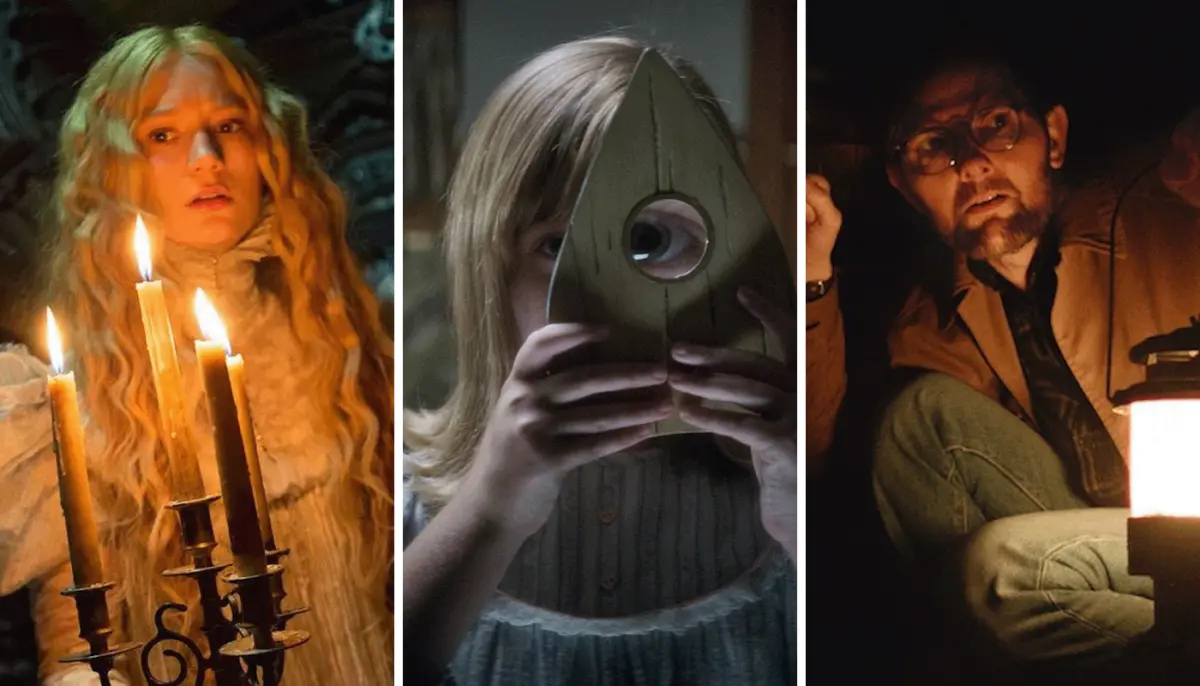
While cinephiles familiar with Guillermo del Toro’s lavish filmography might hesitate to label Crimson Peak as "underrated," public perception tells a very different story. Upon its theatrical release, the film suffered heavily from a misleading marketing campaign that framed it as a standard, jump-scare-heavy modern horror film, overshadowing its true identity as a lavish, historical gothic romance. Consequently, it remains one of del Toro’s most overlooked modern masterworks.
Viewers who look past the occasionally heavy-handed CGI ghosts—widely acknowledged as the film’s weakest element—will discover a magnificent pastiche of classic gothic literature in the tradition of Daphne du Maurier’s Rebecca. Set inside Allerdale Hall, a sinking, crimson-clay-bleeding mansion that literally breathes and rots alongside its inhabitants, the film offers an intoxicating blend of psychological dread, decadent set design, and passionate melodrama. It stands proudly as one of the visually arresting gothic achievements of the 21st century.
Dead of Night
- Platform & Release Date: Shudder — October 21
- Creative Vision: Directed by Alberto Cavalcanti, Charles Crichton, Basil Dearden, and Robert Hamer
For anyone attempting to trace the historical lineage of modern horror anthology cinema, Ealing Studios’ 1945 masterpiece Dead of Night represents mandatory viewing. Widely recognized as the film that cemented the horror anthology format, this British classic laid the structural groundwork for everything from Mario Bava’s Black Sabbath and George A. Romero’s Creepshow to modern television milestones like The Twilight Zone and Tales from the Crypt.
Decades after inspiring generations of filmmakers, Dead of Night retains its uncanny power to unsettle. Eschewing modern gore for psychological unease and structural ingenuity, the film weaves disparate nightmares told by a group of strangers trapped in a seemingly endless temporal loop. Its standout segment—featuring a ventriloquist driven to madness by a malevolent, living puppet—remains a foundational milestone in the history of killer-doll cinema, executing its sinister premise with chilling precision.
Hokum
- Platform & Release Date: Shudder — October 10
- Creative Vision: Directed by Damian McCarthy; Starring Adam Scott
Hokum occupies a peculiar position within the contemporary horror landscape. Despite earning universal critical acclaim, boasting a standout performance by Adam Scott, and debuting during a fiercely competitive year for independent genre cinema, the film inexplicably slipped through the cultural cracks upon its initial release. Its forthcoming arrival on Shudder offers a prime opportunity for rediscovery.
Following up on his critically lauded breakout Oddity, director Damian McCarthy demonstrates an exceptional talent for cultivating an immersive atmosphere of sustained dread, only to deliver deeply satisfying, thematic payoffs. Rather than relying on cheap, synthetic jump scares, Hokum operates on the logic of authentic folklore. It captures the dark, oral traditions of cautionary tales, grounding its supernatural terrors in psychological realism and tactile, unsettling craftsmanship.
Mad God
- Platform & Release Date: Tubi — October 1
- Creative Vision: Directed by Phil Tippett
The genesis of Mad God is legendary among animation and special effects historians. While supervising the stop-motion creature effects for RoboCop 2 in the early 1990s, master animator Phil Tippett conceived an uncompromising, dialogue-free descent into an apocalyptic hellscape. As the industry rapidly transitioned to CGI, Tippett shelved the passion project for decades, before a dedicated crew of artists inspired him to resurrect the painstaking craft.
The resulting feature is nothing short of a miracle of visionary persistence. Mad God follows a lone, gas-masked soldier descending through a decaying, industrial underworld populated by grotesque mutants, sadistic torturers, and monolithic engines of destruction. Evoking the fever-dream claymation sensibilities of a darkened dark-fantasy epic, Tippett’s labor of love is an overwhelming visual feast of artistic insanity that redefines the outer limits of stop-motion animation.
Ouija: Origin of Evil
- Platform & Release Date: Netflix — October 1
- Creative Vision: Directed by Mike Flanagan; Starring Elizabeth Reaser, Annalise Basso, and Henry Thomas
As Mike Flanagan’s stature as a premier architect of modern horror has grown through landmark television and cinematic achievements, it is easy to forget his uncanny ability to elevate unpromising corporate IP into masterclasses of suspense. 2016’s Origin of Evil stands as the crown jewel of this creative alchemy, transforming a cynical prequel to a critically reviled studio cash-in into a poignant, terrifying family drama.
Set in 1960s Los Angeles, the film follows a widowed mother and her two daughters who operate a fraudulent spiritualist scam, only to inadvertently invite a genuine, ancient demonic force into their home via a newly acquired Ouija board. Flanagan seamlessly marries old-school atmospheric terror with profound emotional resonance, anchoring the supernatural carnage in authentic familial grief, creating an endlessly rewatchable seasonal staple.
The People Under the Stairs
- Platform & Release Date: Peacock — October 1
- Creative Vision: Directed by Wes Craven; Starring Brandon Adams, Everett McGill, and Wendy Robie
On paper, the thematic ingredients of Wes Craven’s 1991 cult classic The People Under the Stairs suggest an impossible tonal tightrope walk. Craven constructs a home-invasion thriller that simultaneously functions as a scathing sociopolitical allegory addressing systemic racism, urban real estate exploitation, and generational gentrification. Yet, through sheer audacious direction, the experiment succeeds brilliantly.
The film operates within a grand tradition of social horror, balancing grim realism with pitch-black, Grand Guignol absurdity. Anchored by unforgettable, larger-than-life performances from Twin Peaks alumni Everett McGill and Wendy Robie as deranged, incestuous landlords who harvest their tenants to preserve their warped suburban utopia, Craven’s vision remains a ferociously entertaining, biting piece of satirical terror.
Psycho II
- Platform & Release Date: Netflix — October 1
- Creative Vision: Directed by Richard Franklin; Starring Anthony Perkins, Vera Miles, and Robert Loggia
Sequels to unimpeachable masterpieces are historically doomed to fail, frequently dismissed as uninspired cash grabs that tarnish cinematic legacies. By all metrics, 1983’s Psycho II should have been a disaster that cheapened Alfred Hitchcock’s 1960 benchmark. Instead, director Richard Franklin and screenwriter Tom Holland crafted a sophisticated, psychologically complex thriller that stands as a worthy companion piece to the original.
The narrative cleverly upends audience expectations by depicting Norman Bates released from a psychiatric institution, genuinely rehabilitated, and desperately trying to reintegrate into a society and hometown that refuses to let him forget his past. By examining institutional failures, societal paranoia, and the tragic cycle of trauma, Psycho II subverts franchise conventions to deliver a brilliant, tension-filled character study.
The Seventh Victim
- Platform & Release Date: Prime Video — October 1
- Creative Vision: Directed by Mark Robson; Produced by Val Lewton; Starring Tom Conway, Jean Brooks, and Kim Hunter
The 1940s are frequently sidelined in horror historiography, overshadowed by Universal’s fading monster catalog and global wartime anxieties. However, producer Val Lewton revolutionized psychological horror at RKO Pictures by prioritizing shadow, suggestion, and atmospheric dread. While Cat People receives its rightful acclaim, 1943’s The Seventh Victim remains a fascinating, fiercely ahead-of-its-time exploration of occult subcultures.
Following a young woman searching for her missing sister in the shadowy depths of Greenwich Village, the film uncovers a chilling Satanic cult operating in plain sight within urban America. The Seventh Victim distinguished itself from its contemporaries through its unsettling exploration of psychological manipulation, urban alienation, and one of the bleakest, most haunting narrative resolutions in classic Hollywood history.
Silent Hill
- Platform & Release Date: Peacock — October 1
- Creative Vision: Directed by Christophe Gans; Starring Radha Mitchell, Sean Bean, and Laurie Holden
Translating interactive video game franchises into compelling cinematic narratives has historically been a fool’s errand. Yet, Christophe Gans’s 2006 adaptation of Konami’s seminal survival-horror milestone Silent Hill achieved what few video game adaptations before or since could manage: capturing the authentic, nightmarish psychological atmosphere of its source material.
While narrative coherence occasionally fractures beneath the weight of complex lore, Silent Hill succeeds triumphantly as a masterclass in production design, creature creation, and sensory dread. From the ash-choked streets of the abandoned town to the terrifying industrial transitions into darkness, Gans crafts a bold, unapologetically bizarre piece of dark fantasy that treats video game aesthetics with genuine artistic ambition.
Stir of Echoes
- Platform & Release Date: Prime Video — October 1
- Creative Vision: Directed by David Koepp; Starring Kevin Bacon
Released into theaters during the cultural phenomenon surrounding M. Night Shyamalan’s The Sixth Sense, David Koepp’s Stir of Echoes suffered the ultimate misfortune of unfortunate timing. While Shyamalan’s film captured the box office crown, Koepp’s gritty supernatural thriller carved out its own distinct, deeply impressive legacy as an unflinching exercise in mounting dread.
Anchored by a career-best, highly grounded performance from Kevin Bacon as a blue-collar worker who undergoes hypnosis and subsequently unlocks the ability to communicate with the violent ghosts of his neighborhood, the film leans heavily into methodical, late-60s pacing reminiscent of European thrillers and Brian De Palma’s stylistic sensibilities. Boasting exceptional camerawork, industrial atmosphere, and unforgettable masterclasses in slow-burn tension, Stir of Echoes is a premier modern supernatural classic.
Supporting Context & Metrics: The Economics of Early-Bird Horror
The commercial strategy driving streaming platforms to upload horror content as early as July is grounded in rigorous audience analytics and shifting consumer viewing habits. Industry analysts note several key metrics defining this trend:
- Extended Seasonal Engagement: Data indicates that the "Spooky Season" demographic has expanded from a traditional 31-day window in October to a robust 90-to-120-day engagement cycle spanning from mid-summer through November.
- Algorithmic Discoverability: As subscription video-on-demand (SVOD) platforms implement tiered pricing structures and ad-supported models, platforms rely on high-retention genres like horror to mitigate subscriber churn during traditionally slow summer quarters.
- Curation Over Blockbusters: While major tentpole releases drive initial sign-ups, curated libraries featuring deep-cut, underrated, and international titles significantly increase platform "dwell time," directly correlating with higher user retention and perceived service value.
Official Statements & Industry Perspectives
Industry executives and genre historians have increasingly recognized the vital role that catalog curation plays in sustaining subscriber interest. Speaking on the modern streaming economy, genre archivist and film historian Marcus Vance notes:
"We are witnessing a fundamental shift in how audiences consume horror. The days of treating horror as a strictly seasonal novelty are over. Viewers are actively seeking out curated counter-programming that challenges mainstream formulas. When platforms invest in unearthing overlooked gems—whether it’s 1940s psychological thrillers or daring independent stop-motion—they aren’t just filling digital shelf space; they are cultivating a more sophisticated, highly engaged audience base that values depth over convenience."
Furthermore, independent distributors note that digital platforms offering specialized horror libraries have provided a critical lifeline for titles that were previously victims of poor marketing or limited theatrical footprints, allowing visionary works to finally find their intended audiences.
Future Outlook: The Evolution of Seasonal Streaming
Looking ahead, the intersection of streaming technology and genre curation points toward an increasingly specialized digital marketplace. As artificial intelligence and machine learning algorithms become more sophisticated at mapping viewer preferences, platforms will likely move beyond broad categorical tags ("Horror," "Thriller") to offer hyper-targeted micro-genres tailored to individual aesthetic tastes—such as "folk-tale dread," "gothic architectural horror," and "classic psychological anthologies."
However, this algorithmic efficiency places an even greater responsibility on human curators and film critics to champion the overlooked, the strange, and the genuinely innovative. As subscription fees continue their gradual upward trajectory, consumers are increasingly demanding cultural value that extends far beyond recycled intellectual property.
By taking a chance on unheralded titles like Byzantium, Mad God, and The Seventh Victim, audiences participate in an ongoing reclamation of cinematic history. The early arrival of spooky season on your favorite streaming app is not merely a corporate cash grab; it is an invitation to dive deep into the limitless, shadowy corners of cinematic art—proving that true terror never goes out of season.

Comments
Facebook App ID not configured. Please add it in the Customizer.