

Executive Overview
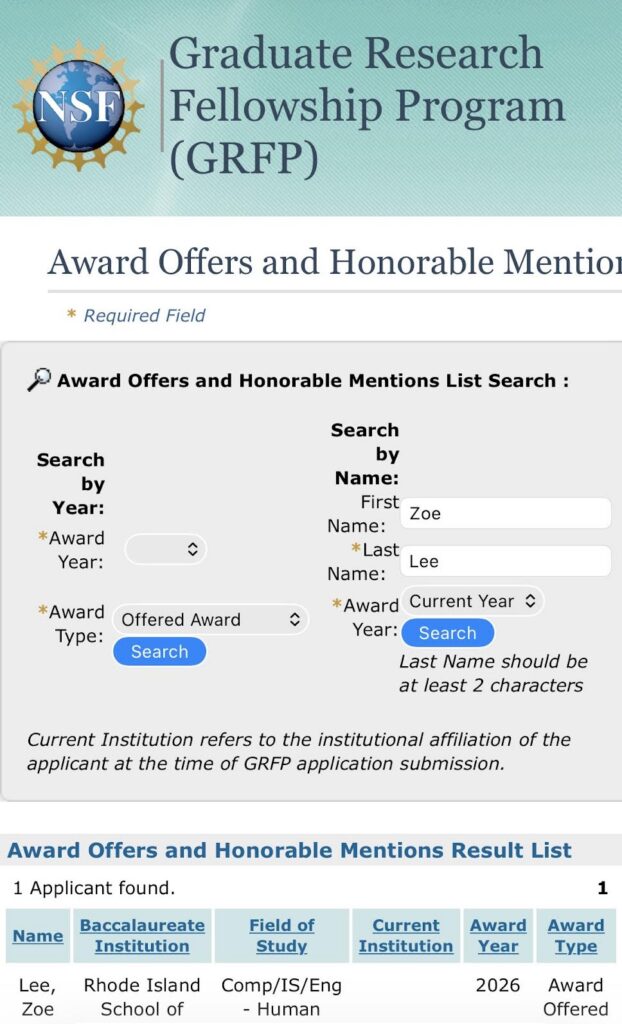
The pursuit of academic and professional excellence often requires a rare intersection of creative vision, rigorous analytical thinking, and relentless dedication. Few individuals embody this multidisciplinary convergence quite as effectively as Zoe Lee, an accomplished industrial designer and researcher. A graduate of the esteemed Rhode Island School of Design (RISD), Lee has officially secured a prestigious National Science Foundation (NSF) Graduate Research Fellowship to support her upcoming academic tenure.
Beginning this fall, Lee will matriculate into the Massachusetts Institute of Technology (MIT) to embark on her Master’s program, with the prestigious NSF fellowship fully extending to fund her subsequent doctoral (PhD) studies. This significant milestone not only marks a monumental achievement in her personal career but also underscores the vital importance of merging human-centric design methodologies with advanced scientific and technological research.
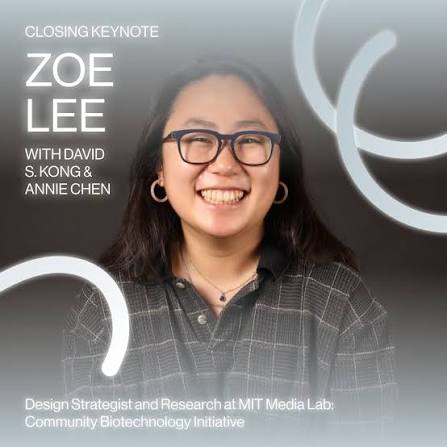
This comprehensive report examines Zoe Lee’s academic pedigree, her extensive portfolio of innovative projects, her artistic and entrepreneurial milestones—ranging from the MacDowell Fellowship to startup ventures like BEAM—and the broader implications of her transition to MIT as an NSF fellow.
Read Also
Detailed Chronology
Understanding the depth of Zoe Lee’s achievement requires mapping the sequential evolution of her academic and professional trajectory. Her journey highlights how foundational training in the arts and industrial design can serve as a powerful launchpad for high-level scientific inquiry and technological innovation.
[2018–2021] Early Design Concepts & Regional Recognition
    │
    ▼
[2023–2024] RISD Graduation & Professional Expansion (BEAM Startup, NEW INC)
    │
    ▼
[2025–2026] Creative Milestones (MacDowell Fellowship, Kickstarter Book Ventures)
    │
    ▼
[Fall 2026] National Science Foundation Grant Award & MIT Graduate/PhD Transition
Early Foundations and RISD Training (2018–2024)
Lee’s creative journey gained early momentum during her formative years exploring sustainable design solutions and human-centered products, such as her early conceptual work with Mama Chia design ideas. Her formal academic training took root at the Rhode Island School of Design (RISD), where she specialized in Industrial Design.
At RISD, Lee immersed herself in the intricate intersection of material science, form, function, and user experience. Her undergraduate years were characterized by collaborative innovation. Notably, she gained regional acclaim when her student team won the Rhode Island BlueGreen Innovation Challenge, a competitive platform recognizing sustainable design and environmental problem-solving. By the time she graduated from RISD in July 2024, Lee had already established a reputation for pushing the boundaries of traditional industrial design into realms of ecological and social impact.
Entrepreneurship, Fellowships, and Creative Works (2024–2026)
Following her undergraduate commencement, Lee resisted the conventional career path, instead launching directly into complex entrepreneurial and artistic ventures. In late 2024, she co-founded the startup BEAM, securing a coveted spot at NEW INC, the first museum-led cultural incubator, run by the New Museum in New York City. BEAM positioned Lee at the forefront of creative technology and design-driven enterprise.
Demonstrating her versatility across mediums, Lee ventured into publishing and the literary arts. In September 2025, she launched a successful Kickstarter campaign for her illustrated book, Eating the Whole Fish. Her creative output reached another high-water mark in March 2026, when she was awarded the prestigious MacDowell Fellowship, a renowned residency that has historically supported some of the world’s most celebrated artists, writers, and thinkers.

The NSF Breakthrough and MIT Admission (2026)
The culmination of her diverse pursuits materialized in mid-2026 when the National Science Foundation selected Lee for its highly competitive Graduate Research Fellowship Program (GRFP). The NSF grant is renowned for identifying and supporting exceptional graduate students who are pursuing full-time research-based master’s and doctoral degrees in STEM and STEM-education fields. Securing this fellowship guarantees multi-year financial support, providing Lee with the autonomy and resources necessary to tackle complex technological problems as she begins her Master’s and subsequent PhD studies at MIT this fall.
Supporting Context & Metrics
To fully contextualize the weight of Zoe Lee’s accomplishments, one must examine the metrics and prestige associated with both the institutions that have shaped her career and the fellowships she has been awarded.

The National Science Foundation Graduate Research Fellowship (NSF GRFP)
The NSF GRFP is the nation’s oldest fellowship program of its kind, dating back to the foundation’s inception in 1950. Its mission is to recruit and support individuals who demonstrate the potential to significantly contribute to research, innovation, and teaching in STEM fields.
- Selectivity: Acceptance rates typically hover between 12% and 16% from an applicant pool of tens of thousands of applicants nationwide.
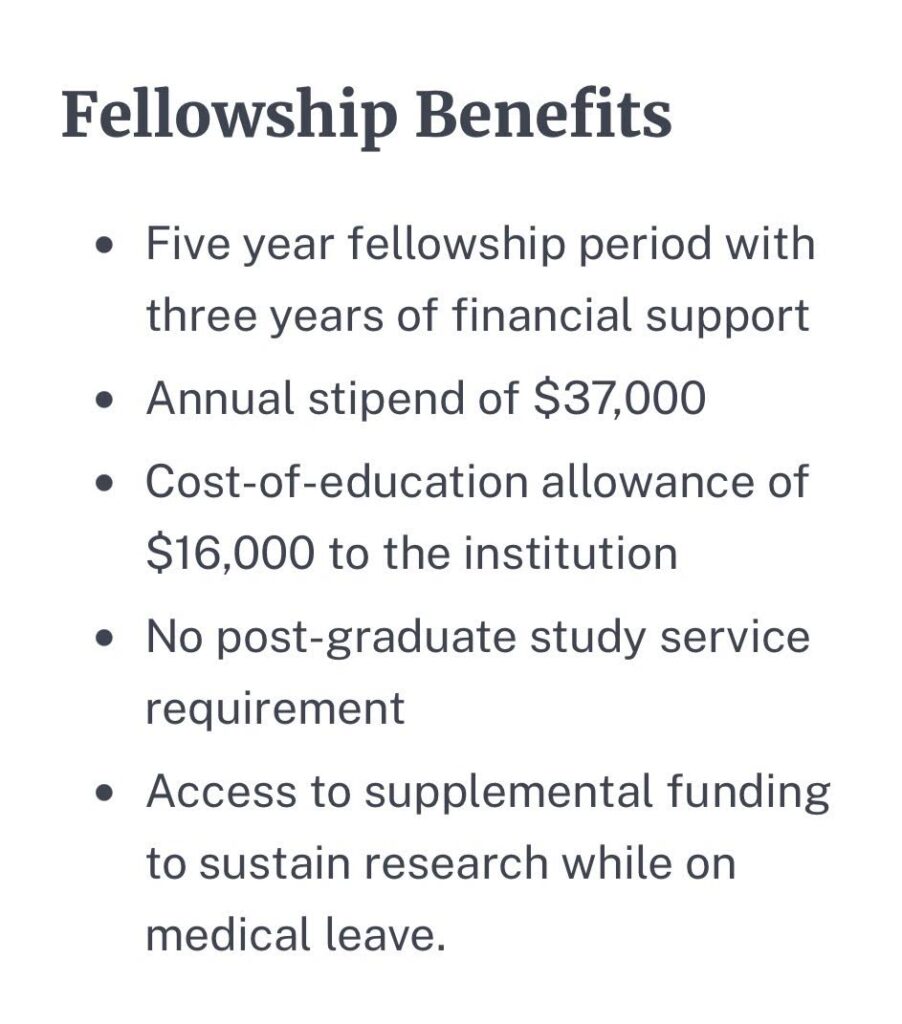
- Funding Structure: The fellowship provides a three-year annual stipend along with a cost of education allowance to the institution, removing financial barriers and allowing researchers complete freedom to direct their investigations.
- Long-Term Impact: Past NSF fellows include numerous Nobel laureates, U.S. cabinet secretaries, and thousands of academic and industry leaders. By securing this grant, Lee joins an elite tier of emerging researchers.
The Rhode Island School of Design (RISD) Pedagogy
RISD is globally recognized as a premier institution for art and design education. Industrial Design at RISD is not merely about styling physical objects; it is an investigative discipline that requires students to understand manufacturing processes, ergonomics, materials science, and human behavior. Lee’s background from this rigorous program provides her with a distinct advantage in advanced technological research at MIT, where bridging the gap between hardware, human interaction, and systems engineering is paramount.

Collaborative Ecosystems: NEW INC and MacDowell
Lee’s inclusion in NEW INC highlights her capacity to operate at the intersection of commerce, art, and technology. The incubator fosters cultural entrepreneurs working in virtual reality, sustainable fashion, interactive installations, and advanced product design. Simultaneously, her MacDowell Fellowship places her within a rich tradition of deep, uninterrupted creative focus. These milestones demonstrate that Lee’s academic potential is matched by her capacity for practical execution and artistic exploration.
Official Statements & Academic Implications
The transition from a top-tier design school to one of the world’s foremost engineering and research institutes represents a growing paradigm shift in academia: the recognition that design thinking is a crucial component of scientific breakthrough.

Bridging Art, Design, and Hard Science
In contemporary research, complex problems—ranging from human-computer interaction and sustainable infrastructure to bio-integrated systems—cannot be solved through technical prowess alone. They require empathy, aesthetic clarity, and intuitive interface design. Leaders in academic admissions and grant panels increasingly look for candidates who possess both analytical rigor and creative dexterity.
By moving from RISD to MIT with the backing of an NSF fellowship, Zoe Lee exemplifies this modern researcher archetype. Her past projects, such as her work in the BlueGreen Innovation Challenge and her startup BEAM, prove that her design sensibilities are deeply rooted in functional, real-world problem-solving. At MIT, her work is anticipated to explore how physical and digital systems can be engineered more harmoniously for human use.

Institutional Excitement and Mentorship
Faculty members, family, and mentors who have closely observed Lee’s trajectory emphasize that her success is a testament to her tenacity. The multi-year security provided by the NSF grant allows her to bypass traditional funding hurdles, empowering her to take bold intellectual risks during her graduate studies. As she prepares to step onto MIT’s campus this fall, the academic community watches with high expectations for how her unique fusion of industrial design and scientific inquiry will shape her doctoral research.
Future Outlook
As Zoe Lee transitions into her MIT Master’s and subsequent PhD programs, her roadmap is defined by ambitious research objectives and boundless interdisciplinary potential.

Anticipated Research Vectors at MIT
While the precise focus of her doctoral dissertation will take shape during her initial Master’s coursework, several core themes from her background are expected to influence her path:
- Sustainable Systems and Circular Economies: Building on her success with the BlueGreen Innovation Challenge and her explorations in material design, Lee is well-positioned to research eco-friendly manufacturing materials and closed-loop product lifecycles.
- Human-Centric Technology and Hardware Integration: Utilizing her industrial design foundation, she may investigate how physical interfaces can better serve human operators in complex automated or digital environments.
- Entrepreneurial Innovation: Given her experience co-founding BEAM and participating in NEW INC, Lee’s future likely holds commercial applications for her academic research, bridging lab discoveries with market-ready solutions.
Conclusion
Zoe Lee’s journey from a RISD industrial design graduate to an NSF fellow and incoming MIT researcher is a compelling narrative of multidisciplinary triumph. It underscores the reality that boundaries between the arts and sciences are increasingly porous, and that the most disruptive innovators are those who dare to cross them. With her education backed by one of the most competitive grants in the nation, Lee stands poised to make enduring contributions to both design theory and scientific research in the years to come.





Comments
Facebook App ID not configured. Please add it in the Customizer.