
Executive Overview
The intersection of historical trauma and speculative fiction has long yielded compelling literature, but few contemporary authors navigate this treacherous creative terrain with the sharp academic eye and narrative audacity of Elizabeth DeLozier. An author, avid traveler, and doctor of physical therapy residing in Southern California, DeLozier is preparing for the August 25, 2026, release of her highly anticipated historical fantasy novel, The Whitechapel Full Moon Society, published by Dutton. Represented by literary agent Stacy Testa, DeLozier follows up her debut work, Eleanore of Avignon, with a genre-bending narrative that thrusts readers directly into the cobblestone alleys of 1888 London.
The premise of the novel centers on Caroline Foster, a determined protagonist who arrives at the doorstep of the titular men’s boarding house in London’s notorious East End on a desperate quest to find her missing brother. However, her search takes a terrifying turn when a string of murders plagues women connected to the society, with the perpetrator operating under the chilling moniker of Jack the Ripper. As Caroline delves deeper into the investigation, she realizes she has stepped straight out of historical reality and into a dark tapestry of monsters, ancient curses, family secrets, and supernatural lore.
Behind this chilling elevator pitch lies a deeply personal and intellectual genesis. DeLozier’s journey from a disillusioned tourist on a rainy London walking tour to a contracted Dutton author encapsulates the unpredictable nature of the modern publishing ecosystem. In this comprehensive feature, we explore the meticulous construction of The Whitechapel Full Moon Society, detailing its chronological evolution from a 2017 vacation spark to a 2026 blockbuster release, examining the industry strategies behind its publication, and analyzing the author’s broader reflections on history, empathy, and the writing craft.
Read Also
Detailed Chronology: From a London Walking Tour to a Dutton Contract
The genesis of The Whitechapel Full Moon Society stretches across nearly a decade of personal experiences, structural reinventions, and collaborative editorial shaping. To understand how a historical massacre morphed into a werewolf-infused mystery, one must trace the timeline of its creation.
The 2017 Spark: Subverting the Ripper Myth
In the spring of 2017, DeLozier traveled to London alongside her best friend, who had previously studied abroad in the British capital. Eager to experience the city’s notorious darker side, the friends booked a commercial "Jack the Ripper’s Whitechapel" walking tour. Expecting theatrical sensationalism—complete with caped guides and dramatized jump scares—DeLozier instead encountered a starkly different reality.
The tour was led by a visibly exhausted and earnest history graduate student. Rather than focusing on blood and gore, the guide spent the afternoon lecturing the group on the wretched, grinding poverty of Victorian London’s working classes, detailing the mechanics of the brutal workhouse system. Most importantly, the guide emphasized a somber truth: the women murdered by Jack the Ripper were victims, first and foremost, of a callous society that deemed them entirely disposable because of their gender and socioeconomic status. Walking those same damp streets left an indelible mark on DeLozier, laying the groundwork for a narrative that would eventually re-examine these historical casualties through a lens of humanity rather than exploitation.
The Accidental Pitch: 2023
Years later, following the publication of her debut novel, Eleanore of Avignon, DeLozier attended a celebratory dinner party. When queried by a fellow guest about her next literary project, an unprompted, off-the-cuff concept tumbled from her lips: "Something about Jack the Ripper meets werewolves."
As DeLozier notes, creative breakthroughs frequently arrive entirely outside of conscious control. Buoyed by this sudden spark, she worked furiously throughout the spring of 2023 to hammer out a detailed outline and initial chapters before the birth of her twin sons in November. By the following spring, she had successfully drafted the first 50 pages.
The Structural Overhaul: Shifting Perspectives
Initially, the manuscript featured a male protagonist within a heavily fantastical framework. However, upon signing with literary agent Stacy Testa and taking the project to market, editorial feedback shifted the trajectory of the book. Cassidy Sachs at Dutton expressed immediate enthusiasm for the core concept but posed a critical question regarding the central point of view.
Working alongside her publishing team, DeLozier realized that a male protagonist could not authentically navigate the dangerous, highly restrictive social stratification of 1888 London in the way the story demanded. Women moved through the Victorian world under entirely different constraints, threats, and societal expectations. Swapping pronouns was insufficient; DeLozier was forced to completely re-imagine her fictional universe and construct Caroline Foster as a resilient, complex female lead capable of standing up to both human malice and supernatural beasts.
Supporting Context & Metrics: The Business of Publishing a Hybrid Genre
Writing a novel is only half the battle; navigating the labyrinthine corridors of modern publishing presents its own unique set of trials and educational milestones. DeLozier’s second publishing cycle offered stark contrasts to her debut experience with Eleanore of Avignon, where she operated as an absolute novice.
Managing the Behind-the-Scenes Machinery
With her debut, DeLozier was largely shielded from—and oblivious to—the complex ecosystem of publicity and marketing operations running concurrently behind the scenes. By the time The Whitechapel Full Moon Society entered the pipeline, she possessed a firmer grasp of industry mechanisms, allowing her to advocate for her vision, ask targeted questions, and collaborate more actively with her publishing house.
The Strategic Hardcover-to-Paperback Pivot
One of the most consequential decisions made during the production of The Whitechapel Full Moon Society involved its physical format. Following the formal acceptance of the manuscript, editor Cassidy Sachs approached DeLozier with a strategic proposition: would the author be open to shifting the release format directly from a traditional hardcover to a paperback?
Sachs explained the macroeconomic realities facing the book trade. In an era marked by historically high inflation and shifting consumer spending habits, a paperback release offered a significantly more attractive price point for mass-market retailers such as Barnes & Noble and Target. While DeLozier acknowledged that a paperback release yields a lower royalty rate per copy sold for the author, she ultimately championed the decision for a more fundamental reason: accessibility. The primary goal was to get the book into the hands of as many readers as possible, sacrificing immediate per-unit margins for broader market penetration and discoverability.
Official Statements & Author Insights
On the Writing Process and Collaborative Problem-Solving
Constructing The Whitechapel Full Moon Society was no small feat, particularly for an author venturing into an entirely new genre. DeLozier sold the book on a proposal, meaning she had to deliver a complete manuscript after securing her publishing deal based on just three sample chapters and an outline.
Hitting a brick wall halfway through the first draft proved to be a formidable trial:
"About halfway through the first draft, I couldn’t write any further. I had never written a mystery before, so revealing clues and maintaining the sense of danger, especially while trying to maintain some semblance of historical accuracy, was very hard. I knew how the novel ended, but I did not know how to get my characters from Act 2 to Act 3."
Fortunately, editorial collaboration saved the narrative structure:
"Luckily, I have an amazing editorial partner in Cassidy Sachs. We put our heads together and reworked the plot from the very beginning with some major changes that I won’t reveal here for fear of spoiling the biggest twist."
On the Core Message and Empathy
DeLozier hopes that beyond delivering the thrills of a late-night page-turner, her historical fantasy serves as a vehicle for historical re-evaluation and human empathy:
"I hope it keeps them up past their bedtime! And I hope that they will realize, as I did, that their fascination should lie not with Jack, the mysterious killer who we continue to picture as larger than life, but with the women he killed. They were mothers, daughters, sisters, and wives. They lived in a world that shares a disturbing number of similarities with our own. I hope that readers will be inspired to look past the façade at the person beneath, who has lived a life which we can only guess at, and to choose kindness as often as possible."
Advice for Aspiring Writers
Drawing from her own journey from a medical professional and historical enthusiast to a nationally published novelist, DeLozier offers grounded, pragmatic counsel to those navigating the querying trenches:
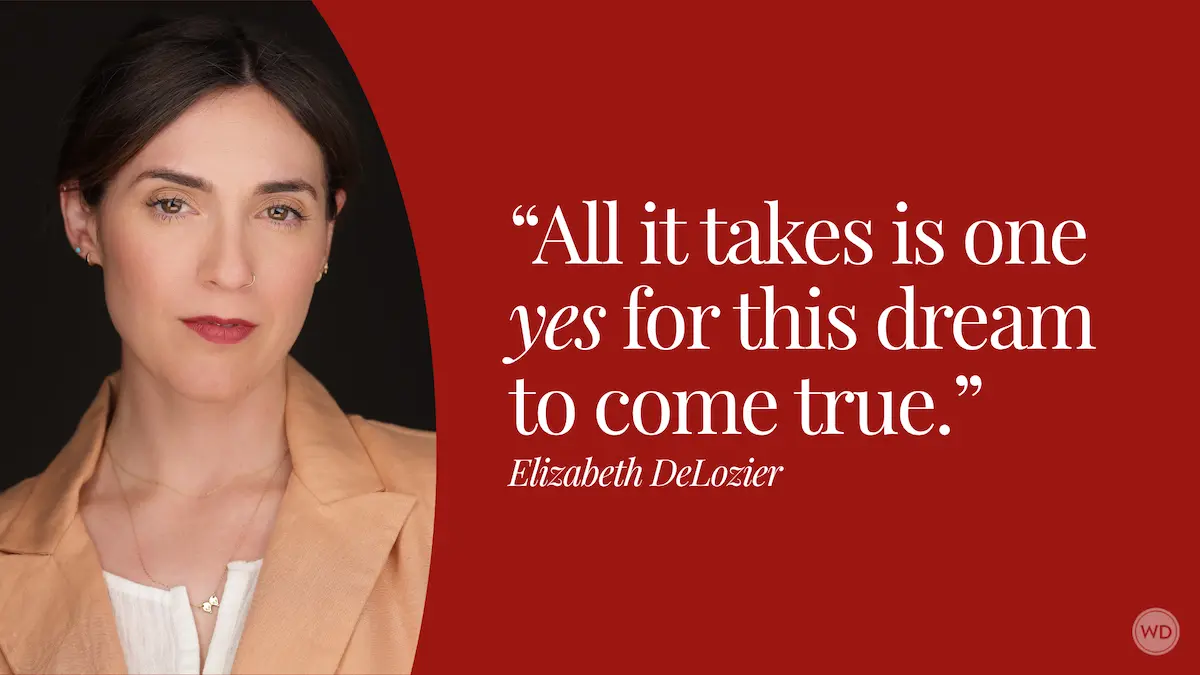
"Don’t give up! The process of writing and publishing a novel is a marathon, not a sprint. Submerge yourself in writing culture: Listen to publishing podcasts, read author and editor interviews, and join a writing group, even if it’s a remote one. Read widely. Listen to audiobooks. Take feedback from respected sources, whether that’s agent rejections or a writer whose work you admire. Keep writing and rewriting. All it takes is one yes for this dream to confirm itself into reality."
Future Outlook
As the publishing date of August 25, 2026, draws closer, anticipation for The Whitechapel Full Moon Society continues to build within historical fantasy and mystery circles. By anchoring fantastical elements—such as boarding houses populated by shape-shifters and ancient curses—to the harsh, unyielding socio-economic realities of Victorian London, DeLozier has crafted a narrative that transcends traditional genre boundaries.
The gamble to prioritize an accessible paperback format, combined with the structural hardening of the manuscript’s second-act mystery mechanics, positions Dutton and DeLozier for a strong commercial run. For readers, The Whitechapel Full Moon Society promises not only an atmospheric descent into the foggy, gaslit streets of 1888 Whitechapel, but a timely reminder of the human stories buried beneath centuries of sensationalized true-crime mythos.





Comments
Facebook App ID not configured. Please add it in the Customizer.