
Executive Overview
In the waning days of August 1914, as the brutal machinery of the Great War violently dismantled the long peace of Edwardian Europe, a peculiar vanguard took to the shell-paved roads of northern France. They were not career soldiers, nor were they conscripts pulled from the agricultural hinterlands or industrial slums. Instead, they were elite "gentlemen drivers"—ex-Olympic medalists, big-game hunters, aristocratic heirs, and speed-crazed automotive pioneers. Armed with little more than civilian roadsters, racing goggles, and a fierce, upper-class bravado, 25 members of Britain’s Royal Automobile Club (RAC) Volunteer Force shipped their personal luxury cars across the English Channel to offer their services to the British Expeditionary Force (BEF).
What began as an informal expedition of wealthy motoring enthusiasts quickly evolved into a baptism by fire. Acting as couriers, scouts, chauffeurs, and inadvertent combatants, these men found themselves at the bleeding edge of a historical paradigm shift: the death of the nineteenth-century cavalry charge and the bloody birth of modern, industrialized warfare. While their contributions have largely faded into the footnotes of military history, these civilian drivers witnessed the frantic opening months of the conflict—from the harrowing retreat to Paris and the miraculous rescue of the Marne to the industrial carnage of Ypres—providing the critical mobility and communication lifelines that helped prevent Allied collapse.
/https://tf-cmsv2-smithsonianmag-media.s3.amazonaws.com/filer_public/eb/d3/ebd30cee-30cc-48d1-ad21-bc873dda36fd/opener1_-_sepoct2026_d15_royalautoclub.jpg)
Detailed Chronology: From Pall Mall to the Western Front
The Prelude: Luxury, Speed, and Ignorance
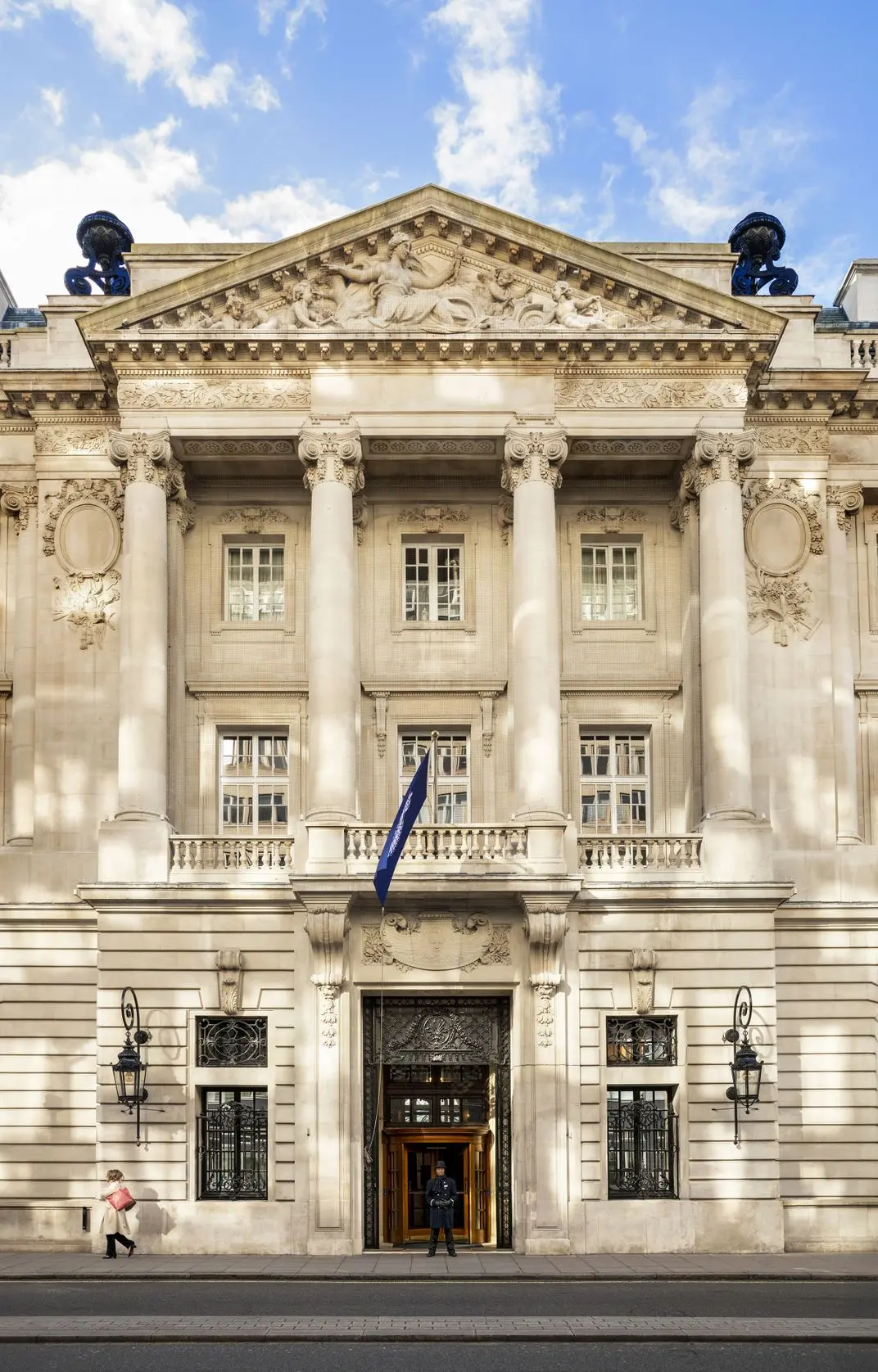
In the scorching summer of 1913, the impending catastrophe of European war was masked by the roar of internal combustion engines. At the French Grand Prix in Lyon, German Mercedes raced wheel-to-wheel with French Peugeots, an unsettling omen that few spectators paused to interpret. Meanwhile, in London, the Royal Automobile Club inaugurated its grand Pall Mall headquarters—a monument to Edwardian opulence featuring marble Turkish baths, a heated indoor swimming pool, and lavish dining rooms where luminaries like Winston Churchill and Arthur Conan Doyle mingled under chandeliers.
Read Also
Yet beneath the veneer of luxury, automotive advocates and military planners alike recognized that the next conflict would be powered by petroleum. By 1913, Great Britain counted some 140,000 cars and 180,000 motorbikes, while Henry Ford’s assembly lines in Detroit were churning out Model Ts at an unprecedented industrial tempo. When the assassination of Archduke Franz Ferdinand in July 1914 shattered the continental peace, the British War Office found itself facing a critical deficit: speed and mobility. While the army possessed logistical trucks and cavalry, it desperately lacked agile units capable of navigating broken infrastructure and rapid tactical shifts.
:focal(414x275:415x276)/https://tf-cmsv2-smithsonianmag-media.s3.amazonaws.com/filer_public/eb/d3/ebd30cee-30cc-48d1-ad21-bc873dda36fd/opener1_-_sepoct2026_d15_royalautoclub.jpg)
The War Office turned to the RAC. From hundreds of eager applicants, a cadre of 25 elite drivers was selected. Among them was Alfred "Toby" Rawlinson, a 47-year-old adventurer and Olympic polo gold medalist who drove a high-speed Hudson roadster; Jimmy Radley, a daredevil aviator who arrived in a pastel-blue 50-horsepower Rolls-Royce Silver Ghost; and Frederic Abernathy Coleman, an American representative for White Motor Cars who operated a luxury White Model 30.
August 1914: Crossing the Channel and the Retreat from Mons
On August 21, 1914, the volunteers embarked from Southampton aboard the troopship Gloucester Castle, their cars crammed with spare tires, fuel cans, and toolkits. They landed at Le Havre just as the German Army, executing the Schlieffen Plan, poured through neutral Belgium with the objective of encircling Paris and crushing the French and British armies in a lightning campaign.
/https://tf-cmsv2-smithsonianmag-media.s3.amazonaws.com/filer_public/35/48/35489bf6-eff4-4de1-906e-60996f79b10c/20260326_royalautomobileclub19_copy.jpg)
Led by Rawlinson—who sported a walrus mustache, a leather jacket, and a Union Jack mounted on his Hudson’s hood—the convoy drove inland to meet the BEF, which was already executing a bitter, exhausting retreat following the Battle of Mons. The sight of these high-speed civilian roadsters charging through French villages provided a vital psychological boost to a startled local population. As Rawlinson and his peers raced along dusty rural roads, French villagers showered them with fruit, flowers, and occasional stray apples that tested the drivers’ reflexes at 50 miles per hour.
Yet, the romance of the open road quickly evaporated into the grim reality of modern combat. The drivers were thrust into chaotic command structures, shuttling dispatches, scouting enemy positions, and navigating roads clogged with terrified refugees, retreating infantry, and caissons of wounded soldiers. Danger lurked everywhere: German cavalry patrols ambushed Allied limousines, while jumpy British and French sentries frequently fired upon approaching automobiles at checkpoints. Coleman watched in horror as a bullet-riddled French staff car limped into a town, its passengers slaughtered by enemy ambushers.
/https://tf-cmsv2-smithsonianmag-media.s3.amazonaws.com/filer_public/cf/28/cf286f90-d279-4803-9ef1-618c9c09152a/sepoct2026_d16_royalautoclub.jpg)
September 1914: The Miracle of the Marne and the Death of Cavalry
By early September, German forces had advanced to within 25 miles of Paris, prompting the French government to flee to Bordeaux and turning the capital into a silent, shuttered ghost town. Along a 160-mile front north of the Marne River, one million German soldiers prepared to crush the remaining Allied lines.
During the ensuing First Battle of the Marne, RAC drivers like Rawlinson and Radley risked execution and capture by racing through no-man’s-land in the dead of night, their headlights extinguished, tracking German divisions and delivering crucial intelligence. It was during these operations that the volunteers witnessed the final, tragic gasps of nineteenth-century warfare. Both Coleman and Rawlinson watched mesmerized as French and British cavalry regiments launched magnificent, suicidal charges across green fields—a romantic spectacle that was instantly obliterated by the ruthless efficiency of German machine guns and artillery barrages.
/https://tf-cmsv2-smithsonianmag-media.s3.amazonaws.com/filer_public/95/d5/95d56bbb-2a4f-4499-8902-1f2927f6ac40/pic.jpg)
The tide turned when French General Joseph-Simon Gallieni famously commandeered 600 Parisian taxicabs to transport 3,000 reservists to the front lines, reinforcing the exhausted French army. Coupled with the intelligence gathered by aviators and RAC drivers identifying a 30-mile gap in the German lines, the Allies launched a counter-offensive that saved Paris, fractured the Schlieffen Plan, and forced the German army to retreat to the Aisne River. Europe quickly buried its illusions of a short war, digging the vast subterranean trench networks that would define the next four years of industrialized slaughter.
October–November 1914: The Siege of Antwerp and the Ypres Meatgrinder
As the front stagnated, the German command shifted its focus north to capture Belgian ports along the English Channel. General Henry Rawlinson was dispatched to direct the defense of Antwerp, and his brother Toby followed in the Hudson, now equipped with a newly purchased machine gun.
/https://tf-cmsv2-smithsonianmag-media.s3.amazonaws.com/filer_public/0c/c8/0cc89476-19b3-4557-988d-b484acf3e4ab/img_6075.jpeg)
Operating in Belgium alongside naval brigades commanded by Winston Churchill, Toby Rawlinson transitioned fully from chauffeur to combatant. Racing between command posts in Ostend, Bruges, and Ypres, Rawlinson utilized his machine gun to ambush enemy patrols, killing a German officer and a motorcycle courier near Ypres and taking an enemy overcoat as a gruesome souvenir.
The climax of the RAC volunteers’ operational utility arrived in November 1914 during the First Battle of Ypres. The medieval Flemish city was reduced to rubble by relentless artillery barrages as German infantry waves crashed against British defensive lines. The Allies held Ypres at a staggering cost of roughly 130,000 casualties per side. By this point, the static, mud-choked reality of trench warfare rendered the high-speed civilian roadster obsolete. The RAC Volunteer Force was formally disbanded, and its members dispersed to new roles across the expanding British military apparatus.
/https://tf-cmsv2-smithsonianmag-media.s3.amazonaws.com/filer_public/68/98/6898f8df-b9f5-4622-aa28-dfbf415c27c4/20260326_royalautomobileclub3_copy.jpg)
Supporting Context & Metrics
The Industrialization of Warfare
The transition from the summer of 1914 to the winter of that same year marked the most rapid technological evolution in military history. The Great War exposed the fatal mismatch between traditional military tactics and industrial-age technology.
| Metric / Asset | Pre-War Status (1913–1914) | Wartime Reality (Late 1914 Onward) |
|---|---|---|
| Primary Mode of Transport | Horses, railway networks, cavalry | Motorized trucks, staff cars, ambulances, tanks |
| Decisive Armament | Rifles, sabers, field artillery | Machine guns, heavy artillery, poison gas |
| Nature of Combat | Fluid, mobile, maneuver-based | Static, attritional, trench-bound |
| British Motor Fleet | ~140,000 cars, 180,000 motorbikes | Hundreds of thousands of militarized transport units |
Key Figures and Their Post-War Fates
- Alfred "Toby" Rawlinson: Survived the war despite being imprisoned by Ottoman forces in Anatolia for 20 months as a suspected spy. He attained the rank of colonel, organized London’s anti-zeppelin defenses, and passed away in 1934.
- Christopher D’Arcy Baker-Carr: Used his RAC experience to successfully lobby Secretary of State for War Herbert Kitchener to create the Machine Gun Corps and helped develop the British Army’s first armored tanks. He retired as a brigadier general.
- James Armand de Rothschild: Severely injured in a car crash while serving as a driver-translator, he later commanded troops in the Jewish Legion in Palestine, earned the Distinguished Conduct Medal, and became a British Member of Parliament and prominent philanthropist.
- Hugh Grosvenor (Duke of Westminster): Contributed his luxury Rolls-Royces to the effort. Following the war, he descended into far-right politics, notorious antisemitism, and a notorious affair with fashion icon Coco Chanel.
Official Statements and Historiographical Perspectives
Historians specializing in civil-military cooperation during the First World War emphasize that the presence of the RAC volunteers served an essential psychological and communicative function during the chaotic opening weeks of the conflict.
/https://tf-cmsv2-smithsonianmag-media.s3.amazonaws.com/filer_public/e7/38/e738fb19-ba52-49ac-8d9f-bc8e09bafe30/sepoct2026_d06_royalautoclub.jpg)
"The French military had a lot of questions about what the British commitment was going to be," notes Dr. Christopher Phillips, a lecturer in the history of warfare at Aberystwyth University. "The cars charging through villages gave a sense of presence. They announced that ‘the British are here.’ These guys conveyed real purpose… Communication between command structures was critical during the early phase of the war, and the drivers—especially the French-speaking Rawlinson—solidified the relationship between the two partners."
Phillips underscores that the convergence of wealthy amateurs and professional military officers broke down traditional institutional barriers under duress.
/https://tf-cmsv2-smithsonianmag-media.s3.amazonaws.com/filer_public/55/dc/55dcd6c7-6620-4f7a-a92c-5e181313ad07/28_6_25_vincennes_i_e_longchamp_agence_rol_btv1b53149291r.jpg)
"Much like the Royal Automobile Club volunteers working closely with the British Expeditionary Force," Phillips adds, referencing the later Paris taxi brigade at the Marne, "this was a demonstration that we’re all in this together—the civilians and the army. It was a turning point."
Reflecting on the totality of the experience, Brigadier General Baker-Carr encapsulated the profound psychological shock experienced by those who entered the war expecting a swift, glorious adventure:
/https://tf-cmsv2-smithsonianmag-media.s3.amazonaws.com/filer_public/ff/de/ffde1c9a-e1da-49d9-9f3d-afd9c8133f87/cavalry_-_gettyimages-591949596.jpg)
"Little did we dream," Baker-Carr wrote in his memoirs, "that we had before us more than four years of misery, mud and slaughter."
Future Outlook & Legacy
Today, the Royal Automobile Club endures as one of Great Britain’s premier private institutions, maintaining its historic Pall Mall clubhouse in London alongside a sprawling 350-acre country estate in Surrey. Yet, the memory of its civilian volunteer force—the men who drove their own luxury roadsters into the path of the Imperial German Army—has largely vanished from the national consciousness, preserved only in out-of-print memoirs, faded sepia photographs, and family archives in country manors like Heydon Hall in Norfolk.
/https://tf-cmsv2-smithsonianmag-media.s3.amazonaws.com/filer_public/77/45/77455b84-88a1-4cf4-90f9-4f2817968986/d45405.jpg)
Modern military logistics trace their lineage directly to the dangerous experiments conducted by Rawlinson, Baker-Carr, and their peers in the autumn of 1914. By proving that high-speed motor vehicles could bridge the communication gaps of fast-moving armies, these eccentric gentlemen drivers inadvertently drafted the blueprint for armored warfare, mechanized transport, and modern logistics. They stepped into the European theater as privileged amateurs seeking adventure, and they departed it as the unwitting midwives of the mechanized age—a transformation paid for in mud, blood, and the brutal finality of industrial steel.


Comments
Facebook App ID not configured. Please add it in the Customizer.