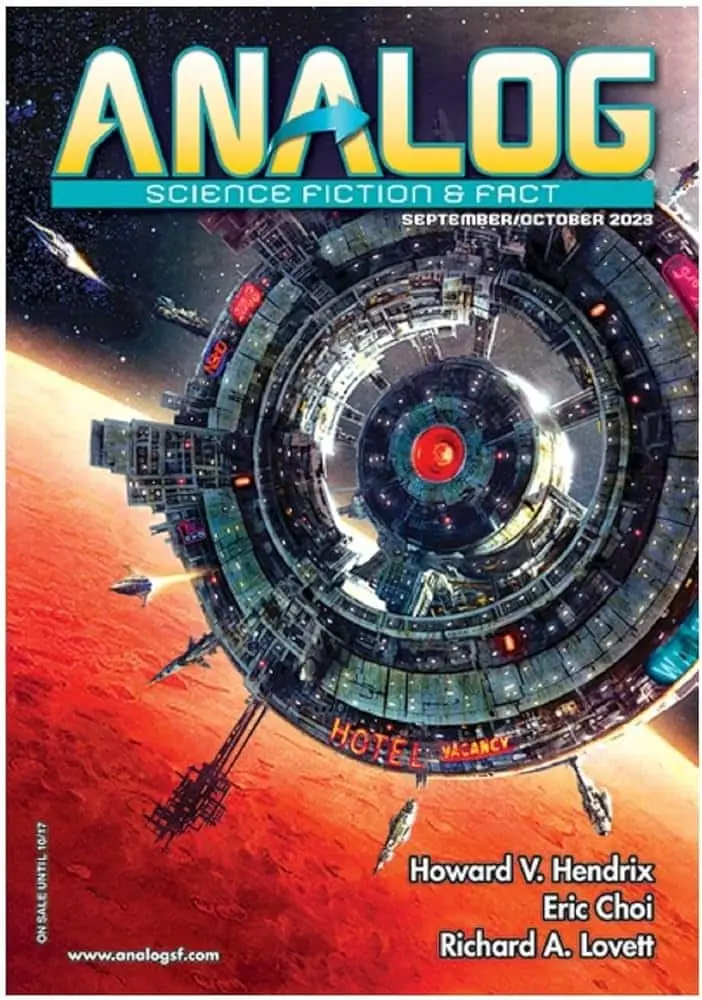
The speculative fiction community is undergoing a major controversy regarding creator rights, fair compensation, and corporate governance following a public dispute between Must Read Magazines (MRM)—the parent company and publisher of legacy genre publications Analog Science Fiction and Fact, Asimov’s Science Fiction, and The Magazine of Fantasy & Science Fiction (F&SF)—and prominent visual artists and authors.
The crisis came to a head when award-winning illustrators, including John Picacio and Donato Giancola, publicly condemned MRM’s contract conditions. The contested terms included mandatory "work-for-hire" transfers, sweeping waivers of moral rights ("droit moral") across all global and extraterrestrial jurisdictions, demands for layered source files, and arduous revision cycles—all paired with stagnant, below-market compensation rates of $1,200 per cover illustration.
In response to widespread calls for boycotts from creators, authors, and industry watchdogs, MRM released an official statement via Analog’s social media channels announcing a temporary freeze on commissioning story-based cover artwork. In its defense, MRM argued that its work-for-hire framework was designed to protect the intellectual property (IP) of prose authors whose stories were being visually adapted. However, key industry leaders—including Victoria Strauss of Writer Beware and veteran author Scott Edelman—have largely rejected MRM’s explanation as insufficient, maintaining that the publisher’s practices reflect an exploitative model that threatens the financial and legal safeguards historically afforded to creative professionals in the field.
[MRM Acquires Legacy SF/F Titles]
       │
       ▼
[Initial Rights Controversies & Submission Grinder Delisting]
       │
       ▼
[SFWA Issues Legal & Contractual Notes to MRM]
       │
       ▼
[Picacio & Giancola Expose Contract Terms & Call for Boycott]
       │
       ▼
[MRM Announces Pause on Story-Based Covers & Revised Moral Rights Terms]
1. Acquisition and Early Friction
Following MRM’s acquisition of Analog, Asimov’s, and F&SF, industry watchdogs began raising flags regarding shifting contract terms for both prose writers and visual artists. The friction escalated when The Submission Grinder, a database for writers tracking fiction markets, delisted MRM titles due to non-standard rights requests. Concurrently, the Science Fiction and Fantasy Writers Association (SFWA) intervened, offering formal notes from its Contracts Committee to urge MRM to realign its licensing agreements with established professional norms.
2. The Artist Revolt Escalates
The simmering tension boiled over when Hugo and Chesley Award-winning artist John Picacio published a public memo strongly advising creators against signing contracts with or submitting work to MRM publications. Picacio shared excerpts from MRM’s boilerplate contract, exposing aggressive language that stripped artists of fundamental copyright protections and moral rights.
Shortly thereafter, legendary illustrator Donato Giancola revealed that he had spent three months in protracted negotiations with Asimov’s legal department over a proposed $1,200 cover art commission. Giancola disclosed that MRM insisted on a work-for-hire structure—a radical departure from his prior decades of work with Asimov’s under standard licensing agreements. Recognizing that negotiations were not occurring in good faith, Giancola formally withdrew from the project in late June.
3. Industry Solidarity and Formal Repudiation
As details of the contract terms circulated, prominent authors and industry commentators mobilized in solidarity with the artistic community. Author Scott Edelman publicly announced the withdrawal of all his submissions from MRM outlets, while Victoria Strauss detailed the systemic risks posed by MRM’s boilerplate language on SFWA’s Writer Beware blog.
4. MRM’s Public Defense and Operational Pivot
Facing mounting professional pressure, MRM issued a formal statement, published through Analog’s Bluesky account. The publisher acknowledged past relies on work-for-hire contracts for story-based cover art, framing the policy as a necessity to prevent artists from retaining derivative copyrights over authors’ original worlds and characters. To mitigate further conflict, MRM announced an immediate pause on story-specific cover art commissions, while asserting that their underlying contracts had been updated—incorporating SFWA feedback—to eliminate global moral rights waivers moving forward.
Supporting Context & Metrics
Dissecting the Boilerplate: The Legal Mechanics of the Contract
To understand the severity of the criticism, it is necessary to examine the specific clauses contained in MRM’s boilerplate agreement. Excerpts provided by artists highlight a heavily asymmetrical contract structure:
                  ┌─────────────────────────────────────────┐
                  │    MRM Boilerplate Contract Terms       │
                  └────────────────────┬────────────────────┘
                                       │
         ┌─────────────────────────────┼─────────────────────────────┐
         ▼                             ▼                             ▼
┌─────────────────┐           ┌─────────────────┐           ┌─────────────────┐
│ Moral Rights    │           │ Rights Transfer │           │ Work Deliveries │
│ Waiver          │           │ & Copyright     │           │ & Revisions     │
├─────────────────┤           ├─────────────────┤           ├─────────────────┤
│ Universal       │           │ Work-for-Hire   │           │ Layered .PSD    │
│ waiver of       │           │ model; Company  │           │ files; Up to 3  │
│ "droit moral"   │           │ holds sole      │           │ unpaid revision │
│ protections     │           │ copyright       │           │ rounds          │
└─────────────────┘           └─────────────────┘           └─────────────────┘
1. Moral Rights ("Droit Moral") Waivers
The contract contained explicit, sweeping language stripping creators of moral rights across indefinite legal boundaries:
"Artist hereby waives the benefits of any provision of law known as ‘droit moral’ and/or ‘moral rights’ or any similar law in any jurisdiction of the universe and hereby agrees not to institute or support, maintain, or permit any action or lawsuit on the grounds that the The Work or any ancillary uses thereof violates any of Artist’s rights or is in any way a defamation or mutilation of the The Work."
In international intellectual property law (anchored by the Berne Convention), "moral rights" protect an creator’s right to claim authorship and object to any distortion, mutilation, or modification of their work that would prejudice their honor or reputation. Forcing an artist to waive these rights globally—and across "any jurisdiction of the universe"—deprives them of legal recourse if their work is altered, repurposed, or commercially misused without attribution.
2. Work-for-Hire vs. Limited First Serial Licensing
Under standard publishing industry practices, cover illustrators grant magazines First Serial Rights or a limited-term promotional license, retaining underlying copyright ownership. This allows artists to resell prints, include the image in art books, or license secondary rights.
MRM’s contract inverted this dynamic by asserting total ownership via a Work-for-Hire framework:
"Company shall solely own the copyright in the The Work… Company or its divisions may be credited as the copyright holder of the work…"
Under a work-for-hire agreement (as defined in 17 U.S.C. § 101 of the U.S. Copyright Act), the hiring party is legally considered the author and copyright owner from the moment of creation. The original artist retains zero rights to show, sell, or monetize their own creation.
3. Scope of Work and File Requirements
The agreement imposed technical demands without corresponding adjustments in pay:
"Workable files shall mean layered files suitable for use in Adobe Photoshop or such similar software. At no additional cost, Company will be presented with at least Two (2) and at most Three (3) rounds of drafts of the The Work for review by Company… Company may instruct Artist to make changes up to Three (3) times upon review…"
Demanding fully editable, layered source files allows a publisher to alter individual elements of an artwork independently. Combined with mandatory unpaid revision cycles, the agreement imposed high operational costs on contractors.
Financial Analysis: Stagnant Rates in Real Terms
Metric
Historical Standard (6+ Years Ago)
MRM Contract Terms
Industry Impact / Delta
Cover Art Flat Fee
$1,200
$1,200
Effective real-income decrease when adjusted for inflation
Rights Granted
Limited First Serial / Promotional License
Full Work-for-Hire / Complete Ownership Transfer
Severe reduction in creator earning potential (no secondary sales/prints)
Moral Rights
Retained by Artist
Waived entirely ("jurisdiction of the universe")
Elimination of legal protection against work alteration or mutilation
Increased labor requirements without financial compensation
Donato Giancola pointed out that the $1,200 compensation figure offered by MRM was identical to the fee offered six years prior for similar work. In real inflation-adjusted terms, this represents a significant reduction in pay, compounded by the shift from a limited license to an all-inclusive rights grab.
Official Statements
Must Read Magazines (MRM) Statement
In its public response posted via Analog’s social media account, MRM sought to frame its work-for-hire requirements as an intellectual property protection measure intended to defend prose writers:
"We previously commissioned illustrators to create covers as work-for-hire when they were asked to adapt authors’ original stories for elements such as cover art.
This will be changing.
The rights granted to MRM are limited, and therefore we can’t protect the intellectual property and rights of the original author of the story, if we at the same time grant the authors’ rights to the illustrator so that the illustrator can then retain an adaptation copyright. We don’t acquire rights from authors that allow us to grant illustrators broad unencumbered use of the worlds, characters, and other elements created by the author.
We’re planning to pause cover contracts based on specific stories for the foreseeable future while we figure out the best way forward with those kinds of commissions.
… Regarding retention of ‘moral rights’ in illustrations: our licensing agreements for original art and original fiction use language prepared by an international IP attorney based on notes we received from SFWA’s contracts committee. These kinds of agreements no longer include a waiver of moral rights."
Donato Giancola, Illustrator
Reflecting on his three-month negotiation attempt with MRM’s legal team, Giancola underscored the breakdown of standard industry practices:
"I went back and forth in contract revisions with Asimov’s SF legal department five times over three months. Nearly as much time was spent on these negotiations, legal revisions, and emails then what I would put into creating art for a final illustration. All for a $1200 fee on a commission who’s legal contract issues were settled in a five minute digital handshake six years ago.
At the end of June, while their legal department was still soliciting me to supply a Non-Disclosure Agreement I would be fine signing after stating I would not sign one, I told Asimov’s SF to find another artist. Their legal department was not negotiating in good faith to get me to work on their magazine – they were looking for an artist to exploit."
Victoria Strauss, Writer Beware / SFWA
Writing on the SFWA-sponsored Writer Beware blog, Strauss cautioned creators against assuming that willingness to negotiate excuses bad-faith boilerplate terms:
"[E]ven if the publisher is willing to make changes, [writers] must think about what it says about the publisher, and its attitude toward its writers, that it would offer a bad contract to begin with… [W]riters shouldn’t be afraid to negotiate, and publishers should be open to change. It’s just really important not to let the details obscure the big picture."
Scott Edelman, Author & Editor
Responding directly to MRM’s public explanation, Edelman dismissed the publisher’s rationale:
"This defense from the publisher of Asimov’s, Analog, and F&SF is no defense at all. I’d hoped those of us who’d protested rights-grab contracts last year had caused a change in the way the company dealt with creators, but sadly, all three dream markets must still be unacceptable outlets for me."
Future Outlook
Short-Term Operational Disruptions
By pausing story-adapted cover art commissions, MRM has introduced an immediate operational bottleneck for Analog, Asimov’s, and F&SF. The decision to halt story-based covers rather than adopt industry-standard licensing frameworks suggests a reluctance to abandon work-for-hire terms. In the short term, readers can expect to see generic, abstract, or stock-oriented cover visuals that do not depict specific scenes or characters from the issue’s stories.
Broader Industry Consequences
The stance taken by high-profile artists like Picacio and Giancola highlights an increasing unwillingness among veteran creators to absorb legal and financial concessions in speculative fiction publishing. Historically, legacy periodicals like Analog and Asimov’s enjoyed significant leverage due to their status as prestige "dream markets." However, the public exposure of predatory contract clauses has eroded that cultural capital.
Structural Legal Reform: Re-architecting boilerplate contracts across all publications to align with SFWA and Graphic Artists Guild standards, offering fair first-serial licensing models and updated pay structures.
Continued Talent Isolation: Persisting with restrictive ownership policies, which risks alienating top-tier illustrative and literary talent and further damaging the standing of historically vital science fiction institutions.





Comments
Facebook App ID not configured. Please add it in the Customizer.