In the realm of children’s literature, the intersection of historical trauma and resilient hope presents a formidable editorial challenge. How do authors distill generational pain, systemic displacement, and state-sanctioned injustice into a format accessible to young minds without diluting historical realities? Guest author and award-winning neurodivergent educator-librarian Jolene Gutiérrez addresses this crucial question with a curated list of seven picture books. These texts explore "Hard History + Hope," offering young readers pathways to comprehend complex socio-political landscapes while fostering empathy, critical thinking, and emotional resilience.
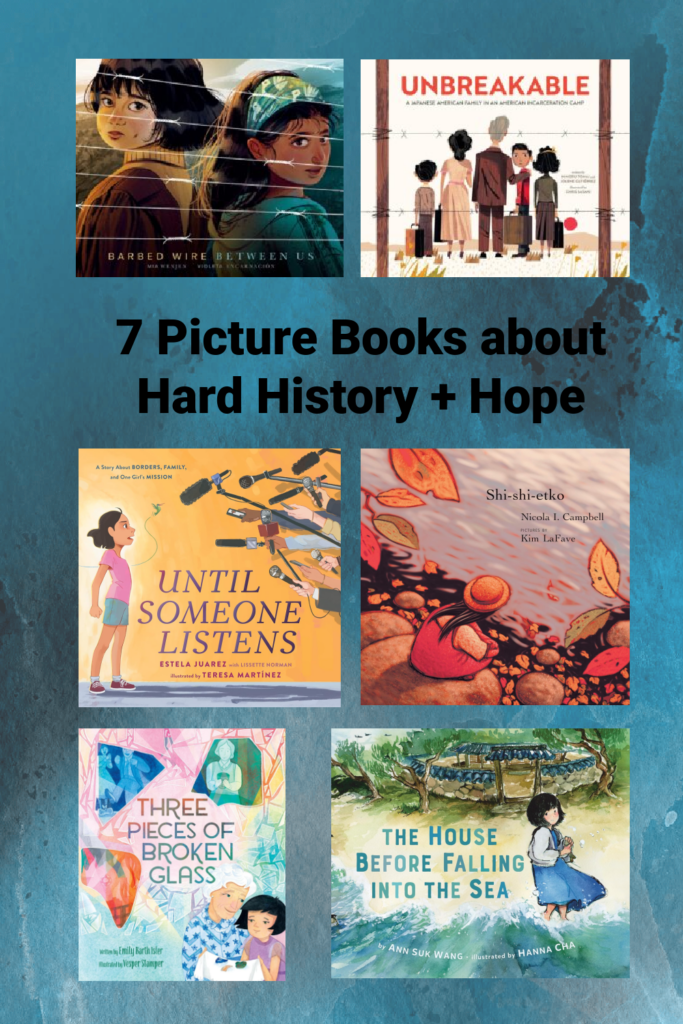
The featured titles—including Unbreakable: A Japanese American Family in an American Incarceration Camp, Three Pieces of Broken Glass, Troubled Waters: A River’s Journey Toward Justice, The House Before Falling Into the Sea, Until Someone Listens, Shi-shi-etko, and Barbed Wire Between Us—transcend traditional chronological storytelling. They use deeply personal narratives, poetic structures, and geographical metaphors to examine how past atrocities echo into contemporary human rights debates. Complementing this literary showcase is an exclusive giveaway featuring a signed copy of Mia Wenjen’s Barbed Wire Between Us and an unsigned edition of Minoru Tonai and Jolene Gutiérrez’s Unbreakable.
Detailed Chronology & Literary Breakdown
To fully appreciate the scope of Gutiérrez’s curated selection, one must examine the historical arcs covered within these picture books. The chronology spans over a century of displacement, systemic subjugation, and civil rights activism, demonstrating that historical trauma is neither isolated nor forgotten.
1. Indigenous Dispossession and Residential Schools
Shi-shi-etko by Nicola I. Campbell, illustrated by Kim LaFave
Historical Window: Late 19th to mid-20th century Canadian and American Indigenous residential school systems.
Narrative Arc: The story follows a young Indigenous girl named Shi-shi-etko as she prepares to leave her family for a government-mandated residential school from which she will not return for a long time. The narrative focuses on her final days at home, absorbing ancestral knowledge, songs, and deep familial bonds.
Pedagogical Value: Acts as a vital, age-appropriate entry point into discussing cultural genocide and the resilience of Indigenous communities.
2. Enslavement, Civil Rights, and the Alabama River
Troubled Waters: A River’s Journey Toward Justice by Carole Boston Weatherford, illustrated by Bryan Collier
Historical Window: The Antebellum era through the Civil Rights Movement of the 1960s.
Narrative Arc: Told from the unique perspective of the Alabama River itself, the book flows through centuries of historical trauma, witnessing the horrors of chattel slavery, the Trail of Tears, Jim Crow sharecropping, lynchings, and the violent clashes of Bloody Sunday.
Thematic Resolution: Highlights the work of Dr. Martin Luther King, Jr. and anonymous foot soldiers of equality, concluding with the powerful thesis that human yearning for freedom is mightier than water.
3. World War II: The Internment of Japanese Americans and European Refugees
Unbreakable: A Japanese American Family in an American Incarceration Camp by Minoru Tonai and Jolene Gutiérrez, illustrated by Chris Sasaki
Historical Window: World War II (1942–1945).
Narrative Arc: Based on co-author Minoru Tonai’s lived experiences, the story details the FBI’s arbitrary arrest of his father, the family’s forced removal to an assembly center, and their eventual imprisonment at the Amache incarceration camp. When the father is finally released after two years, his suitcase is heavy not with clothes, but with rocks gathered from every prison facility he was unjustively held in.
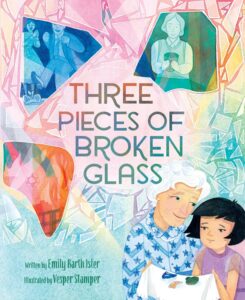
Three Pieces of Broken Glass: A Picture Book by Emily Barth Isler, illustrated by Vesper Stamper
Historical Window: Nazi Germany, Kristallnacht, and wartime Britain (circa 1938–1940s).
Narrative Arc: Traces the life of Grandma Inge through three distinct shards of broken glass: one from her wedding day, one from Kristallnacht, and one from her imprisonment as an "enemy alien" in a British internment camp after fleeing Nazi Germany.
4. Cold War Partition and Modern Border Crises
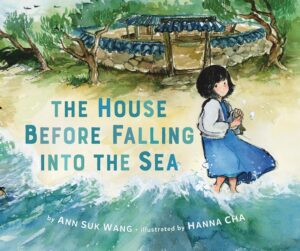
The House Before Falling Into the Sea by Ann Suk Wang, illustrated by Hanna Cha
Historical Window: The Korean War (1950–1953).
Narrative Arc: Set in Busan—described as the last place people can go before "falling into the sea"—the narrative explores how Kyung Tak’s family opens their home to refugees fleeing conflict in northern Korea.
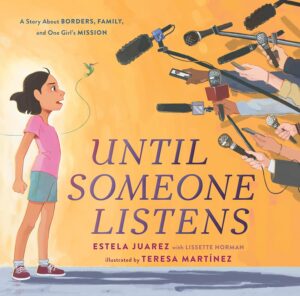
Until Someone Listens: A Story about Borders, Family, and One Girl’s Mission by Estela Juarez with Lissette Norman, illustrated by Teresa Martínez
Historical Window: Contemporary United States-Mexico immigration policies.
Narrative Arc: Focuses on Estela, whose mother—married to a U.S. military veteran—was deported back to Mexico, tearing her family apart. Estela’s proactive campaign of writing letters to Congress, the President, and the media serves as a masterclass in civic engagement for young activists.
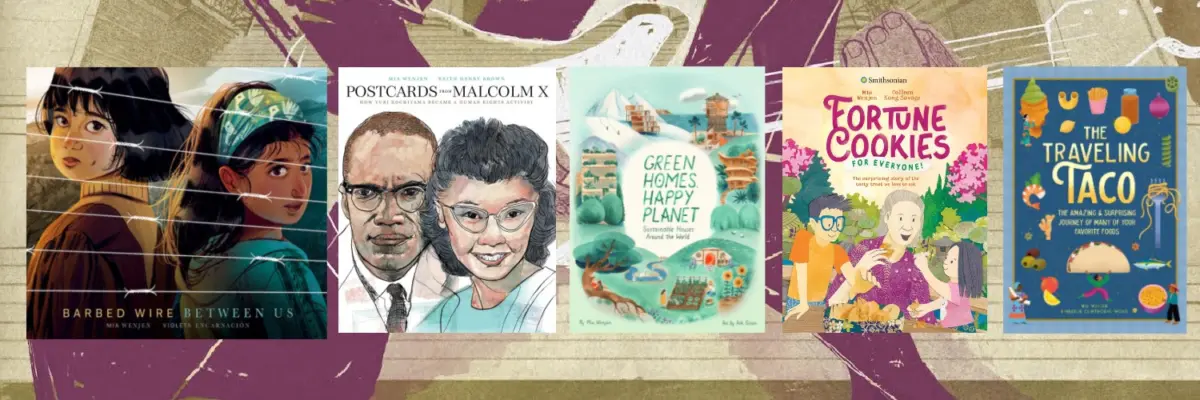
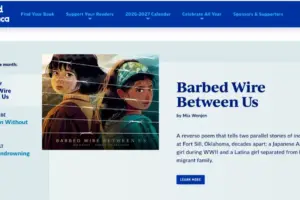
Barbed Wire Between Us by Mia Wenjen, illustrated by Violeta Encarnación
Historical Window: World War II Fort Sill internment and contemporary detention centers.
Narrative Arc: Written as a reverso poem serving as a metaphor for history repeating itself, this book mirrors the experiences of a Japanese American girl incarcerated at Fort Sill during WWII and a Latina girl detained at the exact same facility 80 years later.
Supporting Context & Metrics
The publication and reception of historical picture books reflect a significant shift in children’s publishing. Publishers, educators, and literary critics increasingly recognize that children possess the emotional intelligence to process complex themes when scaffolded by skilled storytelling and rich authorial back matter.
Target Demographics: Ranging from ages 4 to 7+, these titles bridge the gap between early childhood literature and middle-grade historical fiction.
Cross-Cultural Impact: As noted in Jolene Gutiérrez’s biographical profile, works tackling hard histories are gaining international resonance, with translations spanning multiple countries and languages.
Awards and Accolades: Books in this sphere frequently secure prominent recognition, such as the Crystal Kite Award (The Ofrenda That We Built) and multiple starred reviews (Unbreakable), validating the critical demand for diverse, historically grounded children’s literature.
Official Statements and Author Insights
Jolene Gutiérrez’s pedagogical philosophy centers on the transformative power of narrative empathy. As a neurodivergent teacher-librarian working with diverse learners since 1995, Gutiérrez notes that books addressing hard history serve a dual purpose:
"I hope my books will help some readers feel seen and will help others learn and grow in compassion."
This sentiment is echoed across the creative teams of the featured titles. Authors such as Mia Wenjen, Ann Suk Wang, and Emily Barth Isler frequently embed personal lineage into their work—drawing directly from maternal migration histories, wartime incarcerations, and ancestral survival. By grounding systemic tragedies in intimate family dynamics, these creators ensure that historical figures are not reduced to statistics, but are instead honored as fully realized human beings.
Future Outlook: The Evolution of Historical Literacy
The trend toward integrating "Hard History + Hope" in children’s literature is poised to expand. As educators face ongoing debates regarding curriculum transparency and historical representation, picture books offer an accessible, peer-reviewed gateway for classrooms and libraries.
Furthermore, the integration of multimedia components—such as teacher’s guides, book trailers, music videos, and interactive authorial websites—ensures that these stories live beyond the printed page. Initiatives like the 2-book giveaway featuring Barbed Wire Between Us and Unbreakable demonstrate an active, community-driven effort to place vital historical texts directly into the hands of families, educators, and young readers. Ultimately, these literary tools remind society that while the rivers of history can run deep and troubled, the human capacity for justice, memory, and hope remains unbroken.






Comments
Facebook App ID not configured. Please add it in the Customizer.