
Executive Overview
The path to traditional book publication is famously paved with patience. Aspiring authors endure a relentless gauntlet of waiting periods: waiting for the initial spark of inspiration to take form on the page, waiting for beta readers to return their critiques, waiting for literary agents to respond to pitch queries, and finally—once an agent has signed the project and the manuscript is officially "on submission"—waiting for an acquiring editor to deliver that elusive, life-changing "YES!"
While the subsequent phases of book production carry their own administrative delays, the "submission-era silence" remains perhaps the most psychologically taxing period of a writer’s career. Authors often internalize this radio silence, interpreting months of inaction as a personal rejection of their talent, their prose, or their story’s commercial viability.
However, insider perspectives from former publishing industry professionals reveal a vastly different reality. The prolonged waiting times experienced during the editorial review cycle are rarely reflective of a manuscript’s quality. Instead, they are the direct byproduct of an overextended, under-resourced industry where acquisitions reading is treated as an after-hours chore rather than a core daily task.
Read Also
By lifting the veil on the modern publishing house—examining the daily responsibilities of editors, the volume of incoming vetted materials, and the structural limitations of the traditional market—authors can reframe the waiting period. Far from being a helpless purgatory, the submission phase can be navigated strategically through open communication with literary agents and a redirected focus on creative production.
Detailed Chronology: The Anatomy of a Publishing Journey
To fully understand why manuscripts languish in editorial inboxes, it is necessary to map out the complex trajectory a book must take before it ever reaches the desk of an acquisition editor. The timeline from conception to submission is a marathon of gatekeeping, refinement, and strategic positioning.
Phase 1: Creation and Revision
The journey begins in isolation. Authors spend months, sometimes years, drafting, redrafting, and polishing their manuscripts. Once a structural draft is complete, the manuscript often passes through a secondary tier of critique—beta readers, critique partners, or freelance developmental editors. This phase is characterized by active engagement, where the author exercises total control over the narrative arc, character development, and stylistic execution.
Phase 2: The Agent Query Trenches
Once the manuscript is deemed ready, the author enters the query trenches. Finding a literary agent is notoriously competitive. Writers craft hyper-concise query letters, compelling synopses, and polished opening chapters, sending them out in batches to prospective representation. Rejections, form letters, and ghosting are commonplace. When an agent finally offers representation, it marks a major milestone, but it is merely the gateway to the next, more daunting waiting period.
Phase 3: Pre-Submission Polishing
Upon signing with an agent, the work rarely goes straight to publishers. A collaborative editorial phase follows. The agent and author work together to refine the manuscript, optimize the pitch materials, and strategically curate a list of target editors and publishing houses. This ensures that when the book goes "on submission," it represents the absolute highest standard of the author’s capabilities.
Phase 4: The Submission Era
Once the pitch package goes out to editors, the author relinquishes control. This is where the chronology stalls. While agents typically push for responses within a standard six-to-eight-week window, editorial realities frequently stretch this timeline into months. Editors juggle competing priorities, and manuscripts often cycle through multiple internal reads before a definitive offer or pass is issued.
Supporting Context & Metrics: Why Editors Go "Ghost"
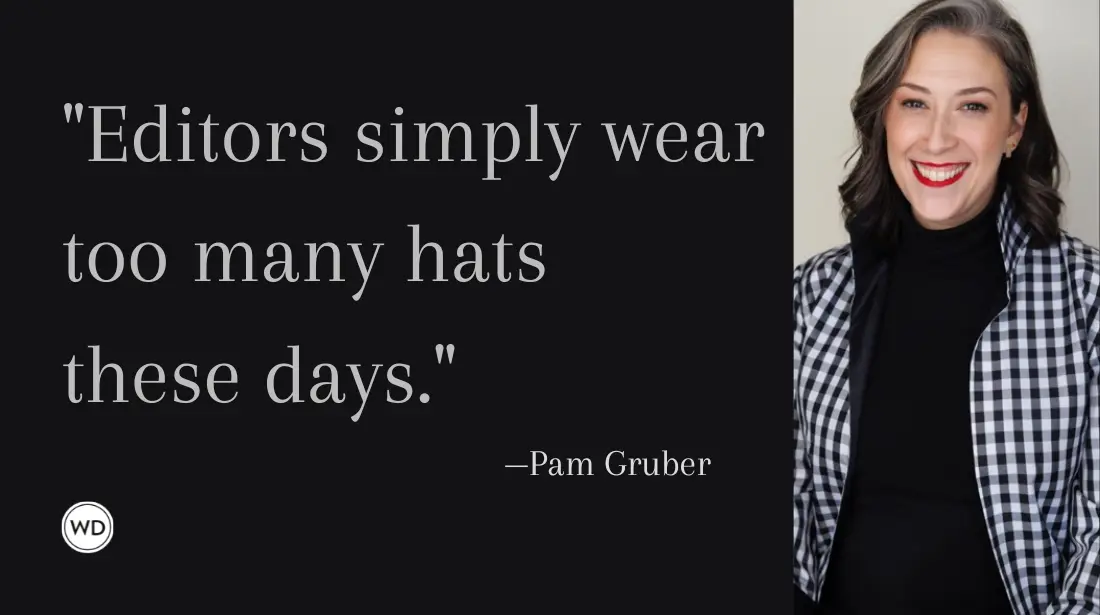
To understand why editors take months to read a manuscript—or in worst-case scenarios, fail to respond at all—one must look at the structural design of modern publishing houses. The popular imagination pictures an editor sitting quietly by a sunny window, leisurely reading manuscripts and occasionally sipping tea. The modern reality is radically different.
The Multi-Hat Reality of Modern Editors
Editors today function primarily as corporate project managers. Long before a book reaches the acquisition stage, an editor is deeply enmeshed in internal administrative and strategic labor. During standard office hours, an editor’s time is consumed by:
- Second Reads: Evaluating manuscripts that have been passed up the chain or pulled from the slush pile.
- Acquisition Prep: Preparing financial models, comparative title analyses, and formal presentation materials for internal editorial board meetings.
- Negotiations: Coordinating with business affairs, legal teams, and literary agents to structure competitive offers and finalize contract terms.
Once a book is officially under contract, the administrative burden multiplies exponentially. An editor typically provides three major rounds of developmental and line edits per title. Beyond text-based work, they coordinate meetings regarding cover design, review interior layout proofs, write promotional copy, input crucial metadata into publishing software, and liaise daily with marketing, publicity, sales, and subsidiary rights teams.
Furthermore, editors are expected to maintain industry presence by attending literary conferences, networking with agents, and scouting emerging talent. Consequently, the actual reading of submissions has been pushed entirely outside the boundaries of the traditional workday.
The "Perpetual Homework" Phenomenon
Because daytime hours are monopolized by meetings, emails, and administrative oversight, submission reading is relegated to personal time. Manuscripts are consumed during subway commutes, late into the evening hours, and over weekends—wedged into the narrow cracks of daily life. Publishing is, at its core, an industry of perpetual homework.
+-----------------------------------------------------------------+
                 THE MODERN EDITOR'S WORKLOAD BREAKDOWN
+-----------------------------------------------------------------+
  [ Daytime Hours: 9:00 AM - 5:00 PM ]
  • Project Management & Internal Meetings
  • Acquisition Board Presentations & Financial Modeling
  • Contract Negotiations & Legal Coordination
  • Post-Contract Editorial Feedback (3x per book)
  • Marketing, Publicity, & Sales Alignment

  [ Off-Hours: Evenings, Weekends, Commutes ]
  • Reading & Evaluating Agency Submissions (The "Slush" & Pitches)
+-----------------------------------------------------------------+
This structural reality explains the sheer volume bottleneck. A typical Young Adult or commercial fiction editor receives roughly 300 submissions per year from vetted literary agents. Editors overseeing wider lists field even greater volumes. When multiplied across an entire industry, the math makes it clear: there are simply more manuscripts entering the pipeline than there are waking hours available for editors to read them.
Vetted Quality vs. Time Scarcity
It is vital for authors to recognize that agents act as rigorous filters. Editors maintain curated, long-term relationships with literary agents precisely because they trust that incoming submissions have already been vetted.
As a result, a manuscript that reaches an editor’s desk is presumed to be baseline publishable. The delay in response is rarely about fundamental quality flaws; rather, it is a matter of strategic fit. Determining whether a book aligns with an editor’s personal taste, their existing list balance, the financial goals of the publishing imprint, and the broader market requires intense cognitive focus—something that cannot be achieved through a cursory glance between subway stops. Even blockbuster deals frequently bypass editors simply because those individuals lacked the calendar space to evaluate the project in time.
Official Industry Perspectives & Strategic Guidance
Navigating the psychological toll of the submission waiting period requires intentional communication between author and agent. Industry veterans emphasize that writers must take an active role in defining how they wish to receive updates during this phase.
Establishing Communication Protocols with Your Agent
Before a manuscript goes out on submission, authors should sit down (virtually or in person) to establish clear expectations regarding communication frequency. Different authors cope with silence in different ways, and finding the right cadence is essential for mental health:
- Ad-Hoc Updates: Receiving notifications immediately as responses, passes, or expressions of interest arrive from editors.
- Regularized Cadence: Opting for a scheduled weekly check-in, maintaining transparency even if there are no new developments to report.
- Milestone-Only Alerts: Choosing a strict "no news is neutral news" policy, requesting updates only when an offer or a significant development occurs.
Many agents maintain meticulous tracking logs detailing every editor contacted, follow-up dates, and personalized responses. Sharing this living record with clients can demystify the process, offering authors transparent insight into the submission landscape without requiring them to constantly chase their representation for updates.
Future Outlook: Reclaiming Control as a Creator
Once a manuscript is actively circulating among publishing houses, the author enters a state of radical disempowerment regarding that specific project. No amount of refreshing an inbox or worrying will accelerate an editor’s reading schedule.
Therefore, the most productive response to submission silence is a deliberate redirection of creative energy. Experienced professionals offer several actionable strategies for writers looking to maintain momentum during publishing purgatory:
- Pivot to the Next Manuscript: The most effective antidote to submission anxiety is forward momentum. Writers should begin brainstorming or drafting their next book project. Establishing a new narrative not only keeps creative muscles active but also positions the author for future multi-book deals. Furthermore, having a second completed or partially drafted manuscript provides strategic leverage and peace of mind should the current submission fail to find an immediate publishing home.
- Diversify Creative Output: If drafting a full-length novel feels overwhelming while waiting on pins and needles, authors can explore alternative avenues of publication and platform-building. Pitching essays to journalistic outlets, submitting short stories to literary magazines, or systematically developing a targeted social media and professional platform can elevate an author’s profile.
- Engage in Pure Recreational Reading: Ironically, writers often stop reading for pleasure once they enter the professional publishing sphere. Reclaiming the joy of reading without analytical critique offers essential psychological respite.
Ultimately, the waiting game is an unavoidable rite of passage in the traditional publishing ecosystem. By understanding the immense structural pressures, administrative burdens, and time constraints under which modern editors operate, authors can depersonalize the silence. Those who have successfully navigated these waters prove one fundamental truth: if generations of published authors could survive the submission waiting game, today’s writers can, too.





Comments
Facebook App ID not configured. Please add it in the Customizer.