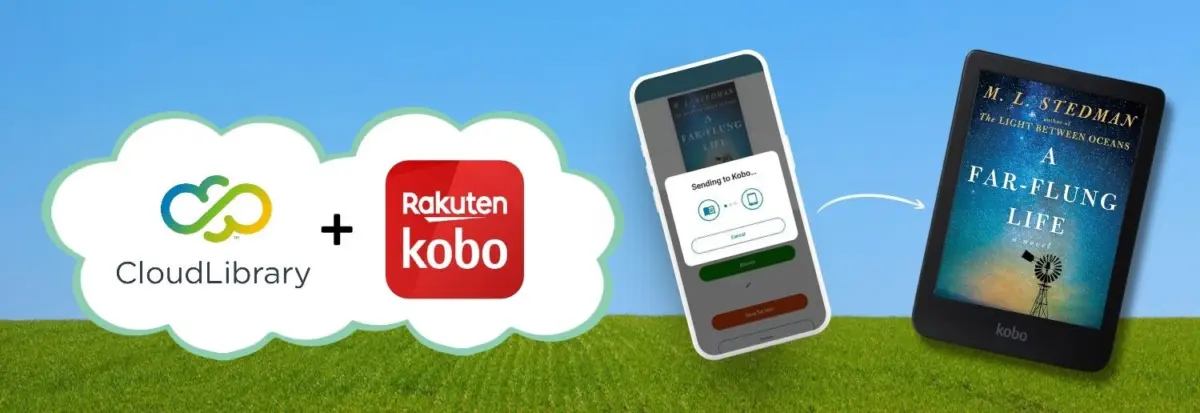
In a major development for the e-reading ecosystem, Rakuten Kobo has announced the official rollout of native CloudLibrary integration across its lineup of e-readers. While Kobo’s existing partnership with OverDrive’s Libby has long served as the gold standard for public library integration on electronic paper devices, many smaller, regional, and specialized library branches rely exclusively on CloudLibrary.
This strategic expansion bridges a significant gap in the digital lending market. By uniting the Kobo Store, Kobo Plus subscription services, Libby, and now CloudLibrary under a single roof, Kobo is positioning its hardware as the ultimate "home base" for avid readers. Whether users acquire content through retail channels, subscription platforms, or civic library networks, the objective remains clear: to deliver a distraction-free, unified reading experience.
Currently, this integration is rolling out to users in the United States and Canada, requiring specific firmware updates depending on the device model. This report explores the mechanics of the integration, leadership perspectives from both Kobo and OCLC, technical requirements, and the broader implications for the future of digital library access.
The path toward a unified library ecosystem on dedicated e-readers has been incremental. For years, the digital library landscape has been fractured across competing vendor platforms. While corporate giants like OverDrive (and its consumer-facing app, Libby) dominated major metropolitan library systems, many county and municipal libraries turned to CloudLibrary—developed by Bibliotheca and powered by OCLC infrastructure—due to its tailored administrative tools, lower overhead for smaller branches, and specialized cataloging options.
Historically, Kobo users dependent on CloudLibrary faced friction. Unlike OverDrive, which has enjoyed deep, native integration within the Kobo user interface for years (allowing users to browse, borrow, and sync library books directly from the device), CloudLibrary users often had to rely on cumbersome workarounds. These included sideloading Adobe Digital Editions (ADE) files via a desktop computer, converting files, or managing loans strictly through separate mobile apps and e-readers lacking direct syncing capabilities.
Firmware Requirements and Compatibility
To realize this seamless native integration, Kobo engineers developed specialized firmware updates. The CloudLibrary feature is officially supported on Kobo e-readers running software version 4.38 or later.
However, users utilizing newer, color-screen iterations of Kobo’s hardware require an even more advanced build. Specifically, the Kobo Clara BW, Kobo Clara Colour, and Kobo Libra Colour necessitate firmware version 4.46 or later to properly render and sync CloudLibrary titles without performance bottlenecks or formatting issues.
Regional Rollout Parameters
At launch, the integration is subject to strict geographical boundaries. The feature is currently exclusive to patrons whose public libraries are located within the United States and Canada. Kobo device owners residing outside these regions will not see CloudLibrary listed as an available integration option within their account settings, reflecting the licensing agreements and geographic distribution footprints inherent to cloud-based library vendors in North America.
Official Statements & Industry Perspectives
The partnership between Rakuten Kobo and OCLC (the parent organization overseeing CloudLibrary management and cooperative library services) marks a milestone in cooperative digital infrastructure. Industry leaders have emphasized the consumer-centric nature of this integration.
Rakuten Kobo Leadership
Michael Tamblyn, Chief Executive Officer of Rakuten Kobo, emphasized the company’s philosophy of meeting readers wherever their literary journeys begin:
"These days, the books readers love are coming from everywhere—from the Kobo Store and Kobo Plus of course, but also libraries, big publishers, indie bookstores, and beyond. We’ve realized that the more you read, the more likely it is that you want all your reading in one place. We want Kobo to be the home base for all of it," Tamblyn stated.
"Our goal is to make sure that whether you’re browsing on Kobo.com or borrowing from a library, the experience is the same: simple, quiet, and focused entirely on the book. By working closely with Libby and now, excitingly, CloudLibrary, we’re making sure that no matter where you find your next great story, it belongs on your Kobo."
OCLC Leadership
Drew Bordas, Chief Operations Officer at OCLC, echoed this enthusiasm, highlighting how the collaboration exponentially increases the reach of public libraries to dedicated hardware users:
"We’re thrilled to bring CloudLibrary to Kobo, expanding access to thousands more library users," said Bordas.
"If your library has CloudLibrary, now you can discover and borrow eBooks easily in the CloudLibrary app, then enjoy a seamless, reader-first experience on your Kobo. We can’t wait for more readers to experience our collection on their Kobo."
Supporting Context & The Digital Library Landscape
To fully understand the weight of this integration, one must examine the dynamics of the digital library ecosystem. Public libraries have experienced an unprecedented surge in digital circulation over the past decade. As physical foot traffic fluctuates, the demand for instantaneous, remote access to e-books and digital audiobooks has strained library budgets and forced technological adaptation.
The Fragmentation of Library Vendors
Unlike the commercial e-book market—which is heavily consolidated—the library vendor market is divided among several key players:
OverDrive / Libby: The undisputed giant in terms of market share, servicing thousands of large public library systems across North America and globally. Its prior integration with Kobo made Kobo devices immensely popular among public library patrons.
CloudLibrary: Hugely popular among independent libraries, smaller municipal systems, and regional consortia that prefer its distinct administrative interface and pricing structures.
Hoopla & Kanopy: Focus heavily on instantaneous, simultaneous-use models (primarily for audiobooks, comics, and video streaming, though offering some e-books as well).
Baker & Taylor’s Axis 360: Another contender in the space, though its market footprint has shifted over recent years.
By adding CloudLibrary alongside Libby, Kobo effectively neutralizes the hardware disadvantage it historically faced against competing ecosystems. Users no longer need to choose an e-reader brand based solely on which vendor their local library happens to license. For a patron whose municipal library system uses CloudLibrary, owning a Kobo Clara Colour or Libra Colour is now just as viable as owning an ecosystem-locked alternative.
Step-by-Step User Guides
For readers eager to take advantage of this new feature, setting up and utilizing CloudLibrary on a compatible Kobo device involves two primary phases: account linking and book borrowing.
How to Connect Your Kobo Account to CloudLibrary
Ensure Firmware is Up-to-Date: Go to Settings > Device information on your Kobo e-reader to verify your software version. If necessary, navigate to Settings > Device information > Sync to download and install the latest firmware update (Version 4.38+ for general devices, or 4.46+ for Clara BW, Clara Colour, and Libra Colour models).
Access Account Settings: On your Kobo home screen, tap the More icon in the bottom right corner, then select Settings.
Locate Accounts: Tap on Accounts within the settings menu. You will see options for OverDrive, Pocket, and now, CloudLibrary.
Sign In: Select CloudLibrary and log in using your public library card number and PIN/password associated with your local library branch. Once authenticated, your device will link your library credentials directly to your Kobo profile.
How to Borrow and Read Books from CloudLibrary
Once your account is successfully linked, syncing borrowed items to your hardware is designed to be frictionless:
Discover and Borrow: You can browse, place holds, and check out titles directly through your library’s CloudLibrary app on a mobile device/tablet, or via your library’s CloudLibrary web portal.
Automatic Syncing: Because your Kobo device is linked to your CloudLibrary account, any active e-book loan will automatically appear in your Kobo e-reader’s library sync queue.
Manual Sync (If Needed): If a newly borrowed book does not appear immediately, tap the sync icon on your Kobo e-reader to force a manual refresh of your catalog.
Read and Return: Open the book just like any sideloaded or purchased title. When your loan period expires, the book will automatically be removed from your device, eliminating late fees and streamlining digital inventory management for the library.
Future Outlook
The integration of CloudLibrary into the Rakuten Kobo ecosystem signals a broader, highly welcome trend in consumer electronics: interoperability and open standards. For years, tech conglomerates have attempted to lock consumers into walled gardens, forcing hardware purchases based on software exclusivity.
By building bridges with multiple public library vendors, Kobo is proving that hardware value can be driven by superior reading ergonomics, screen technology (such as Kaleido 3 color e-paper), and user-centric software, rather than artificial software monopolies.
Moving forward, industry analysts will be watching to see if Kobo extends these integrations to international markets outside the United States and Canada, where CloudLibrary also maintains regional footprints. Furthermore, as subscription models and library lending continue to converge, the pressure will mount on competing hardware manufacturers to match Kobo’s comprehensive library support.
For now, library patrons who rely on CloudLibrary can finally enjoy the premium, eye-friendly electronic paper display of a Kobo e-reader without sacrificing access to their local library’s catalog—marking a resounding win for readers, libraries, and open digital ecosystems alike.






Comments
Facebook App ID not configured. Please add it in the Customizer.