
Executive Overview
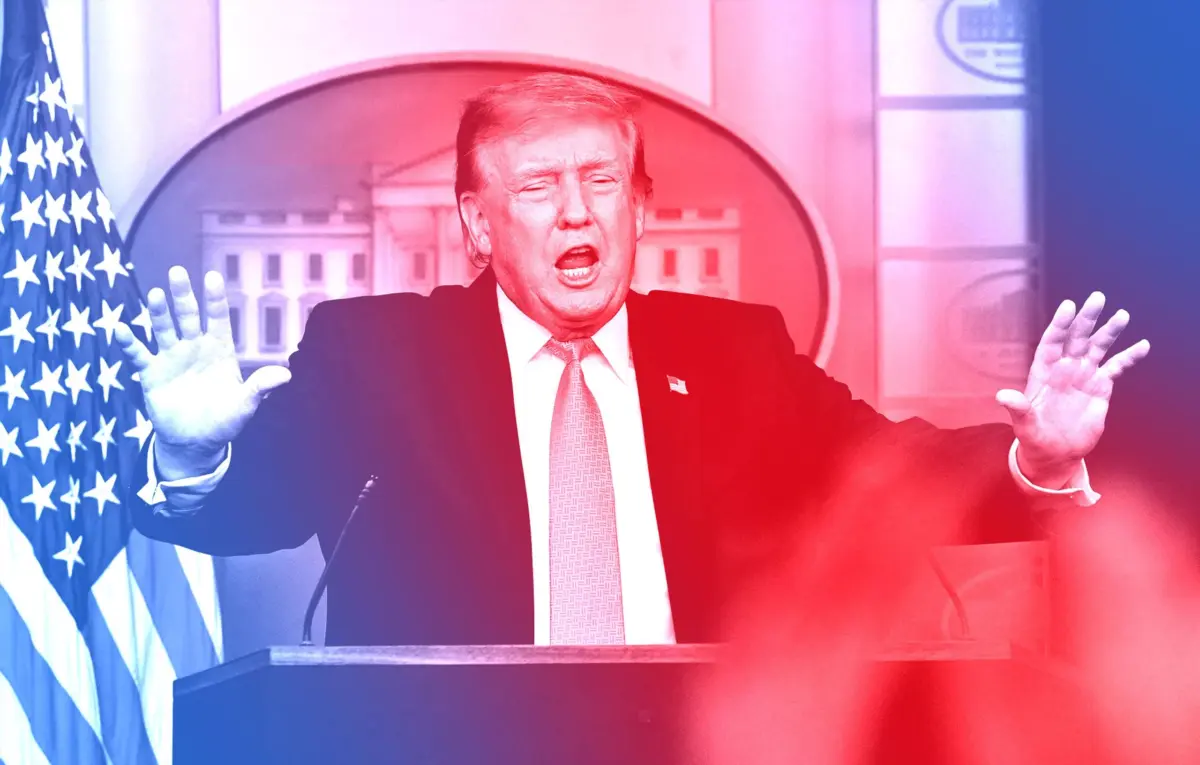
In the immediate wake of a resounding electoral defeat during the midterm elections, the administration of President Donald Trump has entered a period of acute internal friction and dramatic operational realignment. Nine days after voters delivered a decisive rebuke to the Republican Party at the polls, the White House is grappling with a dual crisis: a historic midterm backlash that swept traditional conservative strongholds and an unsustainable foreign policy impasse in the Middle East.
Faced with a projected national House popular vote margin approaching fourteen points in favor of Democrats—the widest gap recorded in over half a century—the President has responded not with strategic pivot or conciliation, but with an aggressive reassertion of executive authority. This post-election response has manifested in a sequence of high-profile moves, including the appointment of immigration hardliner Stephen Miller as White House Chief of Staff, public calls for the prosecution of congressional critics, and an overt public rift with Vice President J.D. Vance.
The central flashpoint of this administrative fracture is the ongoing conflict with Iran. Following media disclosures that Vice President Vance sought direct diplomatic engagement with Iranian security officials to negotiate an end to the hostilities, President Trump stripped the Vice President of his foreign policy mandate. By publicly reassigning Vance to focus exclusively on domestic crime in Democratic-run jurisdictions, the President has signaled a shift toward a policy of economic and military "strangulation" against Tehran, while simultaneously locking his own administration into an increasingly isolated governing posture.
Read Also
Detailed Chronology: Nine Days of White House Friction and the Thursday Social Blitz
The post-election period has been characterized by sharp pivots in messaging, escalating internal conflict, and early-morning public statements that outline a significant shift in White House priorities.
+-----------------------------------------------------------------------------------+
|                            POST-ELECTION TIMELINE                                 |
+-----------------------------------------------------------------------------------+
|  [Election Night]   --> President promises to accept electoral results.           |
|  [Post-Election]    --> VP Vance publicly attributes GOP losses to the Iran war.  |
|  [Sunday]           --> Trump downplays rift with Vance during press Q&A.         |
|  [Wednesday]        --> Trump declares "we won" the war; 4 tankers hit mines.     |
|  [Thursday 05:50]   --> Truth Social post attacking Democratic "corruption."     |
|  [Thursday 06:28]   --> Allegations of illegal threats against Republicans.       |
|  [Thursday 07:04]   --> Border caravan warnings; threats of tariffs on Mexico.    |
|  [Thursday 08:07]   --> Trump officially strips Vance of Iran portfolio.           |
|  [Thursday 10:59]   --> Trump demands prosecution of the "Seditious Six."         |
+-----------------------------------------------------------------------------------+
The Initial Post-Election Window
In the immediate aftermath of Election Night, during which the President initially promised to respect the election results, public discord within the executive branch surfaced rapidly. Vice President J.D. Vance publicly voiced what many political strategists had been whispering privately: that the ongoing military entanglement with Iran was the primary catalyst for the party’s widespread losses.
By Sunday, President Trump acknowledged Vance’s assessment during remarks to reporters, admitting that "a lot of people didn’t like" Vance blaming the midterm results on the conflict. While the President claimed at the time that the disagreement had not damaged their professional relationship, internal tensions continued to heighten behind closed doors.
The Wednesday Shift
On Wednesday, during an address in which he insisted the United States had effectively "won" the conflict in the Middle East and was simply deciding "when we want to end" it, reports emerged highlighting the physical vulnerabilities of maritime trade in the region. Simultaneously, reporting from the Wall Street Journal revealed that Vice President Vance had been actively exploring direct, in-person talks with Mohsen Rezaei, the secretary of Iran’s Supreme National Security Council, in an effort to broker a formal truce.
The Thursday Morning Digital Cascade
The lingering friction culminated on Thursday morning in a series of rapidly issued public statements from the President via Truth Social, laying bare the administration’s strategic realignments and internal ruptures:
- 5:50 AM: The President launched a bitter attack on congressional Democrats, rejecting allegations of administrative corruption and accusing his political opponents of being "CORRUPT AND EVIL."
- 6:28 AM: A follow-up statement claimed Democrats were "illegally threatening Republicans with knowingly false accusations and charges," signaling an intent to resist impending congressional oversight.
- 7:04 AM: The narrative shifted to immigration and trade. The President warned that "Huge CARAVANS" of undocumented migrants were advancing toward the U.S. southern border, threatening to immediately double tariffs on Mexican imports if the transit was not halted.
- 8:07 AM: The President officially announced the demotion of Vice President Vance from foreign diplomacy. Stating that "We don’t need a deal with Iran," Trump instructed Vance to pivot his "complete and total attention" toward investigating "Massive Corruption and Crime" in cities governed by Democrats.
- 10:59 AM: The morning communications concluded with the President demanding legal action against the "Seditious Six"—a group of Democratic members of Congress who had previously published a video reminding military personnel of their constitutional obligation to refuse illegal orders.
Supporting Context & Metrics: Midterm Electoral Shockwaves and Geopolitical Mechanics
The rapid series of policy shifts and personnel moves follows an unprecedented reconfiguration of the American electoral landscape.
Electoral Fallout: The 2026 Midterm Data
Preliminary vote counts indicate a historic political shift. The Democratic Party’s lead in the national House popular vote is approaching fourteen percentage points. If maintained, this will mark the largest margin of victory achieved by either party in a midterm cycle in over fifty years.
       50-YEAR MIDTERM POPULAR VOTE MARGIN COMPARISON

  +15% |========================================== [2026 Dem Lead: ~14%]
       |
  +10% |
       |
   +5% |
       |
    0% +----------------------------------------------------------------
       Source: National Election Data & Regional Balloting Reports
The scale of the electoral realignment is highlighted by the geographic breadth of the shifts. Regions that historically served as reliable Republican strongholds demonstrated significant swings against the administration’s endorsed candidates.
| State | Historical Baseline | 2026 Midterm Shift Context |
|---|---|---|
| Texas | Reliable GOP Margin | High suburban defections; widespread voter pushback on foreign conflict. |
| Ohio | Moderate Red Alignment | Substantial swings in industrial and suburban corridors. |
| North Carolina | Competitive / Lean Red | Key suburban precincts flipped overwhelmingly toward opposition candidates. |
| South Carolina | Solid Conservative | Margins tightened significantly in coastal and urban districts. |
| Kansas | Firm GOP Base | Widespread opposition turnout in metro areas over economic impact of war. |
| Mississippi | Deep South Red Base | Unexpected turnout shifts in urban centers and key rural counties. |
Geopolitical Strategy: Negotiate, Escalate, Strangulate
The decision to remove Vice President Vance from diplomatic engagement with Tehran effectively terminates the administration’s short-lived pursuit of a negotiated settlement. Foreign policy experts frame the President’s remaining choices within three operational frameworks originally outlined by veteran diplomat Aaron David Miller:
- Negotiate: Pursue a formal peace agreement or ceasefire with Tehran—an option now rendered inactive by the sidelined Vance portfolio.
- Escalate: Launch expanded military strikes targeting core Iranian infrastructure—a path the President explicitly ruled out during a recent interview on CBS’s 60 Minutes, citing a desire to avoid deeper military commitment.
- Strangulate: Maintain an assertive naval blockade alongside punitive economic sanctions to isolate Iran without committing to full-scale invasion or formal peace deals.
              +----------------------------------+
              |     TRUMP'S IRAN OPTIONS         |
              +----------------------------------+
                               |
       +-----------------------+-----------------------+
       |                       |                       |
[NEGOTIATE]               [ESCALATE]              [STRANGULATE]
(Abandoned via Vance     (Rejected on "60       (Current Default
 Portfolio Removal)       Minutes" Interview)      Policy Position)
The administration’s default toward "strangulation" comes with substantial operational risks. Despite assertions that the military objective has been secured, maritime security in the region remains highly volatile. Since Wednesday alone, four commercial oil tankers have struck naval mines deployed in the Strait of Hormuz, threatening energy supply chains and complicating efforts to stabilize domestic fuel prices.
Official Statements and Public Rifts
The post-election environment has exposed stark divisions between the executive office, the vice presidency, foreign entities, and national security experts.
Executive Office Communications
Speaking during a national interview on 60 Minutes, President Trump adopted an unyielding posture regarding his political opponents and his approach to governance, remarking that he would rather continue opposing his political enemies than "go to heaven." On foreign affairs, he minimized the necessity of further action against Tehran:
"We won the war already… now we’re just waiting to decide when we want to end it. I don’t see any reason to escalate."
Regarding the internal reassignment of Vice President Vance, the President posted:
"We don’t need a deal with Iran. The Vice President should focus his complete and total attention on uncovering the Massive Corruption and Crime taking place in Democratic-run cities and states."
+-----------------------------------------------------------------------------------+
|                        KEY STATEMENTS & PERSPECTIVES                              |
+-----------------------------------------------------------------------------------+
| Donald Trump:       | "We won the war already... We don't need a deal with Iran." |
| J.D. Vance:         | "The reason we lost is the war."                            |
| Aaron David Miller: | "The problem with strangulation is it won't change IRGC    |
|                     | foundational positions... it compels Iran to escalate."     |
| Danny Citrinowicz:  | "Both sides may genuinely want to avoid confrontation and   |
|                     | still find themselves heading toward one."                  |
+-----------------------------------------------------------------------------------+
The Vice Presidency
Following the election, Vice President J.D. Vance issued an unusually candid assessment of the party’s electoral losses on social media, directly challenging the political wisdom of the ongoing military campaign:
"The reason we lost is the war."
This public statement marked a significant breach between a sitting President and Vice President over core foreign policy. Vance’s subsequent willingness to consider a meeting with Mohsen Rezaei, secretary of Iran’s Supreme National Security Council, served as the ultimate catalyst for his public removal from the diplomatic effort.
Expert Assessments
Diplomatic analysts warn that the administration’s preference for an ambiguous, status-quo strategy carries long-term systemic risks.
Aaron David Miller, former U.S. Middle East negotiator, noted:
"Trump’s had three options—negotiate, escalate, strangulate. None are mutually exclusive if Trump had a strategy… The only problem with strangulation—the neither-here-nor-there option—is that it won’t change I.R.G.C. foundational positions and will, over time, compel Iran to break out and escalate."
Danny Citrinowicz, an Israeli national-security scholar, published an analysis highlighting the potential for unintended confrontation:
"The risk of renewed escalation remains significant… Both sides may genuinely want to avoid another confrontation and still find themselves heading toward one."
Future Outlook: Executive Isolation, Congressional Oversight, and Strategic Instability
As the administration transitions into the second half of its term, it faces a dramatically altered political landscape characterized by systemic governance challenges across multiple fronts.
+-----------------------------------------------------------------------------------+
|                           FUTURE RISK ARCHITECTURE                                |
+-----------------------------------------------------------------------------------+
| DOMESTIC FRONT     --> Impending Democratic House majority oversight & subpoenas. |
| ADMINISTRATION     --> Internal fracture; elevation of hardline loyalists.       |
| FOREIGN POLICY     --> Ambiguous blockade risks Iranian nuclear/military breakout.|
| ECONOMIC FRONT     --> Energy market fragility due to Strait of Hormuz mining.   |
+-----------------------------------------------------------------------------------+
1. The Incoming Congressional Horizon
With Democrats set to assume control of the House of Representatives under a broad popular mandate, the White House will face an era of aggressive legislative oversight. Anticipating subpoenas regarding executive conduct, foreign policy decisions, and internal administration directives, the appointment of Stephen Miller as Chief of Staff signals an operational pivot toward legal non-cooperation and aggressive public counter-messaging.
2. Escalation Risks in the Persian Gulf
The reliance on economic and maritime strangulation without a defined diplomatic exit strategy leaves American forces in a precarious posture. With key shipping lanes in the Strait of Hormuz active with naval mines and Iranian political leadership refusing to yield under unilateral sanctions, the risk of a military breakout or commercial disruption remains elevated. Without a diplomatic proxy like the Vice President empowered to negotiate, any miscalculation in international waters could trigger a broader regional confrontation.
3. The Fractured Executive
The public marginalization of Vice President Vance represents a persistent structural challenge within the executive branch. Deprived of a major foreign policy portfolio and tasked with aggressive domestic political investigations, the Vice President occupies an increasingly isolated position within the West Wing. This institutional rift, combined with an empowered hardline advisory core, suggests the administration will navigate its post-midterm reality through increased executive centralization, setting up prolonged confrontations with both Capitol Hill and international adversaries.




Comments
Facebook App ID not configured. Please add it in the Customizer.