
Executive Overview
On the evening of Sunday, 25 October 2026, the cultural heart of London’s Southbank Centre beat to the rhythm of contemporary verse as the prestigious Queen Elizabeth Hall played host to the annual Forward Prizes for Poetry. Recognised globally as one of the most vital barometers for poetic achievement in the English-speaking world, the ceremony brought together luminaries, emerging talents, and devoted poetry enthusiasts to celebrate the year’s most transformative writing.
Guided by the legendary host and poet Joelle Taylor, alongside the chair of the judging panel Sarah Moss and fellow judge Michael Mullen, the evening was a masterclass in emotional resonance. The 2026 awards arrived at a time of profound social and geopolitical shifts, a climate reflected acutely in the winning collections and pieces. Rather than retreating into abstraction, this year’s victors—Sarah Howe, Nur Turkmani, Tara Bergin, and Biff Smith—grappled directly with the weight of history, the intimacy of familial bonds, the trauma of collective catastrophe, and the nuanced geographies of memory.
From Sarah Howe securing the coveted £10,000 Best Collection prize for Foretokens—her deeply anticipated follow-up to her historic T.S. Eliot Prize-winning debut—to breakthrough moments for debutants and masters of the single poem alike, the 2026 Forward Prizes cemented a golden era for poetry that speaks simultaneously across generations and to the immediate pulse of the present.
Read Also
Detailed Chronology of the Evening
The atmosphere inside the Queen Elizabeth Hall on Sunday evening was electric. Anticipation rippled through the auditorium as the audience—a diverse coalition of publishers, critics, fellow poets, and avid readers—settled in for what has become a highlight of the British literary calendar.
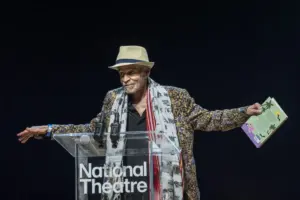
As house lights dimmed, the iconic poet and performer Joelle Taylor took to the stage. Known for her commanding presence and fierce advocacy for spoken word, Taylor set an inclusive, electric tone for the proceedings, reminding the audience of poetry’s unique capacity to articulate the unspeakable.
Following opening remarks, the judging panel—spearheaded by novelist and academic Sarah Moss alongside Michael Mullen—stepped forward to unveil the winners across the four fiercely contested categories:
- The Forward Prize for Best Collection (£10,000): Awarded to Sarah Howe for Foretokens (Chatto & Windus).
- The Jerwood Prize for Best First Collection: Awarded to Nur Turkmani for October (Hajar Press).
- The Forward Prize for Best Single Poem – Written: Awarded to Tara Bergin for "The Fear" (published in The Stinging Fly).
- The Forward Prize for Best Single Poem – Performed: Awarded to Biff Smith for "Dumbarton East" (published by Loud Poets).
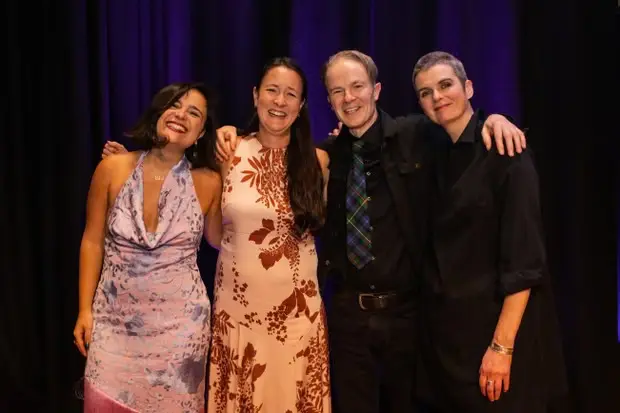
The ceremony balanced moments of high tension with celebrations of community. As each winner was announced, the hall erupted into applause, culminating in a poignant group photo backstage where the victorious poets stood arm-in-arm, smiling broadly—a physical embodiment of the camaraderie that underpins the contemporary poetry landscape.
Supporting Context & Metrics: Deep Dive into the Winning Works
To understand the weight of the 2026 Forward Prizes, one must examine the specific cultural, artistic, and thematic contexts from which these winning texts emerged.
1. Sarah Howe and Foretokens: The Burden and Beauty of Inheritance
Sarah Howe’s victory with Foretokens (published by Chatto & Windus) represents a major milestone in contemporary British letters. Howe is no stranger to critical acclaim; her debut collection, Loop of Jade (2015), made literary history by becoming the first debut collection ever to win the prestigious T.S. Eliot Prize.
More than a decade later, Foretokens proves that Howe’s early brilliance was merely the prelude to a deeper, more vulnerable maturity. The £10,000 prize-winning collection navigates an intensely emotional triad of subjects: the dizzying landscape of new parenthood, the devastating grief of her father’s death, and the fragmented history of her mother’s early life in Hong Kong.
Howe’s poetic footprint extends far beyond the page. Readers may recall her poem “A History of My Relationship with My Mother in Twenty-three Arguments About the Laundry,” which first graced the pages of The Poetry Review in Autumn 2023. Furthermore, Howe has consistently bridged the gap between traditional print poetry, historical scholarship, and digital innovation. Her past collaborations include working alongside poet Fred D’Aguiar for TIDEfest 2021—an offshoot of the TIDE (Travel, Transculturality and Identity in England, 1550–1700) project. For that digital festival, Howe contributed the poem "Stoneware dish: Longquan kilns", inspired by ancient maritime artifacts and later adapted into an animation by filmmaker Aindri C.
Her collaborative impulse was further demonstrated in a commission with the National Portrait Gallery, where Howe and D’Aguiar penned a responsive poem to Pierre Mignard’s 1682 painting, Louise de Kéroualle, Duchess of Portsmouth with an unknown girl. This multidisciplinary sensibility permeates Foretokens, giving her historical inquiries a living, breathing pulse.
2. Nur Turkmani and October: Mapping Collective Catastrophe
The Jerwood Prize for Best First Collection was awarded to Nur Turkmani for October (Hajar Press). Turkmani’s collection is an ambitious, haunting work that spans several Lebanese Octobers.
The collection serves as an essential meditation on rupture, systemic transformation, and the quiet, agonizing undoing and remaking of human relationships against the backdrop of collective catastrophe. In an era where political turmoil frequently resists straightforward narrative capture, Turkmani’s verse provides an emotional register for the resilience of communities caught in the crosshairs of history. Winning the Jerwood Prize signals the arrival of a major new voice in transnational and diasporic literature.
3. Tara Bergin and "The Fear": Timeless Resonance
In the category of Best Single Poem – Written, Tara Bergin triumphed with "The Fear", originally published in the renowned literary magazine The Stinging Fly.
Bergin has long been celebrated for her linguistic dexterity and psychological acuteness. In evaluating her victory, the judging panel offered high praise:
“[The poem] transmits across the generations and across experience, and that collective fear we all share about its legacy for those that follow. It’s a simple poem and yet it does so much. It’s not only timely; it’s timeless.”
In an age dominated by hyper-complex, heavily ironised verse, Bergin’s ability to tap into elemental human anxieties with deceptive simplicity marks her out as a master craftswoman.
4. Biff Smith and "Dumbarton East": The Art of the Spoken Word
The Best Single Poem – Performed category celebrated the intersection of page and stage, with Biff Smith taking home the prize for "Dumbarton East" (released via Loud Poets).
Judging performance poetry presents a unique critical challenge: balancing the literary integrity of the text itself against the dynamic execution of live delivery. Addressing this, the judges noted:
“There’s an inherent challenge in judging performance poetry to balance the quality of the poem itself and the quality of a performance. A winner requires both, and this shortlist was replete with incredible performances and poems.”
The panel went on to commend Smith’s piece, stating they "greatly admired the humour" in a work they described as both "philosophical and subtle." "Dumbarton East" successfully weaves complex themes of local geography, identity, and memory into a narrative framework that resonates deeply with listeners, proving that populist appeal and high literary craft are by no means mutually exclusive.
Official Statements and Critical Reception
The announcements made at the Southbank Centre immediately sent ripples through the wider literary ecosystem. Publishers, cultural institutions, and literary critics have universally praised the 2026 shortlist and final winners for their uncompromising emotional honesty and formal innovation.
In his post-ceremony remarks, chair of judges Sarah Moss emphasized the collective emotional labor embedded in this year’s winning entries. Moss noted that the panel sought out works that refused to shy away from difficult truths—whether those truths lie in the private grief of familial loss, the geopolitical trauma of Middle Eastern landscapes, or the shared socio-political anxieties of contemporary life.
Cultural commentators have also highlighted the Forward Prizes’ continued commitment to platforming diverse publishing houses. Independent presses such as Hajar Press (publishing Nur Turkmani) and literary institutions like The Stinging Fly and Loud Poets continue to prove that the most radical, vibrant poetry often finds its home outside of traditional corporate conglomerates, sustained instead by passionate editorial vision and grassroots arts funding.
Future Outlook: The Trajectory of Contemporary Verse
As the dust settles on the 2026 Forward Prizes, the literary community turns its gaze toward the future. What do these wins portend for the trajectory of poetry in the late 2020s?
Firstly, the success of Sarah Howe’s Foretokens underscores a growing appetite for poetry that successfully synthesizes rigorous historical scholarship with raw biographical confession. As poets increasingly look back into archival records, transcultural histories, and family lineages, the genre is expanding its historical consciousness.
Secondly, the triumph of Nur Turkmani’s October signals an ongoing decentralization of British poetry. Readers are increasingly demanding narratives that transcend domestic British boundaries, looking toward the diaspora, transnational solidarity, and witness poetry that addresses global crises with structural nuance and poetic grace.
Finally, the continued prestige afforded to both written and performed single poems—typified by Tara Bergin and Biff Smith—reinforces the health of a dual-track poetry ecosystem. The divide between the page and the stage is increasingly porous, with poets operating fluidly across print magazines, digital archives, and live audio-visual platforms.
As these four exceptional writers carry the banner of the 2026 Forward Prizes into the coming year, they leave behind an indelible mark on the cultural consciousness, reminding us all of the enduring power of language to make sense of a turbulent world.


Comments
Facebook App ID not configured. Please add it in the Customizer.