
Executive Overview
In the realm of narrative fiction, the modern audience’s palate has shifted decisively away from the pristine, infallible paragons of early storytelling. Today’s readers and viewers demand dimensionality, wrestling with protagonists who harbor deep-seated psychological scars, ethical blind spots, and behavioral flaws. Yet, a central paradox confronts writers: How does one construct a character so deeply flawed that they evade the cliché of the "Goody Two-Shoes," while preserving enough fundamental appeal to keep audiences emotionally invested through hundreds of pages or multiple seasons?
The prevailing consensus among master storytellers and developmental editors points to a singular, foundational mechanism: audience trust.
Audiences are remarkably forgiving of moral failure, brutality, cowardice, and selfishness, provided they sense a core of authenticity within the character’s self-awareness. What readers and viewers fundamentally reject—and what shatters the suspension of disbelief—is hypocrisy. When a character acts out of alignment with their stated values without acknowledging the contradiction, or when an author accidentally creates a hollow moral vacuum, the bond of trust snaps.
Read Also
Conversely, narrative analysis reveals that a flawed character becomes instantly likable when audiences trust the character’s honesty more than they judge their mistakes. By examining iconic figures across literature and cinema—from classic Hollywood dramas to modern Marvel blockbusters and gritty television procedurals—this report explores how radical honesty and transparency transform unlikable scoundrels into deeply magnetic protagonists. Furthermore, it outlines practical frameworks for writers seeking to balance psychological realism with reader empathy.
Detailed Chronology: The Evolution of the Flawed Protagonist
To understand how contemporary storytelling arrived at the current appreciation for the "honest scoundrel," one must trace the evolution of the protagonist through theatrical and cinematic history.
The Classical Paradigm and the Rise of the Antihero
For centuries, classical narrative structures favored clear-cut archetypes. Heroes were virtuous, and villains were wicked. Even as Romantic literature introduced brooding, morally compromised figures like Emily Brontë’s Heathcliff—whose murderous manipulations and dark intensities fascinated readers—these characters were often viewed as cautionary tales rather than models for mainstream protagonist design.
However, the mid-20th century marked a structural pivot. As psychological realism infiltrated mainstream media, writers recognized that perfection breeds stagnant character arcs. Without flaws, there is no room for growth, regression, or internal conflict.

The Golden Age of Hollywood and the Blueprint of Sylvia Scarlett
A prime historical case study in balancing moral failure with redemptive honesty occurred in early cinematic history. The 1935 RKO Radio Pictures release Sylvia Scarlett, starring Katharine Hepburn and Cary Grant, provided a masterclass in this technique.
In the film, Hepburn plays Sylvia, a virtuous young woman who reluctantly disguises herself as a boy to help her criminal father evade the law. Early in the narrative, Sylvia is drawn into theft, crossing the line from innocent bystander to active participant. By definition, she becomes a hypocrite—a character type that typically triggers immediate audience rejection.
Yet, director and writers sidestepped viewer disdain through a single, unguarded moment of total confession. In a tipsy, vulnerable sequence while still disguised as a boy, Sylvia confronts a young housemaid who is about to take the fall for a crime Sylvia and her companions committed. Pointing directly at her father, their traveling cohort, and finally at herself, Sylvia confesses, "He’s a crook, he’s a crook… he’s a crook."
In that singular breath of raw self-awareness, Sylvia rescues her character arc. She acknowledges her moral descent without excuses. The audience forgives her trespasses because she owns them.
Supporting Context & Metrics: The Psychology of Audience Empathy
Why do audiences embrace characters who lie, steal, and destroy, yet abandon those who preach morality while acting immorally? Cognitive psychology and narrative theory offer illuminating insights.
1. The Death of Suspended Disbelief via Unintentional Hypocrisy
When an author attempts to present a character as heroic while ignoring glaring ethical contradictions, the audience perceives a disconnect. This unintended hypocrisy destroys trust. Readers feel manipulated.
According to structural narrative metrics, character likability is rarely a static metric derived from polite manners or pleasant dispositions. Instead, it is a dynamic equation:

$$textLikability = textAuthenticity – textUnacknowledged Hypocrisy$$
When authenticity remains high—driven by transparent admissions of failure—the negative impact of personal flaws diminishes significantly.
2. The Mechanics of the "Lie" and Self-Awareness
Character arcs inherently rely on what narrative theorists term "The Lie the Character Believes."
- In a Positive Change Arc, characters begin mired in self-deception and arc toward self-awareness and truth.
- Conversely, in a Negative Change Arc, a character may begin with a modicum of self-awareness, only to descend deeper into self-deception, heightening the tragic irony of their downfall.
In both instances, honesty serves as the anchor. Even if a character cannot initially articulate the deeper truths of their existence, moments of stark, unvarnished self-admission bridge the gap between their repulsive actions and the audience’s empathy.
Case Studies in Transparency: Stark and Givens
Modern pop culture provides extensive validation of this principle, demonstrating how transparency converts abrasive traits into endearing qualities.
Tony Stark: The Subversive Power of Radical Transparency
Within the Marvel Cinematic Universe, Tony Stark stands as the definitive archetype of the flawed yet universally beloved protagonist. From his introduction in 2008’s Iron Man, Stark is demonstrably arrogant, reckless, provocative, and dismissive of authority.
By conventional metrics, Stark should alienate viewers. Yet, he remains one of the most celebrated figures in modern cinema because he never pretends to be someone he is not.

Consider his iconic verbal sparring match with Steve Rogers in The Avengers. When Rogers challenges him—"Big man in a suit of armor. Take that off, what are you?"—Stark delivers a response that is aggressively, subversively transparent: "Genius, billionaire, playboy, philanthropist."
Standing opposite Rogers—a character defined by humble, sincere, and traditional heroism—Stark unapologetically owns every facet of his ego. By refusing to mask his flaws behind a veneer of false modesty, Stark converts his arrogance into raw authenticity. When he later utters the historic cinematic line, "I am Iron Man," it cements a journey built entirely on the foundation of radical, unflinching honesty about his own identity.
Raylan Givens: Operating in the Moral Gray
On the small screen, FX’s critically acclaimed neo-Western Justified introduced audiences to Deputy U.S. Marshal Raylan Givens (Timothy Olyphant). Operating with a "shoot first, ask questions later" mentality, Raylan frequently steps outside the boundaries of institutional law enforcement, behaving more like a throwback gunslinger than a conventional modern peace officer.
In the pilot episode, after Raylan shoots a suspect in a controversial standoff, his ex-wife confronts him about the incident. Raylan’s response is disarmingly simple and direct: "I was justified."
Throughout the series, Raylan operates strictly according to this personal, internalized code of "justification." He never attempts to gloss over his lethal impulses or his comfort with violence. He understands his own moral grayness and refuses to lie about it to his superiors, his lovers, or himself. It is this absolute integrity to his own flawed code that allows viewers to travel with him into the darkest corners of the American criminal underworld without losing faith in his underlying integrity.
Future Outlook: Practical Frameworks for Writers
For contemporary authors and screenwriters navigating the delicate balance between likability and edge, the mandate is clear: prioritize honesty over perfection. To ensure characters avoid crossing the threshold from compellingly flawed to irredeemably obnoxious, writers should subject their protagonists to rigorous diagnostic questioning:
- Does the character acknowledge their own worst impulses, even privately? (Internal monologue must reflect a baseline of self-awareness).
- Where does the character actively lie to themselves, and how does that deception drive the narrative arc?
- Are the character’s stated values in direct contradiction with their actions—and if so, is that hypocrisy intentional and addressed within the story?
- Does the character attempt to charm their way out of accountability, or do they own their mistakes when confronted?
- How does the character react when their flaws cause collateral damage to those they care about?
- Is the author inadvertently shielding the protagonist from consequences, thereby creating accidental hypocrisy?
- What is the single, disarming truth the character could utter in their darkest moment that would instantly remind the audience of their humanity?
Leveraging Psychological Frameworks for Authentic Flaws
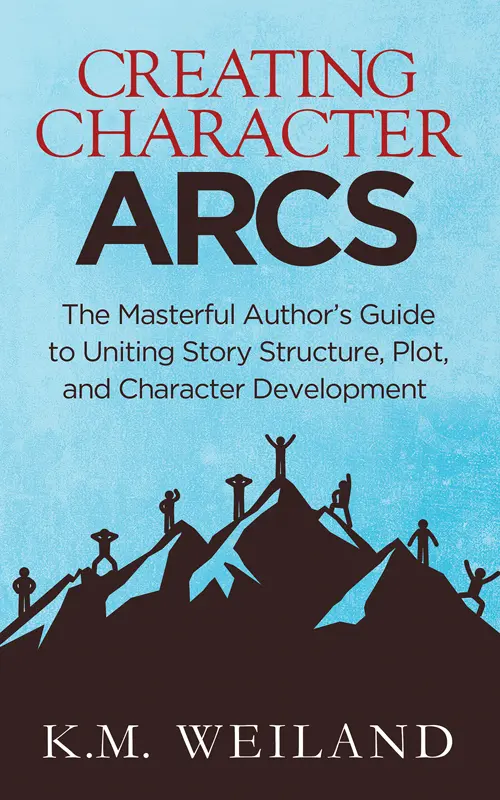
To generate flaws that feel organic rather than tacked-on, many modern creators turn to psychological profiles such as the Enneagram. By anchoring a character’s flaws in deep-seated core fears, core desires, blind spots, and coping mechanisms, writers ensure that weaknesses cease to be arbitrary quirks and instead manifest as natural psychological expressions.

Whether developing a Positive Change Arc or a Negative Change Arc, utilizing structured frameworks helps ground character flaws in authentic human behavior.
Conclusion: The Ultimate Hook
Ultimately, a little well-dramatized self-awareness and honesty is more than enough to make even the most morally compromised character surprisingly magnetic. When protagonists demonstrate the capacity to face the uncomfortable truth about who they are—flaws, sins, and all—they lay the groundwork for a resonant, powerful character arc.
Honesty provides imperfections with context, humanity, and credibility. It tells the audience: I know I am broken, and I am not hiding from it. And in the end, it is that courageous transparency that keeps readers turning pages long into the night.


Comments
Facebook App ID not configured. Please add it in the Customizer.