
Executive Overview
Urban centers across the globe find themselves locked in an escalating spatial emergency. From soaring rents and pervasive displacement to the systemic commodification of shelter, the foundational premise of housing as a basic human right has been systematically eroded by decades of neoliberal real estate policy. Amid this deepening metropolitan crisis, intellectual and political forces are converging to question the structural underpinnings of contemporary housing politics.
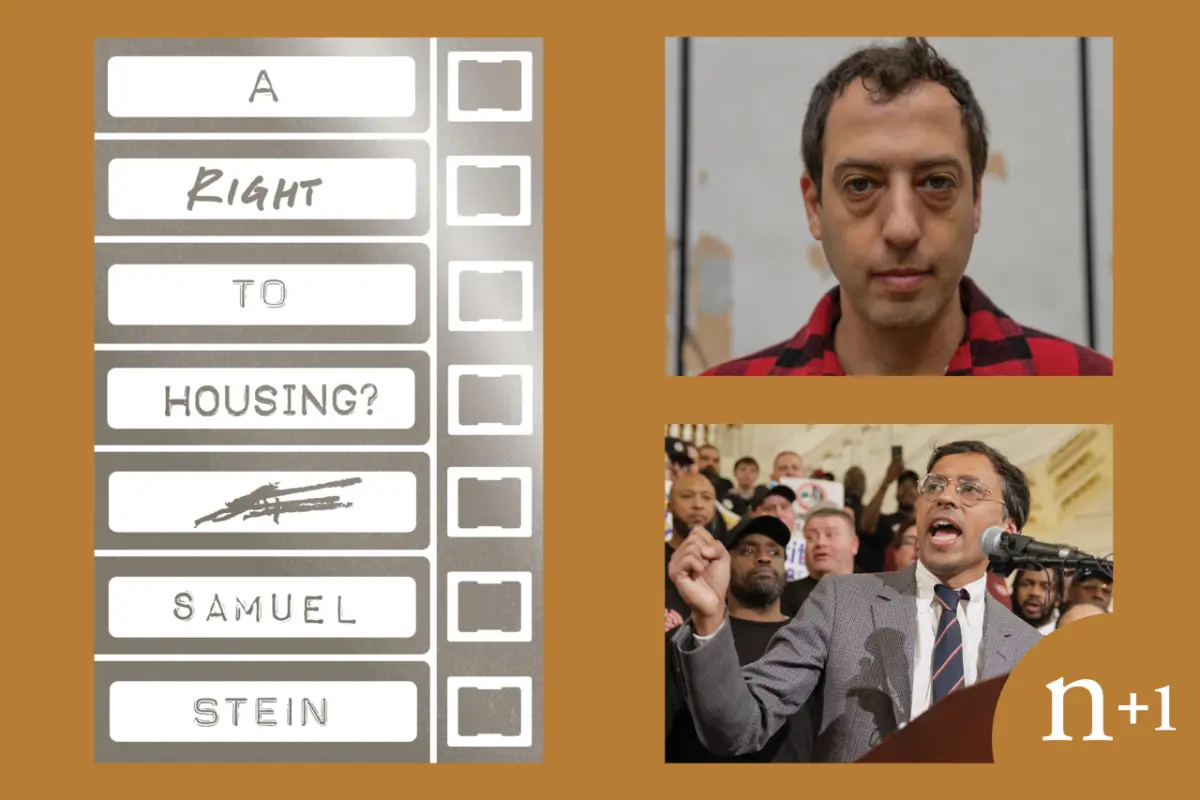
On September 8, the renowned literary and cultural magazine n+1 will host a major public event to celebrate the launch of urban geographer and policy analyst Samuel Stein’s highly anticipated new book, A Right to Housing?, published by Verso. Stein will be joined in conversation by former n+1 coeditor and current political figure Nikil Saval for an evening examining the severe contradictions, political blockades, and radical possibilities inherent in contemporary shelter politics.
The event, scheduled for 7:00 PM at the n+1 office located at 37 Greenpoint Avenue in Brooklyn, is free and open to the public, offering attendees an opportunity to engage directly with some of the sharpest minds currently analyzing urban inequality. As cities grapple with affordability shortfalls that threaten to permanently reshape the social fabric of urban life, Stein’s work offers both a diagnostic autopsy of the housing quagmire and an uncompromising provocation for activists, policymakers, and tenants alike.
Early critical reception for A Right to Housing? has framed the text as an indispensable manual for contemporary social movements. Gail Radford, author of Modern Housing in America, describes the book as "highly recommended for activists of all stripes, but a must-read for everyone who has struggled to instantiate a human right to housing." Similarly, David Madden, coauthor of In Defense of Housing, praises Stein for delivering "a deeply thoughtful and provocative exploration of housing politics in the current conjuncture," while Amanda Huron, author of Carving out the Commons, highlights the book’s candid confrontation with systemic despair, noting that Stein grapples unflinchingly with "the impossibility of our housing quagmire."
This comprehensive report provides an exhaustive look at the forthcoming event, contextualizes the core arguments of Stein’s new book within the wider landscape of contemporary urban struggles, examines the historical trajectory of housing as a contested human right, and outlines the structural metrics driving the current metropolitan emergency.
Detailed Chronology: The Evolution of Modern Housing Politics
To understand the weight of Samuel Stein’s A Right to Housing? and the significance of his upcoming dialogue with Nikil Saval, one must trace the historical degradation of housing policy over the past century. The trajectory of housing in capitalist democracies has shifted dramatically from a post-World War II understanding of social infrastructure to a contemporary regime dominated by financialization, institutional landlordism, and real estate speculation.
The Post-War Settlement and the Promise of Public Provision
In the wake of the Second World War, numerous Western nations recognized the acute political and social danger of unchecked housing shortages. Governments across Europe and North America embarked on ambitious public housing initiatives. In the United States, the Housing Act of 1949 articulated a national goal of "a decent home and a suitable living environment for every American family."
While compromised from its inception by racial segregation, developer carve-outs, and underfunding, this era nonetheless established a precedent: the state bore some degree of responsibility for ensuring that its citizenry was sheltered outside of purely market-driven mechanisms. However, this social democratic consensus proved short-lived. By the late 1970s and 1980s, under the banner of neoliberal restructuring, federal investments in public housing were systematically slashed, mortgage markets were deregulated, and housing was increasingly recast as an investment vehicle rather than a social good.
The Rise of Financialization and the 2008 Watershed
The decades leading up to the 2008 global financial crisis saw the complete financialization of residential real estate. Housing was bundled, securitized, and traded on global capital markets, turning neighborhoods into asset classes. When the subprime mortgage meltdown triggered a worldwide economic collapse, millions of working-class homeowners—disproportionately Black and Hispanic families—were subjected to mass foreclosures.
Instead of prompting a radical reevaluation of housing as a human right, the crisis accelerated corporate consolidation. Private equity firms and institutional investors swooped in to buy up foreclosed single-family homes and apartment complexes en masse, transforming renters into a captive, permanent revenue stream. It is within this ruined landscape of financialized urbanism that contemporary housing movements—from tenant unions and rent strikes to municipal acquisition campaigns—have been forged. Samuel Stein’s work directly engages with the strategic dilemmas facing these movements as they confront an adversary as vast and entrenched as global capital.
Supporting Context & Metrics: The Anatomy of the Contemporary Housing Emergency
The urgency underpinning Stein and Saval’s upcoming discussion is anchored in grim socio-economic realities. Across metropolitan regions, the gap between median wages and the cost of basic shelter has reached breaking point proportions, rendering the phrase "housing affordability" an increasingly hollow bureaucratic euphemism.
The Affordability Gap and Rent Burden
According to data compiled by Harvard University’s Joint Center for Housing Studies, a record number of American renters are classified as "cost-burdened," meaning they spend more than 30 percent of their income on rent and utilities. A staggering share of these households are "severely cost-burdened," shelling out upwards of 50 percent of their earnings just to maintain a roof over their heads.
+--------------------------------------------------------------------------+
|                 US RENTER COST-BURDEN METRICS (APPROXIMATE)              |
+--------------------------------------------------------------------------+
| Total Renters Facing Cost Burden (>30% income)      | >50% of all renters|
| Severely Cost-Burdened Renters (>50% income)       | Millions of households|
| Median Rent-to-Income Ratio in Major Metros        | Steadily rising    |
+--------------------------------------------------------------------------+
This structural squeeze leaves families with virtually no disposable income for healthcare, education, nutrition, or savings. When minor economic shocks occur—such as medical emergencies, car repairs, or brief periods of unemployment—cost-burdened tenants are instantly pushed to the brink of eviction and homelessness.
The Eviction Machine and Spatial Displacement
Evictions operate not merely as isolated legal disputes between landlords and tenants, but as a systemic mechanism of wealth extraction and neighborhood displacement. In major urban centers, legal representation in housing court has historically been overwhelmingly skewed in favor of landlords, who retain legal counsel in the vast majority of cases, while tenants face eviction judges alone.

While tenant organizing and the hard-won expansion of the "Right to Counsel" in cities like New York have begun to shift the balance of power in the courtroom, the underlying economic pressures driving evictions remain unabated. Gentrification, driven by state-subsidized upzoning and speculative capital inflows, continually displaces low-income communities of color from urban cores, pushing them into farther-flung peripheries with inadequate public transit and social services.
The Policy Paralysis: Supply-Side Dogma vs. Structural Reform
In policy circles, the dominant debate over housing has frequently been reduced to a crude binary: supply-side market fundamentalism versus progressive tenant advocacy. Neoliberal urbanists argue that the sole driver of the housing crisis is a lack of supply, asserting that simply deregulating zoning laws and incentivizing private developers to build luxury towers will eventually trigger a "filtering" effect that trickles down to lower-income brackets.
Critics like Samuel Stein, however, dismantle this supply-side dogma by demonstrating that private developers have zero financial incentive to build housing that is affordable to the working class. Capital naturally flows toward maximum return on investment, resulting in a glut of luxury high-rises coexisting alongside severe working-class homelessness. A Right to Housing? tackles these complex policy failures head-on, refusing easy technocratic fixes in favor of a clear-eyed interrogation of the structural limits of capitalist housing markets.
Official Statements & Intellectual Perspectives
The dialogue between Samuel Stein and Nikil Saval brings together two of the most incisive voices in contemporary American urban criticism. Both speakers possess deep practical and theoretical engagements with the mechanics of state power, urban planning, and labor politics.
Samuel Stein: Diagnosing the Quagmire
Samuel Stein, a geographer and policy analyst whose previous work includes the acclaimed Capital City: Gentrification and the Real Estate State, has long interrogated how urban planning functions as an instrument of class rule. In A Right to Housing?, Stein shifts his analytical lens toward the very concept of rights within a market-driven society. He asks a fundamental, disquieting question: Can a society built on private property and the commodification of basic needs ever truly deliver a universal right to housing?
Stein’s collaborators and peers have lauded the book for its intellectual honesty. As Amanda Huron notes, Stein embraces the "doubting mind," refusing to offer utopian shortcuts or hollow political platitudes. Instead, he examines the institutional blocks, legislative deadlocks, and ideological contradictions that prevent housing from being treated as a social entitlement rather than a financial asset.
Nikil Saval: Bridging Literature, Labor, and Urban Policy
Nikil Saval—former coeditor of n+1, author of Cubed: A Secret History of the Workplace, and a member of the Pennsylvania State Senate representing the 1st district—brings a unique dual perspective to the conversation. Having moved from cultural criticism and architectural journalism to institutional lawmaking, Saval understands both the theoretical imperatives of the Left and the brutal legislative realities of fighting for housing justice within state apparatuses.
Saval’s legislative work in Pennsylvania has consistently emphasized the necessity of tenant protections, eviction moratoriums, and public investments in green, affordable housing. His conversation with Stein is expected to bridge the gap between radical urban theory and concrete political strategy, exploring how social movements can successfully translate the demand for a right to housing into actionable legislation and enduring institutional power.
Future Outlook: The Horizon of Housing Justice
As the September 8 event approaches, the stakes for the housing movement could not be higher. The cascading crises of climate change, economic inequality, and urban displacement make the rethinking of shelter an existential imperative for the twenty-first century.
Toward New Horizons of Collective Ownership
What does a genuine, realizable "right to housing" look like moving forward? Increasingly, housing justice movements are looking beyond the traditional binaries of private homeownership and dilapidated public housing authorities. Models of decommodified housing—such as community land trusts (CLTs), limited-equity housing cooperatives, social housing developments modeled on European frameworks like Vienna’s, and municipal housing acquisition programs—are gaining renewed traction.
These models remove land and buildings from the speculative market entirely, placing them under democratic community control. However, scaling these interventions requires confronting the immense political power of real estate lobbies, landlord associations, and financial institutions that profit from scarcity.
The Role of Intellectual Discourse and Grassroots Organizing
Events like the n+1 book launch for A Right to Housing? serve a vital function within this ecosystem of struggle. They provide a physical and intellectual commons where writers, activists, tenants, and policymakers can gather to refine their analyses, share tactical insights, and build solidarity across neighborhoods and cities.
By fostering a rigorous, unvarnished dialogue about the depths of the housing crisis, Stein and Saval invite the public to move past despair and engage in the hard, patient work of political construction. As cities across America teeter on the edge of affordability catastrophes, the ideas discussed at 37 Greenpoint Avenue on September 8 will undoubtedly resonate far beyond the confines of a Brooklyn office, echoing within the broader struggle to reclaim our cities for human need rather than corporate profit.
Event Details Summary
- Date: Tuesday, September 8
- Time: 7:00 PM
- Location: n+1 Office, 37 Greenpoint Ave #316, Brooklyn, NY
- Accessibility: The venue is fully wheelchair accessible.
- Admission: Free and open to the public (RSVP strongly encouraged via the official n+1 Foundation registration portal).
- Amenities: Copies of A Right to Housing? will be available for purchase, alongside complimentary beer and wine.





Comments
Facebook App ID not configured. Please add it in the Customizer.