
Executive Overview
To the uninitiated, the living room of an audiophile looks less like a domestic space and more like an acoustic laboratory or a missile-guidance installation. Heavy foam acoustic panels deface the drywall; exotic silver and black mono-blocks sit proudly on vibration-dampening platforms; and massive, floor-standing loudspeaker cabinets dominate the spatial geometry of the home.
In this sprawling subculture, normal social engagements are routinely sacrificed on the altar of speaker placement. Weekends are frittered away agonizing over millimetric adjustments to toe-in angles, the precise matching of phono cartridge masses to tonearms, or calculating optimal crossover frequencies for subterranean subwoofers.
Etymologically speaking, an audiophile is simply one who "loves to hear." Yet, the term carries a distinct cultural baggage—a whiff of wine-sipping pretension, obsessive-compulsive isolation, and financial excess. But beneath the veneer of consumerist eccentricity lies a profound, almost primal psychological phenomenon. Audiophiles do not merely listen to music; they dissect the architecture of sound itself. They parse texture, timbre, and tone; they demand absolute clarity and spatial depth. Concurrently, they react with visceral hostility to what they perceive as sonic pollution: shrill treble, muddled bass, tinny laptop speakers, compressed Bluetooth units, and the ubiquitous, sterile convenience of modern earbuds.
Read Also
This investigation explores the historical genesis, cultural evolution, and psychological drivers of audiophilia. By tracing its lineage from midcentury novelty gimmicks to today’s global high-end subindustry, we examine why a segment of the population remains perpetually locked in a quest for the ultimate acoustic illusion—and what this obsession reveals about our relationship with sensory reality.
Detailed Chronology: From Midcentury Gimmicks to Modern Obsessions
The history of audiophilia is inextricably bound to technological disruption. Far from originating as an academic or purely musical movement, the pursuit of high fidelity was born in gimmickry—and it has never fully detached itself from its theatrical roots.
The 1940s–1950s: The Birth of the Hi-Fi Wave
The modern audio obsession began in the immediate post-World War II era. A sudden, synchronized onrush of consumer audio innovations—wide-range dynamic speakers, high-fidelity FM radio, and, crucially, the long-playing (LP) vinyl record—created an unprecedented demand for demonstrations of "lifelike" sound. The marketplace was suddenly flooded with gear that could reproduce frequencies previously trapped behind the narrow bandwidth of AM radio and shellac 78s.
Into this technological vacuum stepped eccentric engineers and entrepreneurs eager to push the boundaries of the medium. Perhaps the foundational public face of this movement was Emory Cook, an MIT dropout who founded the independent record label Sounds of Our Times. Cook was not primarily interested in preserving Beethoven symphonies; he was driven by a childlike, almost primitive curiosity about the acoustic signature of the physical world.
Armed with bulky, custom-built magnetic tape recording equipment, Cook hauled his gear from the peak of Mount Washington to the sun-drenched beaches of Trinidad. His mission was simple yet radical: to capture reality with fool-the-ears realism. The resulting LPs were runaway commercial successes, despite offering virtually zero traditional musical content. Highlights from the Sounds of Our Times catalog included eccentric naturalist and industrial audio excursions such as Katydids, Frogs & Forest Birds, Mexican Firecrackers, The Voice of the Sea, and his magnum opus, Rail Dynamics, which reportedly sold over 100,000 copies to suburban living room experimenters.
Mainstream Media Fascination: The Mad Scientist and the Monk
As the hi-fi craze swept post-war America, mainstream journalistic outlets scrambled to make sense of the growing legion of domestic acoustic zealots. Contemporary media coverage frequently cast the early audiophile as a cross between a medieval monk and a mad scientist—an erratic addict and "knob twirler" obsessed with absolute sonic accuracy.
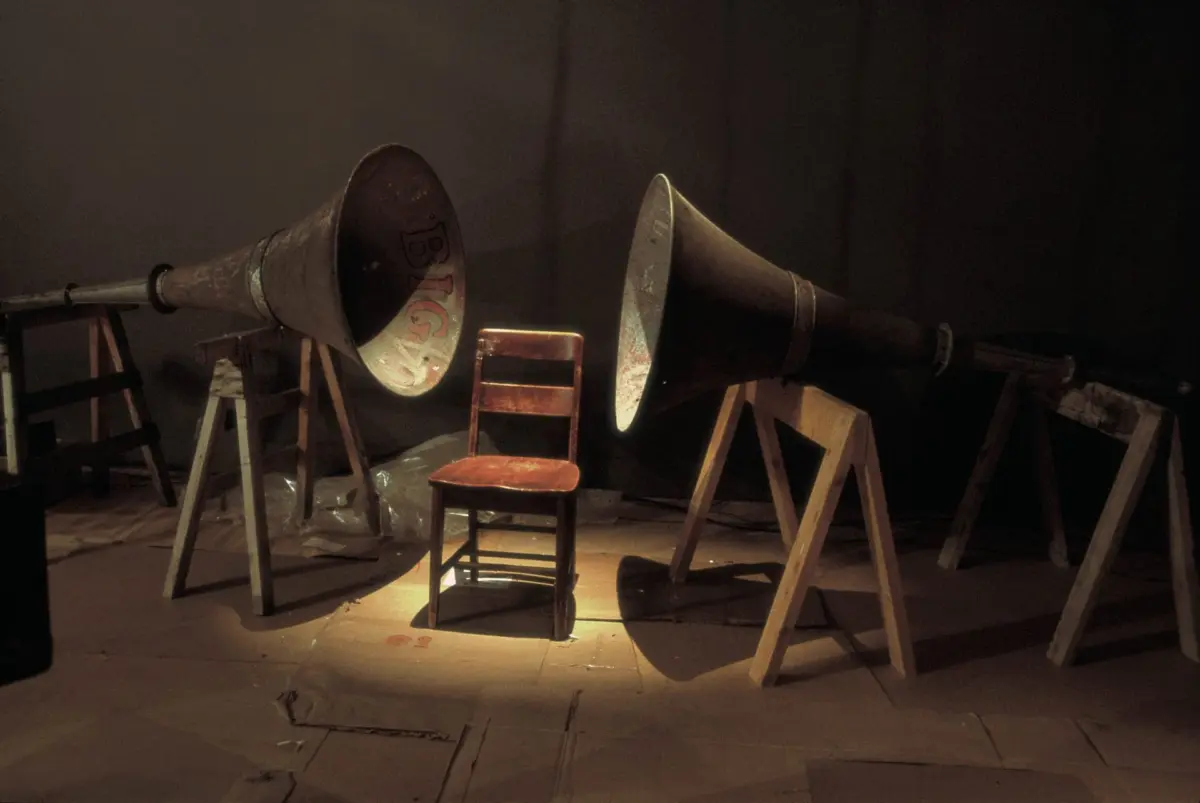
A memorable feature in Life magazine from the era profiled home hobbyists who pushed their passion to absurd architectural extremes, including one enthusiast who built a continuous speaker horn so long that it snaked outward from his garage, pierced an exterior wall, and emptied directly into his living room.
In 1956, The New Yorker published a defining profile of Emory Cook, immortalizing him as the "grand panjandrum" of a burgeoning cultural cult characterized by "an almost mystical reverence for sound." Throughout the decade, the magazine maintained a semi-regular fascination with the hi-fi subculture, dispatching writers to chaotic trade expos like the Rigo High Fidelity Music Show at the New York Coliseum and publishing whimsical verse dedicated to the fidelity movement.
The Digital Pivot and the Global Subindustry
As decades rolled on, the hardware evolved from vacuum-tube amplifiers and reel-to-reel tape decks to solid-state receivers, compact discs, and, eventually, high-resolution digital streaming architectures. Yet, the core psychological profile of the participant remained static.
The midcentury "knob twirler" simply morphed into the modern forum poster, endlessly debating jitter reduction, oxygen-free copper cabling, and room-correction algorithms. Today, this niche obsession is sustained by a vast, shadowy global subindustry of boutique manufacturers—brands whose names are entirely invisible to the general public yet command stratospheric prices among the initiated.
Supporting Context & Metrics: The Economics and Psychology of Sound
To understand the modern audiophile landscape, one must look beyond the gleaming aluminum chassis and examine the socio-economic and psychological metrics driving the market.
The High-End Audio Market Segmentation
While consumer electronics giants like Apple, Sony, and Samsung dominate the mass-market audio space—selling billions of portable earbuds and smart speakers—the high-end audiophile market operates on a completely different economic axis.

- The Entry-Tier Enthusiast ($500 – $2,500): Comprises consumers transitioning away from mass-market gear, investing in dedicated bookshelf speakers, entry-level turntables (such as Rega or Pro-Ject), and standalone DACs (Digital-to-Analog Converters).
- The Mid-Tier Purist ($2,500 – $15,000): Characterized by floor-standing speakers, tube or high-current solid-state amplification, specialized power conditioning units, and acoustic room treatments.
- The Ultra-High-End / "Veblen" Tier ($15,000 to $500,000+): Dominated by exotic horn loudspeakers, Swiss-engineered turntables, single-crystal silver cabling, and dedicated listening rooms built with structural architectural isolation.
The Psychology of Sonic Immersion
What drives an otherwise rational adult to spend the price of a luxury sedan on audio reproduction equipment? Psychologists and cultural critics suggest that audiophilia represents a unique intersection of technological fetishism and sensory escapism.
In an increasingly dense, visually over-stimulated, and compressed digital landscape, high-end audio offers a radical form of sensory purification. When an audiophile sits in the "sweet spot" of an optimized listening room, they are not merely consuming content; they are participating in a ritualistic suspension of disbelief. The acoustic illusion tricks the human brain into registering a virtual three-dimensional space constructed entirely out of pressure waves.
Fascinatingly, cultural critics note a surprising psychological convergence between the high-end audiophile testing their multi-thousand-dollar stereo rig with complex guitar transients and a contemporary teenager deep in the algorithmic rabbit hole of YouTube ASMR videos. Both practices represent a total, unmediated surrender to sound for its own sake—an infantile, elemental regression where texture and timbre override semantic meaning.
Official Statements & Industry Perspectives
To capture the competing philosophies of sound reproduction, we examine insights from acoustic engineers, high-end manufacturers, and cultural commentators.
Dr. Aris Thorne, Professor of Acoustic Engineering at the Massachusetts Institute of Technology:
"There is a persistent tension in audio engineering between objective measurement and subjective perception. Modern testing equipment can measure total harmonic distortion, frequency response, and phase coherence down to infinitesimal fractions. Yet, human psychoacoustics remain endlessly complex. Two amplifiers with identical bench test measurements can present entirely different soundstages to a trained listener. Audiophilia begins precisely where standard instrumentation ends."
Elena Rostova, Chief Designer for a prominent European electrostatic speaker manufacturer:
"People laugh at our customers for spending thousands of dollars on speaker cables. But they fail to understand the holistic nature of a playback system. If you introduce a structural bottleneck anywhere in the signal chain—be it vibration, electrical interference, or phase distortion—the illusion collapses. Our buyers aren’t just purchasing equipment; they are purchasing an open window into the recording session. When done right, the speakers disappear entirely, leaving only the ghost of the performance."
Julian Vance, Cultural Historian and Author of The Hi-Fi Era:
"Audiophilia is fundamentally a romantic rebellion against mass-produced mediocrity. In an era where music has been flattened, compressed, and reduced to disposable digital files streamed over tinny phone speakers, the audiophile insists on material permanence and sonic fidelity. They are secular fundamentalists worshiping at the altar of the original wave-form."
Future Outlook: The Next Frontier of High Fidelity
As we look toward the horizon of the 21st century, the subculture of audiophilia stands at a fascinating crossroads between analog nostalgia and digital innovation.
Spatial Audio and Immersive Computing
The mainstream push toward spatial audio, Dolby Atmos for headphones, and multi-channel immersive mixing has brought techniques once confined to professional mixing studios into consumer consciousness. While traditional two-channel purists often dismiss spatial audio as a digital gimmick reminiscent of 1970s quadraphonic sound, younger generations of listeners are increasingly embracing three-dimensional acoustic environments.
Room Correction and DSP Integration
The traditional audiophile dogma—which held that any digital processing in the signal chain was inherently corrupting—is rapidly evolving. Modern high-end systems increasingly incorporate sophisticated Digital Signal Processing (DSP) and automated room-correction software (such as Dirac Live). These technologies use precision measurement microphones to analyze a room’s acoustic anomalies and digitally flatten peaks and nulls, bridging the gap between raw hardware obsession and computational optimization.
The Vinyl Resurgence and Material Permanence
Paradoxically, alongside digital advancements, the relentless resurgence of vinyl records continues unabated. Younger demographics are driving sales of physical media, seeking a tactile, deliberate listening ritual that stands in stark opposition to the algorithmic infinity-scroll of modern streaming services. This physicalist impulse ensures that the foundational ethos of audiophilia—the desire to physically interact with and master the reproduction of sound—will persist for generations to come.
Ultimately, whether through six-figure tube amplifiers or meticulously placed acoustic foam panels, the audiophile’s crusade remains unchanged: a stubborn, beautiful refusal to accept that sound is merely background noise, and an enduring belief that in the vibration of the air lies the closest thing we have to transcendence.





Comments
Facebook App ID not configured. Please add it in the Customizer.