
Executive Overview
In a high-stakes decision that underscores the enduring resilience of America’s central banking framework, the Federal Reserve voted to implement a quarter-percentage-point interest rate hike, citing persistent inflationary pressures. While routine monetary adjustments rarely capture the attention of the broader public, this specific policy action serves as a watershed moment in modern American governance. It represents a definitive and public rebuke of President Donald J. Trump, who for over eighteen months waged an aggressive, multifaceted campaign to bend the central bank to his political will.
For more than a year and a half, the administration made no secret of its desire for aggressive monetary easing. Facing looming midterm elections and desperate to juice short-term economic indicators, the White House engaged in unprecedented pressure tactics designed to force the Federal Reserve to lower borrowing costs. These efforts included controversial legal maneuvers to oust sitting board members, a coercive Justice Department criminal inquiry into former Fed Chair Jerome Powell, and relentless public tirades from the executive branch.
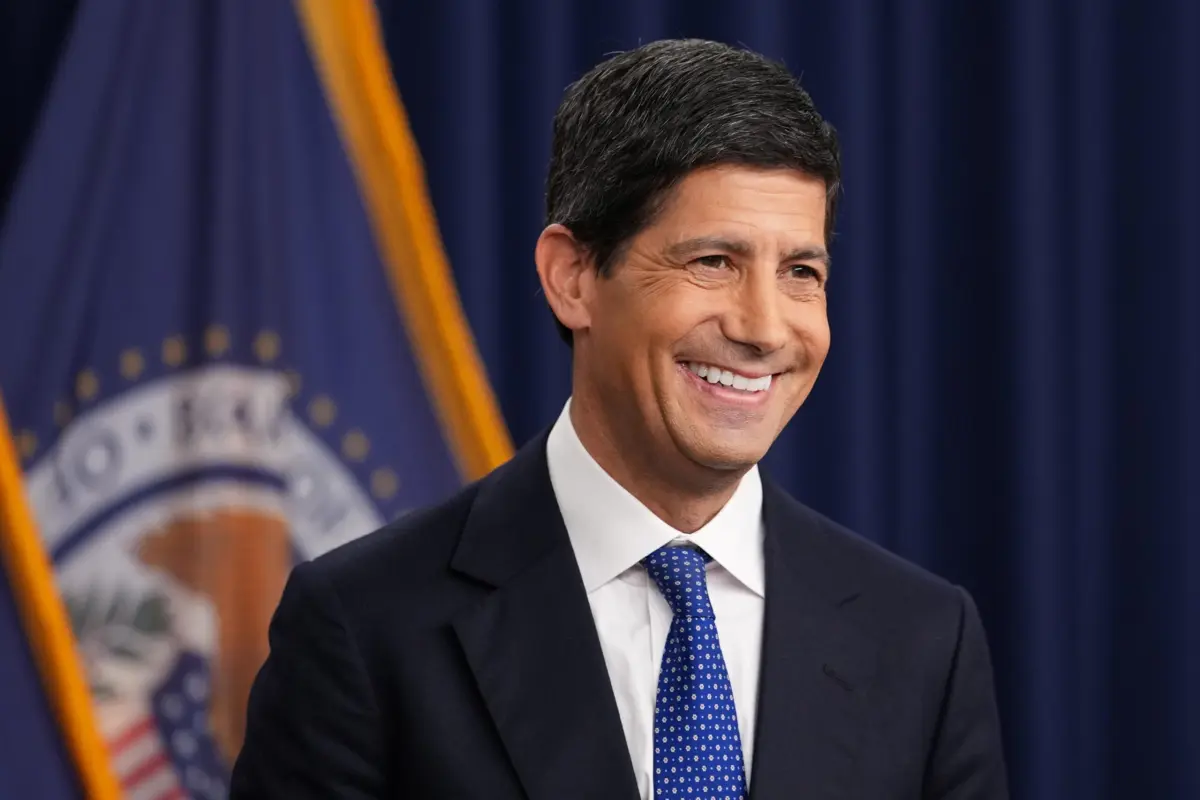
The administration’s strategy culminated earlier this year with the Senate confirmation of Kevin Warsh as the new Federal Reserve Chair, a choice widely interpreted by political observers as the administration’s ultimate bid to install a compliant figurehead at the helm of monetary policy. Yet, in a dramatic plot twist that has rattled Washington and energized defenders of institutional norms, Chairman Warsh joined the majority of the Federal Open Market Committee (FOMC) in voting for the rate hike.
Read Also
This decisive action has laid bare the limits of executive overreach and reaffirmed the foundational principle that monetary policy must remain insulated from partisan politics. As the economic fallout from this decision reverberates through the financial markets and political corridors alike, the administration’s response—ranging from muted statements to sweeping threats of retaliatory trade suspensions—signals that the friction between the White House and the independent central bank is far from over.
Detailed Chronology: The Escalating Battle for Control of the Central Bank
To fully appreciate the gravity of the Federal Reserve’s recent vote, one must examine the protracted war of attrition waged by the Trump administration against the nation’s monetary authority. What began as traditional presidential gripes about interest rates quickly escalated into an institutional assault designed to shatter the Fed’s structural independence.
The Opening Salvos and Public Pressure Campaigns
Shortly after taking office for his current term, President Trump revived his signature playbook: publicly berating the Federal Reserve and its leadership for failing to implement rapid rate cuts. Believing that lower borrowing costs were the silver bullet needed to stimulate consumer spending, bolster the housing market, and stave off potential electoral losses in the upcoming midterms, the administration launched a relentless barrage of criticism.
Day after day, the White House utilized social media briefings and public appearances to disparage central bankers, accusing them of political bias and economic incompetence. Traditional norms dictated that U.S. presidents respect the operational independence of the Federal Reserve to prevent short-term political incentives from compromising long-term price stability. Trump, however, discarded these norms, treating the central bank as an extension of his executive economic agenda.
Legal Maneuvers and Coercive Inquiries
As rhetoric failed to move the needle at FOMC meetings, the administration escalated its tactics from verbal sparring to aggressive administrative and legal warfare. The campaign to reshape the Fed’s governance structure manifested on two major fronts:
- The Ouster of Lisa Cook: The administration launched a concerted effort to force Federal Reserve Governor Lisa Cook from her seat before the expiration of her term. By attempting to manufacture cause for removal or leverage administrative pressure, the White House sought to create a vacancy on the powerful Board of Governors, paving the way for the appointment of a loyalist who would reliably vote for monetary easing. This high-stakes legal battle has faced fierce resistance in the courts and remains ongoing.
- The Justice Department Inquiry into Jerome Powell: In an unprecedented escalation that stunned legal scholars and financial markets, the Department of Justice initiated a coercive criminal investigation against former Fed Chair Jerome Powell. The inquiry, widely viewed by legal experts as a politically motivated pretext designed to intimidate the central bank leadership into submission, cast a dark cloud over the institution. Facing mounting scrutiny and defending the integrity of the judiciary and the central bank, Powell and his defenders weathered the storm until the DOJ quietly dropped the inquiry.
The Confirmation of Kevin Warsh and the Ultimate Miscalculation
Believing that the combination of vacancies, legal pressure, and strategic appointments would finally tip the scales, the administration nominated Kevin Warsh to succeed Jerome Powell as Federal Reserve Chair. Warsh, a former Fed governor with a reputation as a conservative monetary thinker, was viewed by the White House as a pragmatist who would ultimately align with the administration’s growth-first agenda. The Senate confirmed Warsh’s nomination in May, handing the White House what it calculated to be its greatest victory in its quest to domesticate the central bank.
However, the administration fundamentally miscalculated the transformative nature of the institution itself. Upon assuming the four-year chairmanship, Warsh was confronted with economic data that demanded a hawkish response to inflation. Rather than serving as a political instrument for the executive branch, Warsh prioritized the traditional mandate of the Federal Reserve: maintaining price stability and maximum employment over the long haul.
When the FOMC convened and voted to raise interest rates by a quarter of a point, Warsh’s vote in favor of the hike was the ultimate betrayal in the eyes of the White House. The Fed’s gambit to assert its independence had succeeded, and the administration’s meticulously crafted takeover strategy lay in ruins.
Supporting Context & Metrics: Why Fed Independence Matters
To understand why the administration invested so much political capital into controlling the Federal Reserve, one must examine the fundamental mechanics of monetary policy and the inherent tensions between short-term political expediency and long-term economic health.
The Economics of Interest Rates and Political Timelines
Lowering interest rates is a potent mechanism for stimulating economic activity. When the Fed lowers its benchmark rate, the cost of borrowing for mortgages, auto loans, business expansions, and credit cards plummets. This cheap credit unleashes a wave of liquidity, boosting stock markets, driving up consumer spending, and temporarily painting a rosy picture of economic prosperity.
For a political party facing a difficult electoral map—such as the looming threat of a midterm wipeout—an artificially juiced economy is the ultimate insurance policy. If voters feel wealthier and credit flows freely, they are statistically less likely to punish the incumbent party at the ballot box.
Conversely, raising interest rates is politically toxic. By increasing the cost of borrowing, the Fed intentionally dampens economic activity to cool down inflation. This can lead to sluggish stock markets, higher mortgage rates, and voter dissatisfaction.
The Long-Term Danger of Partisan Monetary Policy
If a president were able to successfully exert direct control over the Federal Reserve, the temptation to prioritize short-term political survival over long-term economic stability would be irresistible.
Unchecked monetary easing in the face of persistent inflation risks unleashing runaway price spirals, eroding the purchasing power of the American worker, and destroying the value of savings. Over time, this leads to stagflation—a toxic combination of stagnant economic growth, high unemployment, and soaring inflation.
This exact danger is why the creators of the Federal Reserve Act of 1913 deliberately insulated the central bank from the whims of the executive and legislative branches. By granting governors long, staggered terms and funding the agency independently of congressional appropriations, the system was built to withstand political interference. The recent vote by Chairman Warsh and the FOMC demonstrates that this institutional armor still holds strong, protecting the U.S. economy from the short-sighted ambitions of politicians.
Official Statements and Institutional Responses
The fallout from the Federal Reserve’s unexpected rate hike has triggered sharp reactions across the political and economic spectrum, highlighting deep divisions over the role of government in monetary affairs.
The White House Reaction: Muted Outrage and Sweeping Threats
Up to this point, the administration’s official response to the rate hike has been uncharacteristically muted—at least by the standards of a president known for unfiltered social media tirades. Observers suggest that the White House may be calculating its next steps, realizing that direct, aggressive attacks on a Fed chair they recently appointed could backfire politically.
However, the administration has hardly backed down from its aggressive posture. Earlier this month, President Trump raised the stakes dramatically by threatening to weaponize international trade policy in response to monetary tightening. In a statement that sent shockwaves through global trade capitals, the president declared that his administration would suspend trade relations "WITH COUNTRIES WITH WHICH WE HAVE A DEFICIT" if the Federal Reserve went through with its rate hike.
This unprecedented linkage of monetary policy to international trade tariffs highlights the unpredictable nature of the administration’s economic strategy. While economists and trade representatives scramble to determine whether the White House will make good on these threats, international partners are watching nervously as U.S. domestic political disputes spill over into global markets.
Defense of Institutional Norms
In contrast to the administration’s combative stance, defenders of the Federal Reserve—spanning bipartisan coalitions of economists, former central bankers, and financial regulators—have hailed the Fed’s decision as a victory for the rule of law and economic sanity.
Financial analysts noted that the markets reacted with a measure of relief, interpreting the rate hike as proof that the Federal Reserve remains anchored to objective economic indicators rather than political coercion. Institutional watchdogs have praised Chairman Warsh for rising above political loyalties to uphold the central bank’s statutory mandate.
Future Outlook: What Lies Ahead for the Fed and the White House?
As the dust settles on this latest battle between the executive branch and the central bank, the road ahead remains fraught with uncertainty. Several critical questions will define the economic and political landscape in the coming months:
- Will the Administration Retaliate on Trade? The threat to suspend trade relations with countries carrying a trade deficit remains a wild card. If the White House follows through on this protectionist ultimatum, it could trigger a global trade war, disrupt supply chains, and plunge financial markets into chaos, regardless of what the Federal Reserve does with interest rates.
- The Status of Fed Governance: Legal battles regarding board appointments, such as the ongoing dispute surrounding Lisa Cook, will continue to work their way through the federal court system. The administration may continue its piecemeal efforts to reshape the board, though recent events prove that even administration-friendly nominees are capable of voting independently once seated.
- The Path of Monetary Policy: Inflationary pressures show stubborn persistence, suggesting that the Federal Reserve may not be finished tightening monetary policy. If economic data continues to warrant further rate hikes, the friction between the White House and the central bank will inevitably intensify, keeping monetary policy at the center of the national political debate.
Ultimately, the Federal Reserve’s decision to raise interest rates in direct defiance of presidential demands is a powerful testament to the resilience of American institutions. While the conflict between political ambition and economic independence is far from over, the central bank has proven that its foundational firewall remains intact—protecting the long-term health of the U.S. economy from the pressures of short-term politics.



Comments
Facebook App ID not configured. Please add it in the Customizer.