
Executive Overview
Dementia has been classified by the World Health Organization as one of the greatest health challenges of our generation. By the close of this decade, an estimated 78 million people globally will live with the condition—representing a staggering 188 percent increase since the year 2000—driving global economic and social costs past the $2.8 trillion mark. Yet, despite these harrowing figures, medical research into the foundational causes and prospective cures of neurodegenerative diseases remains fundamentally stymied.
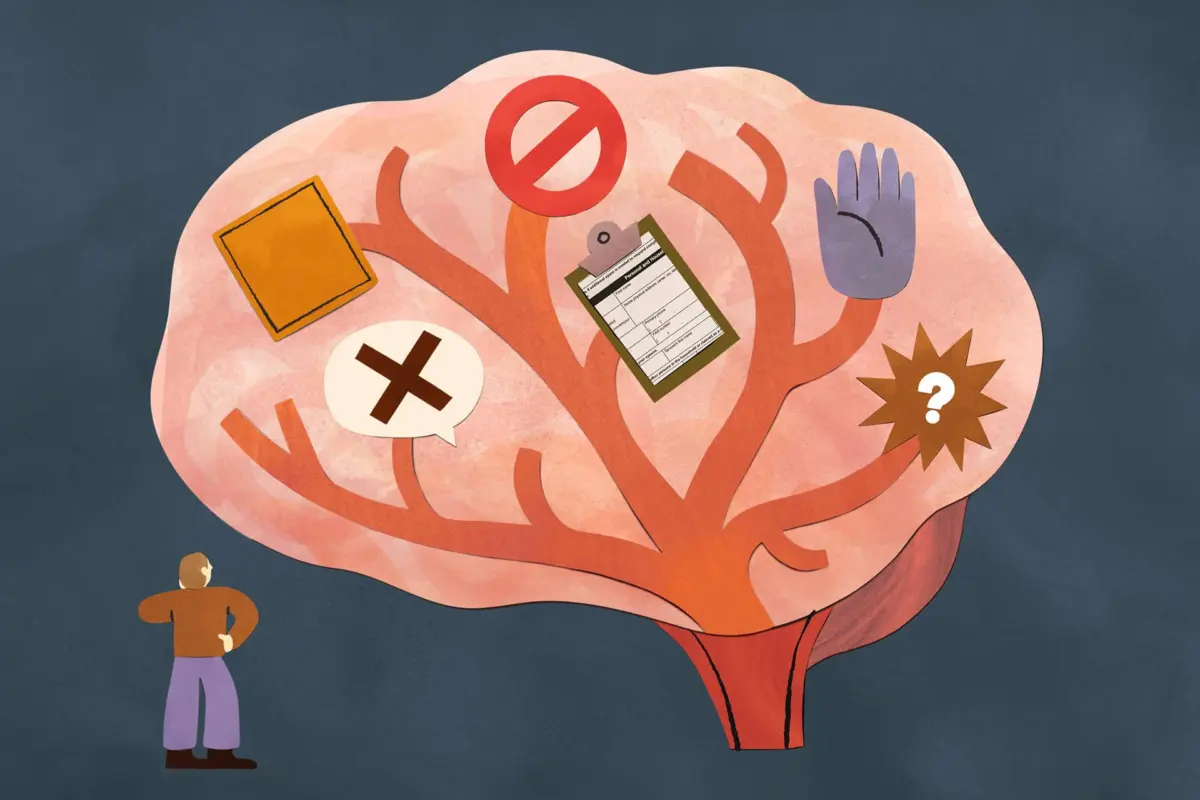
The primary bottlenecks are not strictly biochemical or pharmacological; rather, they are structural. Investigators face an acute shortage of high-quality data, inadequate funding, and a deeply fractured relationship with patients and caregivers. At the epicenter of this crisis lies a tragic paradox: while millions suffer and die from neurodegeneration, the supply of post-mortem brain tissue essential for cutting-edge microscopic analysis is vastly inadequate.
For families willing to donate a loved one’s brain to science, the process resembles an obstacle course. Bereaved relatives must navigate a fragmented landscape of territorial brain banks, uncooperative crematoriums, inflexible administrative schedules, and a total lack of institutional guidance from hospice workers, social workers, and primary physicians. This investigative report explores the emotional and logistical gauntlet of brain donation, examining why a system meant to fuel the future of neuroscience continues to fail families in their darkest hours.
Read Also
Detailed Chronology: A Family’s Fight to Donate
The process of arranging a post-mortem brain donation is rarely straightforward. For Courtney, a Bay Area resident whose 78-year-old father suffered from advanced dementia in a memory care community, the journey was characterized by months of isolation, administrative dead ends, and a persistent feeling of "free-soloing" an intricate medical protocol.
Like most individuals who pursue brain donation, Courtney’s family did not have her father enrolled in a longitudinal research study—the traditional pipeline through which brain banks secure tissue. Instead, she found herself starting from scratch.
[Dad Enters Memory Care]
       │
       ▼
[Initial Family Resolution] ──> Discovers local universities (UCSF/Stanford) won't accept tissue outside of active studies
       │
       ▼
[The Brain Donor Project] ──> Online registration links family to James Watkins (UCLA Brain Donation Program)
       │
       ▼
[The Crematorium Gauntlet] ──> Calling 7 facilities; locating one willing to hold the body for a brain retrieval specialist
       │
       ▼
[The Final Hours] ──> August 13, 4:45 PM: Father passes away
       │
       ▼
[The Administrative Failure] ──> Sunset View Cemetery restricts extractions to 9-to-5 business hours; 16-hour extraction window missed
The Search for Partners
Initially, inquiries to major regional institutions like the University of California, San Francisco (UCSF) and Stanford yielded rejections because the patient had not previously participated in their clinical trials. Momentum stalled for months as Courtney juggled eldercare, the daily demands of raising two children, and the emotional toll of watching her father decline.
A renewed effort in January brought her to the Brain Donor Project website. Within hours, she was connected with James Watkins, a research and study coordinator for the UCLA brain donation program. Watkins offered a practical path forward, but one complicated by her father’s wish to be cremated. Because brains cannot be transplanted, they must be surgically retrieved shortly after death and shipped on ice to a specialized repository. This required finding a crematorium willing to receive the body and temporarily pause its standard protocols to accommodate an independent brain retrieval specialist.
Together, Watkins and Courtney cold-called seven crematoriums in the Bay Area. All seven claimed they lacked the facilities or administrative flexibility to accommodate an external surgical extraction team. Through persistence and optimism, Watkins eventually helped engineer a provisional setup with a local cemetery and crematorium willing to rent an extraction room for a fee, provided all other variables aligned.
The Midnight Deadline
The intricate plan collapsed against the rigid reality of institutional bureaucracy. On a Thursday afternoon in August, Courtney noticed a distinct shift in her father’s breathing. She played The Beatles’ "Blackbird" on her phone, whispered her final farewells, and watched him take his last breath.
Immediately following his passing, Courtney contacted Watkins, only to receive devastating news: the designated facility, Sunset View Cemetery, enforced a strict 9-to-5 operational window for extractions. Death, however, does not abide by standard business hours. Because her father passed away in the late afternoon, there was no feasible way to execute the surgical extraction and transport the tissue to Los Angeles within the mandatory 16-hour post-mortem window. The donation could not proceed.
Supporting Context & Metrics: The Anatomy of a Brain Bank
To understand why the logistical hurdles are so high, one must look at how brain banking operates on a structural level. Historically, brain banks across the United States functioned as isolated, territorial entities, competing for scarce post-mortem tissue samples to power their localized research initiatives.
The Evolution of the NeuroBioBank
The landscape shifted in 2013 when the National Institutes of Health (NIH) established the NeuroBioBank. This collaborative consortium unified prominent academic medical centers—including Harvard University, Mount Sinai in New York, the University of Maryland, the University of Miami, and UCLA—into a shared network designed to pool resources and standardize tissue distribution. Today, the network houses tissue from roughly 18,000 brains, serving as a vital repository for researchers worldwide.
To bridge the gap between individual donors and institutional repositories, the Brain Donor Project was founded in 2016 by Tish Hevel, following her own family’s experience with brain donation. Operating as a pre-registration clearinghouse, the organization allows individuals to signal their intent to donate. The project then matches prospective donors with geographically proximate brain banks capable of organizing the retrieval process. Over the past decade, the organization has pre-registered approximately 30,000 individuals.
Why Real Tissue Matters
While advanced neuroimaging—such as high-resolution MRIs and PET scans—allows clinicians to visualize structural changes in living brains, it cannot match the cellular fidelity of physical tissue analysis. Dr. Melissa Murray, a professor of neuroscience at the Mayo Clinic, likens examining real brain tissue under a microscope to "looking into outer space."
Microscopic examination permits neuroscientists to:
- Identify Cellular Vulnerability: Pinpoint precisely which neuronal subtypes are most susceptible to specific protein misfoldings.
- Map Genetic Underpinnings: Isolate genetic markers associated with complex neurodegenerative cascades.
- Resolve Misdiagnoses: Provide definitive neuropathological reports post-mortem. Clinical diagnoses of dementia types (such as frontotemporal dementia or Lewy body dementia) based on behavioral observations alone carry notable margins of error. Comprehensive pathology reports frequently reveal overlapping pathologies—such as concurrent Alzheimer’s, Parkinson’s, arteriosclerosis, and frontotemporal dementia—that eluded detection during life.
Official Statements and Expert Perspectives
The friction between altruistic intent and bureaucratic inertia is a central frustration for both families and institutional coordinators.
"It takes a special person because you are helping someone during what may be one of their darkest times. And you’re dealing with logistics… it takes sensitivity and smarts."
— Tish Hevel, Founder, Brain Donor Project
James Watkins, navigating the complex intersection of clinical research and family grief at UCLA, emphasizes the personal commitment required to support families through the process:
"I won’t be doing my job until we’ve done everything we can think of to try to make this happen."
— James Watkins, Research and Study Coordinator, UCLA Brain Donation Program
Despite these efforts, systemic barriers remain largely unaddressed by the broader healthcare ecosystem. Tricia Boyle, whose mother passed away from dementia without a brain donation plan in place, highlights the absence of basic communication channels within institutional care settings:
"I’m actually frustrated that no one in my family thought to talk about this, but there was so much I was dealing with. I’m giving myself grace for not being on top of it, but I am super sad, as my family likely would have easily said yes to it had someone asked!"
— Tricia Boyle, Family Caregiver
Future Outlook: Bridging the Infrastructure Gap
The fundamental crisis in brain donation is not a lack of public goodwill, but a severe deficit in infrastructural support. While organizations like the Brain Donor Project leverage public awareness campaigns—partnering with digital advocates and hospice educators to reach wider audiences—the heavy lifting remains decentralized.
For brain donation to scale effectively in response to the growing global dementia crisis, structural reforms must be implemented across the continuum of eldercare:
- Integration into Medical Directives: Healthcare systems must move beyond rudimentary organ donor designations at the DMV and incorporate structured, actionable brain donation planning directly into long-term care admissions and palliative care consultations.
- Professional Training for Care Teams: Social workers, hospice nurses, and memory care facility administrators should be trained to introduce brain donation as a standard option early in the care trajectory, removing the burden of independent research from exhausted families.
- Standardized Crematory Partnerships: Establishing regional networks of crematoriums equipped with climate-controlled holding facilities and standardized extraction agreements would eliminate the ad-hoc logistical scrambling that currently derails a significant percentage of intended donations.
- Funding for Rapid-Response Extraction Teams: Expanding the pool of professional, on-call brain retrieval specialists—rather than relying on a patchwork of local freelancers—would ensure that donations are not lost to arbitrary business-hour restrictions.
Until such an infrastructure is built, families wishing to contribute to the cure of neurodegenerative diseases will continue to rely on personal grit, late-night phone calls, and fragile administrative workarounds. The desire to turn personal loss into scientific progress is abundantly clear; what remains missing is a system capable of honoring that sacrifice without demanding the impossible.




Comments
Facebook App ID not configured. Please add it in the Customizer.