
Executive Overview
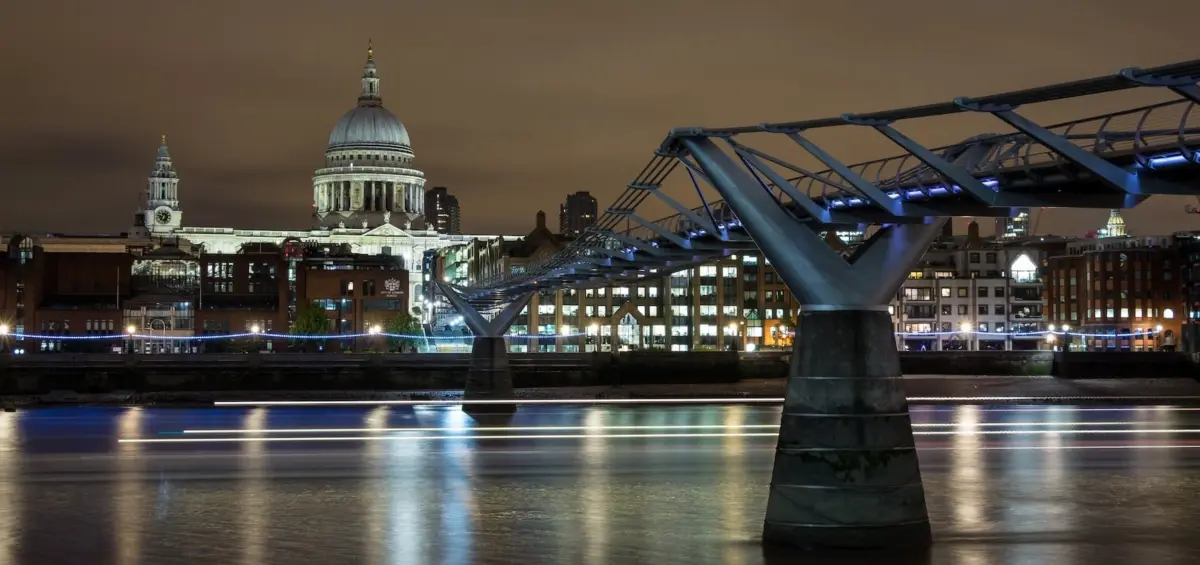
In a development that blurs the increasingly fragile boundaries between the sacred and the secular, St. Paul’s Cathedral has entered into a landmark partnership with the London nightclub Fabric. Under the newly inked agreement, the legendary electronic music institution will serve as the "exclusive partner for contemporary music events" at Sir Christopher Wren’s seventeenth-century masterwork.
This unusual collaboration aims to breathe new life—and much-needed revenue—into one of London’s most prominent architectural and spiritual monuments. Yet, the arrangement has ignited a fierce transnational debate regarding the commercialization of holy spaces. Critics range from international Catholic prelates to traditionalist Anglicans who view the pact as symptomatic of an institution losing its grip on the distinctiveness of the holy.
The agreement arrives at a perilous juncture for the Church of England. Grappling with plummeting weekly attendance figures, mass parish closures, and a severe clergy shortage, the established church finds itself stretched to financial and operational breaking points. While proponents argue that beauty and music can serve as bridges to the transcendent, detractors contend that transforming hallowed naves into concert venues risks squandering the very spiritual sanctuary that sets churches apart from the secular world. Against the backdrop of shifting British demographics, cultural realignments, and a deepening identity crisis, the alliance between St. Paul’s and Fabric captures the existential anxieties of a nation attempting to navigate the sunset of its traditional religious life.
Read Also
Detailed Chronology: From Silent Discos to Electronic Partnerships
The journey toward contemporary commercial music partnerships within English cathedrals has accelerated over recent years, characterized by a series of high-profile events that have repeatedly tested public sensibilities.
- 2022: Fabric organizes a critically acclaimed concert inside St. Paul’s Cathedral featuring Australian synth-pop artist RY X. Organizers praise the event for introducing synthesizers and electronic soundscapes into an acoustic environment designed centuries before the invention of modern amplification. At the time, the performance is framed as a singular cultural crossover, but it quietly lays the groundwork for institutional partnerships.
- Early 2024: Canterbury Cathedral hosts a commercially promoted silent disco within its sacred walls, sparking national outrage and earning the sardonic moniker "the rave in the nave." Thousands of ticket-holders don wireless headphones to dance beneath medieval vaults, prompting intense soul-searching within the Anglican hierarchy over the appropriate use of consecrated architecture.
- Late 2024: Musician Nick Cave performs a candlelit, deeply introspective concert at St. Bartholomew the Great in London. The event, which weaves musical performance with personal reflections on faith, is lauded by ecclesiastical commentators as a masterclass in how contemporary artists can engage with sacred space respectfully.
- Recent Weeks: St. Paul’s Cathedral formalizes its relationship with Fabric, officially naming the nightclub its exclusive partner for contemporary music events. The announcement triggers immediate commentary from civic leaders, international critics, and preservationists alike.
- The Immediate Aftermath: London Mayor Sadiq Khan takes to social media to celebrate the partnership, describing Fabric and St. Paul’s as an "iconic duo." The endorsement draws swift backlash from journalists and commentators, who question the propriety of reducing a house of worship to a secular landmark. Simultaneously, international religious figures, including Roman Catholic Bishop Robert Barron, publicly admonish the Anglican leadership for eroding the boundary between the sacred and the secular.
Supporting Context & Metrics: The Crisis of English Anglicanism
The decision by St. Paul’s Cathedral to court the contemporary music and clubbing scenes does not occur in a vacuum; it is a desperate tactical response to an unfolding demographic and financial catastrophe within the Church of England.
The Erosion of the Flock
Once the undisputed cultural and spiritual backbone of English society, the established church now presides over a population largely detached from formal religious practice. Contemporary data illustrates the scale of the decline:
- Weekly Attendance: Only 5 percent of British adults attend church on a weekly basis.
- Nominal Affiliation: Even among individuals who self-identify as professed Christians, regular weekly attendance hovers at a mere 13 percent.
- Comparative Decline: While religious institutions in the United States routinely lament falling participation rates, English clergy view American figures as enviable benchmarks. Barring the growth observed within Islamic communities across the United Kingdom, traditional religious adherence in Britain is undergoing a steep, generational contraction.
Institutional Hollowing Out
The spiritual vacuum has manifested concretely in the physical infrastructure of the church:
- Building Closures: Between 2010 and 2019, 423 Anglican churches closed their doors permanently. The Church of England’s official registry routinely advertises shuttered buildings for commercial lease or sale, with dozens of historically listed properties currently seeking alternative uses.
- Clergy Shortages: A severe drop in vocations has left vicars increasingly overstretched, managing multiple parishes simultaneously. Ministry professionals warn that the church is tracking toward institutional exhaustion, noting a 20 percent reduction in paid clergy since the turn of the century.
- Financial Pressures: Despite holding a substantial endowment fund estimated at £11.6 billion, individual parishes see minimal financial trickle-down. Compounding these strains, government policy shifts—such as applying a 20 percent value-added tax to grants from the £23 million annual church restoration fund—have further squeezed fragile local budgets.
Official Statements and Diverse Perspectives
The St. Paul’s-Fabric partnership has catalyzed a polarized debate among theologians, cultural commentators, and institutional representatives.
The Cathedral’s Defense
Representatives for St. Paul’s Cathedral maintain that contemporary music events can be curated with deep reverence for the building’s primary purpose. Sandra Lynes Timbrell, the cathedral’s director of visitor engagement, assured the Church Times that the planned collaborations will be executed "respectfully." According to cathedral planners, the events will consist strictly of "seated concerts" utilizing "minimal amplification," designed to engage new audiences without compromising the dignity of Sir Christopher Wren’s architecture.
Civic and Political Reaction
London Mayor Sadiq Khan defended the cultural dynamism of the city, championing the partnership via social media as a creative fusion of world-class music and historic landmarks. However, this framing drew sharp rebukes. Critics argued that treating an architectural masterpiece of the English Reformation primarily as a secular tourist attraction or event space diminishes its sacred identity. Journalist Tom Harwood lampooned the mayor’s endorsement by suggesting equivalent tongue-in-cheek pairings, such as pairing prominent London gay venues with south London mosques, highlighting the perceived double standard in how different religious heritages are publicly discussed.
Theological Critiques
From the wider Christian community, the reaction has been largely critical. Robert Barron, the Roman Catholic bishop of Winona-Rochester in Minnesota, publicly admonished Anglican leadership, asserting that the arrangement demonstrates that the church has "lost any sense of the crucial distinction between the sacred and the secular."
Closer to home, the Rev. Marcus Walker, rector of St. Bartholomew the Great in London, offers a nuanced perspective. While acknowledging that beauty can draw individuals toward the divine—pointing to reverent, faith-infused performances like Nick Cave’s candlelit concert as deeply spiritual experiences—Walker admits that partnering with a commercial nightclub operator like Fabric "makes it more complex." Fabric’s history includes a brief closure in 2016 after its license was revoked following drug-related tragedies—though the club reopened months later under stringent security protocols—making its association with a cathedral uniquely controversial.
Future Outlook: The Identity Map of Post-Christian Britain
As the Church of England searches for viable revenue streams to maintain its crumbling architectural heritage, the fundamental question facing the nation is no longer merely financial; it is existential.
For centuries, the Anglican establishment provided a unifying cultural architecture that transcended regional, social, and educational divides. Today, as that structure recedes, England finds itself navigating a complex national identity crisis. The vacuum left by the retreat of traditional Christianity is already being contested by a medley of ideological movements, ranging from civic and ethnic nationalisms to secular technocracy and postmodern philosophies.
Critics of the Fabric partnership argue that by inviting secular commercial enterprises into the sanctuary, the church risks trading its eternal birthright for temporary financial relief. A Christian house of worship offers something no commercial venue can replicate: an immediate threshold separating the worldly from the spiritual, providing pilgrims and seekers alike with an encounter with the Divine.
If the Church of England hopes to guide a society adrift in secularity, commentators suggest it must lean into what worldly institutions cannot replicate—tradition, custom, continuity, and the unyielding sanctity of the holy. Without preserving the distinct sacredness of its spaces, the church may find that filling its pews with the sounds of the modern nightclub ultimately empties them of their enduring spiritual soul.




Comments
Facebook App ID not configured. Please add it in the Customizer.