
Executive Overview
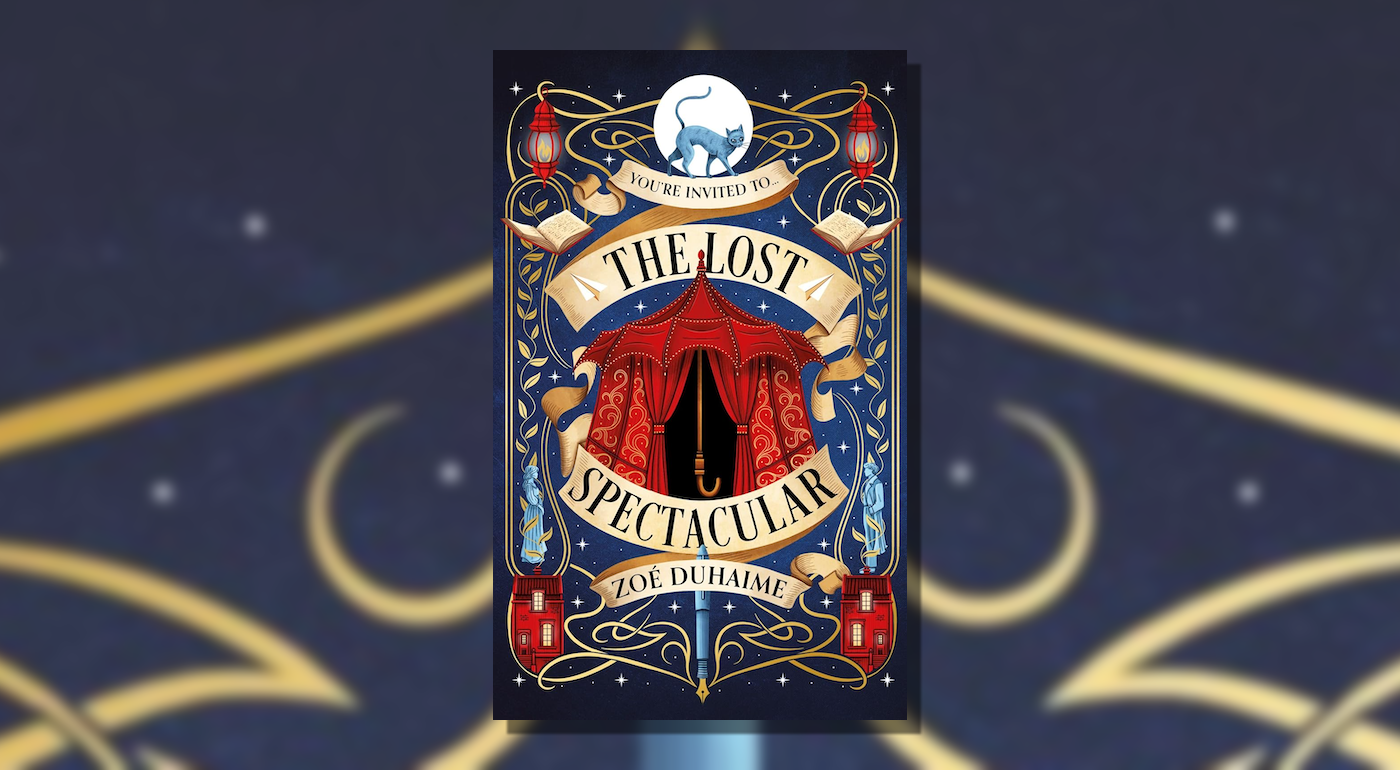
Literary landscapes are rarely bound by the Euclidean rules of the real world, but few contemporary fantasy releases have blurred the lines quite as aggressively as Zoë Duhaime’s debut novel, The Lost Spectacular. Published by Erewhon Books on September 29, the novel introduces readers to a world where foundational texts are mutable, typographic errors are portals, and the lost items of the human experience—from abandoned first drafts to misplaced pearl earrings—coalesce into a traveling, reality-bending carnival known simply as "The Spectacular."
At the heart of this narrative storm are two estranged childhood friends: Noon Bonaventure, the weary proprietor of a failing English-language bookstore named La Tobaganne, and Munro Forrest, an ambitious museum curator determined to capture the Spectacular and lock its wonders behind glass. As Munro prepares the opening night of his career-defining exhibit, and as Noon is unexpectedly summoned as the next captain of the enigmatic show, the duo find themselves drawn back into a cat-and-mouse dynamic rooted in decades-old lore.
This deep-dive news feature explores the intricate world-building, thematic resonance, and narrative trajectory of The Lost Spectacular. Through an examination of the novel’s opening chapter, the socioeconomic realities of its whimsical yet melancholic setting, and the profound philosophical divide between its protagonists, we examine why Duhaime’s work is positioned to be one of the most provocative speculative fiction releases of the year.
Read Also
Detailed Chronology: The Rain, the Misprints, and the Return of the Spectacular
The events of The Lost Spectacular do not begin with a cataclysmic explosion or an overt magical incantation; rather, they begin with the quiet, mundane decay of a neighborhood bookstore and a peculiar rainstorm in the "City Not-Unlike-Montréal."
The Slow Bleed of La Tobaganne
For Noon Bonaventure, life is an exercise in radical surrender. Following the death of her father—a charismatic bibliophile whose absence left a permanent vacuum in the household and the business—Noon has inherited La Tobaganne, a struggling remnant of a dying neighborhood trade located at the corner of Rue Bader Ginsberg and Boulevard Rigaud.
The bookstore is a physical archive of its owner’s emotional state: eclectic, slightly dusty, and sustained mostly by steady runs of gardening memoirs, transport history, and cookery collections. Fiction, for Noon, has lost its sheen; it feels less like an escape and more like an "empty hall of mirrors." Her days are consumed by the small, administrative indignities of running a failing small business in an aging district—dealing with staff turnover, rising utility bills, and the perpetual hum of municipal construction notices.
The Misprint of The Wind in the Willows
The disruption begins innocently enough. Odette, a spirited retiree and former archivist who acts as an unofficial backseat driver for the shop, arrives during a torrential downpour to collect her usual order of misprints. Among them is a copy of Kenneth Grahame’s 1908 classic, The Wind in the Willows.
To the untrained eye, the volume contains nothing more than a minor typo in the table of contents. However, as Noon handles the book, the textual boundary begins to break down. The foreword stirs like sand in a sieve, reordering itself to reveal an alarming message:
The man in the charcoal cloak fumed.
“Where the hell have you been? The draft is done and Wordsworth is over.”
This textual migration is not an isolated glitch; it is the vanguard of the Spectacular. The mysterious festival—a glittering, ephemeral phenomenon found only by invitation or through the anomalies of misprinted pages—is waking up.
The Deluge and the Gray Envelope
While Noon contends with a rapidly flooding basement next door—hauling buckets alongside a frantic café owner amidst rising swamp water—the boundaries between everyday reality and storybook myth continue to dissolve. Amidst the chaos of sirens, cyclists leaving wakes in the flooded intersection, and phone calls to her restaurateur mother, Noon catches a glimpse of a shadowy figure across the street: the man in the charcoal cloak.

Returning to her desk, surrounded by damp correspondence and a municipal notice warning of impending road construction, Noon discovers a gray envelope resting beneath the bureaucratic paperwork. Sealed with a red stamp pressed onto a white feather and dusted with gold lustre, the invitation reads:
June Clara Bonaventure, La Tobaganne, proprietor
852 Rue Bader Ginsberg
A City Not-Unlike-Montréal
The Spectacular!
9 o’clock this evening, in the garden behind the library.
Come as you are.
With her fountain pen missing and her carefully maintained composure pushed to its absolute limit, Noon realizes that she can no longer outrun the past—or the man who has spent a lifetime chasing her through the margins of literature.
Supporting Context & Metrics: The Architecture of Memory and Loss
To fully appreciate the narrative tension of The Lost Spectacular, one must examine the socioeconomic and psychological framework that Duhaime constructs within her fictionalized version of Montreal.
The Urban Ecology of "A City Not-Unlike-Montréal"
Duhaime’s setting functions as a character in its own right. It is a city defined by linguistic duality, aging infrastructure, and a melancholic charm. The neighborhood surrounding Rue Bader Ginsberg is caught in a transitional death spiral familiar to many urban dwellers: old trades are dying out, replaced predictably by dentists and lawyers, while endless municipal construction projects tear up the asphalt, promising wider sidewalks that small businesses may not survive long enough to see.
- Economic Indicators of Decline: La Tobaganne operates on thin margins, sustained by hand-written receipts, generational goodwill, and the occasional high-value sale of rare books to collectors like Odette.
- Infrastructure Vulnerability: The recurrent flooding of the bookstore’s basement mirrors the emotional fragility of its proprietors. Water—traditionally a symbol of cleansing and rebirth—serves here as an invasive, destructive force that drags buried memories and forgotten grief to the surface.
The Philosophy of Letting Go vs. Never Letting Go
At the core of The Lost Spectacular is a profound philosophical dichotomy embodied by its two central figures:
- Noon Bonaventure (The Apostle of Grace): Noon has learned to move on. Shaped by the loss of her father to brain cancer and the slow erosion of her childhood world, she practices the art of surrender. For Noon, objects and memories must be allowed to drift away, much like the pages of a discarded book.
- Munro Singh Forrest (The Curator of Attachment): Munro, her estranged childhood rival and companion, chooses the opposite path. As an ambitious museum curator, his life’s work is dedicated to preservation, categorization, and trapping the ephemeral. His ultimate ambition—to capture the Spectacular and force its lost treasures into a permanent exhibit—represents a fundamental refusal to accept the transient nature of existence.
Official Statements and Authorial Vision
While Erewhon Books has kept tight-lipped regarding the full scope of the novel’s plot twists, early promotional materials and editorial notes shed light on the genesis of Duhaime’s literary universe.
- On the Nature of the Spectacular: Editorial summaries describe the Spectacular not merely as a magical circus, but as an existential archive. It is a physical manifestation of human oversight—housing everything from "lone pearl earrings and apple orchards" to "abandoned first drafts and shipwrecks."
- The Dynamic Between Noon and Munro: According to preview insights, the relationship between Noon and Munro transcends standard tropes of romantic rivalry. Having grown up listening to stories from Munro’s grandmother and debating their narrative merits, the pair are bound by a shared childhood discovery of the Spectacular. When a past misstep abruptly severed their connection, it created a chasm that their adult careers—Noon as the reluctant heir to the show, Munro as its would-be warden—now force them to cross.
As opening night for Munro’s exhibit approaches, the narrative builds toward an inevitable convergence: a reckoning where both characters must cease running from their shared history and determine how their respective stories conclude.
Future Outlook: A Landmark Debut for Autumn 2026
With The Lost Spectacular slated for release on September 29, the novel is already generating significant buzz within speculative fiction circles. Duhaime’s prose—characterized by a lush, tactile lyricism that marries the domestic realism of urban literary fiction with the whimsical danger of magical realism—positions her as a fresh and distinctive voice in the genre.
For readers, the novel offers an invitation to look closer at the books on their shelves, to question the blank spaces in the margins, and to consider what they might find if they followed a stray piece of sand out the door and into the rain. As Noon Bonaventure prepares to step into the garden behind the library at nine o’clock, one thing is certain: the boundary between the stories we read and the lives we live has never been thinner.




Comments
Facebook App ID not configured. Please add it in the Customizer.